
Illustrative planning scenario (U.S. dollars, September 2026)
This is a scope-bounded example, not a market quote: assume $600 for a whole-house humidifier, $700 for installation, and $400 for water, drain, controls, and commissioning. The illustrative project is $1,700 before repairs to the moisture source; verify equipment compatibility and drainage before treating it as the solution.
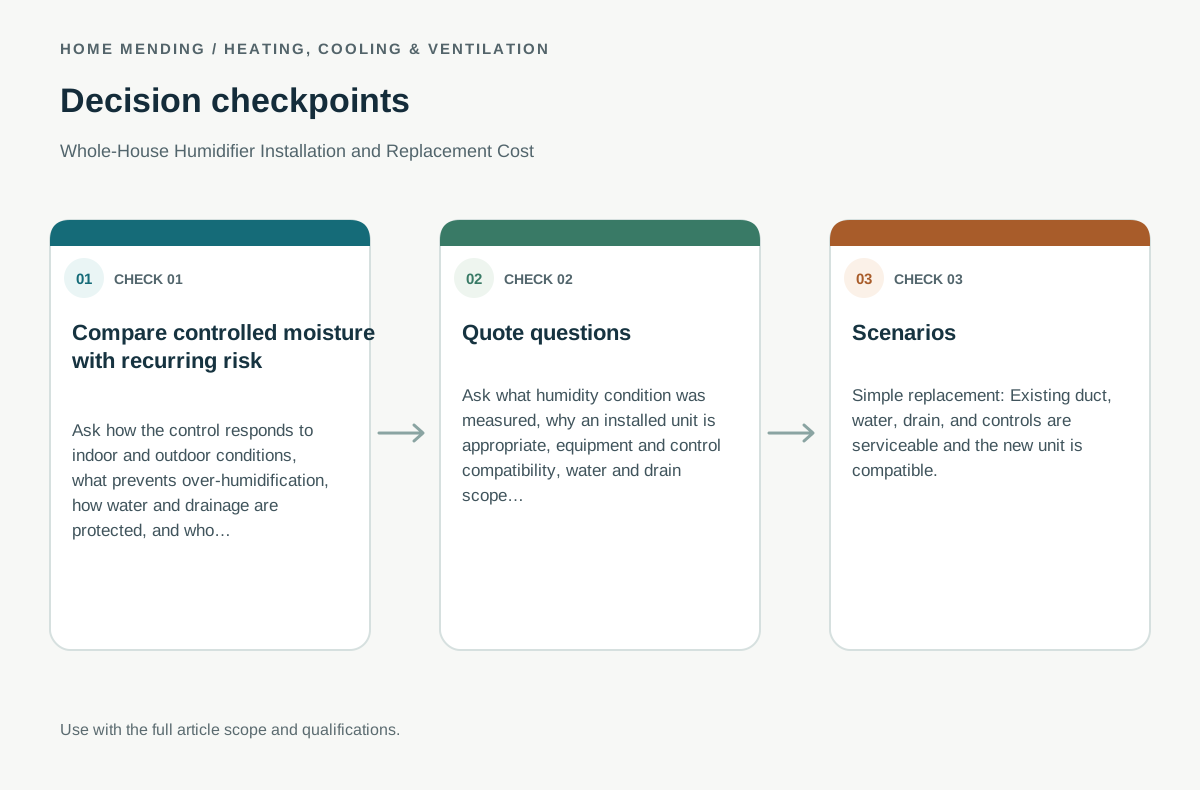
Compare controlled moisture with recurring risk
Ask how the control responds to indoor and outdoor conditions, what prevents over-humidification, how water and drainage are protected, and who performs seasonal maintenance. A humidifier added to a home with condensation or wet ducts may increase risk instead of solving the complaint.
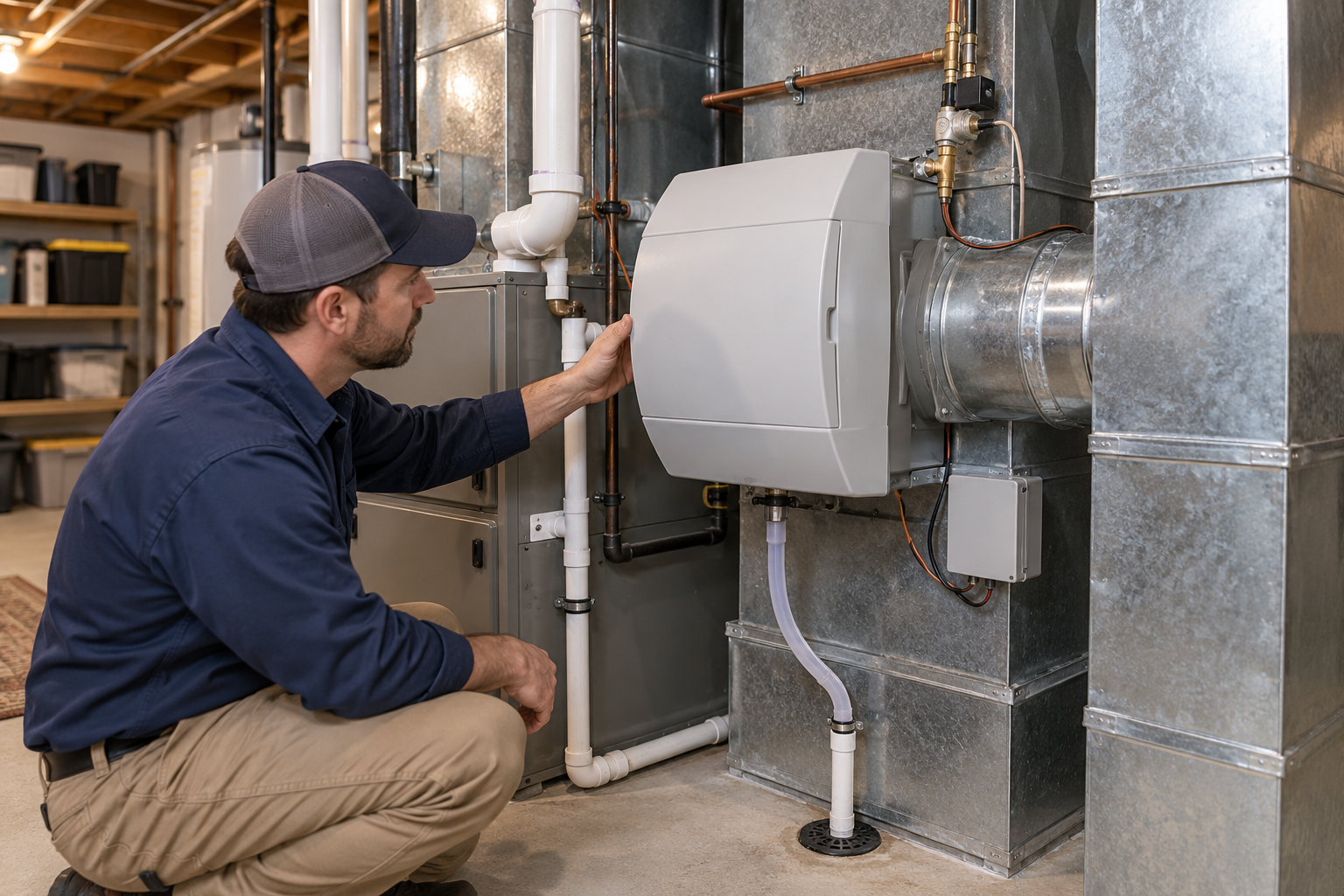
Compare a simple compatible replacement with a new retrofit requiring duct openings, water, drain, electrical, controls, and finish access. Include pads or panels, cleaning, service, leak consequences, future equipment compatibility, and the alternative of correcting ventilation, air leakage, or another source.
Make the installation accountable
Request a room or area coverage assumption, control location, water and drain route, duct connection, electrical scope, service clearance, testing, and moisture safeguard. A product can be compatible with the furnace yet still be a poor installation if a drain is inaccessible or the control cannot respond to the home’s conditions. State who owns wall repair, leak protection, seasonal shutdown, and maintenance.
Compare the simple case of reusing sound connections with a retrofit that adds duct openings, water, drain, controls, or electrical work. Over a longer ownership horizon, include replacement parts, water-panel or pad service, cleaning, and the consequence of a leak. The strongest quote explains how the system will be controlled and maintained, not only how much the cabinet costs.
Ask what humidity measurements, condensation observations, ventilation behavior, and envelope conditions support the proposal. Dryness can relate to ventilation, air leakage, heating, or occupancy. If windows, ducts, walls, or attic areas already show condensation, source correction and envelope assessment may come first.
Compare bypass, fan-powered, and steam systems on equipment, duct, water, drain, electrical, controls, access, consumables, and service. The strongest installation quote identifies moisture safeguards and the condition that would require changing the plan.
An installed whole-house humidifier may use bypass airflow, a powered fan, or steam and can require duct work, water, drain, electrical, controls, and maintenance access. The active evidence does not support a universal installed range. Cost and suitability depend on the existing HVAC system and whether dry air is actually the problem.
Decide between equipment and building work
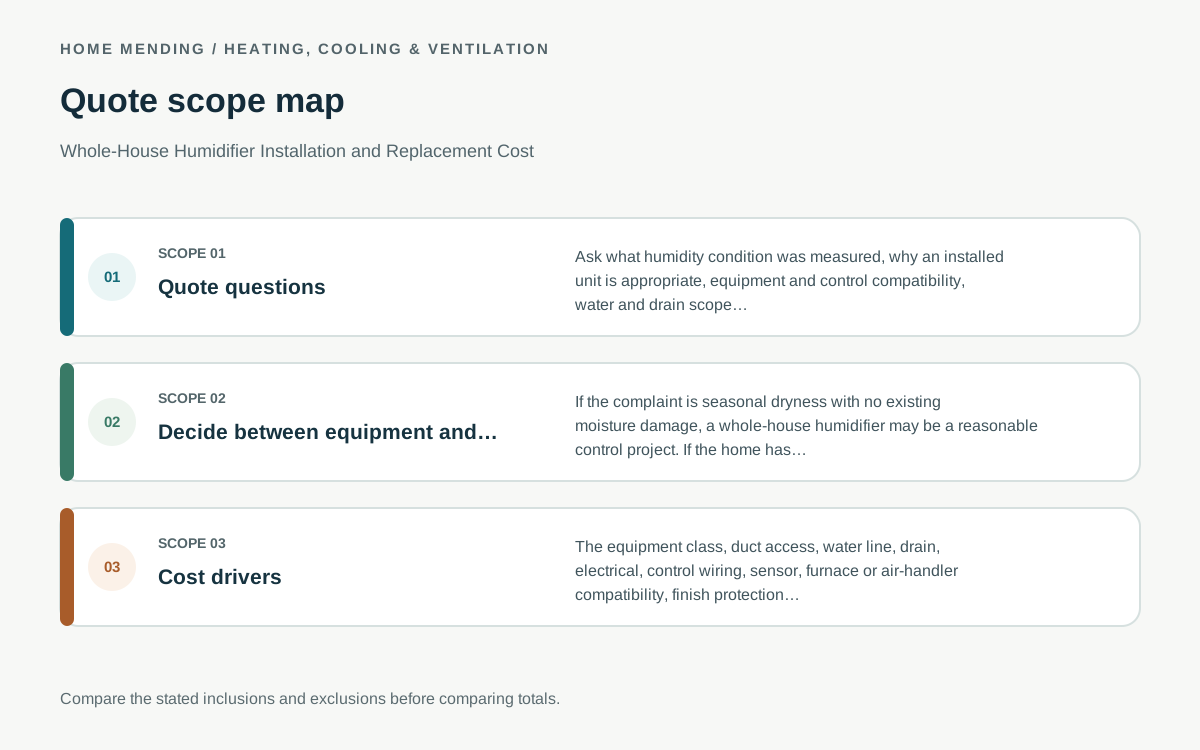
If the complaint is seasonal dryness with no existing moisture damage, a whole-house humidifier may be a reasonable control project. If the home has condensation, wet ducts, air leakage, or ventilation behavior that explains the condition, source correction may deserve priority. A humidifier cannot safely compensate for every enclosure or air-exchange problem.
Compare the proposed equipment type, water and drain work, controls, service access, and recurring maintenance with targeted alternatives. If a future furnace or air-handler replacement is likely, ask whether the current installation will remain compatible. This ownership question can materially change whether to install now or coordinate the work.
Winter dryness can relate to ventilation, air leakage, heating, occupancy, or measurement conditions. Adding humidity without understanding the building can create condensation or moisture problems. Health Canada and NRCan emphasize that ventilation and indoor moisture interact; a humidifier is not a substitute for repairing leaks, condensation, or envelope defects.
Installation types
A bypass unit uses the air stream and may need duct transitions and water. A fan-powered unit adds its own air movement. A steam system may add electrical, water, drain, controls, and service requirements. Exact compatibility and maintenance requirements are product-specific.
Cost drivers
The equipment class, duct access, water line, drain, electrical, control wiring, sensor, furnace or air-handler compatibility, finish protection, commissioning, and service access affect price. A replacement may be simpler than a new installation if the existing opening, drain, and controls are suitable.
Scenarios
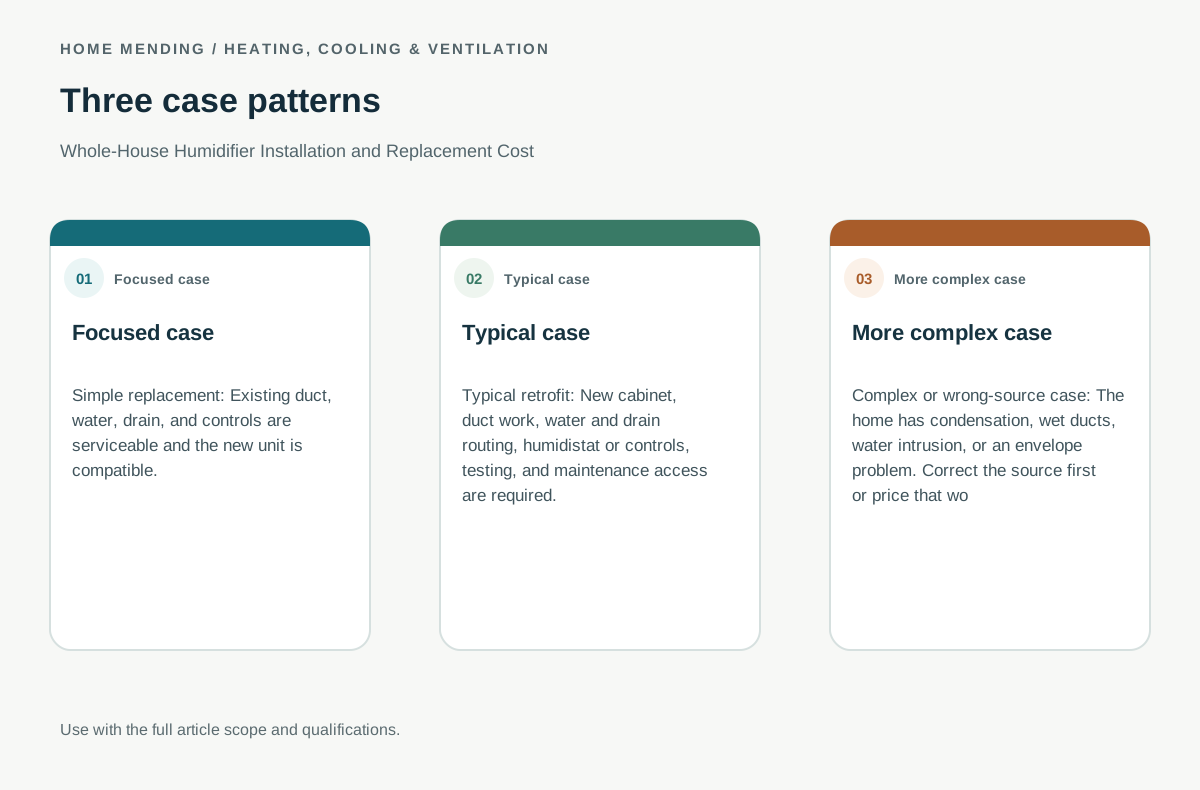
Simple replacement: Existing duct, water, drain, and controls are serviceable and the new unit is compatible.
Typical retrofit: New cabinet, duct work, water and drain routing, humidistat or controls, testing, and maintenance access are required.
Complex or wrong-source case: The home has condensation, wet ducts, water intrusion, or an envelope problem. Correct the source first or price that work separately; a humidifier can worsen the condition.
Quote questions
Ask what humidity condition was measured, why an installed unit is appropriate, equipment and control compatibility, water and drain scope, electrical, duct access, maintenance, warranty, and moisture safeguards. Keep portable appliances and envelope correction outside this installed-HVAC article when they are the real decision.
Choose a whole-house humidifier when the HVAC system can support it, the indoor condition is understood, and maintenance and moisture risk are included. The lowest equipment price is not the lowest ownership cost if it creates wet ducts or inaccessible service.
Check the building before adding moisture
Ask what humidity measurements, room symptoms, ventilation behavior, and condensation observations support the proposal. Dryness can be related to ventilation, air leakage, heating, or occupancy. If windows, ducts, walls, or attic areas already show condensation or moisture, source correction and envelope assessment may come first.
Compare the installation burden
Bypass, fan-powered, and steam units can have different duct, water, drain, electrical, controls, and service requirements. Request a complete scope and identify what happens if the drain, water supply, or control location is inaccessible. Keep filter, pad, water treatment, and seasonal service in the ownership budget.
Define the outcome
The goal should be a controlled indoor condition within the equipment and building’s safe design limits, not a maximum humidity number copied from generic advice. Ask how the control responds to outdoor conditions and what moisture safeguards are included. A humidifier is worthwhile only when the problem is understood and the system can manage the added moisture.
Compare installation and recurring cost
Request the humidifier type, duct opening, water supply, drain, electrical, controls, sensor, access, maintenance, testing, and warranty. A steam unit can create a different electrical and service scope from a bypass or fan-powered unit. If a contractor proposes a drain pump or new control, price it explicitly.
For a home with condensation or wet assemblies, compare source correction and envelope work before adding humidity. For a home with a confirmed dry-air problem and compatible HVAC, an installed unit may be worthwhile. The decision is about controlled moisture, not a product’s maximum setting.
Include the recurring work
The installation price is only the entry point. Pads, water panels, filters, cleaning, water treatment, drain inspection, control batteries, and seasonal shutdown may recur according to the product and service instructions. Steam equipment can have different electrical and maintenance implications from an evaporative unit. Ask which tasks the homeowner can perform and which require service.
Over a short horizon, a compatible replacement may be reasonable if it reuses sound connections and solves a confirmed problem. Over a longer horizon, compare maintenance access, water quality, leak consequences, replacement parts, and the likelihood that a future furnace or air-handler change will alter compatibility. A modest first cost can be poor value if service is inaccessible.