
Illustrative planning scenario (U.S. dollars, September 2026)
This is a transparent planning example, not a market average: assume $1,800 for a whole-house dehumidifier, $1,000 for installation, and $700 for duct, drain, electrical, and controls work. The illustrative total is $3,500 before correcting envelope or ventilation moisture sources; those causes should be priced separately.
Establish the next best project
If the moisture source is a leak, wet assembly, crawl-space condition, or ventilation problem, source correction may have more value than adding equipment. If the cooling system is oversized or does not run long enough, dehumidification may address a real HVAC load. Ask what evidence distinguishes these situations.
Price unit, ducts, drain, pump, controls, electrical, access, commissioning, filters, electricity, runtime, noise, and service. Compare a bounded replacement with a full source-and-equipment plan. The project should state what humidity outcome is expected and what remains outside its control.
Ask whether humidity is coming from outdoor air, occupancy, ventilation, a basement or crawl space, plumbing, roof, foundation, wet insulation, or an oversized AC. A dehumidifier can manage a load, but it does not correct bulk water or contaminated materials.
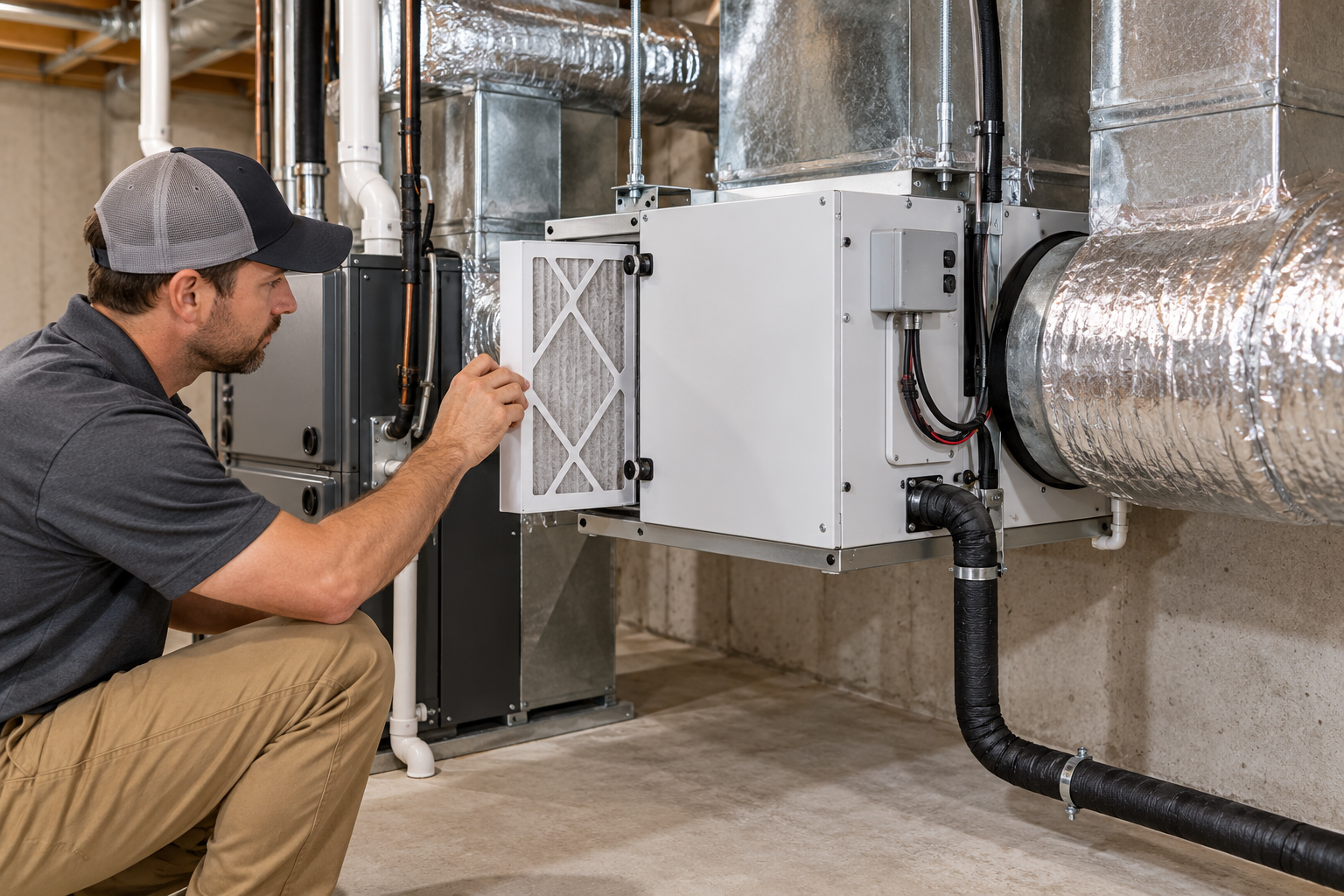
Request expected runtime, duct and drain layout, electrical, controls, filters, coil access, testing, service, and warranty. A unit that runs continuously because a source remains open can be an expensive and ineffective solution.
A whole-house dehumidifier is installed into or alongside an HVAC air path and usually needs duct connections, a condensate drain, controls, electrical work, access, and commissioning. The active evidence does not support a reliable universal price. The correct budget depends on whether the equipment is managing indoor humidity or being asked to hide a water, envelope, ventilation, or cooling-system problem.
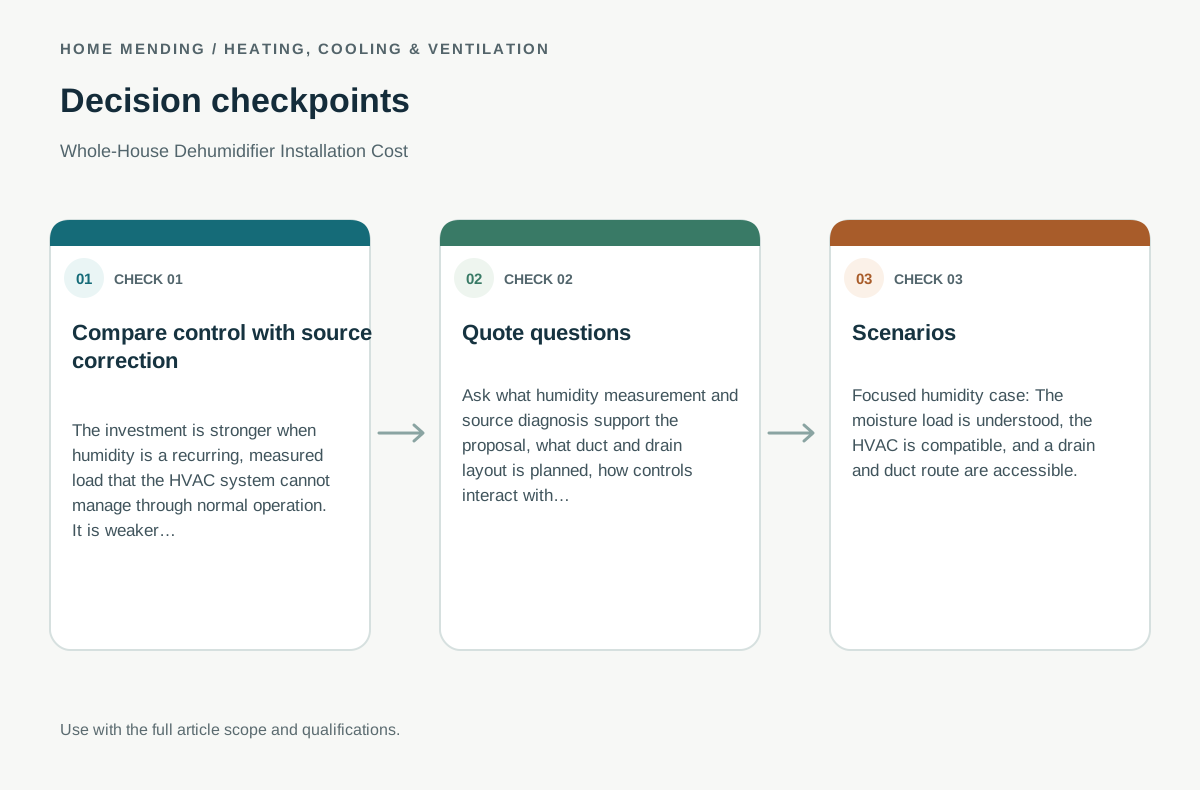
Compare control with source correction
The investment is stronger when humidity is a recurring, measured load that the HVAC system cannot manage through normal operation. It is weaker when the root cause is bulk water, a plumbing leak, wet insulation, poor ventilation, or an oversized cooling system. In those cases, a dehumidifier may be supplementary while the source is corrected.
Ask what will be measured after installation and how the unit interacts with heating, cooling, and ventilation. Include drain protection, filters, coils, electricity, runtime, noise, service access, and future replacement. A complete quote should make clear whether the homeowner is buying humidity control, source repair, or both.
Central dehumidification can control indoor moisture when the existing AC does not run long enough or the home needs humidity control independent of temperature. It does not correct bulk water, plumbing leaks, foundation seepage, roof leaks, wet ducts, or every ventilation problem. If moisture has a building or health source, correct that source and use the appropriate category.
Installation configurations
The unit may connect to return and supply ducts, operate on a dedicated bypass, or use another manufacturer-supported arrangement. The quote should identify airflow path, controls, drain or pump, electrical, filtration, and how the dehumidifier interacts with the AC, furnace, heat pump, or ventilation system.
Cost drivers
Cabinet and capacity, duct access, drain routing, pump, controls, electrical, condensate disposal, installation location, service access, and commissioning change cost. A finished basement, crawl space, or multi-zone system can add access and control complexity.
Scenarios
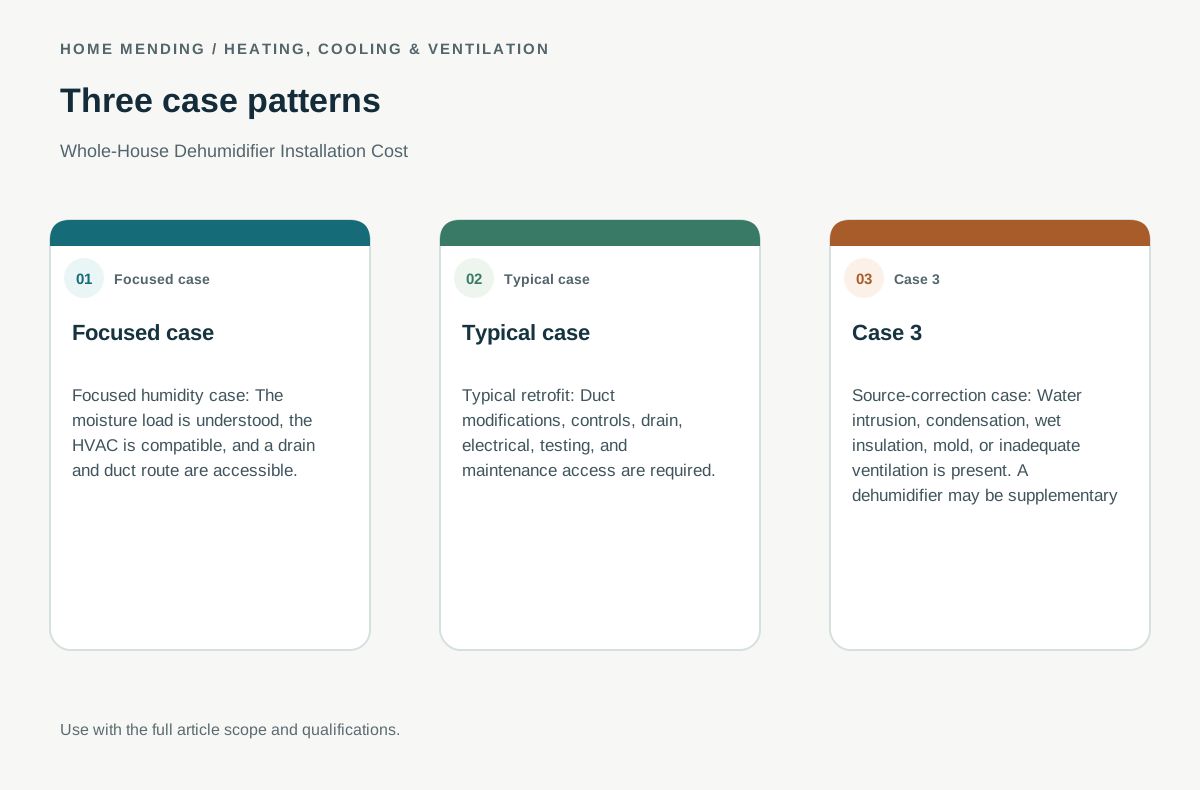
Focused humidity case: The moisture load is understood, the HVAC is compatible, and a drain and duct route are accessible.
Typical retrofit: Duct modifications, controls, drain, electrical, testing, and maintenance access are required.
Source-correction case: Water intrusion, condensation, wet insulation, mold, or inadequate ventilation is present. A dehumidifier may be supplementary, not the main repair.
Operating economics
Include electricity, runtime, filter and coil maintenance, condensate service, and interaction with AC runtime. A unit that runs continuously because the building source remains unresolved can create an expensive and ineffective solution.
Quote questions
Ask what humidity measurement and source diagnosis support the proposal, what duct and drain layout is planned, how controls interact with existing equipment, what electrical work is required, and what maintenance and warranty apply. Compare an installed dehumidifier with source correction and ventilation changes only when those are genuine alternatives.
Choose whole-house dehumidification when it addresses a defined HVAC humidity load and the installation is compatible. Treat it as humidity management, not proof that the moisture source has been repaired.

Diagnose the moisture load
Ask whether humidity is coming from outdoor air, occupancy, ventilation, a basement or crawl space, plumbing, roof, foundation, wet insulation, or an oversized AC. A dehumidifier can manage a load, but it does not make bulk water or contaminated materials safe. The source and the installed control should be separate lines in the decision.
Compare operating scenarios
In a focused case, the humidity load is understood, a drain is accessible, and the unit can connect to compatible ducts and controls. In a difficult case, the unit runs continuously because a source remains open, access is poor, or the system interacts badly with ventilation and cooling. Include electricity, filters, coil cleaning, condensate, service access, and expected runtime when comparing options.
Ask for a humidity-control target appropriate to the home and climate, not a universal promise. If the recommendation changes after source correction or AC replacement, keep those projects visible rather than buying the dehumidifier twice.
Compare source correction with equipment
If a basement, crawl space, plumbing, roof, foundation, or envelope source is contributing moisture, price correction and dehumidification separately. If the AC is oversized or rarely runs long enough, a dehumidifier may address a real HVAC load, but it should not be used to justify leaving a defect unresolved.
Ask for duct and drain layout, controls, electrical, expected runtime, service access, filters, commissioning, and warranty. A complete quote explains how the unit will interact with the furnace, AC, heat pump, or ventilation system.
Price the long-term control burden
Include expected runtime, electricity, filters, coil cleaning, condensate protection, drain or pump maintenance, noise, and service access. A unit placed in a remote crawl space may have a lower installation price but a higher chance of neglected maintenance. Ask who will notice a failed drain or control and what protection exists if condensate is not removed.
Repair is usually a bounded decision when the cabinet, coil, fan, controls, and drain are otherwise sound. Replacement is more coherent when several components are failing or the unit cannot control humidity without excessive runtime. If the building source remains unresolved, postpone a payback claim: the equipment cost and operating cost will both be distorted by the open source.
Define the success condition
State whether the project is intended to reduce measured indoor humidity, prevent recurring condensation, reduce HVAC runtime, or manage a known seasonal load. Then identify what will be tested after installation: control response, condensate removal, airflow, interaction with the furnace, AC, heat pump, or ventilation system, and service access. A unit that operates continuously without improving the underlying condition is not a successful low-cost installation.
Compare source correction, ventilation adjustment, air-conditioning correction, room-level equipment, and whole-house dehumidification only when each addresses the same problem. Include the disruption and recurring cost of filters, cleaning, electricity, condensate, noise, and future service.