
Illustrative planning scenario (U.S. dollars, September 2026)
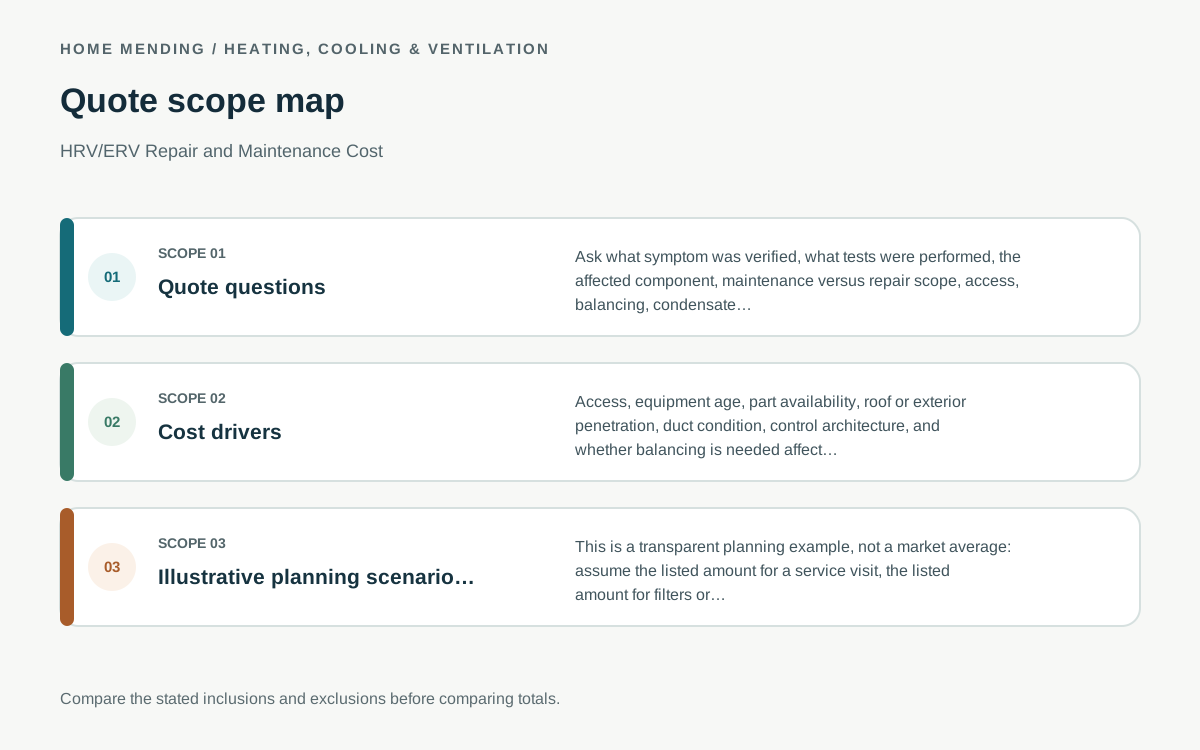
This is a transparent planning example, not a market average: assume $175 for a service visit, $150 for filters or consumables, and $500 for a fan, control, or balancing correction. The illustrative annual exposure is $825 before major parts; the unit’s service manual determines the actual maintenance scope.
Make the operating condition part of the diagnosis
Record whether the symptom appears during cold weather, humid weather, high occupancy, a particular speed, or a particular control setting. That context helps distinguish frost, condensate, airflow, fan, damper, control, and installation causes. Ask whether the technician will test the unit after work under the relevant mode instead of only confirming that the fan runs.
Compare a bounded repair with installation correction and replacement when symptoms recur. Include access, balancing, controls, ducts, penetrations, parts availability, and warranty. A repair can be the economical choice when it restores a maintainable system; it can be false economy when the same cause remains.

Identify the cheapest complete remedy
The lowest complete remedy may be a filter or core service, but only if the unit then delivers the expected airflow. It may instead be a fan or control repair, condensate correction, exterior hood clearing, balancing, or a correction to the original duct installation. Ask which tests distinguish those cases and whether the quote includes post-work operation in the affected modes.
For repeated symptoms, record when frost, noise, moisture, or weak airflow occurs and whether the symptom changes with weather, occupancy, or ventilation setting. That history can prevent a cycle of parts that never addresses a control or installation cause. Compare repeat service, a broader correction, and replacement on access, warranty, future parts availability, and the effect on ventilation balance.
Noise can arise from a fan, mount, filter, duct, or imbalance. Frost can involve outdoor conditions, airflow, controls, defrost, or installation. Condensate can involve drainage, slope, blockage, or moisture conditions. Weak airflow can reflect filters, core, fan, dampers, ducts, or commissioning.
Ask what evidence identifies the failed part and what alternatives were considered. If the symptom returns after cleaning or repair, investigate the original balance, controls, climate, and installation before authorizing another component.
HRV and ERV service can range from homeowner filter and core cleaning to professional fan, control, condensate, frost, duct, or balancing work. The active evidence does not establish a dependable universal repair price. The useful budget identifies whether the problem is maintenance, a component, a duct or control issue, or a design and commissioning problem.
Routine maintenance
NRCan describes filter and core cleaning and service-manual checks as routine homeowner maintenance, with exact tasks and intervals depending on the unit. Maintenance access matters when comparing installation quotes. A clogged filter can reduce airflow, but a noisy, wet, frozen, or weakly ventilating system needs diagnosis rather than repeated cleaning.
Separate maintenance from commissioning correction
Filters, core cleaning, and service-manual checks are recurring maintenance. A blocked exterior hood, incorrect control, poor balance, condensate problem, or frost behavior may require a broader diagnostic or installation correction. Ask which category the quote addresses and what evidence supports any part replacement.
For a short horizon, bounded maintenance or repair may be enough when the unit is otherwise credible. For a long horizon, repeated service, poor access, unavailable parts, or several simultaneous failures can support replacement. Include ducts, controls, penetrations, balancing, removal, commissioning, and warranty when comparing the alternatives.
Possible work includes filters and core, fan or motor, controls and sensors, defrost or frost management, condensate drain, blocked ducts, exterior hoods, dampers, balancing, commissioning correction, and replacement. Frost or condensation can result from climate, airflow, controls, installation, maintenance, or enclosure conditions; the symptom alone is not a diagnosis.
Cost drivers
Access, equipment age, part availability, roof or exterior penetration, duct condition, control architecture, and whether balancing is needed affect cost. A component replacement may be focused; a system that was never properly balanced can require a broader assessment.
Scenarios
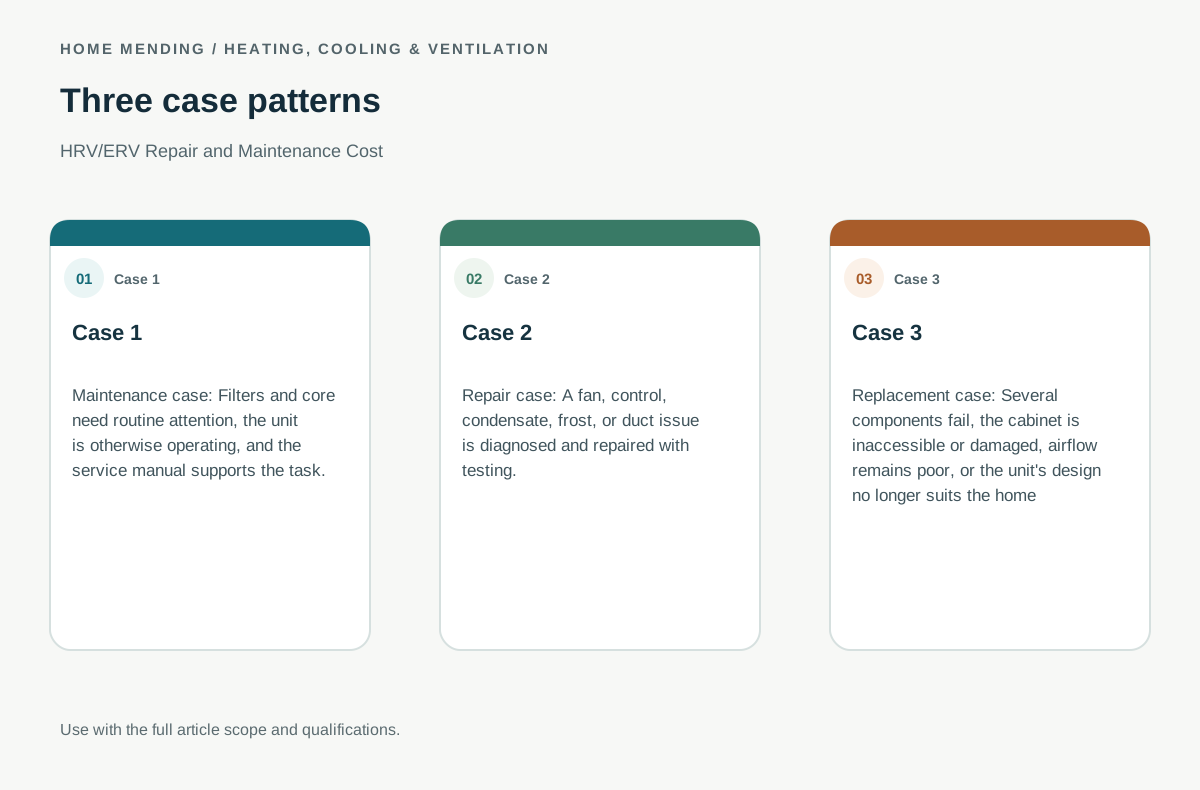
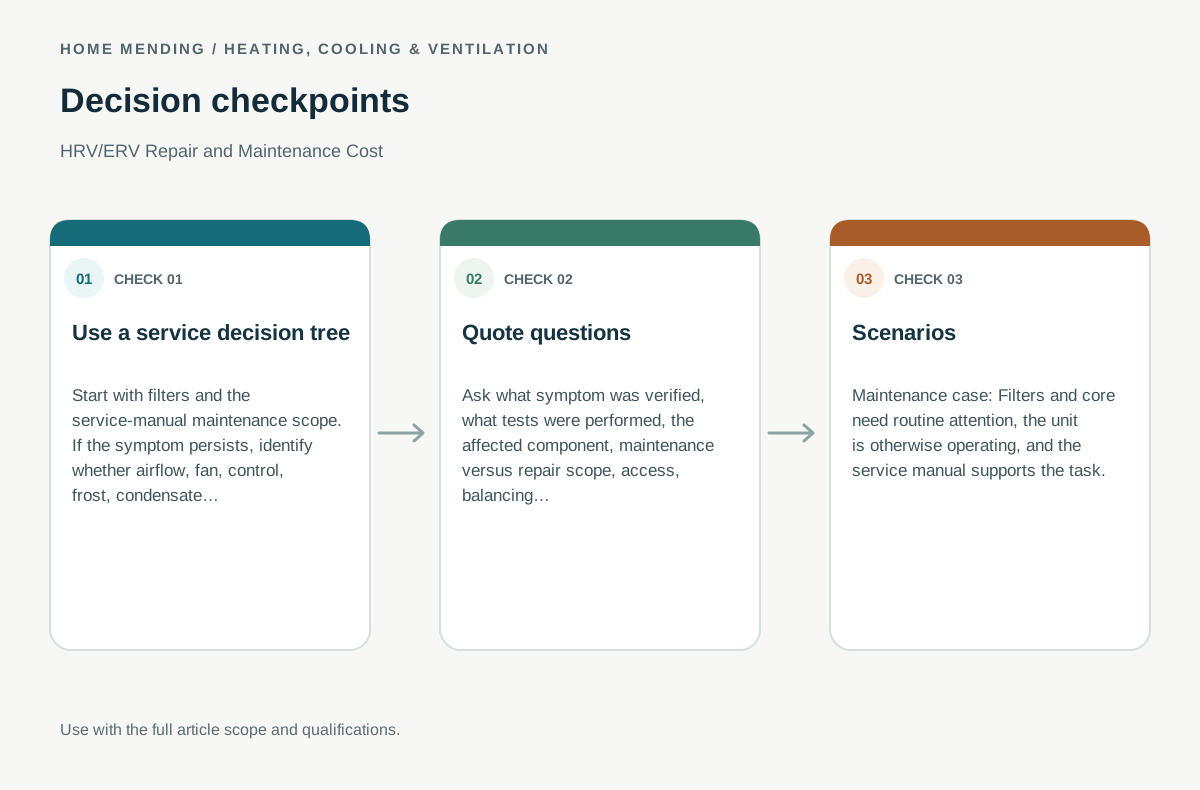
Maintenance case: Filters and core need routine attention, the unit is otherwise operating, and the service manual supports the task.
Repair case: A fan, control, condensate, frost, or duct issue is diagnosed and repaired with testing.
Replacement case: Several components fail, the cabinet is inaccessible or damaged, airflow remains poor, or the unit’s design no longer suits the home. Compare replacement with repair and include ducting, controls, balancing, access, and commissioning.
Quote questions
Ask what symptom was verified, what tests were performed, the affected component, maintenance versus repair scope, access, balancing, condensate, warranty, and remaining condition. If dryness or moisture is the complaint, ask whether ventilation rate, indoor moisture, and source conditions were evaluated; do not treat a symptom as proof that an HRV or ERV is inherently wrong.
Repair when the fault is bounded and the system is maintainable. Replace when repair risk and service cost are part of a broader decline. The right budget restores airflow and moisture behavior, not just a fan that turns on.
Diagnose the symptom before replacing a part
Noise can arise from a fan, mount, filter, duct, or imbalance. Frost can involve outdoor conditions, airflow, controls, defrost, or installation. Condensate can involve drainage, slope, blockage, or moisture conditions. Weak airflow can reflect filters, core, fan, dampers, ducts, or commissioning. Ask what evidence identifies the failed part and what alternative causes were considered.
Budget maintenance separately
Include filters, core cleaning, service-manual tasks, professional balancing, fan or control repairs, condensate, and access. A maintenance visit should not become an unpriced repair authorization. If the unit is difficult to access, include that recurring labor in the ownership comparison.
When replacement is rational
Replacement deserves a quote when several components fail, airflow remains poor, the unit is inaccessible or mismatched, or the original installation was never properly commissioned. Compare the cabinet, ducts, controls, exterior penetrations, balancing, commissioning, removal, and warranty rather than a fan-only price.
Use a service decision tree
Start with filters and the service-manual maintenance scope. If the symptom persists, identify whether airflow, fan, control, frost, condensate, duct, or commissioning is implicated. If a component is replaced, document the operating mode and test afterward. If several issues coexist, compare repair with replacement rather than authorizing unrelated parts in sequence.
Ask for a repair warranty, remaining-condition statement, access assumptions, and any effect on ventilation balance. The useful service cost is the amount required to restore the designed function, not merely the amount required to silence one symptom.
Make a maintenance visit decision-useful
Separate the visit fee, routine cleaning, diagnosis, parts, balancing, access, and follow-up testing. Ask whether a recommended part is available, whether the repair carries a meaningful warranty, and whether the technician found a condition that will shorten the part’s life. This protects against comparing a cheap component swap with a complete restoration of ventilation performance.
If the home has persistent dryness or moisture, compare the unit’s measured airflow and operating mode with the broader ventilation and building conditions. An HRV or ERV may be working as designed while the complaint comes from a source, enclosure, or control issue. Repair the verified cause; do not turn every symptom into a replacement recommendation.