Thermostat replacement can be a straightforward control swap or a compatibility project involving wiring, equipment stages, heat-pump modes, boiler controls, zoning, or proprietary communications. The device price is only one part of the quote: a lower-cost thermostat can require more installation work or fail to support the existing system.
Illustrative planning scenario (U.S. dollars, September 2026)
This is a worked scope example, not a market quote: assume a $250 thermostat, $250 for installation and setup, and $300 for an adapter, transformer, or new control wire. The illustrative total is $800 before wall repair. It represents a case with added compatibility work, not a typical or guaranteed price. Confirm the equipment, wiring, and testing scope before comparing it with a like-for-like replacement.
Published installation ranges
Angi’s September 2026 U.S. guide reports a $114–$265 professional installation range and a $185 national average based on 2,397 verified Angi Pro projects. HomeStars’ August 2026 Canadian guide gives a broader CAD $200–$500 range for thermostat installation. These are separate source-specific planning references, not matching surveys or guaranteed local quotes; their methods and included work are not established as equivalent. Do not convert one range into the other. A straightforward compatible swap may differ substantially from work that needs new cable, an adapter, wall repair, multiple controls, or setup for complex equipment. The Angi thermostat guide and HomeStars Canada guide describe their own cost context. Use a local quote to confirm whether the device, labor, wiring, setup, testing, tax, and disposal are included.
If a bid sits outside a published guide range, first compare the work descriptions. A second thermostat, a control-wire run through finished walls, zone setup, or troubleshooting can make two totals look far apart even when each contractor priced the stated scope. Ask for a line item or written explanation of the difference and identify any trip charge, service minimum, or return visit. The market guide helps frame a conversation; it cannot tell you whether a specific system is compatible or what a local installer should charge.
What the installation quote should cover
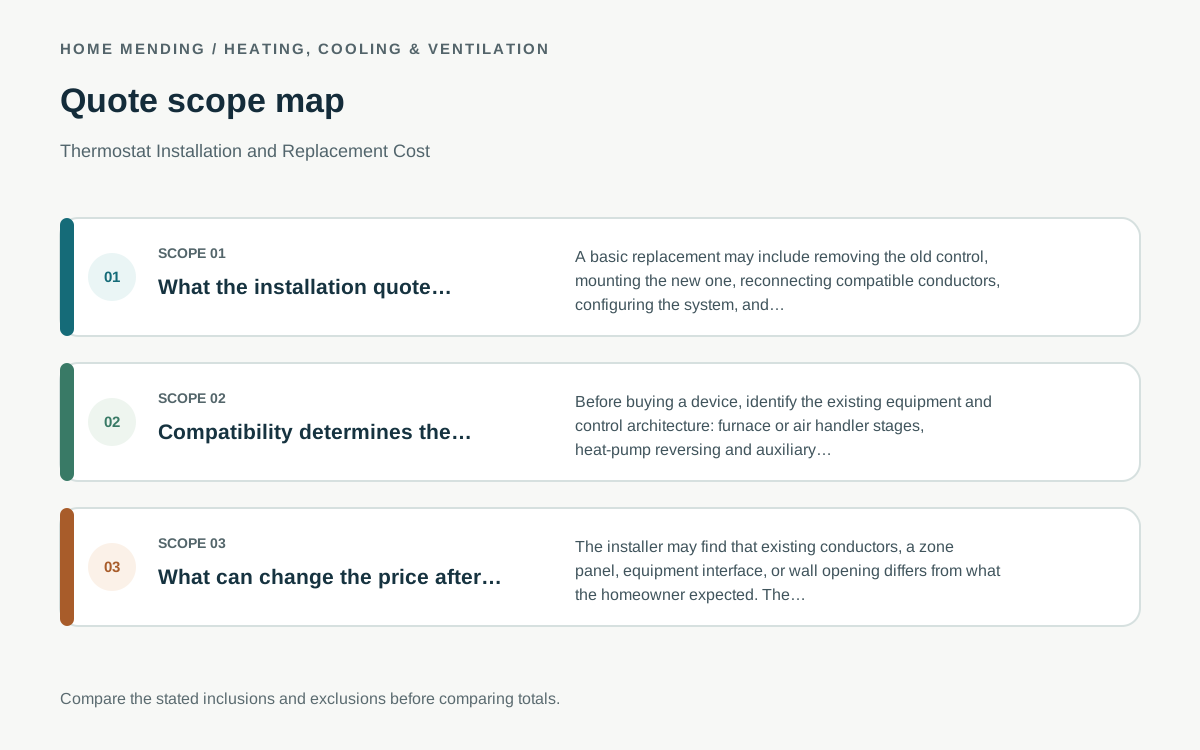
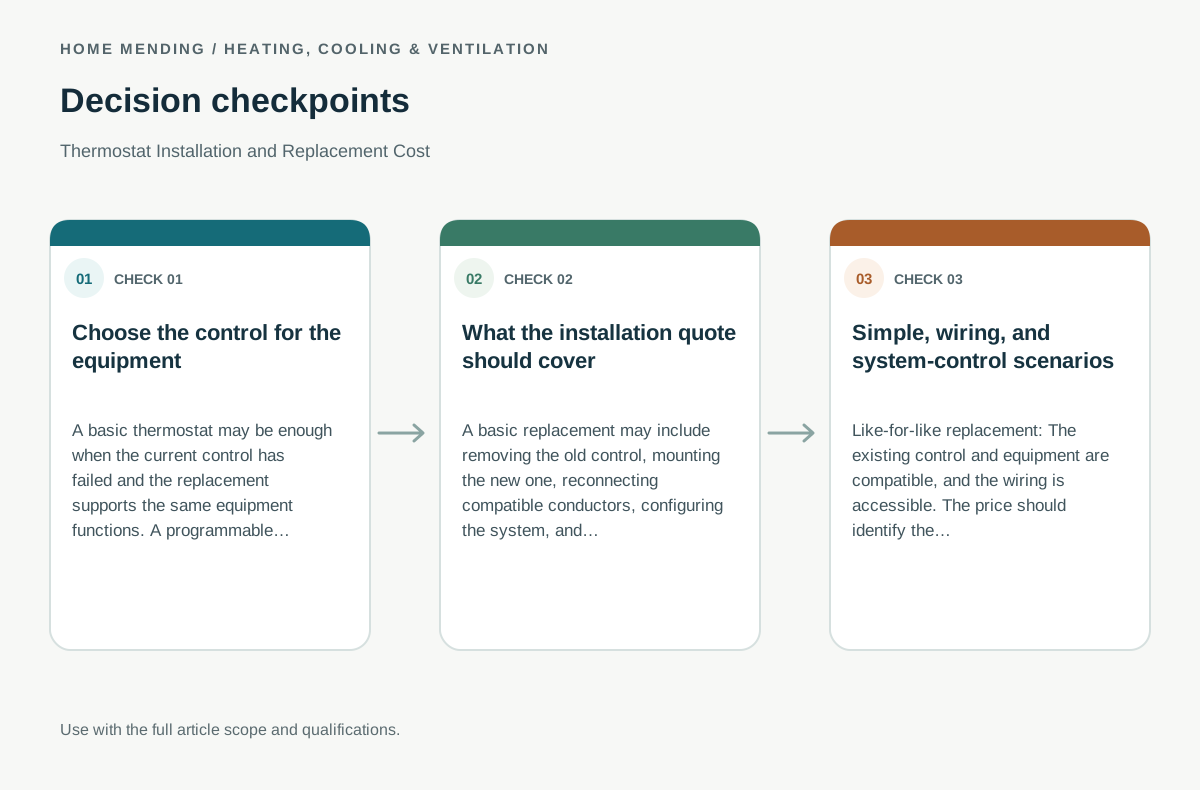
A basic replacement may include removing the old control, mounting the new one, reconnecting compatible conductors, configuring the system, and testing operation. The scope can grow when the wiring route is inaccessible, a common-wire solution is needed, the wall requires repair, or the control must work with multiple stages, a heat pump, boiler, zone panel, or communicating equipment.
Ask the installer to separate the thermostat model, labor, new cable or adapter, transformer or control changes, wall repair, setup, testing, disposal, and warranty. A quote that says only “thermostat installed” does not tell you whether the price assumes existing wiring will work or whether a difficult control interface is excluded.
Compatibility determines the work
Before buying a device, identify the existing equipment and control architecture: furnace or air handler stages, heat-pump reversing and auxiliary modes, boiler relay, zone panel, and any communicating controls. Ordinary low-voltage thermostats are also a different class of work from line-voltage controls. A product labeled for HVAC use is not automatically compatible with every system.
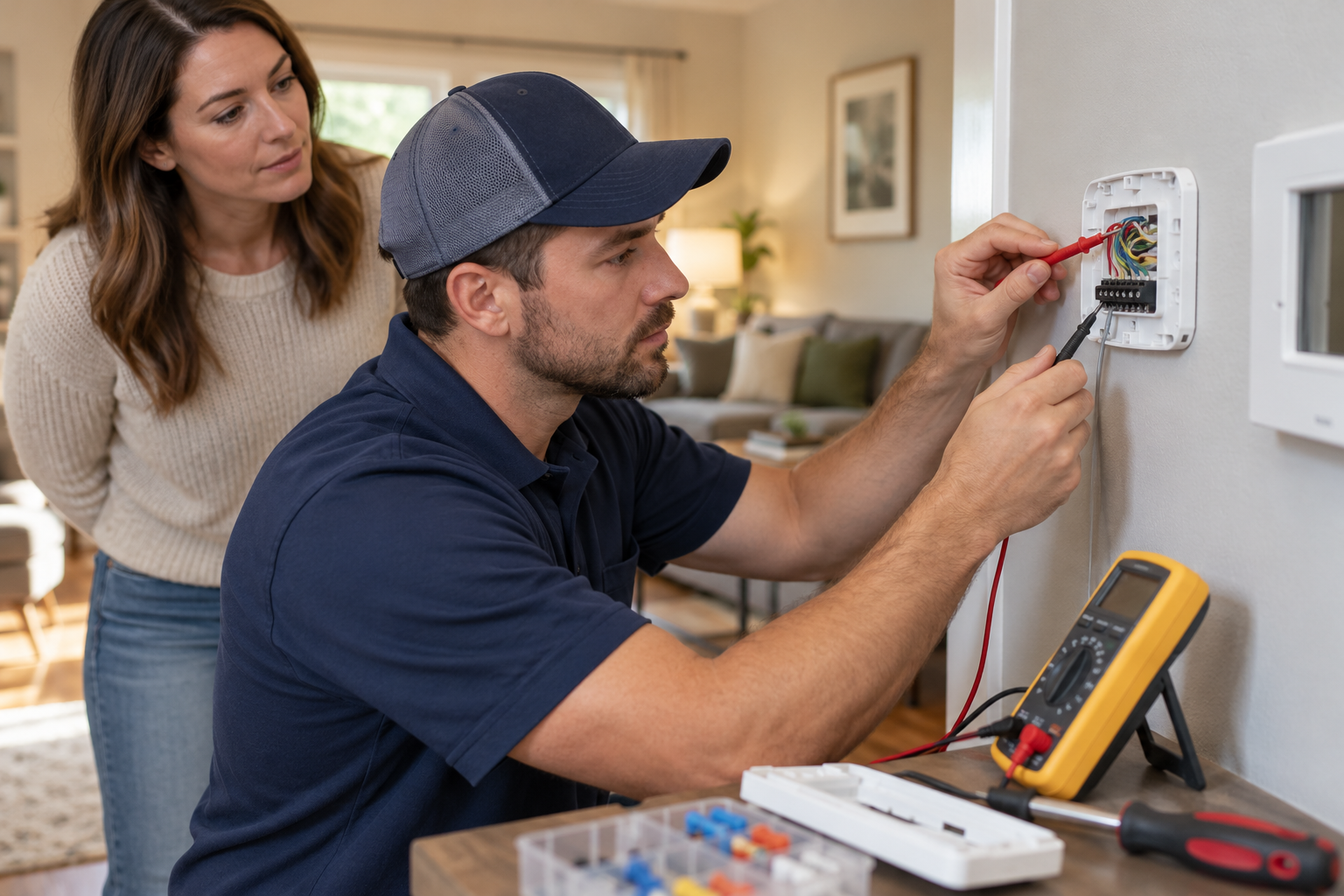
For a heat pump, the selected control must support the modes the system uses. A boiler or zoned setup may depend on a particular relay or sequencing. A communicating system may need its matched control to retain equipment functions. Have a qualified installer verify the proposed model and any required wiring or interface before purchase; returning the device will not recover labor or wall work caused by a mismatch.
The amount of installation work can matter more than the display. A like-for-like swap with accessible wiring is different from fishing a new cable through finished walls, adding an adapter or transformer, or connecting a zone panel. Ask for the expected scope and the price or approval process if the existing wire does not support the selected control.
Choose the control for the equipment
A basic thermostat may be enough when the current control has failed and the replacement supports the same equipment functions. A programmable model adds scheduled settings; a connected smart control may add remote access, sensors, or utility interaction. Those categories describe features, not compatibility. Start with the furnace, heat pump, boiler, stages, and zone arrangement, then decide which functions are worth paying to install.
Line-voltage electric heat is an important boundary: its control and wiring are not the same as ordinary low-voltage furnace or heat-pump controls. If you are not sure which system is present, identify the equipment model or have the installer inspect it before ordering a device. A generic thermostat label does not establish that the control can safely or correctly operate every heating system.
What can change the price after the device is selected
The installer may find that existing conductors, a zone panel, equipment interface, or wall opening differs from what the homeowner expected. The quote should state whether it includes only the planned swap or also includes a defined allowance for new wire, an adapter, transformer, sensor, or repair. If the scope cannot be known until the old control is removed, ask the contractor to pause for approval before adding work.
Also separate work that belongs to a larger HVAC problem. A failed wall control may justify replacement, but a system that short-cycles or heats rooms unevenly may need diagnosis of equipment, ducts, or airflow. A quote for a thermostat should not silently absorb an unrelated HVAC repair, and a thermostat price should not be used as a substitute for the diagnosis that the system needs.
Test the system before sign-off
The quote should specify which operating modes will be checked after installation. For applicable heat pumps, that can include heating, cooling, changeover, and auxiliary operation. For boilers, staged equipment, or zoning, the installer should verify calls and sequencing for the functions being replaced. The homeowner should receive a usable configuration and know how to operate it if an app or internet connection is unavailable.
Testing is part of the control installation, not proof that the wider HVAC system is sized correctly or that its ducts are balanced. If the thermostat triggers a larger equipment or distribution change, keep that scope separate in the quote. Ask what is included if a mode fails or the existing wiring is incompatible.
Simple, wiring, and system-control scenarios
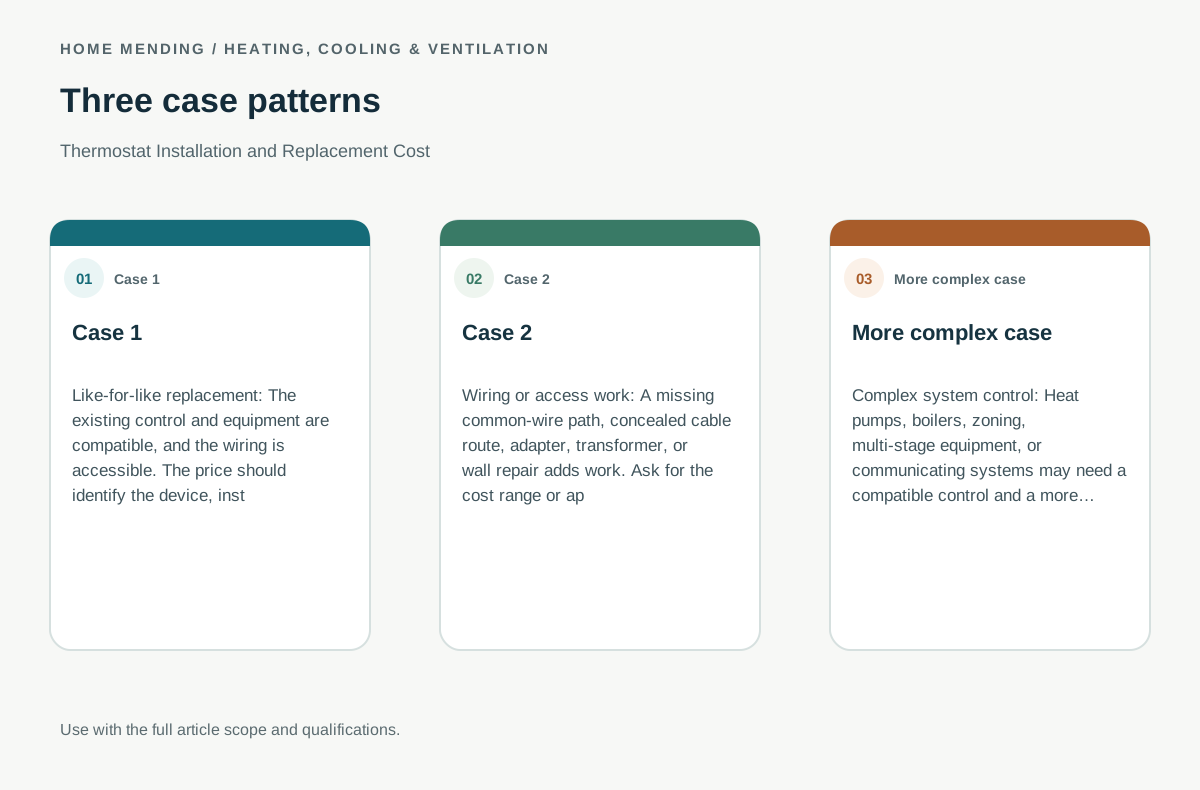
Like-for-like replacement: The existing control and equipment are compatible, and the wiring is accessible. The price should identify the device, installation, configuration, mode test, disposal, and warranty. Ask whether the contractor will retain the existing schedule or restore settings after the new control is installed.
Wiring or access work: A missing common-wire path, concealed cable route, adapter, transformer, or wall repair adds work. Ask for the cost range or approval point before the installer proceeds. Confirm whether the work is low-voltage control wiring or a different electrical task, and who is qualified and responsible for it.
Complex system control: Heat pumps, boilers, zoning, multi-stage equipment, or communicating systems may need a compatible control and a more complete test. Price the required interface and operating modes rather than comparing only thermostat models. If the system uses several controls or zones, ask whether the bid includes each affected thermostat and the time needed to confirm that the whole sequence responds as intended.
Replacement versus a smart upgrade
If the existing thermostat is failed or incompatible, the decision is to restore suitable control. Choosing a connected thermostat with remote access, occupancy features, or more scheduling options is a separate value decision. Compare its additional device, wiring, setup, subscription, and support costs with features the household will actually use. See smart thermostat cost for that upgrade decision.
When the thermostat may not be the problem
Uneven rooms, short cycling, high bills, or weak heating can result from ducts, airflow, equipment condition or sizing, or the building envelope. A new control may change the schedule without addressing the cause. If the complaint is broader than a dead or unsuitable thermostat, ask what diagnosis supports the proposed control replacement and whether other system checks are included.
Compare complete quotes
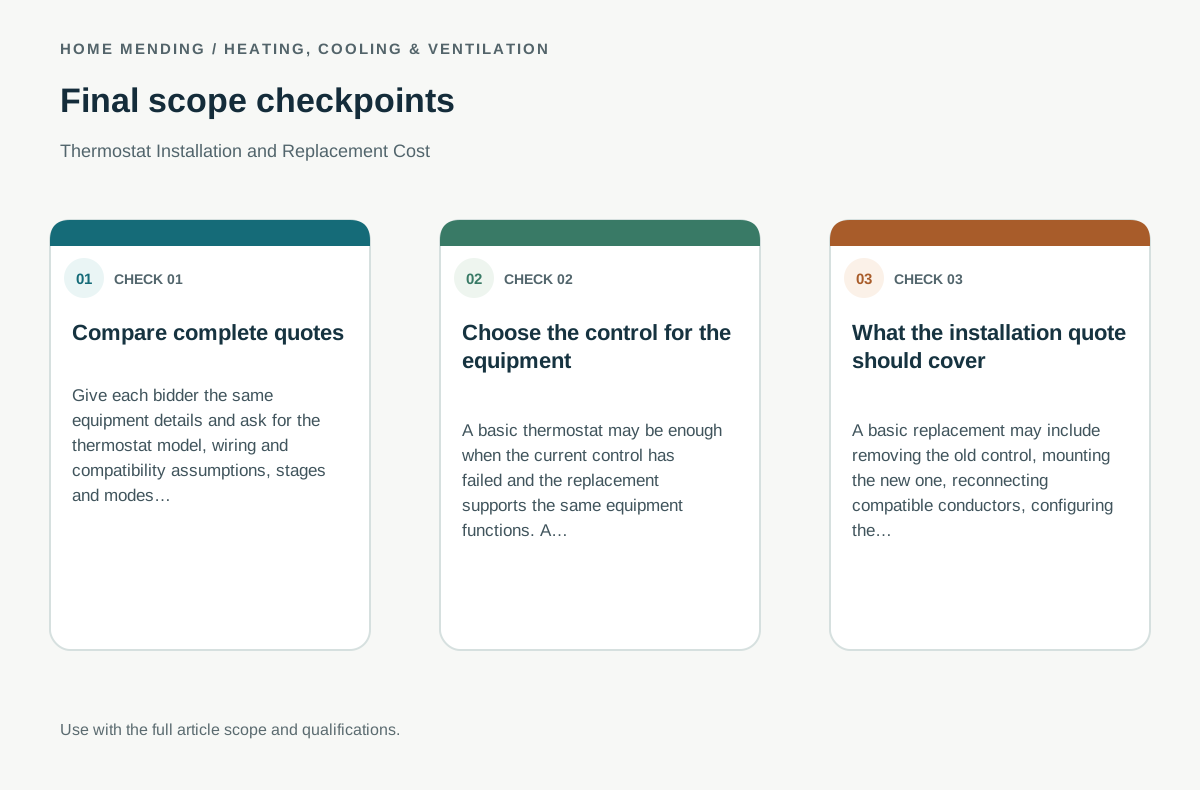
Give each bidder the same equipment details and ask for the thermostat model, wiring and compatibility assumptions, stages and modes to be tested, setup, wall repair, disposal, warranty, and exclusions. Separate a like-for-like replacement from added wiring or system-control changes. Ask who supplies the device, whether returns are allowed if it proves incompatible, whether a second visit is included, and what warranty covers the control versus installation labor.
If one estimate assumes existing wiring and another includes a new cable or adapter, compare those as different scopes. If a bidder includes heat-pump mode testing or zone setup and another includes only a basic heat call, the totals are not directly comparable. Request an alternate price for the additional work when it is optional, and keep any equipment repair as a separate line item. Choose the simplest compatible control that meets the household’s needs; pay for additional complexity when its functions and integration solve a real control problem.