
A smart thermostat is an upgrade from an existing control, not simply another installation choice. Its value may come from remote access, alerts, schedules, sensors, or a change in household behavior; those benefits are separate from any energy savings. The installed premium and compatibility with the HVAC system should be clear before the device is purchased.
Illustrative planning scenario (U.S. dollars, September 2026)
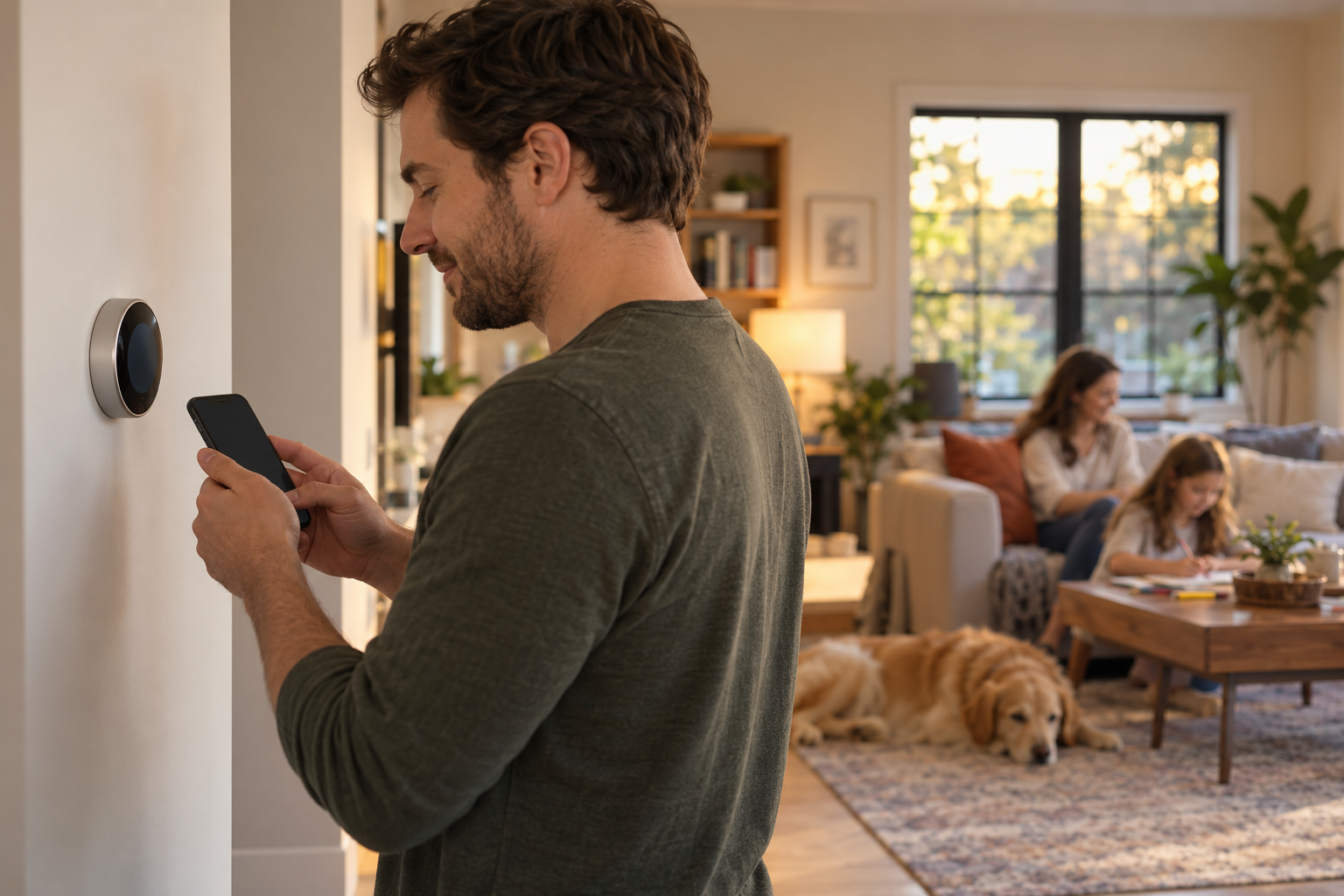
This is a transparent ownership example, not a savings promise: compare a $250 basic thermostat with a $500 smart model and $250 of installation or wiring. The smart upgrade has a $500 installed premium; over five years that is $100 per year before subscriptions, energy effects, alerts, or the value of remote control.
What the upgrade can buy
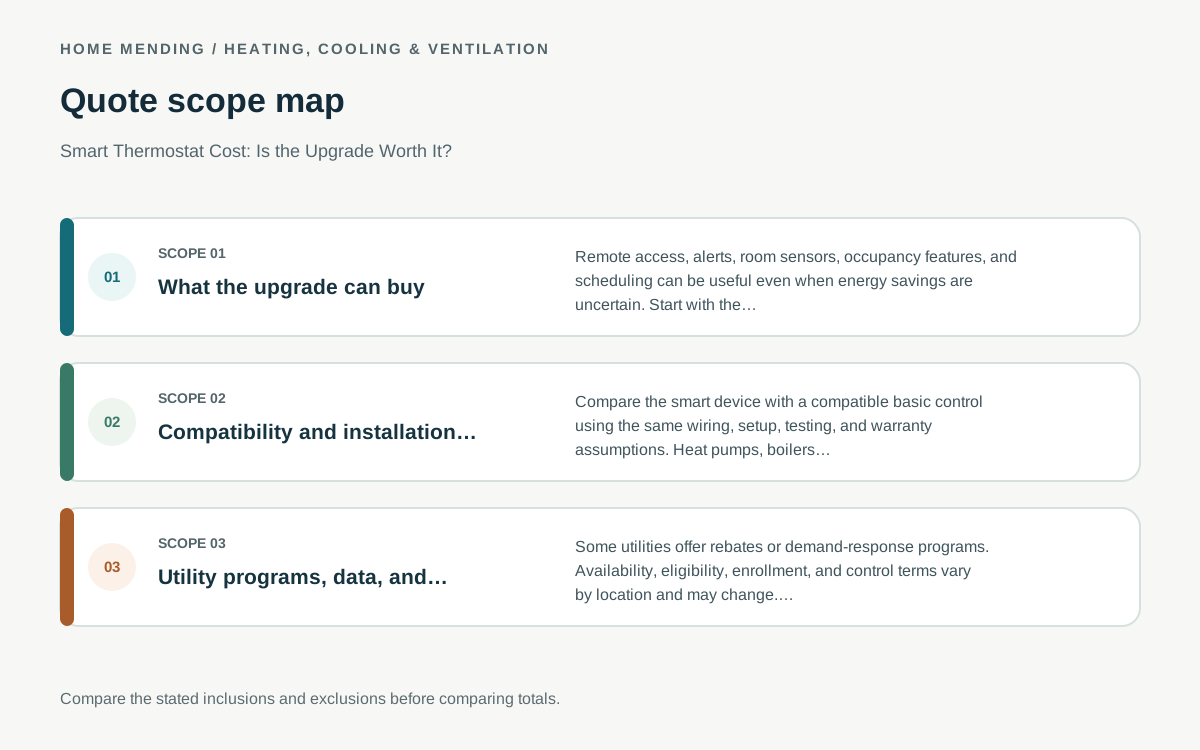
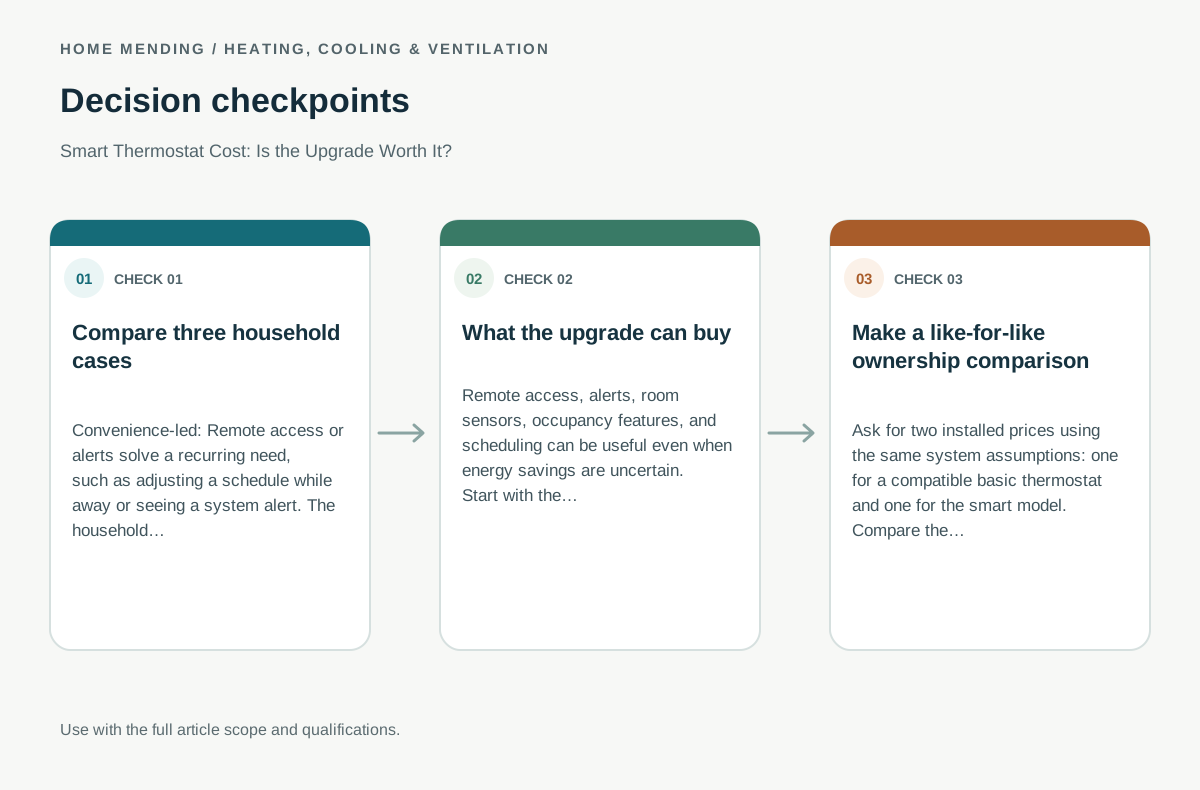
Remote access, alerts, room sensors, occupancy features, and scheduling can be useful even when energy savings are uncertain. Start with the household’s unmet need. If occupants often leave the system at settings they would change from elsewhere, remote control may help. If an effective schedule is already in place and nobody wants app access, convenience may be limited. A smart device is not automatically more efficient just because it connects to an app.
Separate three possible benefits in the decision: convenience, improved control of rooms or schedules, and reduced energy use. Name which one matters and what behavior or system capability would produce it. This prevents a feature list or a generic savings claim from standing in for a household-specific value case.
Before comparing models, note the control problem the household actually experiences for a typical week: missed schedule changes, a need to adjust settings away from home, or one room that matters at certain hours. Record how often it happens and who would use the feature that addresses it. This small baseline helps distinguish a recurring need from a feature that sounds appealing during shopping. If several occupants share the thermostat, confirm that the normal controls remain understandable to everyone who needs them and that app access can be managed when household needs change.
Compatibility and installation cost
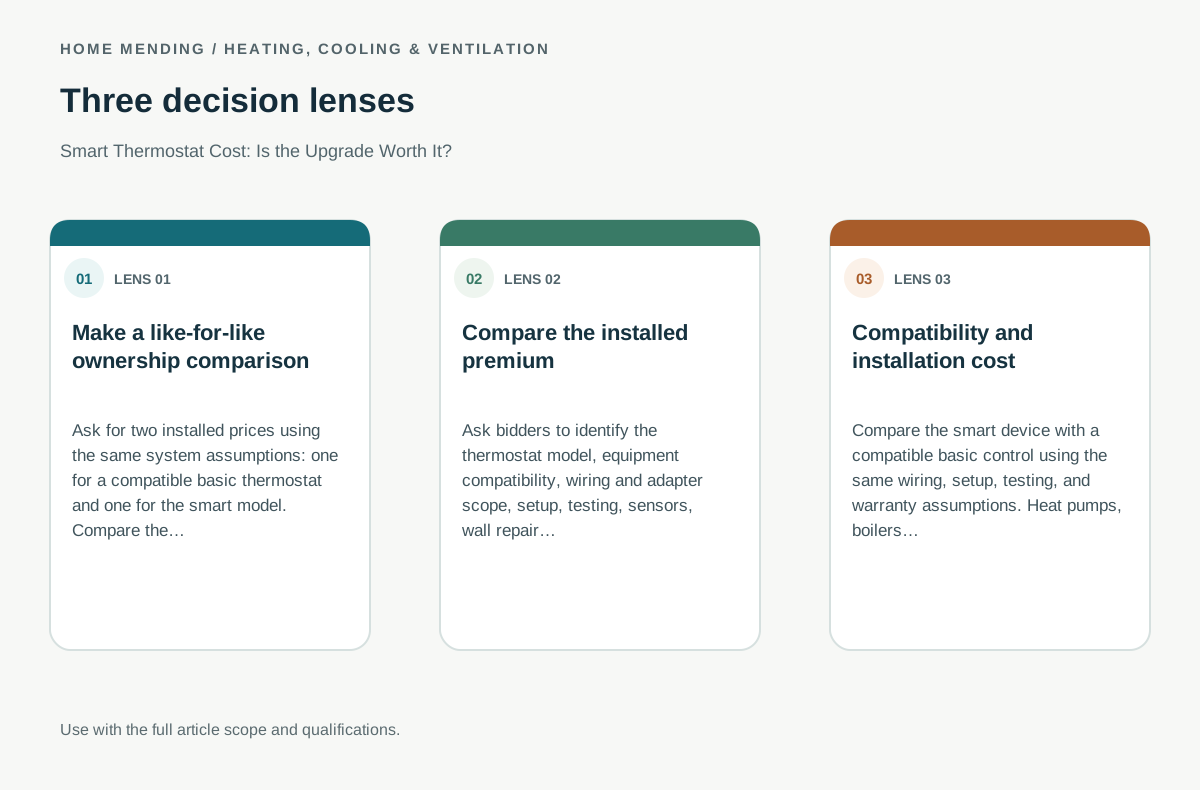
Compare the smart device with a compatible basic control using the same wiring, setup, testing, and warranty assumptions. Heat pumps, boilers, multi-stage systems, zoning panels, and communicating equipment may require particular control logic or interfaces. Check the existing equipment, stages, wiring, and relevant operating modes before purchase. If an adapter, transformer, sensor, new cable, or control-panel change is needed, include it in the installed premium.
For heat pumps and other complex equipment, the installer should confirm that the selected thermostat preserves the system’s required modes and sequence. A low device price is poor value if the control is incompatible, loses important functions, or requires extra labor after purchase. For a full replacement-cost and wiring discussion, see thermostat installation and replacement cost.
Estimate energy value conservatively
Any energy benefit depends on the old schedule, occupancy, climate, setpoint changes, HVAC response, and local energy rates. Estimate only the behavior change the household realistically expects. If occupants already manage settings effectively, the energy opportunity may be small even when remote access remains valuable. App reports or product savings estimates are inputs to a comparison, not a guarantee for this home.
Use a simple scenario: compare the expected installed premium with a range of plausible household use rather than assuming the thermostat causes a fixed percentage reduction. If the result changes substantially with a small change in use or energy rates, treat savings as uncertain and make the decision on convenience or control instead. Keep any modeled outcome separate from the equipment’s rated efficiency.
ENERGY STAR certification provides product-level criteria and does not guarantee a particular household’s savings. Its current smart-thermostat criteria include basic operation without service-provider connectivity, schedules, and energy-use feedback; the program assesses energy performance using data across participating homes. Your old settings, occupancy, climate, equipment, and actual response still determine whether the upgrade changes energy use at your address.
One way to check a savings estimate is to translate it into years to recover the premium. With the $500 example above, an assumed $50 per year would take ten years to equal the premium; $100 per year would take five years; and $150 per year would take about three years and four months. This is only arithmetic using assumed savings, before subscriptions, financing, maintenance, or a future device replacement. It does not show that a thermostat will deliver any of those amounts.
Make a like-for-like ownership comparison
Ask for two installed prices using the same system assumptions: one for a compatible basic thermostat and one for the smart model. Compare the difference after including any adapter, wiring, sensors, setup, and testing required only by the smart option. Subtract a rebate only after confirming the exact device, address, and enrollment conditions qualify. Then list any subscription or replacement sensor expense over the period you expect to own the control. A lower device price can be offset by extra installation or recurring charges.
Keep the cash comparison separate from the convenience case. Write down which household task the smart feature would change, how often it comes up, and who would use it. Remote access may be useful even when it does not pay back as energy savings. Conversely, if the feature will rarely be opened or the household already follows a schedule it likes, the price premium may buy little practical value. This makes the decision legible without assigning an artificial dollar amount to comfort or peace of mind.
If energy savings matter to the decision, save utility usage and billing records before changing controls and review them after a comparable heating or cooling period. Look at energy use as well as bill totals, since rate changes can alter the bill without changing consumption. Weather, occupancy, equipment work, and other home changes also affect use, so a before-and-after difference cannot by itself prove the thermostat caused it. Treat the records as a household check against the original estimate, not a product guarantee or a controlled test.
Utility programs, data, and ongoing costs
Some utilities offer rebates or demand-response programs. Availability, eligibility, enrollment, and control terms vary by location and may change. Verify the current program for the actual address and device before subtracting an incentive from the project budget. Do not describe a local offer as a national benefit.
Over the ownership period, consider subscriptions, connectivity, data practices, app support, sensor batteries, replacement devices, and whether a future HVAC system will remain compatible. Ask whether the thermostat can still operate locally if the internet or app is unavailable. These costs and limits belong in the ownership comparison, separate from energy savings.
Room sensors are most useful to evaluate when a particular occupied room is uncomfortable at predictable times and the household can name how selecting that room would change control. Check which rooms and schedules the device can use, whether sensors are bundled or sold separately, and how their signals affect the system’s call. A sensor can give the thermostat another temperature reading; it does not add a heating or cooling zone, repair duct imbalance, or guarantee equal temperatures in every room. If several spaces need different temperatures at the same time, ask whether the issue calls for system diagnosis or a separately scoped zoning project before paying for a collection of sensors.
Compare three household cases
Convenience-led: Remote access or alerts solve a recurring need, such as adjusting a schedule while away or seeing a system alert. The household may value the upgrade even if energy use does not change enough to recover the premium. State that as a convenience benefit rather than presenting it as energy savings.
Behavior-led: Occupants expect to use schedules or sensors to change settings they otherwise leave in place. Model the expected behavior and local energy cost; do not assume a product guarantee. If occupants do not plan to change how the system is run, the device may not deliver the behavior change needed by the cost model.
Feature-led without a control need: The house already follows an effective schedule, occupants do not need remote access, or the equipment cannot use the proposed features. A compatible basic thermostat may provide better value, especially if the smart model needs extra wiring or a paid service that the household does not want.
When a smart thermostat is not the fix
Uneven rooms, short cycling, high bills, or poor heating can come from ducts, airflow, equipment condition or sizing, or the building envelope. A connected display will not correct those causes. If comfort is the main concern, identify the underlying system issue before treating a thermostat upgrade as an energy retrofit.
Compare the installed premium
Ask bidders to identify the thermostat model, equipment compatibility, wiring and adapter scope, setup, testing, sensors, wall repair, subscriptions, privacy terms, warranty, and exclusions. Compare the smart option with a suitable basic control on the same installation assumptions. The upgrade is worth paying for when the household can name a real convenience, control, or behavior benefit and the equipment can safely use the selected features.