
Illustrative planning scenario (U.S. dollars, September 2026)
This is a transparent planning example, not a market quote: assume $1,200 for two dampers, $900 for a zoning control, $1,000 for wiring and installation, and $600 for commissioning. The illustrative total is $3,700 before duct corrections; confirm equipment compatibility and the comfort problem the zones are meant to solve.

Set a measurable comfort objective
State which rooms, schedules, or exposures justify separate control and what condition should improve. If a room is uncomfortable because of leakage, insulation, windows, return-air shortage, or equipment capacity, zoning may mask the symptom or move it elsewhere. Ask for that diagnosis before accepting the control package.
Compare damper and control work with duct correction, a ductless head, or separate equipment serving the same area. Include access, wiring, balancing, commissioning, future actuators, sensors, panel compatibility, and what happens when one small zone calls. A zoning price is complete only when its airflow consequences are addressed.
Treat airflow as the compatibility test
Ask how the system behaves when one zone calls, several call, and dampers close. The proposal should address returns, blower limits, bypass or variable-airflow strategy where applicable, damper access, controls, and commissioning. Zoning hardware cannot create capacity or correct a room whose discomfort comes from insulation, windows, leakage, or an undersized branch.
Compare the installed zoning scope with duct correction, a ductless head, or a separate system serving the same rooms. Include damper and actuator service, sensors, panel replacement, future equipment compatibility, and the cost of accessing concealed components. The control premium is worthwhile only when the use pattern and air path support it.
Establish the alternative before buying zones
Document the recurring comfort pattern, room schedules, solar or floor differences, and existing duct condition. If the problem changes with weather or follows a poorly insulated room, an envelope or distribution correction may offer more value than dampers and sensors. If one area truly needs separate control, compare zoning with a ductless head or independent equipment serving that same area.
Price the number of zones, damper and actuator access, control panel, thermostats or sensors, wiring, return-air strategy, bypass or variable-airflow assumptions, balancing, commissioning, and future service. A small control package can become a larger retrofit when the ducts are concealed or the equipment cannot operate properly with one zone calling.
Zoning has more value when floors, rooms, schedules, or solar exposures differ predictably. It has less value when occupants use the home together or when discomfort comes from insulation, windows, air leakage, or capacity. Ask what happens when one small zone calls, several zones call, and dampers close.
Compare zoning with duct correction, a ductless head, or separate equipment only when those alternatives cover the same rooms. Include controls, sensors, wiring, balancing, access, commissioning, maintenance, and future replacement.
An HVAC zoning project uses dampers, a zone-control panel, thermostats or sensors, and compatible equipment to serve different areas separately. The active evidence does not support a reliable universal installed range. Cost depends on the number of zones, duct layout, access, dampers, controls, equipment, airflow strategy, commissioning, and whether a mini-split or separate system is the better alternative.
What zoning changes
Zoning changes control and air distribution; it does not create heating or cooling capacity that the equipment and ducts do not have. A multi-story home may benefit from separate control, but an undersized return, poorly sealed duct, or envelope-driven room load may need correction first. ENERGY STAR identifies airflow and duct evaluation as whole-system concerns.
Cost layers
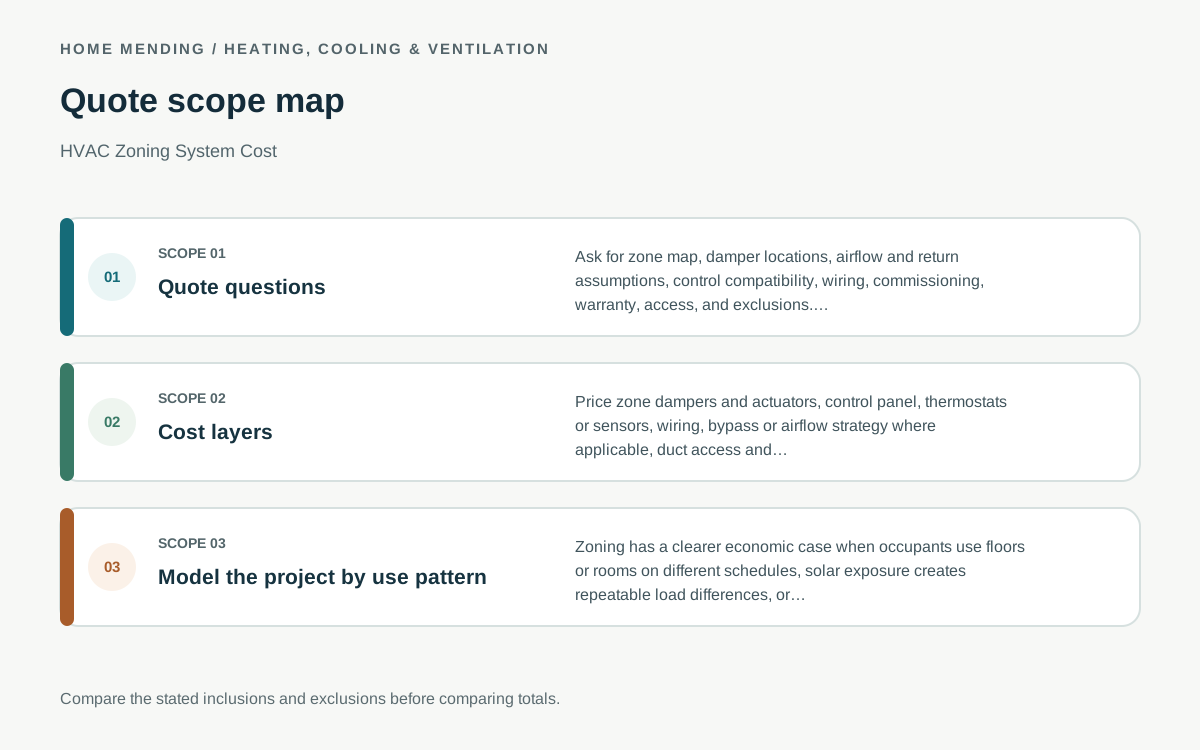
Price zone dampers and actuators, control panel, thermostats or sensors, wiring, bypass or airflow strategy where applicable, duct access and modification, equipment compatibility, commissioning, and any balancing. A quote should identify which zones are served and what happens when only one zone calls.
Controls are product-specific. Do not assume a zoning panel works with every furnace, heat pump, boiler, communicating control, or blower configuration.
Scenarios
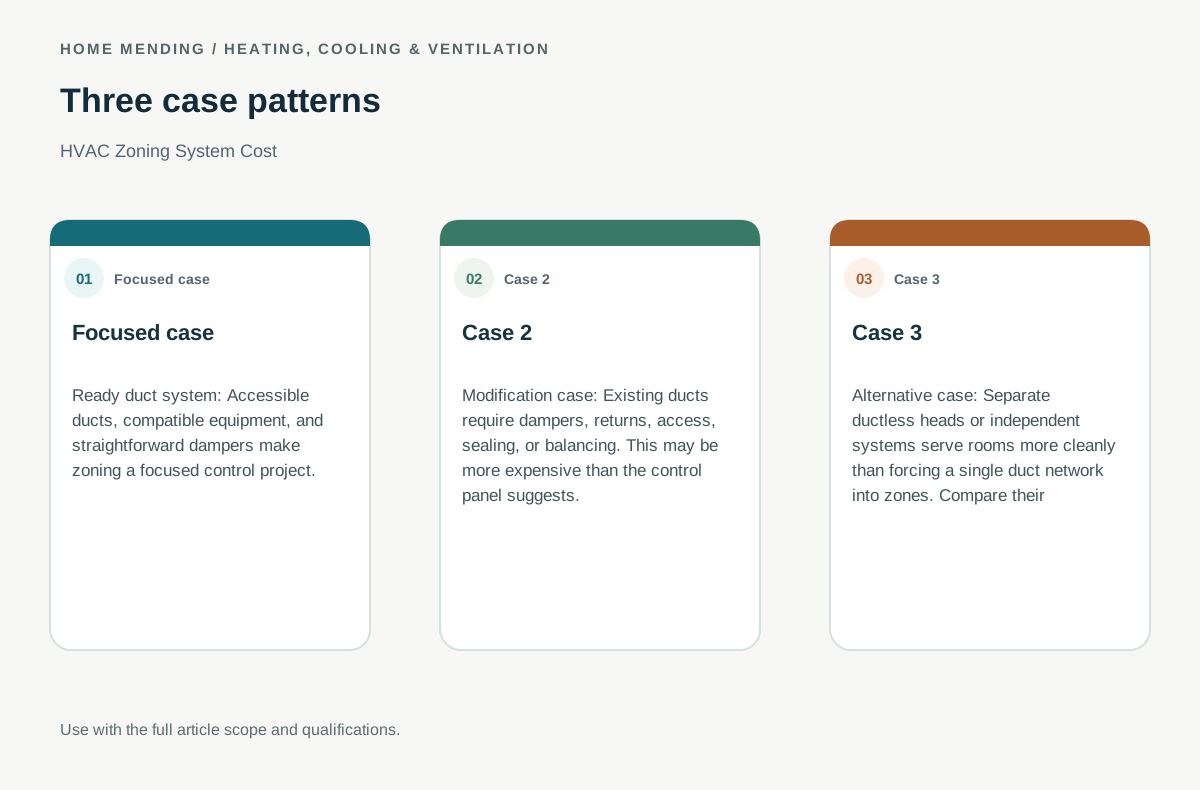
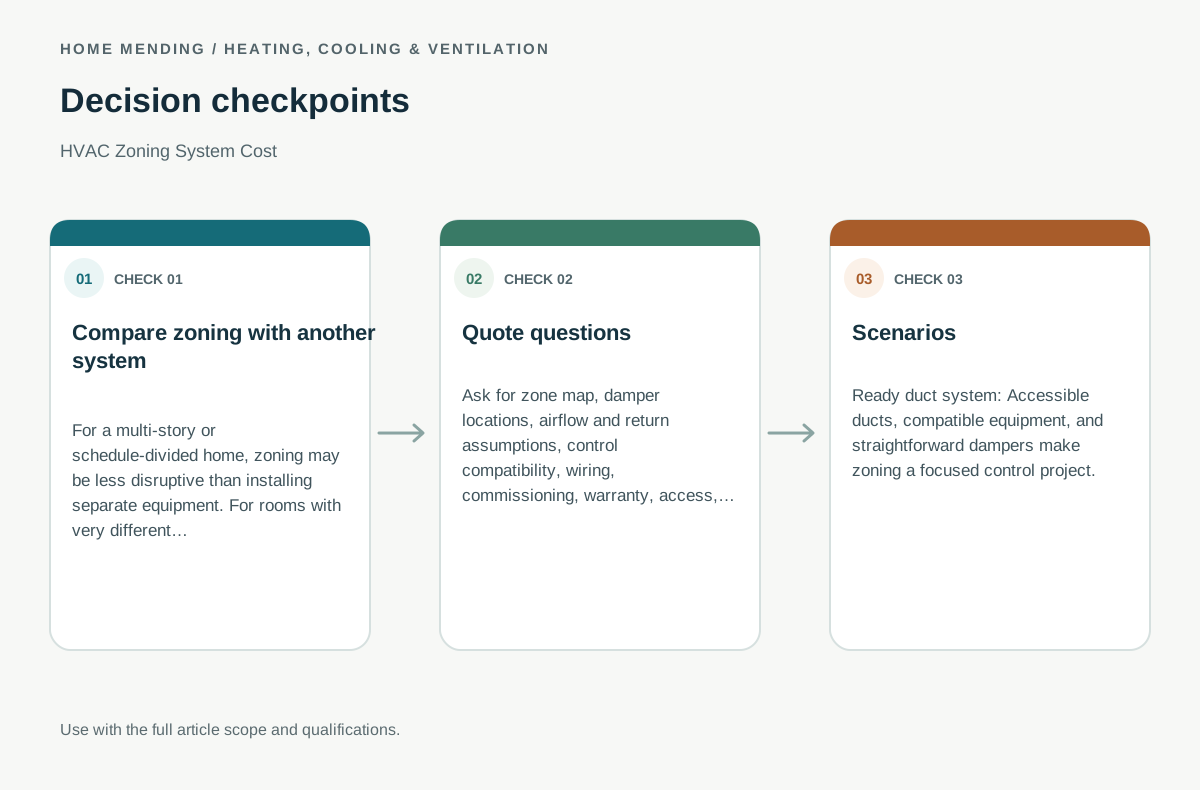
Ready duct system: Accessible ducts, compatible equipment, and straightforward dampers make zoning a focused control project.
Modification case: Existing ducts require dampers, returns, access, sealing, or balancing. This may be more expensive than the control panel suggests.
Alternative case: Separate ductless heads or independent systems serve rooms more cleanly than forcing a single duct network into zones. Compare their installation, appearance, maintenance, redundancy, and capacity.
Is zoning the economic fix?
Zoning is stronger when different areas have predictable schedules or exposures and the distribution can deliver appropriate airflow. It is weaker when comfort differences come from insulation, windows, air leakage, poor equipment sizing, or inadequate ducts. A diagnostic and balancing scope may be a better first purchase.
Quote questions
Ask for zone map, damper locations, airflow and return assumptions, control compatibility, wiring, commissioning, warranty, access, and exclusions. Request the alternative cost for duct correction, a mini-split, or separate equipment only when those are genuine choices.
Do not choose zoning because it is a familiar add-on. Choose it when the building’s use pattern and compatible air-distribution system make separate control worth the installation and future service cost.
Check the airflow consequence
Ask how the equipment behaves when one zone calls, several zones call, and dampers close. The proposal should address return air, bypass or variable-airflow strategy where applicable, blower limits, and commissioning. These are compatibility questions for the actual equipment, not universal zoning rules.
Compare zoning with another system
For a multi-story or schedule-divided home, zoning may be less disruptive than installing separate equipment. For rooms with very different loads, poor ducts, or difficult access, ductless heads or a dedicated system may be more coherent. Compare equipment, electrical, line or duct routes, controls, maintenance, redundancy, and future replacement.
Define success
Specify the rooms and comfort problem the project is meant to address. If the cause is insulation, windows, air leakage, or capacity, a control panel will not fix it. A good quote says which discomfort is expected to improve and which conditions remain outside the zoning scope.
Compare zoning with its alternatives
For predictable schedules and a sound duct system, zoning may be a modest control and damper project. For distinct room loads or poor ducts, ductless heads or separate equipment may be more coherent. For an envelope-driven problem, insulation, air sealing, window, or shading work may be the better first cost.
Ask for the zone map, damper locations, return-air plan, equipment limits, control sequence, balancing, access, testing, and warranty. The price should show whether the system can operate properly when one zone calls rather than assume that closed dampers are harmless.
Model the project by use pattern
Zoning has a clearer economic case when occupants use floors or rooms on different schedules, solar exposure creates repeatable load differences, or a home has areas that can be closed without sacrificing comfort elsewhere. Its case is weaker when everyone occupies the same rooms at the same time or when the complaint changes with weather because the envelope is the dominant cause.
Compare the installed zoning premium with the cost of correcting ducts or adding a separate system. Include future damper, actuator, sensor, panel, and control repairs. If the equipment is near replacement, verify that the proposed zoning hardware will remain compatible; otherwise the homeowner may pay for controls twice. The decision is successful only when the zones improve usable comfort without creating new airflow or service problems.