
Professional air balancing measures and adjusts airflow so the distribution system serves rooms more consistently. It may include registers, dampers, blower settings, static-pressure observations, return air, and duct restrictions. The active evidence does not establish a reliable universal price or test threshold, so compare the measurement and correction scope rather than buying a generic “balance” visit.
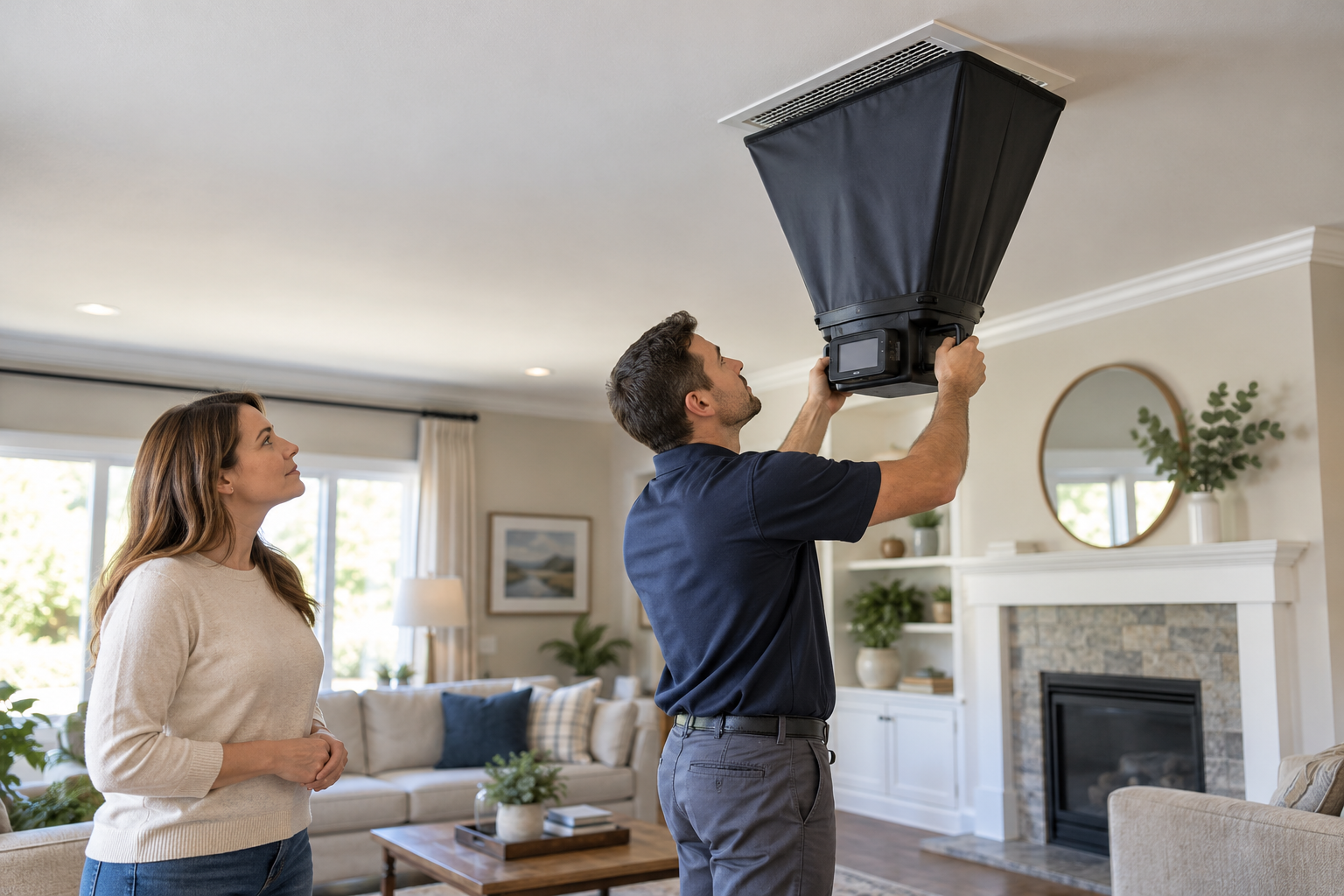
Illustrative planning scenario (U.S. dollars, September 2026)
This is a scope-bounded example, not a market average: assume $350 for an airflow assessment, $500 for balancing and register adjustments, and $650 for a follow-up measurement report. The illustrative total is $1,500 before duct repair; insist on measured before-and-after conditions rather than a promise of comfort.
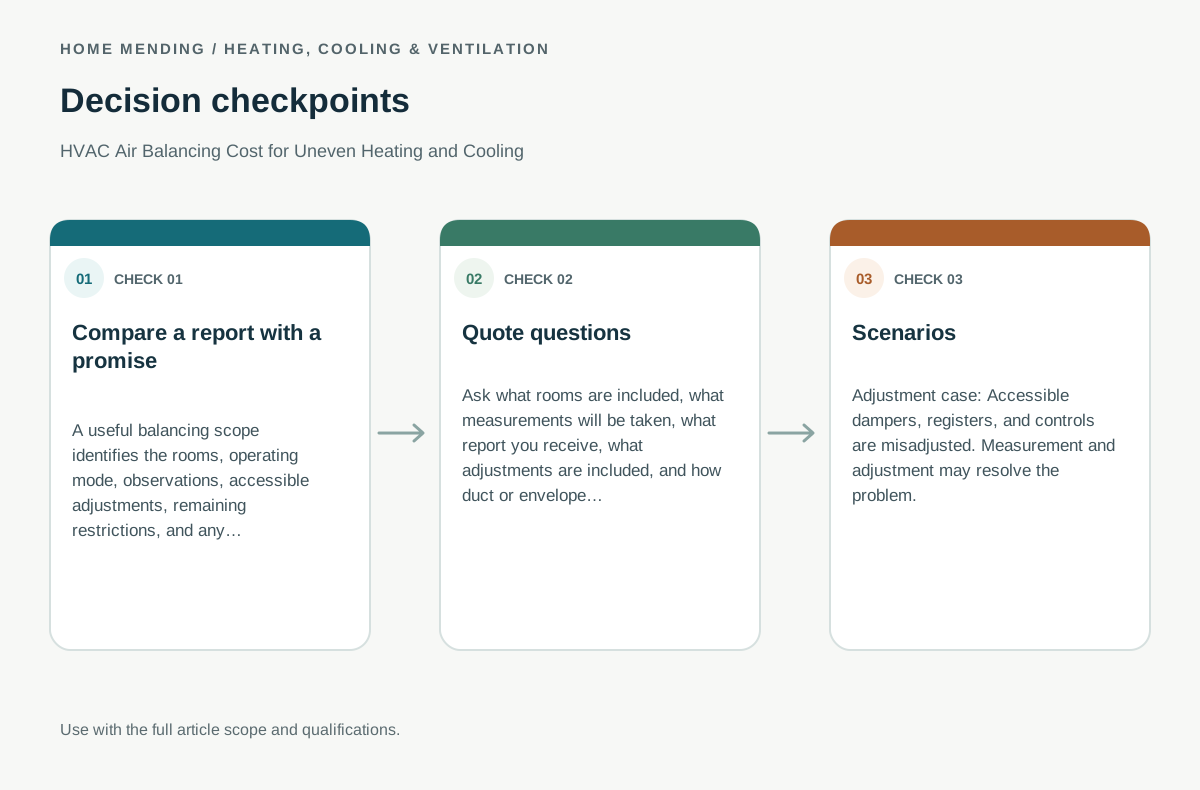
Compare a report with a promise
A useful balancing scope identifies the rooms, operating mode, observations, accessible adjustments, remaining restrictions, and any after-testing. It should explain whether the problem is distribution or whether the visit is screening for leakage, inadequate returns, equipment mismatch, or envelope-driven load. A generic “balance the system” line does not establish the work.
For a simple case, adjustment may be enough. For a difficult case, balancing may lead to duct repair, return work, equipment correction, or a redesign quote. Price those next steps separately and ask what evidence would trigger them. This keeps a modest diagnostic purchase from becoming an open-ended retrofit.
Describe what a successful adjustment changes
The homeowner should know whether the goal is more even room airflow, reduced noise, improved equipment operation, or confirmation that the distribution system is adequate. A balancing visit cannot promise a comfortable room when the room load, insulation, windows, air leakage, or equipment capacity is the dominant cause. State those boundaries before comparing prices.
Ask for the operating mode and rooms observed, accessible changes, remaining restrictions, after measurements where useful, and the next step if adjustment cannot solve the complaint. This lets a small adjustment be compared honestly with duct sealing, return-air work, equipment correction, or an envelope project.
Decide whether the visit is corrective or diagnostic
Balancing is a focused adjustment when the equipment, ducts, returns, and room loads are adequate and the problem is distribution. It becomes diagnostic when the technician must determine whether leakage, a restriction, inadequate return, control sequence, equipment sizing, or the envelope is responsible. The quote should say which questions the visit will answer.
A useful report can identify rooms observed, operating mode, accessible adjustments, remaining defects, and any after-testing. That is more decision-useful than a promise to “balance the house.” If the project uncovers a duct repair or equipment issue, price that next scope separately and state what evidence supports it.
Balancing can identify a closed damper, restricted branch, excessive leakage, incorrect blower setting, or room receiving too much or too little air. It can help determine whether a comfort problem is distribution-related before equipment is replaced. ENERGY STAR treats ducts, airflow, and installation quality as part of system performance.
What it cannot do alone
Balancing cannot make an undersized duct deliver unlimited air, turn a poor return into an adequate one, correct an undersized or oversized system, or eliminate heat gain from a poorly insulated room. Building-envelope conditions, windows, solar exposure, moisture, and equipment load may need separate evaluation.
Scope and cost drivers
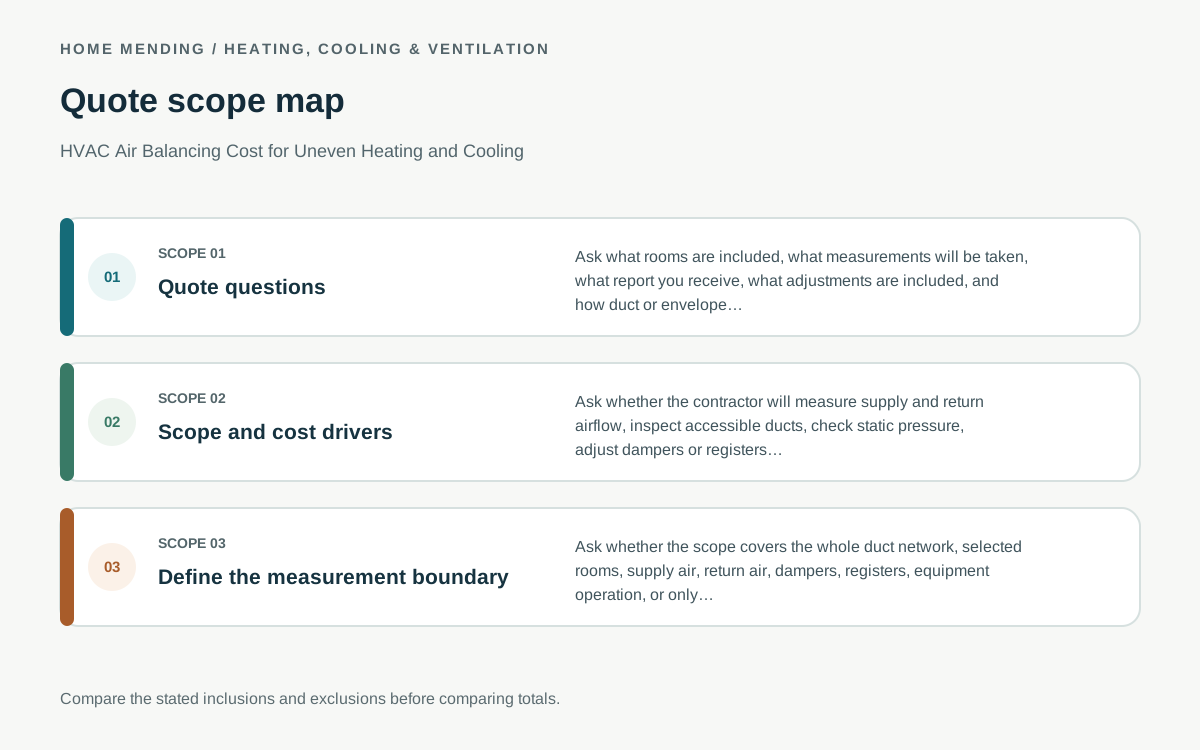
Ask whether the contractor will measure supply and return airflow, inspect accessible ducts, check static pressure, adjust dampers or registers, review blower settings, identify restrictions, and provide a report. A full-home assessment is different from adjusting two registers. Access, number of zones, concealed ducts, and corrective work change cost.
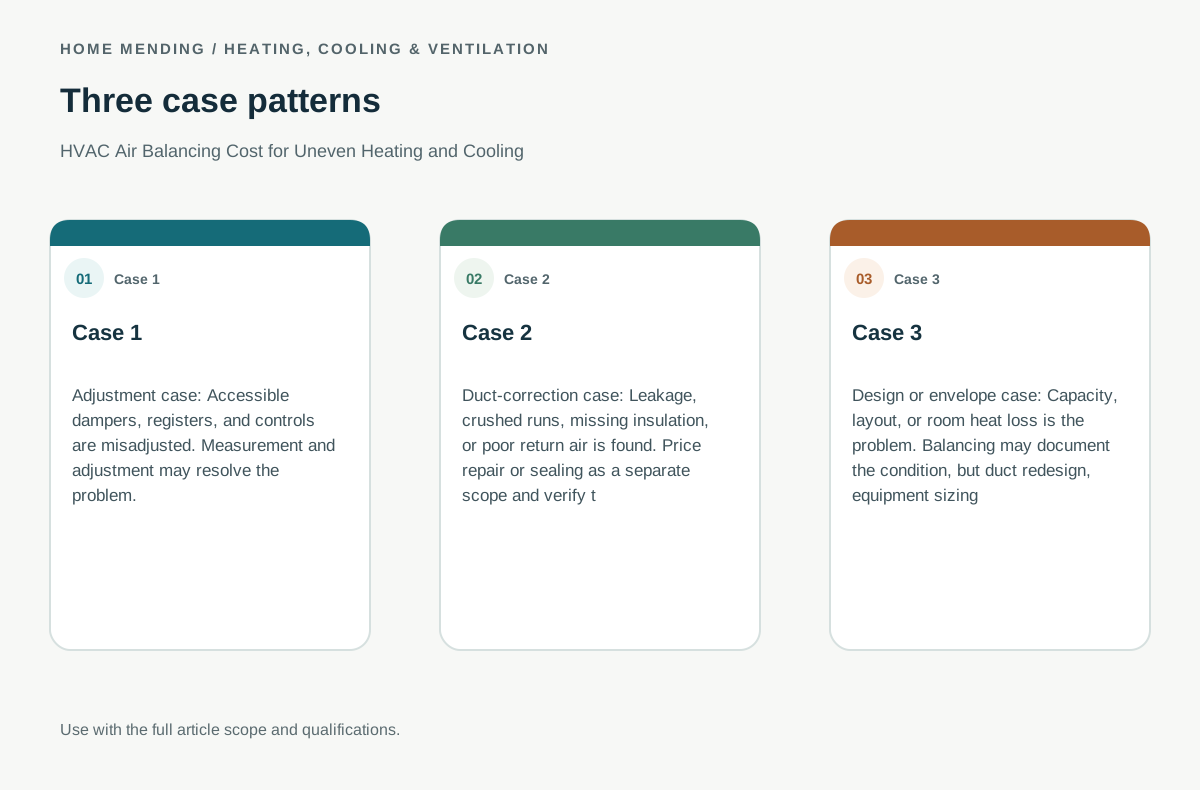
Scenarios
Adjustment case: Accessible dampers, registers, and controls are misadjusted. Measurement and adjustment may resolve the problem.
Duct-correction case: Leakage, crushed runs, missing insulation, or poor return air is found. Price repair or sealing as a separate scope and verify the result.
Design or envelope case: Capacity, layout, or room heat loss is the problem. Balancing may document the condition, but duct redesign, equipment sizing, or envelope work is required.
Before authorizing equipment replacement
If only one or two rooms are uncomfortable, request an airflow-oriented diagnosis before replacing the furnace, AC, or heat pump. ENERGY STAR’s replacement guidance identifies uneven comfort and suspected duct problems as reasons to evaluate the wider system. A new appliance on the same distribution may reproduce the complaint.
Quote questions
Ask what rooms are included, what measurements will be taken, what report you receive, what adjustments are included, and how duct or envelope recommendations are separated. Request a before-and-after basis when improvement is promised.
Balancing is worth the cost when the decision is genuinely airflow and the contractor can measure and correct the system. It is not a substitute for design or building-envelope work when those are the real constraints.
What the report should distinguish
Ask for room coverage, supply and return observations, accessible duct condition, damper and register settings, blower settings, and any static-pressure or airflow measurements the contractor uses. The report should separate a correctable adjustment from a restriction, undersized branch, inadequate return, or room heat-loss condition. A list of adjusted registers without a conclusion does not show whether the expenditure solved the stated problem.
Scenario-based budgeting
An adjustment-only visit is a small scope when dampers and controls are accessible. A corrective balancing project can include duct sealing, supports, insulation, return-air work, or equipment settings. A redesign or envelope case may require a separate designer or trade. Ask which case the price assumes and what would move it to the next case.
Before replacing equipment
If a new furnace, AC, or heat pump is proposed because rooms are uneven, request airflow and load reasoning first. A larger unit can increase cycling or fail to deliver air through a deficient network. Balancing may not be the entire fix, but it can prevent buying equipment that inherits the same distribution problem.
Define the measurement boundary
Ask whether the scope covers the whole duct network, selected rooms, supply air, return air, dampers, registers, equipment operation, or only adjustment of accessible terminals. A limited balancing visit can be appropriate after a small repair; it should not be described as a whole-system diagnosis if major ducts, controls, or envelope conditions were not assessed.
The low-cost case may be register and damper adjustment with documented observations. A typical case includes airflow checks, correction of accessible distribution defects, and after-testing. A difficult case uncovers inadequate returns, concealed leakage, undersized runs, equipment mismatch, or a room load problem. At that point, balancing is part of a broader repair or redesign decision. Price the next diagnostic step rather than assuming every extra task is included.
An adjustment changes registers, dampers, or settings. A corrective project may repair leaks, add return air, replace a restriction, or alter controls. A redesign changes ducts or equipment. Ask which level is included and what evidence would move the job to the next level.
Request a room list, before observations, work performed, remaining defects, and any after measurements. Do not require a universal numerical threshold when the evidence does not establish one; require a clear explanation of what was measured and why the correction is expected to help.