
An HVAC diagnostic visit is the paid investigation that comes before you know which repair to authorize. Broad U.S. repair-market guidance places ordinary HVAC repairs around $130–$2,000, but that is not a diagnostic-fee schedule. A first visit may be a low-hundreds service call, while after-hours attendance, specialized equipment, or a second visit can make the initial investigation more expensive. Ask for the fee and scope before the technician arrives.

Illustrative planning scenario (U.S. dollars, September 2026)
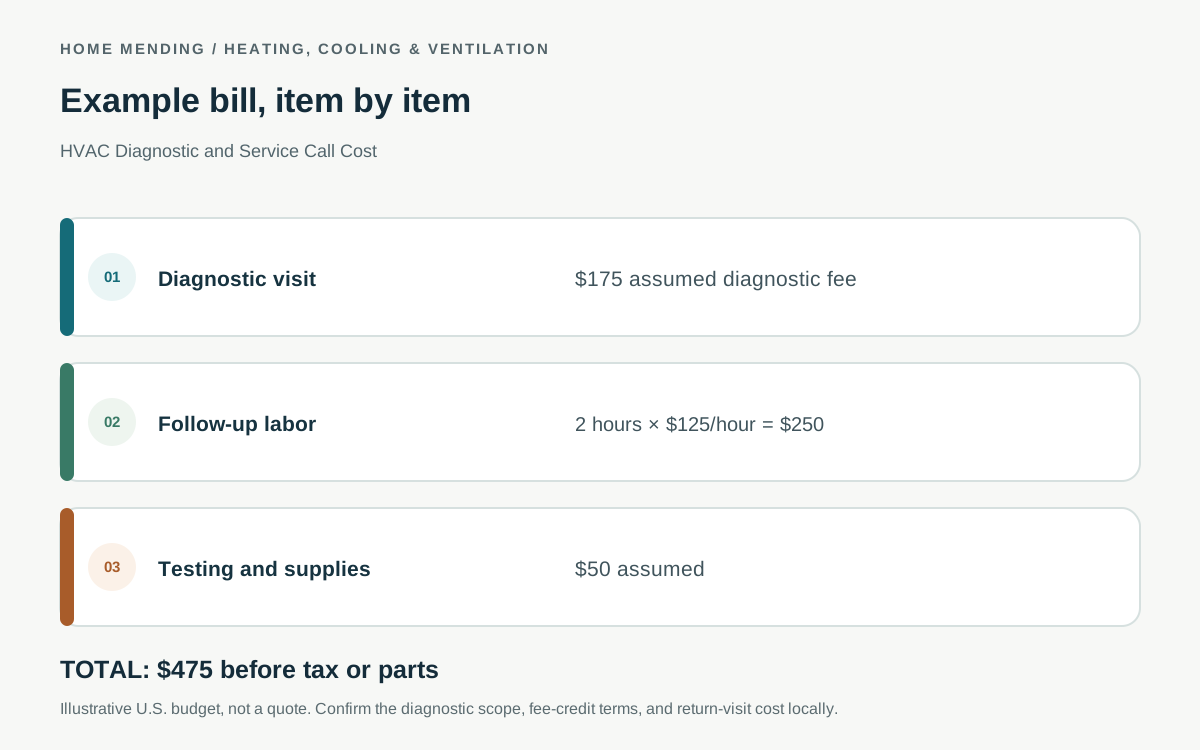
This is a transparent budgeting example, not a market quote: assume a $175 diagnostic fee, two hours of follow-up labor at $125 per hour, and $50 of testing or supplies. The first-visit investigation and follow-up would total $475 before tax or parts. Confirm each fee, credit, and return-visit term locally.
Canadian diagnostic-fee examples
Canadian published figures are available for separate equipment-service contexts. HomeStars’ 2026 air-conditioning service guide, updated August 21, lists a CAD $75–$150 diagnostic or call-out fee. Its separate 2026 furnace-repair guide lists CAD $80–$150 for diagnosis or a service call. Keep those observations separate: they are not a unified Canadian HVAC range, a representative provincial or national price, or evidence that the visits include the same testing or follow-up work. The guides do not establish a general fee-credit policy. Ask which fee applies to your equipment and whether additional diagnostic time, testing, or a return visit costs extra.
What you are paying for
The first visit usually combines travel or dispatch, technician time, a conversation about symptoms, visual inspection, measurements, and tests appropriate to the equipment. The aim is not necessarily to repair the system during that visit. It is to narrow the failure from a symptom such as “not cooling” or “short-cycling” to a repairable cause.
For a forced-air system, the investigation may consider controls, power at the equipment, airflow, filters, blower operation, coils, duct restrictions, and refrigerant-related symptoms. A furnace or boiler call may involve controls, ignition or burner operation, circulation, pressure, venting, or other combustion-related observations. A heat-pump call may need to distinguish heating, cooling, defrost, auxiliary heat, controls, and refrigerant-circuit behavior. The exact tests depend on the equipment and the complaint.
Do not treat that list as a homeowner test procedure. Electrical, combustion, pressure, and refrigerant work should be handled by qualified personnel with appropriate instruments.
Common charging models
Contractors commonly structure the first visit in one of three ways:
- a flat diagnostic or service fee, with repairs quoted separately;
- a time-based labor charge plus travel or dispatch;
- a diagnostic charge that is credited, partly or fully, if you authorize the repair.
None of these credit policies is universal. A “free diagnosis with repair” offer may simply move the diagnostic labor into the repair price or depend on same-company authorization. Ask whether the fee is owed if you decline the repair, whether a return visit is included, and whether parts research or equipment-specific follow-up is extra.
Why two diagnostic visits cost different amounts
The largest driver is not always the visible symptom. A simple failed control or accessible component may be identified in one visit. An intermittent fault, concealed duct problem, refrigerant leak, poor airflow, or equipment that fails only under a particular load may need more observation or a return visit.
Other cost drivers include:
- system type and age;
- attic, crawl-space, roof, or restricted mechanical-room access;
- whether the technician can safely operate the system;
- heating versus cooling season demand;
- emergency, weekend, or overnight timing;
- distance and local labor market;
- need for a specialist or manufacturer-specific support;
- whether diagnosis also includes a written replacement assessment.
An urgent no-heat call can cost more because you are buying availability and travel at an inconvenient time, not because the failed part is necessarily more expensive.
Simple, typical, and difficult scenarios
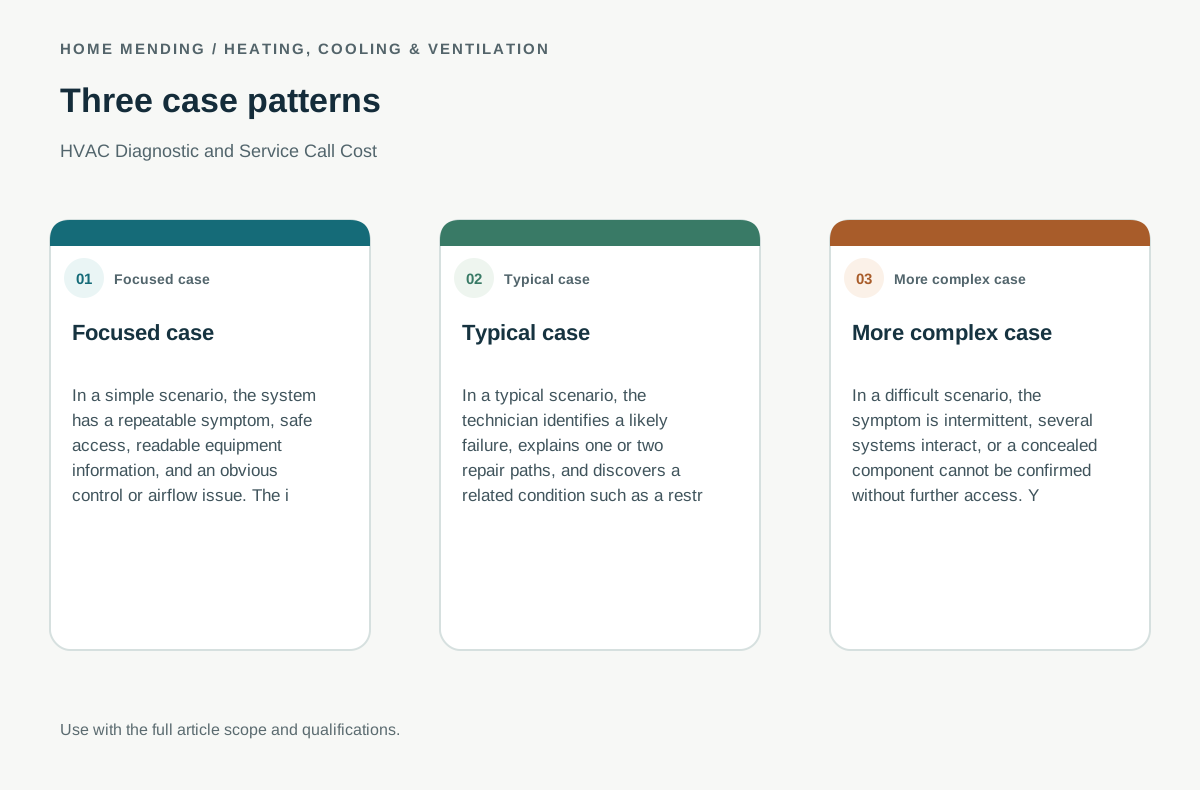
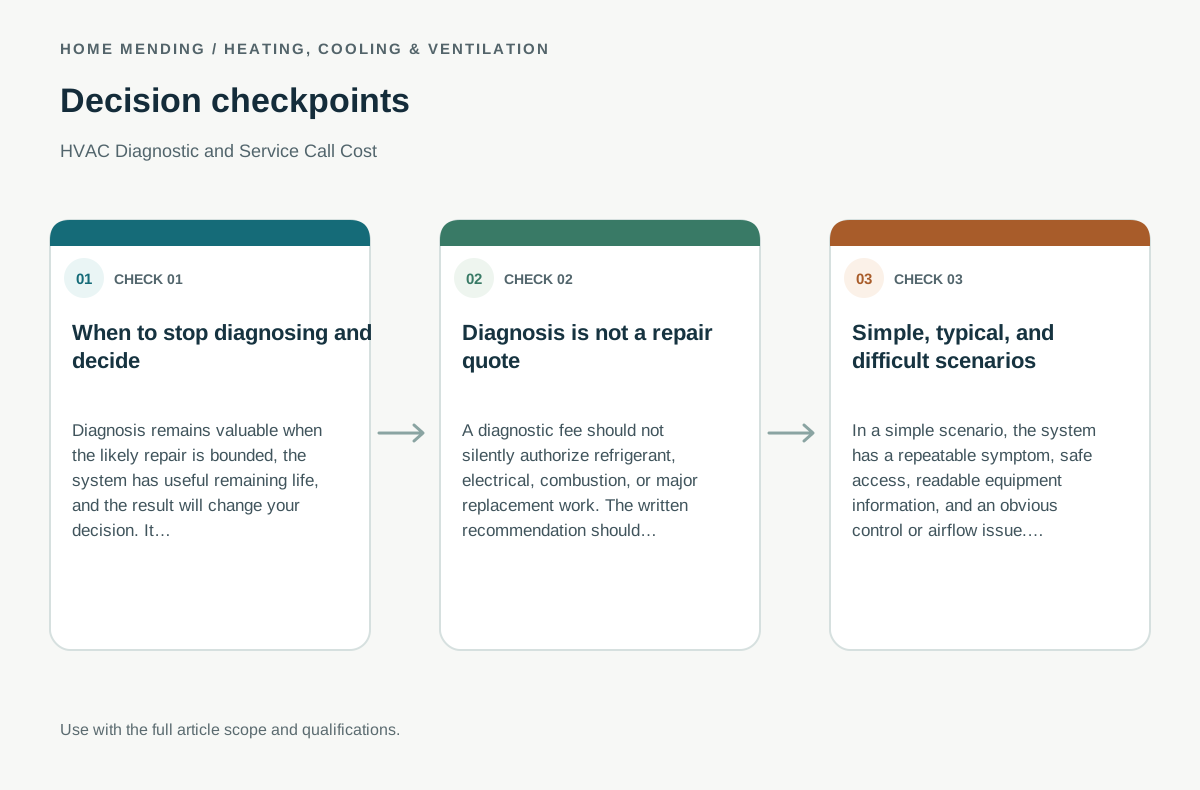
In a simple scenario, the system has a repeatable symptom, safe access, readable equipment information, and an obvious control or airflow issue. The initial fee may be the whole diagnostic cost, with the repair separately priced.
In a typical scenario, the technician identifies a likely failure, explains one or two repair paths, and discovers a related condition such as a restricted filter, leaking duct, aging coil, or control mismatch. The useful output is a scoped repair quote, not just a part name.
In a difficult scenario, the symptom is intermittent, several systems interact, or a concealed component cannot be confirmed without further access. You may pay for a return visit, additional testing, or a specialist. That is not automatically unreasonable; the question is whether the contractor explains what new information the additional charge will produce.
Diagnosis is not a repair quote
A diagnostic fee should not silently authorize refrigerant, electrical, combustion, or major replacement work. The written recommendation should identify the observed symptom, suspected cause, tests performed, proposed repair, excluded work, and any uncertainty. If the diagnosis is “the unit is old,” ask what failed and what evidence supports replacement rather than repair.
ENERGY STAR recommends looking at the wider system because ducts, airflow, controls, and installation quality can affect comfort and efficiency. A contractor who immediately recommends a larger unit without addressing airflow or load may be solving the wrong problem. Conversely, repeated testing without a credible next decision is not useful merely because it is detailed.
How to compare service-call terms
Ask these questions before booking:
- What is the dispatch or diagnostic fee, including tax and after-hours terms?
- How much technician time or testing does it include?
- Is the fee credited against labor, parts, or the whole repair?
- What happens if the equipment cannot be safely operated or the cause is not found?
- Is a written repair-versus-replace recommendation included?
- Will a return visit, specialty technician, or additional test be separately priced?
Compare the terms, not just the advertised entry fee. A low first-visit charge with an undefined follow-up can be less predictable than a higher fee that includes a clear diagnostic scope.
When to stop diagnosing and decide
Diagnosis remains valuable when the likely repair is bounded, the system has useful remaining life, and the result will change your decision. It becomes less attractive when several major failures are present, parts are uncertain, the equipment has a poor service history, or the proposed repair would be followed by another likely mobilization. At that point, price a replacement using the same equipment, duct, control, removal, and access assumptions.
The economic output of a service call is clarity: what failed, what remains unknown, what the repair includes, and what replacement would actually entail. Without those four pieces, a single total is difficult to evaluate.
Budget the visit before the visit
Write down the symptom, when it occurs, which rooms are affected, recent repairs, equipment age and fuel, and whether the problem is heating, cooling, airflow, noise, water, or control. Tell the contractor if the problem is intermittent or only appears at a particular outdoor temperature. This does not replace diagnosis, but it gives the visit a usable starting boundary.
Separate three possible invoices: the first visit, a confirmed repair, and a second visit if parts or access are needed. A contractor may offer a fixed diagnostic fee but charge separately for a return trip. That is acceptable when disclosed; it is difficult to compare when “diagnosis” has no defined stopping point.
When more diagnosis is worthwhile
Additional testing has value when it distinguishes a small repair from a replacement, identifies a duct or envelope cause, or protects a major component from being replaced unnecessarily. It has less value when the contractor cannot say what question the test answers. Ask what new decision the test is intended to support and the maximum planned diagnostic scope.
For a system approaching replacement, a second opinion is most useful when it reviews the diagnosis and replacement assumptions together. Keep the model and serial information, written diagnosis, repair warranty, and fee-credit terms with the quote so the next decision is based on evidence rather than memory.