
Illustrative planning scenario (U.S. dollars, September 2026)
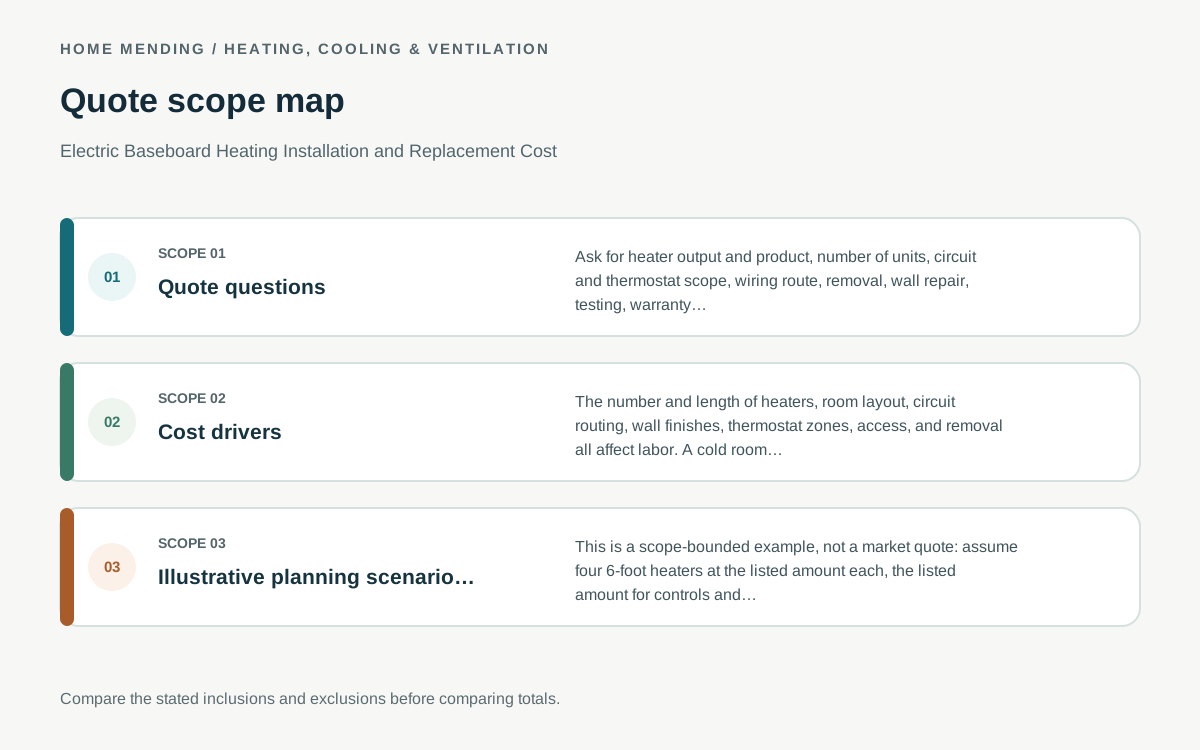
This is a scope-bounded example, not a market quote: assume four 6-foot heaters at $250 each, $600 for controls and branch-circuit work, and $800 for labor and trim. The illustrative installation total is $2,400 before finish repairs; verify load, wiring, and local electrical requirements with a qualified electrician.
Decide whether room control is the main value
Baseboard can make sense when independent room control and low distribution disruption matter. It is less compelling when many rooms need high runtime and a heat pump could serve them with a different operating profile. Compare actual coverage, controls, electrical, service, maintenance, and future replacement rather than only heater count.
Ask what happens if circuits are inaccessible, the panel lacks capacity, a wall must be opened, or the room remains cold because the envelope is the cause. Keep those conditions and any broader electrification scope separately priced.
List every heater, output, thermostat zone, circuit, wiring route, access opening, removal, testing, and finish repair. Several small heaters can create substantial wiring work. A panel or service recommendation should show its electrical basis and remain separately priced.
Compare baseboard with a heat pump only after matching room coverage and ownership assumptions. Include heat-pump equipment, low-temperature capacity, backup, line set or ducts, controls, electrical, maintenance, and access.
Build a room-by-room schedule
List each room, heater output, thermostat zone, circuit, wiring route, access, and finish work. This exposes whether the proposal is a replacement, an addition, or a partial system. Several small heaters can create more wiring work than one larger room unit.
Compare baseboard with a heat pump only after matching room coverage and ownership assumptions. Include heat-pump equipment, low-temperature capacity, backup, line set or ducts, controls, electrical, maintenance, and access. Low equipment cost is not automatically low lifetime cost.
Electric baseboard projects can be inexpensive at the equipment level but more involved once circuits, thermostats, wall access, service capacity, and operating cost are considered. The active evidence does not establish a dependable universal installation price. Price the heater, electrical work, controls, removal, finish repair, and operating assumptions as separate layers.

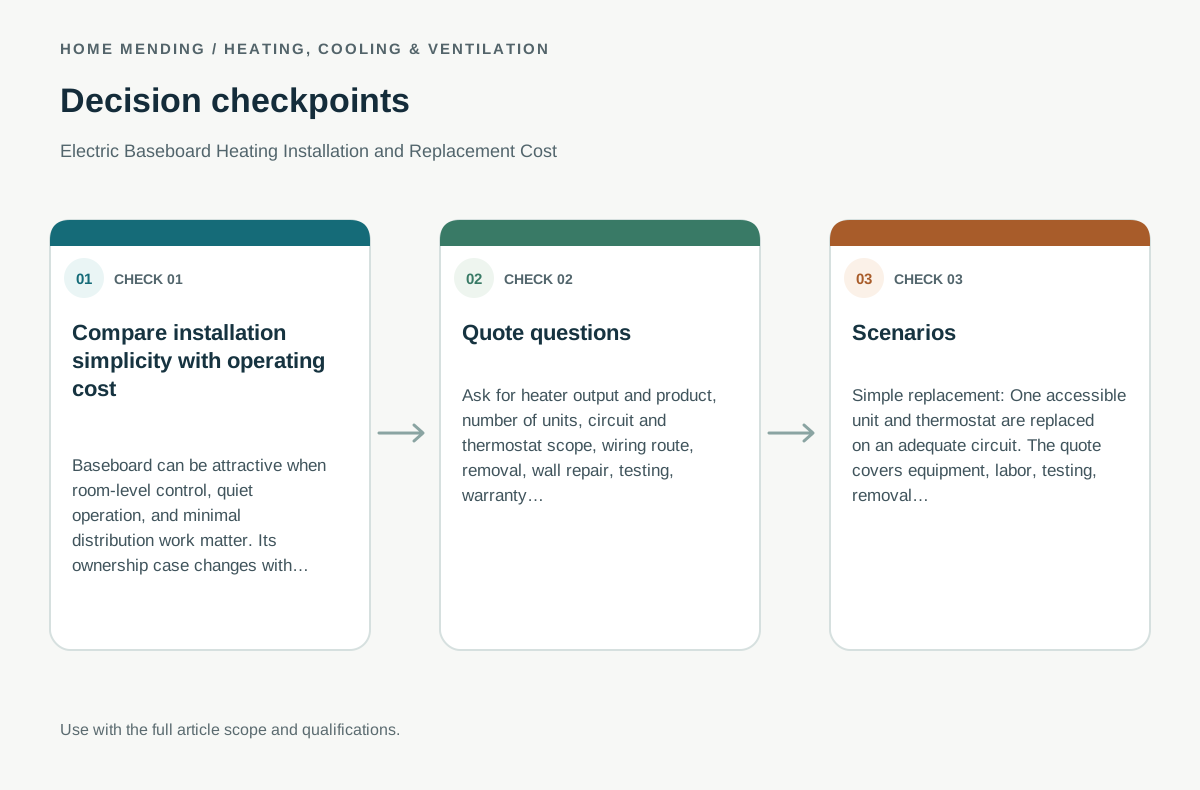
Compare installation simplicity with operating cost
Baseboard can be attractive when room-level control, quiet operation, and minimal distribution work matter. Its ownership case changes with electricity price, runtime, insulation, and the number of rooms that must be heated. A ductless or ducted heat pump may have a larger installation scope but a different operating and coverage profile. Compare actual rooms, backup, maintenance, controls, and electrical work.
If service capacity or a panel upgrade is proposed, ask whether it is required for the heaters, the alternative system, or a broader future plan. Keep that work separately priced. The lowest appliance price does not necessarily represent the lowest project or lifetime cost.
A replacement may reuse a suitable circuit, wiring route, thermostat, and mounting location. New installation may require a circuit, breaker, wiring, line-voltage control, wall penetration, trim repair, or panel assessment. A room-by-room project can involve several small scopes rather than one appliance price.
Electrical work should be assessed and performed by qualified personnel under the requirements that apply locally. A recommendation for service or panel work is a separate electrical-capacity decision, not an automatic consequence of every baseboard replacement.
Cost drivers
The number and length of heaters, room layout, circuit routing, wall finishes, thermostat zones, access, and removal all affect labor. A cold room may also need insulation, air sealing, window work, or a different heat-distribution strategy; a larger heater is not always the right fix.
Operating economics are equally important. Electricity price, climate, runtime, room use, insulation, and thermostat behavior can make low installation cost coexist with high ownership cost. Do not compare a baseboard price with a heat-pump price without including electrical work, outdoor and indoor equipment, backup heat, ducts or line sets, and controls.
Scenarios
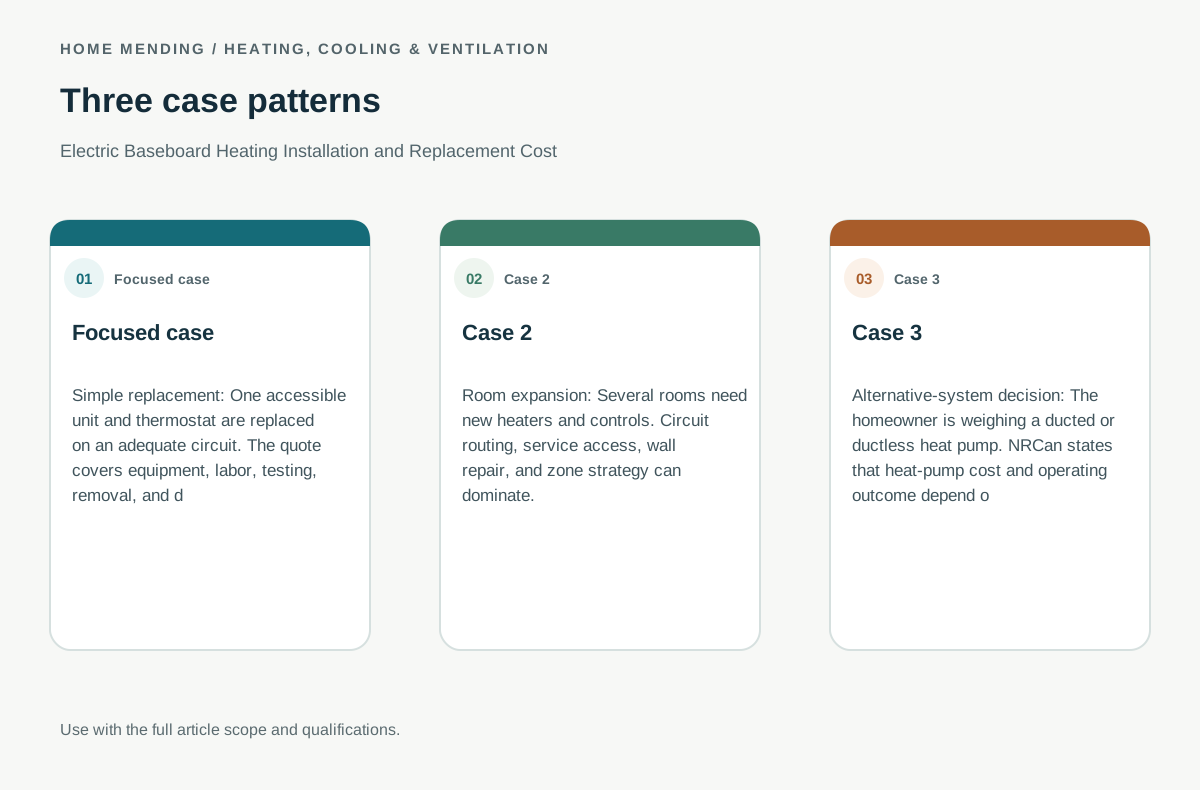
Simple replacement: One accessible unit and thermostat are replaced on an adequate circuit. The quote covers equipment, labor, testing, removal, and disposal.
Room expansion: Several rooms need new heaters and controls. Circuit routing, service access, wall repair, and zone strategy can dominate.
Alternative-system decision: The homeowner is weighing a ducted or ductless heat pump. NRCan states that heat-pump cost and operating outcome depend on system type, existing equipment, ductwork, electricity, competing fuel prices, climate, and design. Compare those assumptions locally.
When another category is involved
If the main project is a panel or service upgrade, whole-home electrification, or coordinated fuel conversion, use the broader electrification and electrical scopes. If a remodel drives wall and floor access, separate the finish and construction work so it is not mistaken for heating cost.
Quote questions
Ask for heater output and product, number of units, circuit and thermostat scope, wiring route, removal, wall repair, testing, warranty, service-capacity assumptions, and exclusions. Choose baseboard when its simple room control and installation fit the home and local operating economics. Price a heat pump when climate, use, and future system strategy make the larger comparison meaningful.
Count circuits and room controls
Ask for a room-by-room schedule showing heater output, thermostat zones, circuit routing, breaker and panel assumptions, wall access, removal, testing, and finish repair. Several small heaters can create more wiring and control work than one larger room unit. A panel recommendation should have a separate electrical basis and price.
For baseboard, include electricity price, expected runtime, insulation, room use, and thermostat behavior. For a heat pump, include outdoor and indoor equipment, capacity at actual conditions, backup heat, line set or ducts, electrical work, controls, maintenance, and access. The simplest installation is not automatically the lowest lifetime cost.
Build a room-by-room comparison
List each room, heater output, thermostat zone, circuit, wiring route, access, and finish work. This exposes whether the proposal is a replacement, an addition, or a partial system. It also helps compare a heat pump or envelope project without assuming that every room has the same load.
Ask what happens if the service panel cannot support the proposed circuits, if a wall is finished, or if a heater is located under furniture or a window. These conditions can change labor and layout. Electrical capacity, permits, and line-voltage controls require local professional verification.
For a long horizon, include expected electricity cost, maintenance, and future replacement. For a short horizon, lower disruption may have more value than theoretical operating savings.
Test the alternative against the same rooms
A heat-pump comparison is meaningful only when both options cover the same rooms and maintain acceptable comfort at the relevant outdoor conditions. A ductless system may reduce new circuit work in some layouts but add outdoor equipment, line-set routing, controls, and visible indoor heads. A ducted option may preserve appearance while requiring distribution work. A partial heat pump that leaves several baseboards active is not comparable with whole-home replacement.
Ask how the home will be heated during low outdoor temperatures, equipment outages, and rooms without a proposed indoor unit. Include backup, maintenance, service, and future replacement in the ownership view. Baseboard can remain reasonable when room-by-room control and low disruption are the priorities; the larger alternative is worthwhile only when its operating or comfort advantage justifies its installation complexity.