
An exterior masonry crack may be a joint repair, cracked-unit replacement, water-management problem, or sign that the wall needs broader assessment. Width or a photograph alone cannot establish the cause.
Cost layers
A quote may include inspection, access, cleaning, repointing, unit replacement, opening-area repair, flashing or sealant, substrate work, and structural evaluation. Ask which layer is being priced and which conditions expand the scope.
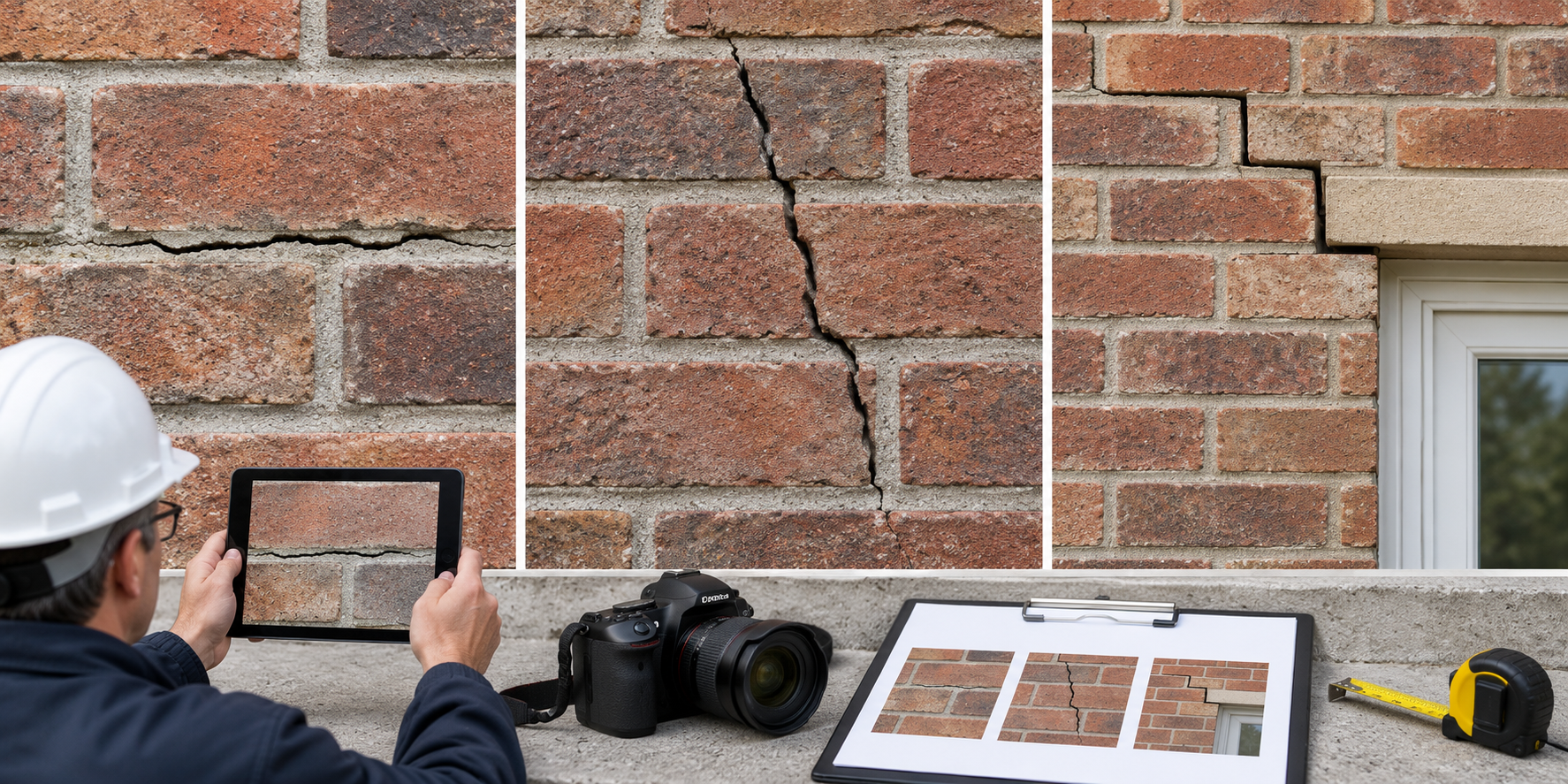
Cracks limited to defective mortar can call for repointing. Cracks through units, recurring cracks, displacement, patterns at openings, or separation from adjacent construction may warrant qualified masonry or structural review. This is triage, not remote diagnosis.
Masonry performance depends on material properties, moisture, climate, and freeze-thaw exposure. Veneer can also depend on flashing, weeps, joints, and drainage behind it. Repairing a visible crack without correcting a water source may lead to recurrence.
No reliable national or Canadian masonry-crack price was established. Use a local quote with a mapped pattern, access, unit and joint work, testing, and contingency assumptions. For mortar-focused work, see brick repointing cost.
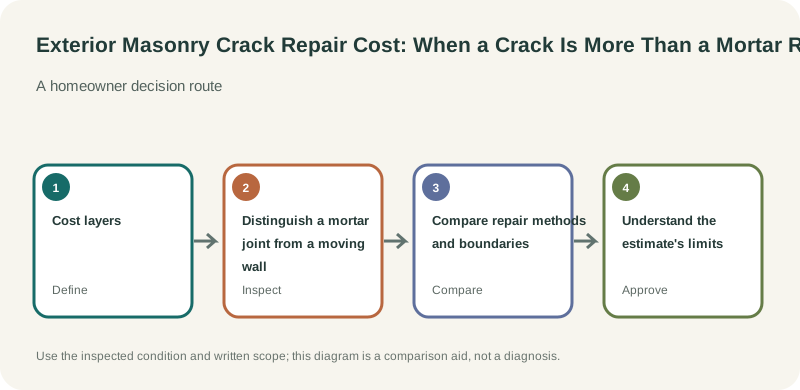
Distinguish a mortar joint from a moving wall
A narrow crack in mortar may be a localized maintenance issue; stepped cracks, displacement, bulging, or repeated opening can indicate movement or a problem behind the masonry. Ask the contractor to describe whether the crack passes through mortar, brick, veneer, or multiple courses, and whether its pattern or change over time affects the proposed repair. A cosmetic fill can hide the line without establishing why it formed.
Photograph and date the crack, including a wider view that shows nearby openings, roof lines, and wall corners. If it appears to be changing, obtain an appropriate structural assessment before paying for a finish repair. Category 014 covers localized masonry repair economics; building movement and structural investigation belong to the relevant structural specialist. The repair quote should state any assumptions about stability and what evidence would make the scope inappropriate.
Compare repair methods and boundaries
Ask whether the proposal involves repointing, replacing damaged units, installing a crack-control detail, or another method, and why it suits the observed masonry. Define the length and depth, compatible mortar, brick matching, access, protection, and finish. Confirm whether the contractor will address a nearby water source such as failed flashing or an open joint. Water correction and structural stabilization are separate items unless written into the scope.
If a crack affects a veneer, ask whether the wall behind it is checked and whether ties or support are involved. Widespread cracking should not be priced by multiplying a small patch rate without inspection. A useful proposal documents the crack pattern, method, monitoring or follow-up recommendations, exclusions, and the condition that would trigger a broader evaluation.
Understand the estimate’s limits
Ask whether the contractor is repairing a visible crack, monitoring it, or making a determination about the cause. Those are different services. A masonry contractor may describe the repair method without diagnosing foundation movement or framing behavior. If the estimate assumes the wall is stable, write that assumption down and ask what changes would require stopping the repair. Avoid paying for a cosmetic finish that could conceal a crack still being evaluated.
If monitoring is recommended, agree how the crack will be measured, photographed, and revisited, and what time period or change triggers another assessment. Monitoring does not replace an urgent structural review when there is visible displacement, falling material, or rapid change. Seek qualified local help if conditions suggest an immediate hazard.
Compare warranties and follow-up
Ask what the workmanship warranty covers: mortar adhesion, color match, water entry, or only the installed material. Many warranties exclude movement or water sources outside the repaired joint, so clarify boundaries. Request a written description of the method and compatible materials used. If the crack is repointed or bridged, compare before-and-after photographs and preserve the record for future owners or contractors.
Compare quote assumptions in writing
Ask each bidder to use the same crack locations, repair limits, finish goal, and access plan. Have them list whether the price includes cleaning, mortar removal, unit replacement, reinforcement if specified by a qualified designer, coating, and follow-up observation. If one quote assumes no movement and another includes a structural detail, the difference is not simply a labor markup. Clarify the technical basis before selecting a price.
Where a crack is near an opening or roof line, ask whether water entry is part of the assessment. A masonry repair may need adjacent flashing or sealant work to prevent wetting, but such work should be identified rather than folded into an undefined “repair.” The final scope should say what condition is corrected and what remains outside the contractor’s review.