
The crown, sometimes called a wash, is the masonry or concrete water-shedding top around the flue. Contractors may use cap for the crown, the rain cap, or both. Confirm the quote’s meaning.
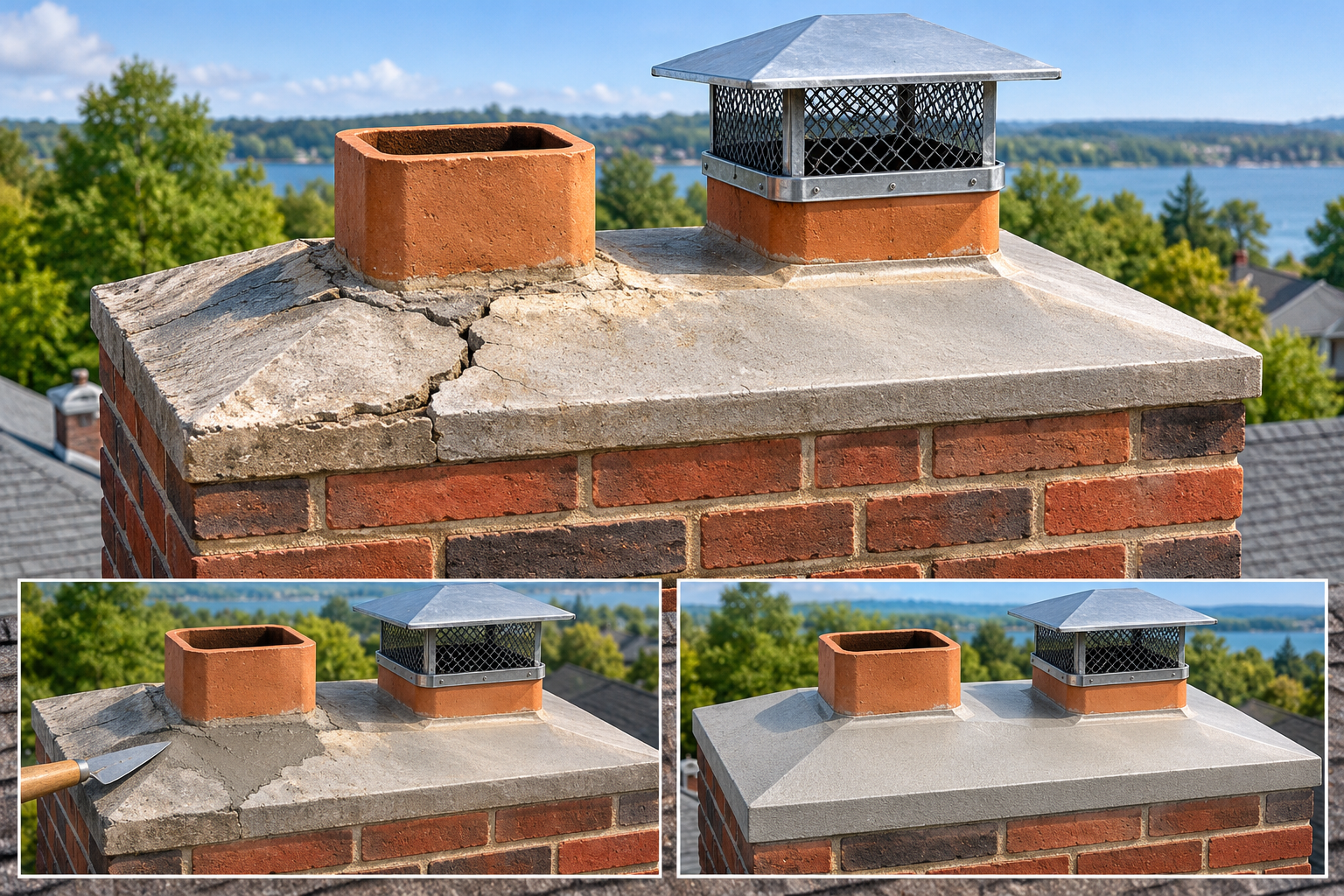
A proposal may cover localized crack repair, resurfacing, rebuilding the crown, correcting the flue interface, replacing a rain cap, adjacent masonry, or flashing. These components can contribute to one leak but are not the same repair.
CSIA inspection guidance identifies the crown, flashing, rain cap, flue dimensions, and termination as inspection points. It also describes a bond-break detail in its referenced standard. Do not turn that U.S.-oriented guidance into a universal construction prescription; the chimney, appliance, code, and authority must be assessed.
Height, pitch, multiple flues, removal, custom dimensions, weather protection, and related masonry affect labor. HomeGuide’s February 2026 U.S.-oriented guide reports $150–$700 for minor crown repairs, $600–$1,500 or more for major work, and $1,000–$3,000 for replacement. The ranges overlap and describe that publisher’s cost guide, not a sampled bid distribution or Canadian benchmark. Ask for inspection, access, demolition, water-shedding geometry, flue interface, cap, adjacent masonry, flashing, cleanup, and warranty. If the source is uncertain, start with chimney leak repair cost.
Choose repair or replacement from the crown’s condition
Ask the contractor to photograph cracks, separation around the flue, missing material, and the connection to the masonry. A small, stable defect may support a localized repair, while widespread deterioration or poor water-shedding shape may call for more extensive work. The proposal should describe the area removed, the replacement material, finished slope or drainage intent, and how the flue interface is handled. Confirm whether a rain cap or chimney-top cover is included; it is a separate component from the crown.
The cost may include roof access, scaffold, demolition, debris handling, weather protection, and repairs to adjacent brick or flashing. Request those lines separately when access is substantial. Ask how the contractor protects the flue and surrounding roof while work is underway, and whether the work can be completed under current weather conditions.
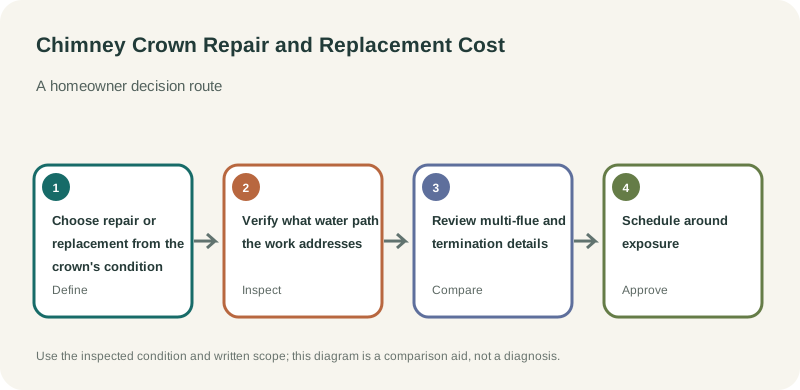
Verify what water path the work addresses
A crown repair will not correct failed step flashing, a leaking cap, or a defect lower on the stack. If water is the concern, ask what evidence points to the crown and whether nearby components were inspected. Written photographs and a scope drawing can reduce ambiguity when several defects coexist. If masonry movement or liner damage is suspected, have those conditions assessed separately before approving a surface coating as a complete fix.
Review multi-flue and termination details
A crown serving more than one flue has several interfaces, and the scope should identify each one. Ask how existing flue tiles or liners will be protected, what the repair does at the joints, and whether the finished crown allows for the chimney materials to move as intended. The appropriate detail depends on the system and local requirements; request the contractor’s drawing or product detail rather than inferring it from a generic description.
Confirm whether the rain cap is reused, replaced, or omitted and how that decision relates to the crown repair. If caps are fastened through the crown, ask how penetrations are treated. The estimate should state whether the crown work changes any inspection access and what condition would require an expanded repair once loose material is removed.
Schedule around exposure
The crown sits at the most weather-exposed part of the chimney. Ask how fresh work will be protected from rain, freezing conditions, or premature loading, and how long the area must remain undisturbed. The contractor should identify any limitations that affect use of the fireplace or access to the roof during curing. Record the product or materials, photos, and warranty so future inspection can distinguish a repaired area from original work.
Compare a patch with a rebuild by affected area
A local patch may address one crack or small failed interface if the surrounding crown remains sound. A larger repair or replacement is more likely when the top is broadly deteriorated, no longer sheds water effectively, or cannot support a durable connection at several flues. Ask the contractor to mark the affected extent and describe why the remaining crown is considered serviceable. A product coating over a cracked or poorly shaped crown should be priced as a separate option with its limits stated.
If the quote includes scaffold or roof access for other chimney work, compare the added crown-repair labor now with a later mobilization. Retain the inspection photos and final material detail so the next inspection can identify the work already completed.
Separate weather repair from flue service
A crown protects the top masonry but is only one part of the chimney. Ask whether the inspection also covered the flue termination, cap, stack joints, and accessible attic, and request separate prices for defects found. If no liner or appliance inspection was performed, do not infer that the repair establishes safe operation. Keep water-shedding work and flue service as separate decisions with their own qualified scope.