
A chimney rain cap helps keep precipitation, debris, and animals out of a flue or chimney opening. It is not the masonry crown and cannot correct a cracked crown or failed flashing.
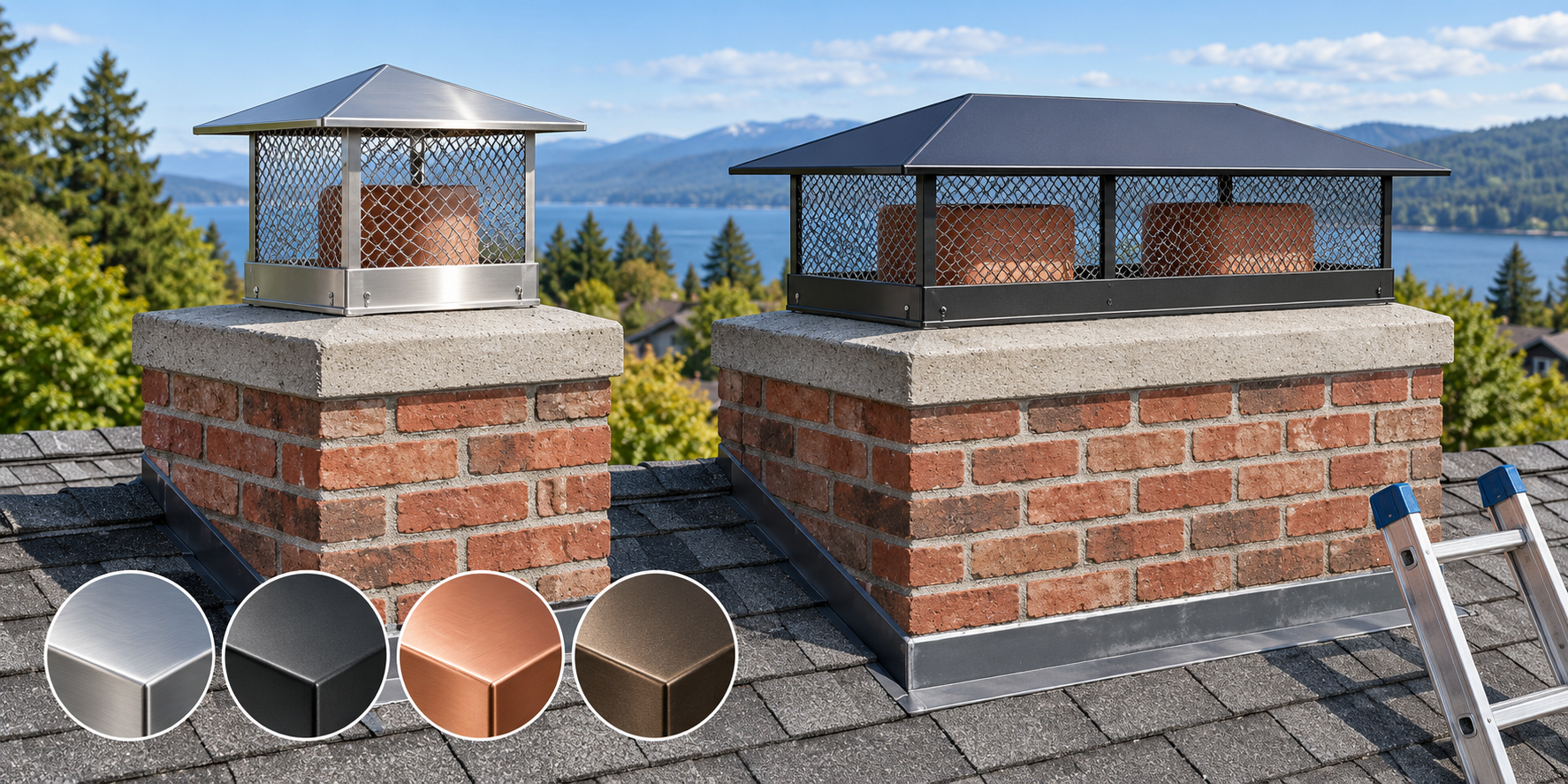
Cost drivers include one flue or multiple flues, custom dimensions, stainless, galvanized, copper, or another material, mesh, corrosion, difficult removal, roof height, access, crown condition, and attachment. Ask whether inspection, fabrication, access, crown repairs, taxes, and cleanup are included.
CSIA guidance includes checking the rain cap for obstruction and restriction in a broader inspection. Whether a cap needs a spark-arrestor feature, how it attaches, and what clearances apply depend on the actual appliance, chimney, product, and local requirements. Do not promise compatibility from a photograph.
Angi’s July 2026 U.S.-oriented guide reports professional chimney-cap installation averaging about $300. It is one publisher’s planning signal, not a measured range of local bids; it does not establish the price for custom multi-flue work or Canada. If water is entering, compare chimney crown repair and chimney flashing repair before assuming the cap is the only source.
Match the cap to the flue and appliance
Ask the contractor to measure the flue opening and identify whether the proposed cap serves one flue or a multi-flue chimney. Confirm the material, screen or spark-arrestor features if applicable, fastening method, and clearance from the termination. Cap terminology is inconsistent, so write down whether the quote covers only a rain cap, a crown cap, a liner termination, or another assembly. The appliance type and local requirements determine whether a particular design is suitable.
Removal can expose a cracked crown, damaged tile, corroded fasteners, or an opening that needs a different repair. Ask what inspection is included and how extra work will be approved. If the cap has blown off or is obstructed, clarify whether the service includes safe access and debris removal, and whether the contractor will check for related damage before installing a replacement.
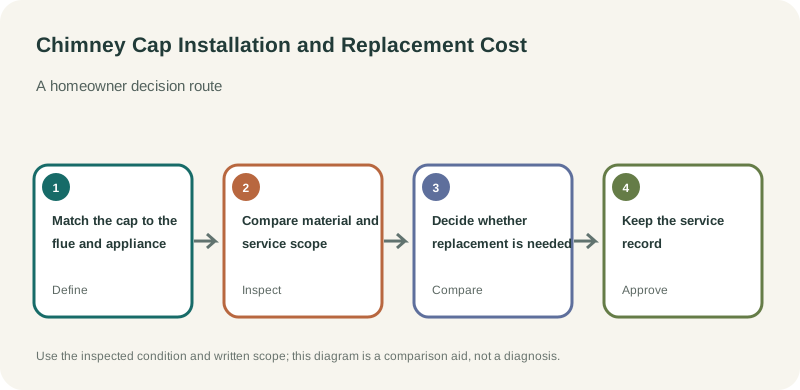
Compare material and service scope
Galvanized, stainless, copper, and other products differ in corrosion resistance and cost, but material alone does not determine value. Request the product specification and warranty conditions, including exclusions for incompatible fuel, salt exposure, or improper installation if relevant. Ask whether the price includes roof access, removal, fastening, inspection, cleanup, and tax. If the leak continues after cap replacement, the original diagnosis should be revisited rather than adding sealant without evidence.
Decide whether replacement is needed
Ask whether the existing cap is missing, damaged, corroded, poorly secured, obstructed, or simply being replaced as part of another repair. If it is intact, a leak or draft concern may be caused elsewhere. The inspection should note the cap condition and any restriction, and the quote should separate cleaning from fabrication or installation. If an animal or debris entry occurred, ask whether the flue and appliance connection also need a qualified inspection before use.
For multiple flues, ask how the cap design maintains appropriate clearances and whether one cover serves the entire crown or each flue separately. A larger cover may require custom dimensions and different attachment than a single-flue cap. Get measurements and a product drawing where fit is not obvious. The installer should explain how the cap will be secured without damaging a sound crown or liner termination.
Keep the service record
Retain the installed product information, material, and date, and ask how it should be inspected and maintained. If the cap is part of a larger crown repair, the invoice should distinguish that work. This record helps a later contractor determine whether a future water symptom is at the cap, crown, or another chimney component.
Know when the cap is only one line in the repair
A cap is a discrete replacement if the old unit is missing or damaged and the flue termination is otherwise sound. It becomes part of a larger scope if the crown is cracked, the liner ends below the surface, the stack is unstable, or water has damaged nearby masonry. Ask the contractor to state which condition applies and why. If the cap is included during crown work, request an incremental price so you can see the added cost of doing both while roof access is already arranged.
A useful quote records flue count, measurements, product and material, removal, attachment, roof access, and any related inspection. With that information, another provider can compare the same task without assuming a cap size or chimney configuration.
Check adjacent causes before replacing the cap
If the cap is rusted or loose but there is no water or draft symptom, replacement may be a routine maintenance task. If the concern is a leak, smoke, or poor appliance performance, ask for an inspection of the connected flue and other termination components before limiting the estimate to the cap. The invoice should state what was inspected and what remains unknown. This avoids expecting a small cap purchase to resolve a symptom that originates in the crown, liner, or appliance.