
The cents-per-kilowatt-hour number on a comparison sheet may not be the rate your electrified home pays. Fixed customer charges, time-of-use periods, seasonal prices, tiers, demand charges where applicable, taxes, and eligibility rules can all change the result. Tariffs are utility-specific and time-sensitive; use the actual current tariff for the property.
Flat and tiered pricing
A flat volumetric rate makes a first-pass model straightforward: additional kilowatt-hours multiply by the stated price. Tiered or block pricing can move some consumption into a higher or lower block as heating, water heating, or charging increases use. Model the whole bill, not just the marginal rate printed in an advertisement.
Time-of-use and seasonal rates
Time-of-use pricing makes the schedule of flexible loads important. EV charging or water heating may be shifted if the equipment, household, and tariff allow it. Heating demand may occur precisely when winter prices or system peaks are high. Seasonal tariffs can make a cold-climate heat pump look different from a summer cooling-only comparison.
Do not assume the homeowner can shift every load. Comfort, hot-water recovery, vehicle departure, weather, controls, and backup heat set practical limits. A managed load may lower a bill while adding equipment cost or inconvenience.
Fixed charges and demand charges
Fixed customer charges remain even when consumption falls. They matter when a household is deciding whether to cancel gas, propane, or oil service, and when comparing a dual-fuel arrangement with all-electric operation. Demand charges are not universal residential charges; where they apply, the billing interval and peak event must be understood before modeling.
Rate-plan comparison
Collect the tariff name, effective date, fixed charge, energy blocks, time windows, seasonal rules, demand component, taxes, rider charges, and eligibility. Ask whether a heat-pump, EV, or controlled water-heating rate requires a separate meter, equipment, enrollment, or utility approval. A rate plan is not a saving until the actual household can use it.
Use one year of bills and test the proposed load shape. An electrification assessment can help estimate the new load, while a utility capacity review can show whether coincident winter demand changes the infrastructure project. A modeled report should state its weather and operating assumptions; it cannot promise your future bill.
How rates change equipment decisions
Higher peak prices can increase the value of load management, thermal storage, or scheduling, but controls cost money and may affect comfort. A rate with a high fixed charge can reduce the benefit of eliminating only one small fuel load. A cheap overnight EV rate may have little value if the vehicle is away or charging is already limited by service capacity.
Compare a simple flat-rate case, the current eligible tariff, and a difficult case with less favorable future prices. Do not publish a national winner from one utility’s tariff.
Questions before choosing
Ask the utility how rates are updated, whether switching back is possible, how winter peaks are billed, and what equipment or enrollment is required. Recheck the tariff when adding a heat pump, EV, storage, or managed loads. The best rate plan is the one whose rules, load shape, and household behavior remain acceptable—not the one with the lowest isolated energy price.
Build the bill from the tariff
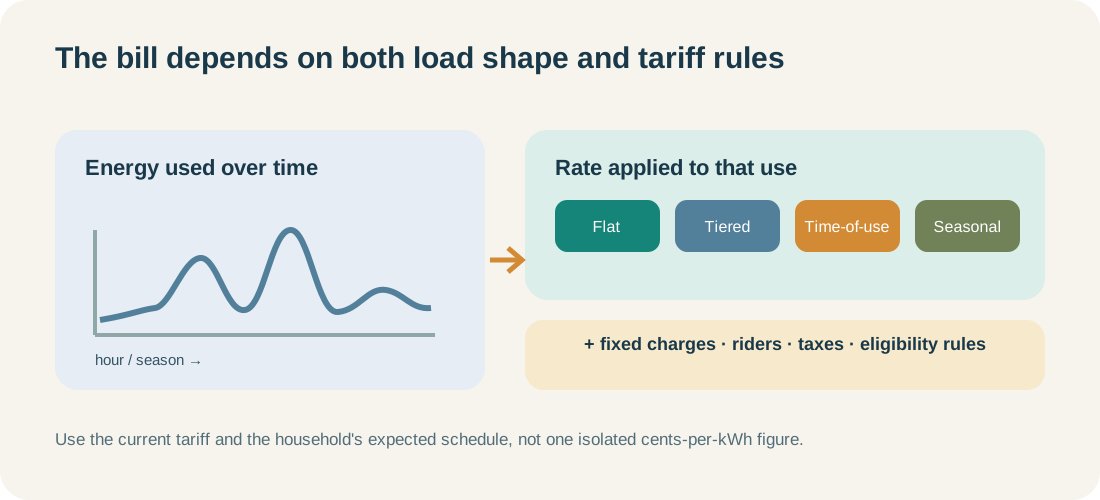
Save the current tariff with its effective date. Record fixed charges, energy blocks, time windows, seasonal changes, riders, taxes, and eligibility. Calculate the proposed annual load by billing period if the rate is time-sensitive. A flat annual average can hide a winter peak or place too much consumption in an expensive tier.
Rate and equipment choices interact
A flexible water heater or EV can respond to a tariff only if the household accepts the schedule and the controls are reliable. A heat pump cannot simply be shifted away from every expensive hour without affecting comfort. A smart panel or load-management system may add capital and software cost. Compare tariff savings with that cost and with a simple plan using the existing rate.
Recheck after electrification
Rates, programs, and eligibility change. Review the bill after the first representative season and compare actual load shape with the model. If a rate change would reverse the choice, the home may need a different operating strategy or a revised ownership calculation. Never present one utility’s tariff as a national result.
A rate plan is not a control strategy
A tariff may reward off-peak consumption, but the home still needs heat, hot water, and charging at practical times. Ask whether equipment can shift load without compromising comfort, manufacturer requirements, or warranty. A control that lowers the bill by creating unacceptable operation is not a successful economic plan.
Calculate the current tariff, the best eligible alternative, and a case in which the household cannot shift enough demand to receive the advertised benefit. Include enrollment, metering, software, and exit costs, and record the tariff date.
Keep fixed charges visible
When comparing partial and full electrification, show the gas or propane customer charge separately from consumption. Eliminating a small final load may not eliminate the account cost, while retiring service may require one-time work. The tariff model and the conversion quote should use the same assumptions about which services remain.
Why a national average is not the price in your model
The U.S. Energy Information Administration’s table released September 24, 2026 reports a preliminary July residential electricity average of 18.31 cents per kilowatt-hour, up from 17.45 cents in July 2025. State averages in the same table ranged from 12.72 cents in Louisiana to 33.61 cents in California and 48.00 cents in Hawaii. Those values describe average residential revenue divided by sales at state level; they are not a customer’s tariff, marginal rate, time-of-use schedule, or a Canadian comparison. They also do not indicate what an individual electrification project will pay.
An Eastern Massachusetts Eversource schedule provides a local example of seasonal heat-pump delivery pricing. Its R1HP and R2HP residential schedules for September 1 through December 31, 2026 show a USD 10 monthly customer charge and separate summer and winter distribution components, with transmission and other charges listed separately. These are delivery-rate details only; they do not establish the household’s full electricity price, bill, eligibility, or savings. Check the serving utility’s current schedule before using local figures.
For a project model, take the current tariff from the serving utility and record its effective date. Separate energy charge by tier or time period, delivery charges that vary with consumption, fixed monthly charges, demand charges if applicable, taxes, riders, and export credits if solar is involved. Check whether the household is eligible for the rate plan used in the estimate. A single “cents per kWh” value can obscure a large peak/off-peak difference or a charge that remains unchanged when consumption falls.
Model expected operating behavior rather than multiplying all new heat-pump use by the cheapest rate. If the system can preheat or charge at off-peak times, state the control and comfort assumptions. If resistance backup or EV charging may overlap with a peak period, include it in the high-cost case. Compare the current and proposed rate schedules using the same interval or monthly usage profile where data is available.
The EIA average is useful as a dated U.S. cross-check if a household has no better context, but it should be labeled as context only. For Canada, use the province, utility, and customer class tariff directly; do not convert U.S. averages into Canadian rates. Recheck the tariff before accepting an equipment proposal, because rate structures and program eligibility can change independently of the equipment.
Save the tariff that was used
A homeowner’s bill changes when the applicable tariff changes, so save the rate schedule or bill page used in the estimate and record its effective date. Note the customer class, service territory, time period, tier, and any rider included. If the tariff is seasonal or time-of-use, retain the schedule rather than only one annual average.
Re-run the estimate before a major equipment commitment if the utility has filed a rate change or the household moves to a different plan. If the model uses the EIA state average as a rough check, identify that it cannot predict the effect of the home’s actual load shape. This makes it possible for the reader or contractor to reproduce the estimate later.
Model load shape when the tariff varies by time
For a time-of-use or demand-based tariff, annual kilowatt-hours alone are insufficient. The model needs an hourly or interval profile, or a transparent proxy, for heating, water heating, EV charging, and other major loads. Show which loads can shift and which are constrained by comfort or schedule. A flat rate can make two operating strategies look equivalent even when a time-varying plan changes their cost.
If the household has interval data, use it to establish the existing shape, then add modeled equipment at the times it is expected to operate. If no interval data exists, present the assumption and a sensitivity case. Do not promise savings from load shifting unless the equipment controls and rate plan support it. The model should state whether it uses a current tariff or a historical average. A historic average is appropriate for context; a customer-specific forecast should use the applicable schedule and expected consumption pattern. If the rate plan requires enrollment or a new meter, include the process and any conditions before counting savings.
This distinction is also important when discussing incentives or financing. A program offer may depend on territory and income, while the electricity tariff depends on utility service and customer class. Verify both independently.
An offer that recovers retrofit costs on the bill is a separate project obligation from the price of electricity under the tariff. For the work scope, continuing charge, modeled savings, and transfer terms, see the guide to utility-funded home electrification and energy retrofits.