
Dual fuel can mean a heat pump with combustion backup or a home that electrifies most loads while retaining gas, oil, or propane for one system. All-electric eliminates the remaining combustion load and its service decisions. The cheaper path depends on upfront work, fixed charges, local rates, climate, backup needs, and the value of redundancy.
Compare what each path retains
A dual-fuel home may retain a furnace, boiler, tank, gas meter, oil tank, propane delivery, venting, maintenance, and future fuel-price exposure. An all-electric home may require more electrical capacity, a different backup strategy, or a larger transition project. Detail the actual end uses; “dual fuel” is not one equipment configuration.
Upfront cost
For dual fuel, include the heat-pump project, controls, retained-system servicing, and any capacity work. For all-electric, add the final conversion, fuel retirement, vent and tank work, meter or service changes, and restoration. A dual-fuel quote that excludes the existing system’s maintenance is not comparable with an all-electric quote that includes decommissioning.
Cold-climate performance deserves separate attention. Heat-pump output and efficiency change with conditions, and backup heat can affect both service capacity and bills. NRCan advises skilled design and proper sizing and notes that electrical upgrades and other renovations can extend the project timeline in some cases.
Operating costs and fixed charges
Model local electricity and fuel prices, delivered heat, heat-pump seasonal performance, backup use, and fixed customer charges. A dual-fuel home may avoid expensive electric backup during a cold event but continue to pay for fuel service. An all-electric home may use more electricity while eliminating fuel consumption and a fixed charge. The result can reverse with rates and climate.
Use low, expected, and difficult rate/performance cases. Do not present a single payback based on raw energy-unit prices. Cooling value, maintenance, and equipment replacement are real economic inputs, but they should be stated rather than assumed.
Reasons to retain fuel
Retaining fuel can provide backup, reduce a service-capacity project, preserve an existing distribution system, or suit a household that values redundancy. It can also avoid replacing sound equipment. The costs are fixed charges, fuel delivery or tank management, combustion maintenance, future retirement, and possible loss of flexibility if equipment fails at the wrong time.
Reasons to go all-electric
Full conversion can simplify the energy systems, eliminate a remaining customer charge, and align all replacements under one plan. It may be attractive when equipment is near end of life, fuel retirement is already required, or electrical capacity is being upgraded for other reasons. It can be less attractive when the electrical project is expensive, winter backup is unresolved, or the retained fuel provides valuable resilience.
Decision framework
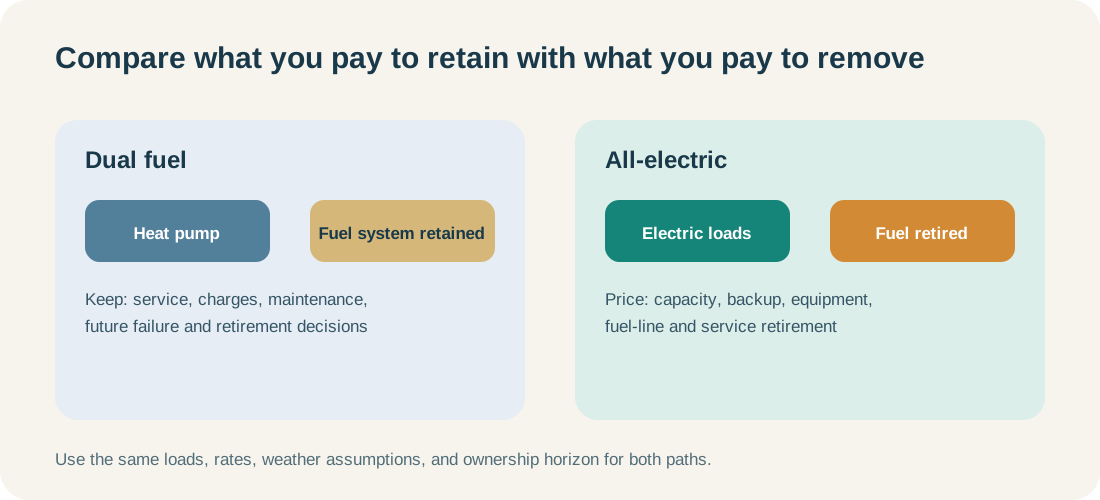
Compare each path over your ownership horizon with complete scope, annual bills, fixed charges, maintenance, replacement timing, emergency risk, and future loads. The winner is the one that meets comfort and capacity needs at an acceptable lifecycle cost. Do not treat fuel elimination as free or backup as costless.
Separate backup value from fuel habit
Ask what the retained system actually does. A furnace that can heat the whole home is different from a fireplace used occasionally; a tank that remains for one appliance is different from a complete dual-fuel control strategy. Price inspection, fuel delivery, fixed charges, parts, and eventual retirement. If backup matters for outages, confirm what still operates without grid power; fuel retention alone is not a complete resilience plan.
Test the break-even assumptions
Run rate cases for electricity and the retained fuel, performance cases for mild and cold weather, and capital cases with and without capacity or fuel-retirement work. Include the cost of a service upgrade in all-electric, and the cost of fixed charges and future failure in dual fuel. The result may be close enough that comfort, simplicity, repair access, or a planned remodel decides it.
What makes the result change
The choice can change when gas, oil, or propane rates move, the heat pump operates differently in cold weather, the utility requires a service project, or the household adds an EV. Identify the two assumptions with the greatest effect and test them. A close result should not be presented as a fixed recommendation.
Compare the failure modes
For dual fuel, ask what happens if the combustion system fails, fuel delivery is delayed, or the changeover control does not operate. For all-electric, ask what happens during a cold peak, service interruption, or delayed utility work. This is not a request for a universal resilience promise; it is a way to price temporary heat, maintenance, and backup decisions that otherwise remain hidden.
Questions before choosing
Ask the installer to state the changeover strategy, backup capacity, service assumptions, maintenance responsibility, and equipment life. Do not let a system comparison become equipment selection; use the owning HVAC guidance for that decision. The system-level choice is resolved when the household understands what it is paying to retain and what it is paying to remove.
Compare the operating rule, not just the equipment list
A dual-fuel proposal should state when the home uses each system and who sets that operating point. If a heat pump operates above a chosen outdoor temperature and a furnace takes over below it, ask whether the threshold is based on comfort, equipment capacity, energy prices, or electrical constraints. Ask what happens during defrost, a heat-pump fault, a power interruption, or a period when the backup fuel is unavailable. Without that operating rule, an estimated annual bill cannot be independently checked.
The all-electric alternative should identify its own cold-weather strategy. It may use a larger heat pump, staged resistance backup, thermal storage, envelope work, or a combination. Each choice changes installation cost, electrical demand, and operating exposure. A dual-fuel system can reduce electrical peak demand or preserve an existing furnace, but may retain gas fixed charges, inspections, combustion equipment, and service dependencies. An all-electric system can simplify the fuel inventory but may need a service project or a defined outage plan.
Request the same design temperature and indoor comfort assumptions for both quotes. Have the HVAC professional show expected heat delivery, backup operation, and any capacity gap; then have the electrician or engineer review the electrical consequence. Model both choices with local fuel and electricity rates, fixed charges that actually change, maintenance, and the cost of retaining or retiring the existing system. Do not count a gas fixed charge as avoided if another appliance will keep the account open.
Consider control and ownership complexity as well. Dual-fuel systems can require compatible thermostats, interlocks, commissioning, and maintenance of two sources. All-electric systems can require electrical controls and may need more deliberate backup planning. A homeowner who values redundancy may accept these costs; another may prefer one system and a simpler maintenance plan. State those preferences rather than pretending the cheapest modeled year settles the decision.
The result should remain valid only for the quoted equipment, tariffs, and controls. If one is changed, revise the operating-cost model.
Use a break-even test with explicit boundaries
A simple test compares annual fuel and maintenance costs, but it should not blend capital cost and service value. First determine which option costs more to install, including electrical and retirement work. Then estimate annual operating costs under the same weather and comfort assumptions. Finally show how many years of expected operation are needed for any operating-cost difference to offset the initial premium. If the household may move sooner, the payback period may have little value to them.
Do not assume dual fuel always uses less energy or that all-electric always has lower maintenance. The result depends on the selected equipment, controls, local tariffs, fuel delivery, backup frequency, and retained customer charges. Use a wide sensitivity range where price or performance is uncertain and state what result would make the household change its preference.
Include resilience as a separate benefit if it matters. Backup only has value when the source can operate during the outage conditions the household expects; grid-dependent controls or ignition may limit that value. Ask the installer to explain what remains functional, and what maintenance is required to preserve that option.
Check fixed charges before claiming operating savings
If the dual-fuel path retains a gas account for backup, include the customer charge and any minimum delivery or maintenance obligation even when annual fuel use is low. If all-electric service allows the account to close, verify the utility’s process and any remaining retirement costs. Do not treat the commodity charge alone as the cost of keeping fuel available.
A household may still choose dual fuel for resilience or cold-weather confidence. Show the price of that value separately from the variable heating cost, so the choice can be reviewed if rates, equipment, or household needs change. Before signing, ask each contractor to list the items included in its energy estimate and the conditions that would invalidate it. The HVAC proposal should identify capacity and controls; the electrical proposal should address the associated loads; and the fuel supplier or utility should confirm the retained-service charges. Keep each party’s estimate separate but use the same final-home assumptions.
A single annual total without that shared basis cannot show whether the difference comes from efficiency, rates, missing fixed charges, or a narrower equipment scope.