
“Energy audit” can describe a quick walkthrough, a diagnostic visit, or a modeled evaluation with a written upgrade roadmap. Those are not interchangeable purchases. The useful cost question is therefore: what level of evidence do you need before approving insulation, air sealing, heating changes, or a broader electrification project?
Three levels of service
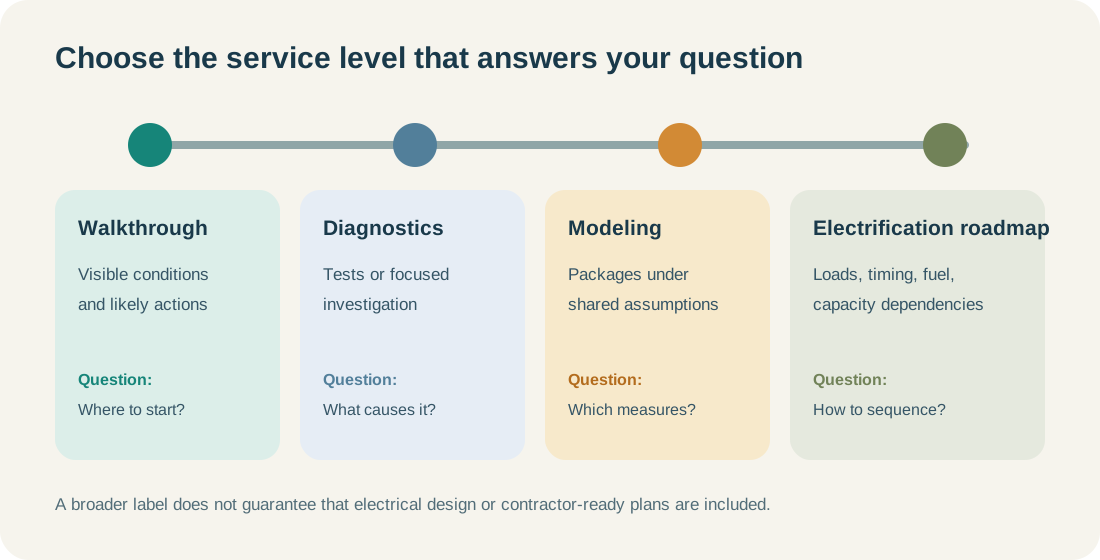
A basic walkthrough may review utility bills, visible insulation, drafts, equipment, and obvious maintenance issues. It can be sensible when you need a short list of likely opportunities, but it may not locate air leakage or quantify competing measures.
A diagnostic assessment can add blower-door testing, thermal imaging, combustion or ventilation observations where appropriate, and a more detailed report. The exact instruments and safety boundaries vary by provider. Ask what the testing can and cannot establish; a thermal image is a clue, not a complete diagnosis of every enclosure problem.
An energy-modeling evaluation estimates energy use under standardized assumptions and compares upgrade packages. In Canada, NRCan describes EnerGuide evaluations as on-site assessments that examine the home from basement to attic and may produce a rating and renovation report. The report can show heat-loss and energy-use breakdowns, recommended improvements, and modeled results.
What changes the fee
Price is affected by house size and complexity, travel, testing equipment, report detail, whether a follow-up is included, and whether the visit is part of a current utility or government program. A home with multiple additions, mixed heating systems, moisture concerns, or planned electrical changes takes more interpretation than a compact, uniform house.
Program support can lower the homeowner’s fee, but program participation, approved assessors, and eligibility are jurisdiction-specific and can change. Treat a subsidized assessment as a current program question, not as a permanent market price.
Audit versus electrification roadmap
An audit primarily explains how the building uses or loses energy and what improvements may help. An electrification roadmap must additionally coordinate fuel retirement, future electrical loads, equipment replacement timing, and infrastructure. An audit may recommend a heat pump without deciding whether the service can support it, whether the water heater should change first, or whether the gas customer charge remains after other loads are electrified.
If several systems are changing, ask whether the auditor’s deliverable answers those system-level questions or whether a separate electrification assessment and load calculation are needed.
When the assessment earns its cost
An audit is most useful when the cause of high bills or comfort problems is uncertain, when enclosure work could change equipment sizing, when you are comparing several retrofit packages, or when a planned remodel creates a short window for low-disruption improvements. It is less valuable when a single failed component has an obvious, independently scoped replacement.
Use the report to compare measures as packages. For example, a modest air-sealing project may change comfort but not justify delaying an urgent heating replacement. Conversely, installing oversized equipment before understanding the building load can create a cost that the assessment could have prevented. The report should show dependencies rather than declare one universal “envelope first” rule.
Limits of modeled savings
NRCan cautions that modeled or estimated household use need not match utility bills because the model uses standard operating conditions, weather, and assumptions about unusual loads. That is not a flaw; it tells you to treat the result as a comparison model. Ask which conclusions are robust if occupancy, thermostat settings, weather, or rates differ.
What the report should help you reject
A good audit can show that an expensive equipment change will not solve a comfort problem caused by distribution, air leakage, moisture, or another enclosure issue. It can also show that a deep retrofit is unlikely to change the immediate replacement decision. Ask the provider to identify measures that are mutually dependent instead of presenting a shopping list.
A practical value test
Before booking, write down the decision the audit may change and the approximate cost of being wrong. If the result could change a large equipment purchase, prevent a service upgrade, or capture a remodel access window, the fee has a clear economic purpose. If it will only confirm what is already known, choose a narrower assessment.
What to ask before booking
Confirm the inspection areas, testing, report, follow-up, credentials relevant to the program, travel and taxes, and whether electrical capacity or fuel-system retirement is included. Ask for a sample report and a statement of exclusions. The right audit fee buys decision clarity; the wrong one buys a generic list that still leaves you unable to compare quotes.
Match the audit to the decision
If your concern is a drafty room, a diagnostic assessment may be more useful than a full modeled package. If you are choosing between envelope work and a heat-pump replacement, look for load, comfort, and equipment interaction. If several fuel changes are planned, ask for an electrification roadmap or a defined handoff to one rather than assuming the audit includes it.
Testing earns its cost when it can change the next scope. A blower-door result is useful when it changes air-sealing or ventilation decisions; it is less useful when no project budget exists to act on it. A modeled report is useful when it compares measures on common assumptions and translates them into quote scopes.
Compare audit quotes
Normalize the inspection area, tests, report, follow-up, travel, tax, and program paperwork. Ask whether the provider will inspect combustion equipment or merely record it, whether thermal imaging is included, and whether a second visit costs extra. Confirm that the report distinguishes observed defects, modeled savings, and recommendations requiring another professional.
For a home with urgent heating or moisture problems, do not delay necessary work solely to obtain a perfect audit. Use the audit to improve a planned decision, not to replace immediate diagnosis or repair.
Read program prices as scope examples
Published assessment offers illustrate why “audit cost” is difficult to average. Prince Edward Island lists CAD 99 plus HST for a subsidized assessment through program partners, but the price is linked to the Home Insulation Rebates pathway. Mass Save offers a no-cost assessment for eligible one-to-four-unit homes in participating sponsor territories. New York’s EmPower+ offers a no-cost comprehensive assessment and custom plan for income-eligible households in one-to-four-family homes; the separate Residential Energy Assessment Program has ended. None of these amounts is a general market rate for an unsubsidized audit.
Ask the program administrator what the visit actually covers before comparing it with a private diagnostic audit. The useful distinctions are whether the assessment includes a blower-door test, thermal investigation, modeled energy report, electrification sequencing, or an electrical-capacity calculation. Programs may focus on eligible efficiency measures and referrals, while a private specialist may be hired for a narrow moisture, comfort, combustion, or equipment-sizing question. A lower fee does not make the scopes equivalent.
Eligibility also changes the economics. Confirm the property type, service territory, household-income rules, owner or renter requirements, approved-provider process, and whether an assessment is required before rebate work. Ask whether the program pays the provider directly, whether the homeowner owes a copayment, and whether the recommendations remain usable if the household does not proceed with program measures. Save the written scope and report; a second contractor can then quote from the findings rather than repeat the same basic visit.
If you are comparing offers, make a two-column list: information delivered and decision enabled. A basic visit may be enough to identify likely insulation priorities. A diagnostic audit is more valuable when the source of drafts or uneven rooms is unclear. A broader roadmap is justified when multiple systems, electrical limits, or replacement dates interact. This turns program availability into a useful first step without confusing a subsidized assessment with a complete project design.
Match diagnostic testing to the suspected problem
Pay for a test only when its result can change the next action. A blower-door test can quantify air leakage, but the report should also explain where follow-up investigation is needed. Thermal imaging depends on suitable temperature conditions and does not by itself prove that a wall needs insulation. Combustion or ventilation checks have distinct safety and operating boundaries. Ask which observation is measured, which is inferred, and which requires a specialist.
If the audit is required for a program rebate, confirm whether the initial visit and any post-work verification are both included in the homeowner’s quoted fee. PEI’s published rate is tied to its program pathway; it should not be mistaken for a general price for extra testing or a second visit. Request a sample report with personal information removed so you can see how observations turn into prioritized work.
Decide whether a follow-up visit is necessary
Some findings are only confirmed after access is opened or a repair is completed. Ask whether the audit fee includes a follow-up, a post-work test, or only the initial report. If a program requires a later verification visit, clarify who pays for it and whether the same provider must return. The cost comparison should include both visits when the decision depends on before-and-after measurement.
Keep the report and any test results with invoices. If comfort problems continue after recommended work, the next specialist can see what was measured and what remained an assumption rather than repeating the initial inspection.