
A load calculation is a professional capacity assessment for the proposed electrical system. It is not the same as looking at the service label, counting breaker handles, or inspecting whether a panel has empty spaces. Because providers and local authorities use different scopes and rules, there is no dependable universal fee. Compare the calculation’s inputs, deliverable, and acceptance by the relevant authority.
Why electrification needs one
Heat pumps, resistance backup, water heating, induction cooking, dryers, and vehicle charging can all be reasonable individual additions. The capacity question arises when they share one service. The service rating is a starting fact; calculated demand, equipment characteristics, operating controls, panel condition, future loads, and local requirements determine the practical answer.
The calculation may prevent two opposite mistakes. It can show that a planned service upgrade is not needed under an accepted design, or it can identify a real constraint before equipment is ordered. Neither outcome is guaranteed until the calculation uses actual equipment data and the method accepted where the project is located.
What the professional needs
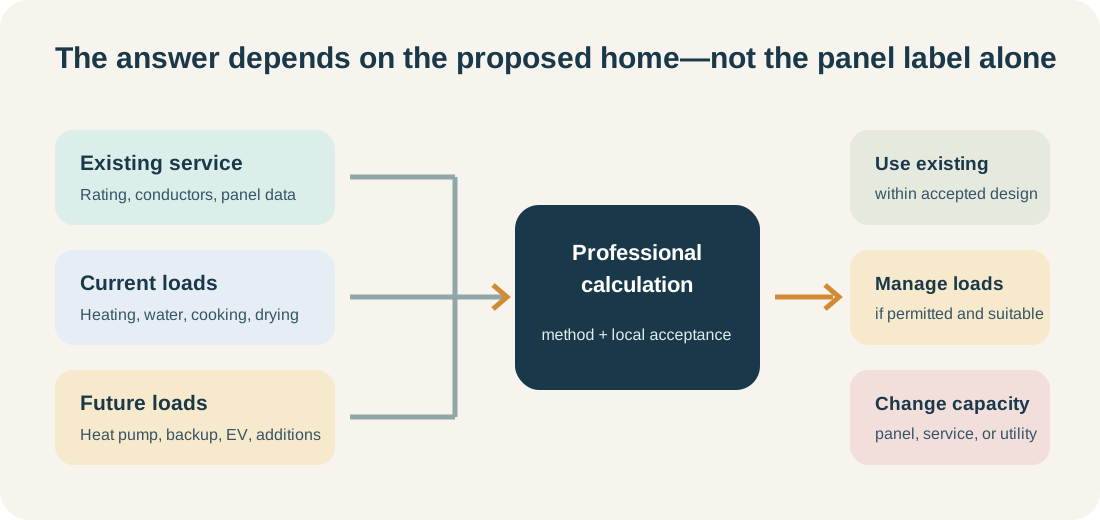
Prepare service and panel information, existing major loads, heating and water-heating equipment, cooking and drying equipment, proposed equipment specifications if known, EV plans, solar or storage plans, and any historical demand data available from the utility. A future-load list matters: leaving out a later EV or resistance backup can make today’s answer unsuitable for the project you actually intend.
The professional may distinguish connected or nameplate load from calculated demand and may evaluate managed loads or historical demand where the adopted rules permit. Those terms are technical and method-specific. This article is not a DIY calculation guide; the arithmetic that appears simple can have code and safety consequences when used to approve equipment.
Calculation versus panel inspection
A panel inspection answers questions about visible equipment condition, labeling, space, and obvious installation issues. A load calculation answers whether the proposed combination of loads fits a service under an accepted method. You may need both. A new panel with abundant breaker space can still be limited by service conductors or calculated demand, while a crowded panel may have options that a simple visual inspection does not reveal.
What the fee should buy
Ask whether the price includes a site visit, documentation review, equipment-specific assumptions, a written result, one revision, and communication with the electrician, utility, or permit authority. A cheap spreadsheet using generic wattages is not equivalent to a signed or otherwise accepted professional analysis. A whole-home roadmap may include capacity screening, but confirm whether a formal calculation is separate.
The economic value is highest when the decision is between a service upgrade and a managed-load strategy, when several systems will change together, or when utility work has a long lead time. It is lower when the project is a single small load with an already documented, accepted design.
Possible outcomes
The result may support the proposed equipment without major capacity work, require a smaller enabling change, point to demand management, or identify the need for a panel, service, or utility project. It may also show that equipment selection must change. A result that says “upgrade” should explain the limiting load and whether the limitation is panel space, service capacity, conductors, utility infrastructure, or local approval.
Methods and sign-off requirements vary across US and Canadian jurisdictions. A National Electrical Code development document can illustrate why service-load and energy-management treatment is technical, but it does not tell you which version your authority has adopted. Ask the electrician and utility what documentation they accept before paying for a report.
Information quality changes the result
An analysis based on unknown equipment, incomplete panel records, or an omitted future load may be cheap but require redesign later. Gather model numbers, service information, utility demand history where accepted, and the planned operating mode before the visit. Tell the professional what is fixed and what is still a choice.
If the result recommends managed loads, ask for the consequence in normal and peak conditions. If it recommends more service, ask whether the limiting factor is inside the home or at the utility. Those distinctions determine which quote to request next.
Quote questions
Request the assumed future loads, equipment model or design values, demand method, exclusions, validity period, and revision policy. Ask whether the result remains valid if you add a larger heat pump, electric resistance backup, EV charging, solar, or a second water heater. The calculation is most useful when it is a transparent decision document rather than a single unexplained capacity number.
What the result changes in the budget
The calculation may remove an unnecessary service-upgrade allowance, support a smaller equipment choice, identify a circuit or panel-space problem, justify managed loads, or confirm that utility work is needed. The report should connect the result to the actual quote rather than leave the homeowner with a number no contractor uses.
Ask for it before final equipment selection when capacity is uncertain. If a heat pump is substituted for a larger model, resistance backup is added, or EV charging changes from scheduled to unrestricted, the analysis may need revision. Treat validity as tied to the stated loads and assumptions.
Three scope cases
- Screening review: existing documents and a limited visit identify whether a formal calculation is needed.
- Project calculation: the professional gathers service and equipment data, applies an accepted method, and supplies a written result.
- Coordinated design: the calculation is part of an electrification roadmap and is revised as equipment or utility choices change.
Buy the scope the next decision requires. Confirm whether a utility, engineer, electrician, or authority must accept the document; a report no one can use is false economy.
Compare the deliverable by the decision it supports
A useful request starts with the decision that is blocked. If the choice is between two heat-pump models, the professional needs the candidate model data and the planned backup mode. If the question is whether an EV charger can be added, the request should include charger output, expected charging window, and any existing managed loads. If a utility upgrade is possible, ask whether the analysis is meant to support a permit, utility application, equipment selection, or only an early feasibility discussion. The same word, “calculation,” can describe these different levels of service.
Ask the provider to identify the method and the inputs the method needs, then separate the fee into document review, site visit, electrical measurements or records, engineering or electrician analysis, written report, revisions, and meetings with the project team. A short screening opinion may be appropriate before equipment is selected, but it should not be priced or represented as a final approval document if it omits model-specific data or the authority’s required format. Conversely, a detailed report can be wasted effort if the utility later requires its own design or an updated load schedule.
A good written conclusion should show more than a pass/fail label. It should state the service and panel information used, proposed equipment and backup assumptions, loads that are managed or excluded, any conditions for operation, the governing method or local acceptance route, and what change would require the work to be revisited. It should identify whether the limiting issue is a physical panel condition, calculated demand, service conductors, or utility infrastructure. That explanation helps the homeowner obtain the next quote instead of paying twice to rediscover the same constraint.
There is no evidence-based standard fee to insert here. Compare current local proposals by scope, acceptance, revision policy, and whether the report will be usable by the electrician, utility, and permit authority involved in this specific project.
Establish a change rule before relying on the report
The report should state when a revision is necessary. A different heat-pump model, larger resistance element, higher-power charger, added dwelling unit, or changed load-control sequence can alter the inputs. Ask whether the provider offers a reduced-price revision and which changes require a site revisit. This is especially useful when bids are being collected before every product is selected.
Also ask whether the calculation is accepted by the local authority or utility for the intended purpose. A professionally prepared document can still be the wrong deliverable if it omits the authority’s requested format or scope. Record the reviewer or official who confirmed acceptance and the date. If no formal approval is intended, label the report as planning analysis so it is not reused later as a permit determination.
Protect the report from being reused outside its scope
Keep the final load list, equipment schedules, and calculation date together. If a future homeowner, contractor, or utility receives only the conclusion page, they may not see the limitations. Ask the preparer to identify whether the result applies to a named installation, a proposed design, or a limited planning scenario. The language should make the intended use clear.
When changes are made, keep both the old and revised assumptions. A revised calculation should not silently erase why the earlier plan differed. This simple record makes the professional fee more valuable across contractor changes and reduces the chance that a preliminary answer is treated as permanent approval.