
“Grounding repair” is not one standardized project. A report may refer to a service-level connection, bonding between conductive parts, grounding-electrode work, a branch-circuit equipment-grounding problem, or a two-prong receptacle. The price can therefore range from a focused correction to a system-level project involving panel, service, or rewiring work.
Published market evidence is weak for one universal grounding price. Canadian electrician labor observations around CAD $80–$150 per hour provide context, but the visit, materials, access, permit or inspection, and actual deficiency determine the total. A quote should name the condition rather than use “grounding” as a blank allowance.
Grounding and bonding in plain language
Grounding broadly connects an electrical system to the earth or a grounding path as defined by the applicable system. Bonding connects conductive parts so they remain at a managed electrical potential and protective devices can operate as intended. The exact design is technical and jurisdiction-specific; this overview is not a wiring method or a DIY procedure.
Do not install a ground rod, jumper, three-slot receptacle, or panel connection based on a generic online diagram. CPSC identifies panel work as requiring qualified professional involvement, and local codes determine accepted methods.
How the problem is found
The concern may appear in a home inspection, an electrical assessment, a renovation review, a symptom investigation, or during panel/device work. A visible two-prong outlet does not prove the full circuit condition, and a three-slot face does not prove an equipment-grounding path. A professional may need to identify the panel, service, circuit, boxes, conductors, and alterations before pricing correction.
Ontario ESA also flags replacement of metallic water meters or domestic water lines as an electrical-coordination issue: interrupting pipe continuity can create shock or arcing exposure, especially where a neutral connection is defective. If plumbing work will remove or replace a metallic service line, ask an Ontario licensed electrical contractor to assess grounding and bonding before the old line is removed, and include that coordination in the project scope. ESA assigns the electrical work to that contractor; its notice is not a homeowner procedure or a rule for other jurisdictions.
Cost paths
| Finding | Likely scope |
|---|---|
| Localized connection or bonding correction | Service call, accessible correction, testing, and documentation. |
| Device or circuit grounding concern | Receptacle/circuit work, access, protection options where locally accepted, and labeling. |
| Panel/service grounding or bonding | Equipment shutdown, service or panel work, authority/utility steps, and inspection. |
| Widespread ungrounded or legacy circuits | Partial or whole-house rewiring decision with substantial access and restoration. |
The cheapest material line may be irrelevant if the electrician must trace a concealed circuit or coordinate a service shutdown.
Scenarios and decision boundaries
Contained correction: The deficiency is identified, accessible, and does not interact with panel or branch wiring. This is the narrowest case.
Renovation correction: The problem is found while walls are open. Combining work can reduce duplicate access, but the quote should still list the circuits and tests.
System correction: Multiple circuits, the panel, service entrance, legacy wiring, or an inspection condition are implicated. Compare a defined system correction with partial rewire or panel work rather than stacking small grounding allowances.
Code requirements vary by U.S. adoption and Canadian provincial or territorial implementation. Alberta’s code page is evidence that the Canadian jurisdictional framework must be checked; it is not a complete rule for every province. Ontario and B.C. process examples likewise should not be generalized.
Quote questions
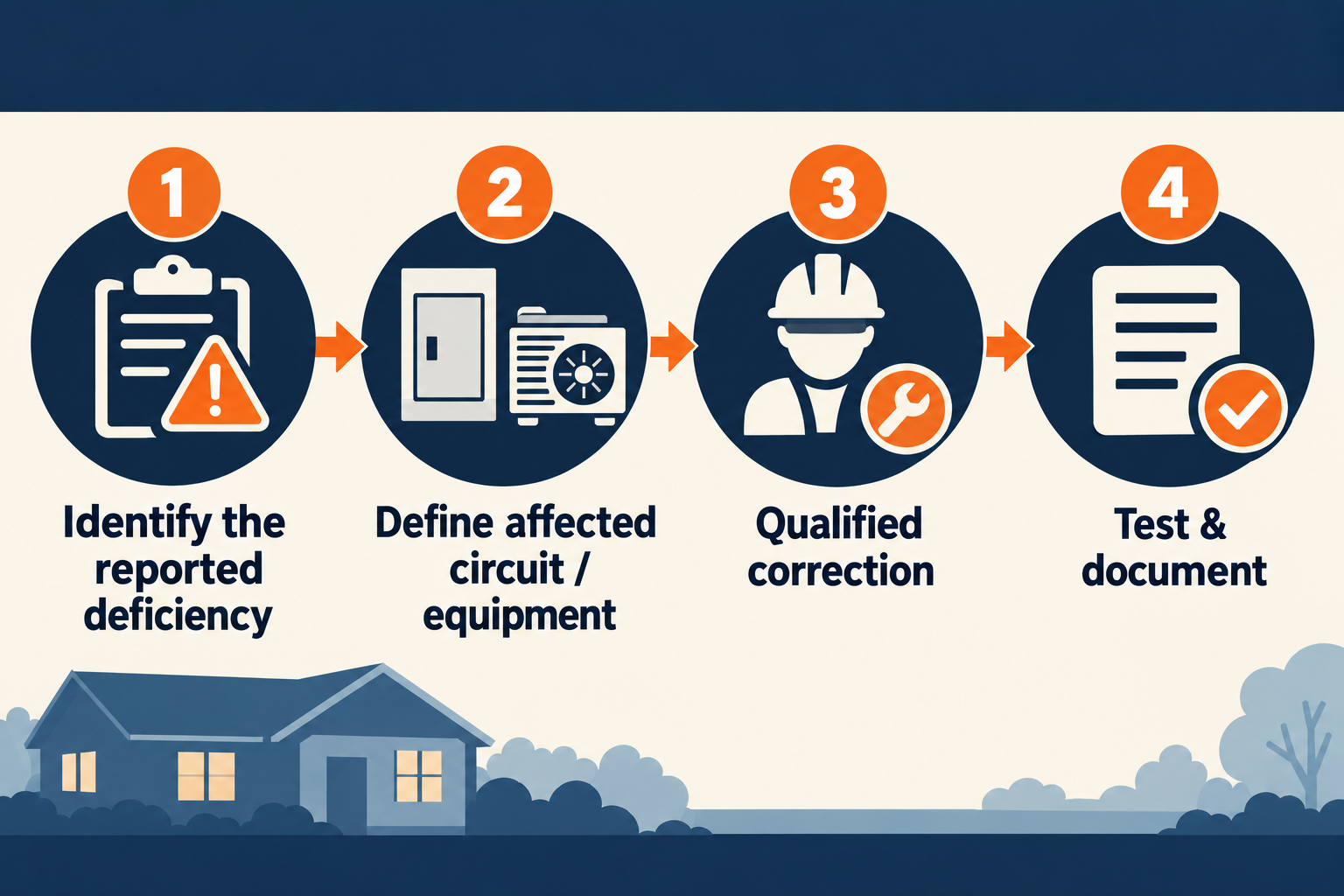
Ask the electrician to identify the deficiency, affected equipment/circuits, proposed correction, access, panel/service interaction, materials, testing, permit or notification, inspection, labels, restoration, and retained uncertainty. If the report says “not grounded,” ask whether that means a device observation, a circuit condition, or a service-level finding.
The decision is financially sound when the quote resolves a defined electrical deficiency and does not imply that a cosmetic three-slot replacement or a generic ground connection fixes a broader system condition.
Convert report language into scope
Ask the professional to translate “ground missing,” “bonding deficient,” or “not verified” into an affected component and proposed correction. A report may identify an observation without proving why it exists. The cost of a service-level correction is not comparable with the cost of one device or circuit.
Request a staged approach when the condition is unclear: assessment, defined repair, testing, and documentation. If walls must open, agree on access and finish responsibility. If service equipment or utility coordination is involved, identify the shutdown and authority boundary before work starts.
Repair, upgrade, or rewire
A localized correction may be economical when the deficiency is isolated and the rest of the system is assessed. A broader rewire may make sense when many ungrounded or altered circuits require the same access, or when a planned renovation exposes the routes. A panel replacement may be related but does not automatically correct branch-circuit grounding. Keep those decisions separate in the quote.
For long-term ownership, include future renovations and the cost of reopening finished surfaces. For a short horizon, require accurate documentation of what was corrected and retained. The best quote names the deficiency and its limits rather than promising that a generic “grounding upgrade” solves every concern.
Ask for a testable completion record
The record should identify the affected equipment or circuit, correction performed, tests or observations completed, retained limitations, and any inspection or authority outcome. A receipt for a ground rod or device does not prove that a broader deficiency was resolved. Keep the technical method with the qualified professional rather than attempting to reproduce it.
If the work came from an inspection, compare the completed record with the report wording. If the work is part of a rewire or panel change, identify which grounding and bonding items are included and which remain separate. This prevents a broad safety phrase from hiding a narrow correction.
Distinguish the desired result from the visible symptom
“Needs grounding” can describe an inspection observation, an ungrounded receptacle, a missing bonding connection, a service issue, a damaged conductor, or a broader legacy-system condition. These paths do not share one price. Ask the electrician to identify the affected circuit or equipment, the condition observed, the test or inspection basis, the proposed correction, and the result that will be documented.
If the homeowner’s goal is appliance compatibility, shock protection, inspection acceptance, or a complete grounding system, say so explicitly. A device-level protection solution may not create a grounding conductor; a bonding correction may not repair a damaged branch circuit. Keep panel, service, rewire, and finish work visible as separate scope where relevant.
Because the work is high consequence, a low allowance with no method or completion record is not a meaningful saving. Pay for a qualified assessment when the report does not identify the path.
Use a professional scope for high-consequence work
Grounding and bonding can interact with service equipment, branch circuits, metal systems, and protection. The homeowner’s economic task is to identify the deficiency, price the professional correction, and preserve the result—not to select a method from a generic illustration. Ask for the applicable authority or inspection outcome when one is required.
A staged quote is useful when the deficiency is not yet known: assessment first, repair second, testing and documentation third. That structure reduces the risk of approving either an unnecessary whole-house project or an inexpensive correction that does not address the report.