
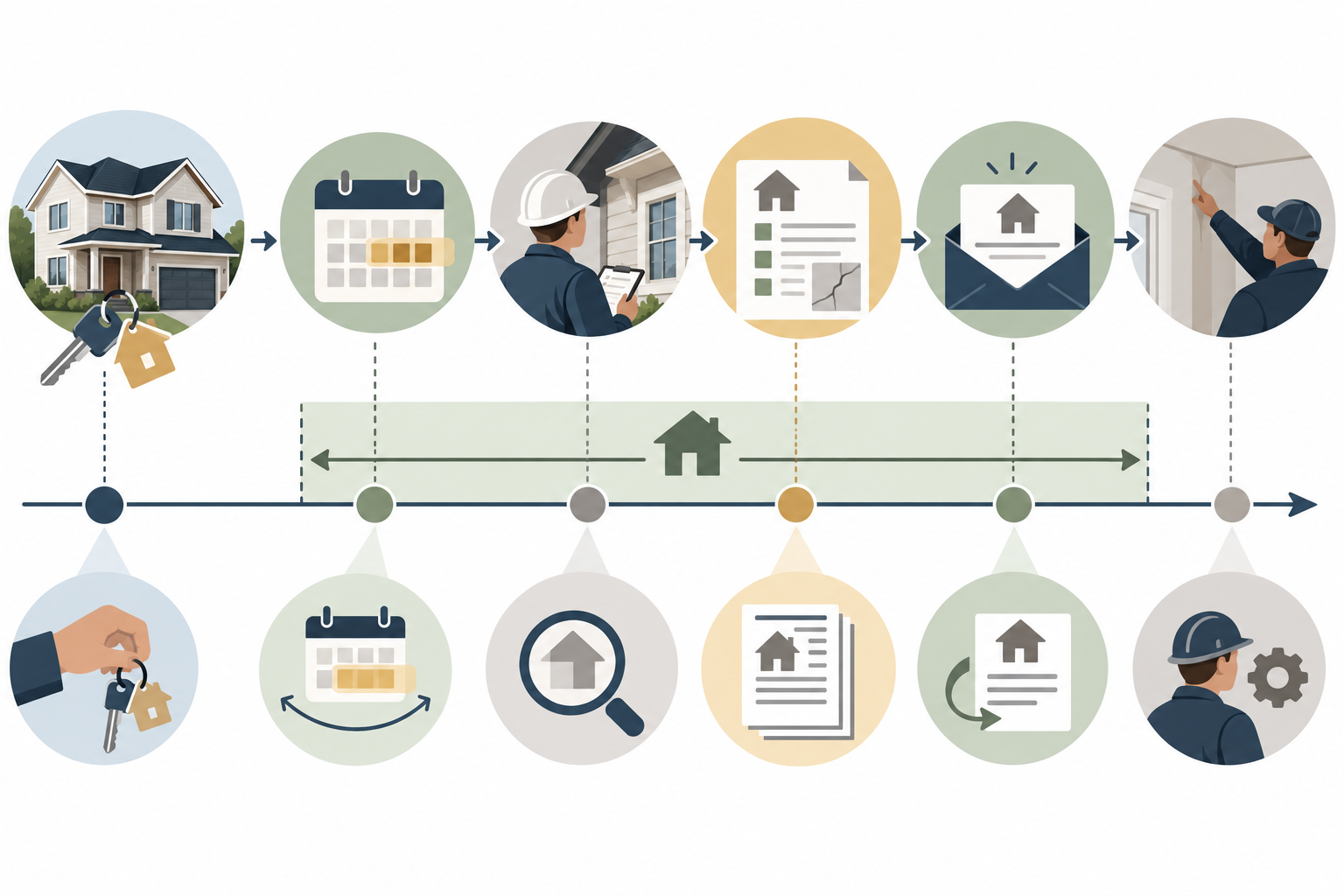
A warranty inspection is a private inspection scheduled early enough to document defects before a builder, contractor, or statutory warranty deadline. “11-month inspection” is a common planning phrase for a one-year warranty, not a universal legal deadline. The useful timing depends on the warranty start date, reporting rules, contract, jurisdiction, and whether the home is new, remodeled, or covered by another program.
What the inspection can do
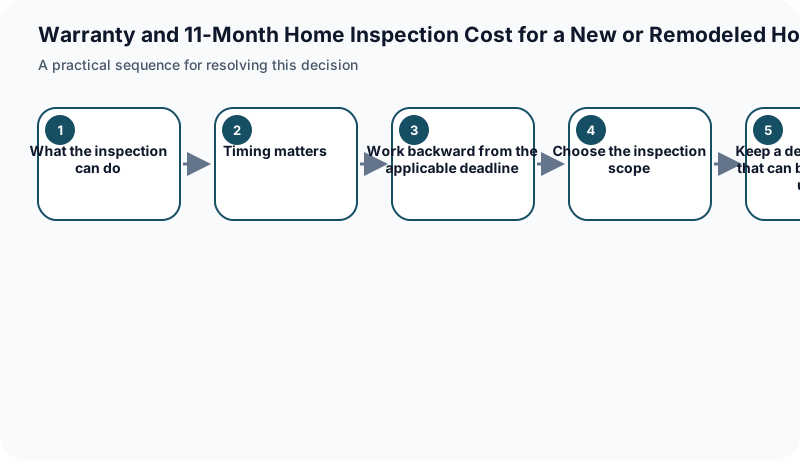
A general inspector may review visible structure, exterior, roof, plumbing, electrical, HVAC, moisture, finishes, and operation within the agreed scope. The report can organize observations and photographs for discussion with the builder. A structural engineer, envelope specialist, or other professional may be needed for a technical concern. The inspection does not automatically preserve a legal claim, require the builder to repair, or establish causation.
Timing matters
For Ontario new homes, Tarion describes first-year Initial, Mid-Year, and Year-End forms submitted at days 41, 183, and 365, with a stated grace period subject to its rules and written proof of timely builder notice. That is an Ontario program example. It does not make a private inspection mandatory and does not establish a deadline for every U.S. or Canadian warranty.
Check the warranty documents for the possession or coverage start date, notice method, exclusions, reporting windows, and dispute process. Give the builder a reasonable opportunity to review and address issues as the program requires. Keep copies of notices and delivery records.
Work backward from the applicable deadline
Start by locating the warranty or contract, the date coverage began, the required notice method, and any program forms. Do not schedule an inspection based only on a common “11-month” phrase. A possession date, substantial-completion date, registration date, or other event may be relevant under the specific program. If the home is in a statutory warranty program, use that program’s current instructions and keep proof of every submission.
Book early enough to receive the report, review it, and send required notice before the applicable deadline. If a specialist is needed for a structural, moisture, or electrical concern, that may require a separate visit and additional time. An inspection close to a deadline may not leave enough time for a follow-up or clarification.
Choose the inspection scope
A standard home inspection can organize visible observations across major systems and finishes. It may not include engineering analysis, invasive testing, code review, thermal imaging, sewer scope, or specialist evaluation unless those are specifically contracted. Ask the inspector to list the areas and methods included, what is inaccessible, and how the report separates maintenance items from suspected defects.
Prioritize items that are new, recurring, affecting more than one area, or likely to be concealed or harder to document later. Provide the inspector with repair records, earlier reports, product information, and a chronology of the problem. Ask whether photographs and location notes are included and whether the inspector can return after a repair.
Keep a defect record that can be followed up
For each concern, keep the report page, location, date observed, photographs, notice sent, builder response, repair appointment, and any follow-up inspection. Send the information through the required warranty or contract channel, not only to an onsite worker. Ask the builder to confirm receipt and next steps in writing.
An inspection report is evidence of observations; it does not determine who is legally responsible or whether a warranty claim is covered. The program administrator, contract, and applicable law control those questions. For a disputed or high-consequence issue, seek qualified local advice and keep the inspection fee separate from diagnostic, repair, legal, and claim costs.
Understand what the inspection does not buy
The inspection fee does not automatically preserve a claim, extend a warranty, require a repair, or determine who is responsible. Confirm the contract and program notice rules separately. If an issue is disputed, the owner may need a technical specialist, program administrator, or legal adviser; those services are separate from the general inspection.
Ask the inspector to distinguish maintenance recommendations, visible workmanship concerns, possible defects, and items that could not be evaluated. A report should identify the inspected date and limitations. It should not promise that a system will remain defect-free or that a builder will accept every observation.
Decide whether a specialist is needed
If a general inspection finds a concern involving structure, water entry, electrical safety, HVAC performance, or another technical system, ask which professional can investigate it. A specialist’s fee may be justified when it can identify a cause or corrective scope, but do not order invasive testing without understanding what decision it supports.
If a warranty or contract deadline is close, send timely notice using the required process while arranging technical follow-up. Keep proof of the notice. Do not wait for a specialist report if the program instructions require earlier notification; confirm the correct sequence with the program or a qualified local adviser.
Prepare the visit so it produces useful evidence
Make a room-by-room list of concerns and identify when each began. Give the inspector prior notices, repair records, and any response from the builder. Ask whether the inspection covers operation of installed equipment, roof or attic access, exterior elevations, site drainage, and detached structures. Some areas may be inaccessible or outside the standard service.
Ask for photographs and location references that make it possible to find the observation later. If the builder disagrees, the owner should be able to identify the room, component, date, and visible condition without relying on memory.
Consider the inspection’s cost against the follow-up path
The inspection price is one part of a potential warranty process. If a report reveals a technical issue, the owner may need an engineer, specialist, testing, repair, or further program review. Keep these as separate potential costs and do not assume that paying for a general inspection includes them.
If the inspector recommends an invasive test, ask what it would establish and who should perform it. Obtain permission from the appropriate owner or builder before altering the property. The goal is to document and route the concern while preserving the applicable notice process.
When the report is complete, compare its findings with the warranty notice rules and send the relevant items through the required channel. Keep the report, notice, and proof of delivery together even if the builder responds verbally.
Keep inspection cost separate from warranty value
A private inspection can be useful evidence, but it does not guarantee a repair, reimbursement, or successful claim. Before hiring, review the actual warranty, builder agreement, or statutory program so the inspection is aimed at a real reporting window and recipient. If no notice deadline is approaching, the owner may have time to obtain a specialist assessment rather than ordering a broad inspection immediately.
If several parties need a copy of the report, confirm whether the inspector permits reliance by them and whether a separate report is needed. Keep any legal review, technical diagnosis, program fee, and repair estimate separate from the inspection fee.
Keep proof of the inspection appointment and report delivery date with the warranty notice record.
What affects the cost
- Home size, age, and complexity.
- General inspection versus specialist or engineering scope.
- Number of systems and inaccessible areas.
- Report detail, photographs, thermal or moisture tools, and follow-up.
- Travel, urgency, and scheduling near a deadline.
- A second visit after repairs.
Market pricing varies by region and provider. Request a written fee and deliverable rather than assuming the phrase “warranty inspection” defines the work.
How to use the report
Separate observations from conclusions. Send the report through the warranty or contract process and ask the builder to respond. Escalate a suspected structural, moisture, electrical, or safety issue to an appropriately qualified professional. Do not authorize invasive investigation or repair solely from a general inspection report.
Ask the inspector:
- What standards and scope apply?
- What is excluded or inaccessible?
- Can the report distinguish incomplete work, maintenance, damage, and possible defect?
- Which findings require an engineer or specialist?
- Will a follow-up visit be needed after repairs?
The right question is not “Is an 11-month inspection always worth it?” It is whether the fee buys timely, usable documentation for the actual warranty and whether you have enough time to notify the responsible party. For active construction inspections, read independent construction inspection.
Prepare for a useful warranty review
Gather the purchase or construction documents, warranty terms, service history, and a list of observed concerns before the visit. Note when each issue first appeared and whether it changes with weather or use. Ask the inspector to photograph and locate findings, distinguish visible symptoms from possible causes, and identify where access prevented an opinion. A general inspection may flag a concern without diagnosing the responsible system; an engineer or specialist may be needed for a technical conclusion. Confirm how quickly the report will arrive and whether follow-up is included. Send any required notice to the responsible party within the deadline that applies to your contract or warranty, and retain proof of delivery.