
A structural engineer inspection is a professional evaluation of a suspected structural condition or proposed change. It is different from a general home inspection and different again from engineered drawings for construction. The price depends on the question the engineer must answer, the evidence available, the travel and site conditions, and whether calculations or design follow the visit.
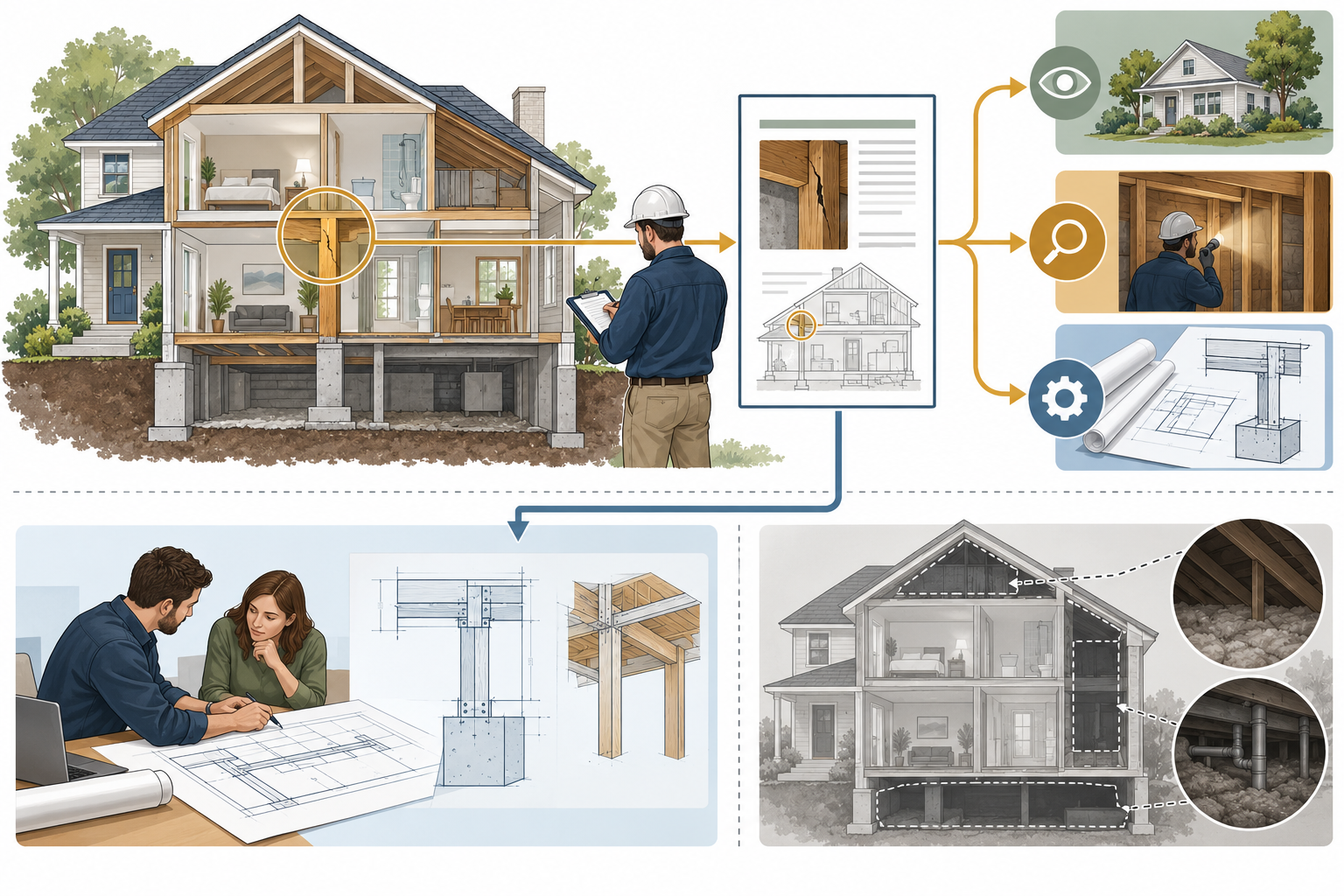
What you may be buying
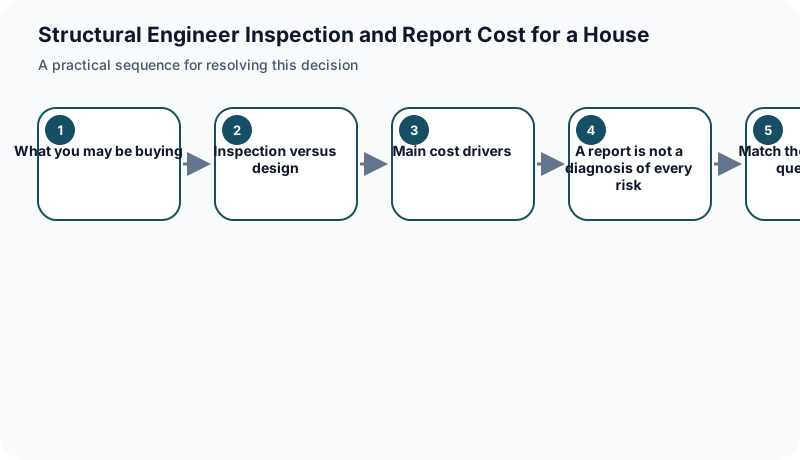
An inspection can be a limited site visit, a verbal consultation, a photo-based opinion, or a written report. The engineer may be asked to examine a crack, sagging floor, beam, load-bearing wall, foundation movement, roof change, storm damage, or a condition discovered during a purchase. A report may describe observations and recommendations without producing a repair design.
Angi’s 2026 U.S. market guide reports inspection examples from roughly $350 to $1,000 for several limited residential situations and higher amounts for more involved work. It also reports a broader structural-engineering range and stresses that location and scope drive the result. Treat those figures as attributed U.S. market context, not a Canadian rate, safety determination, or promise of what your local engineer will charge.
Inspection versus design
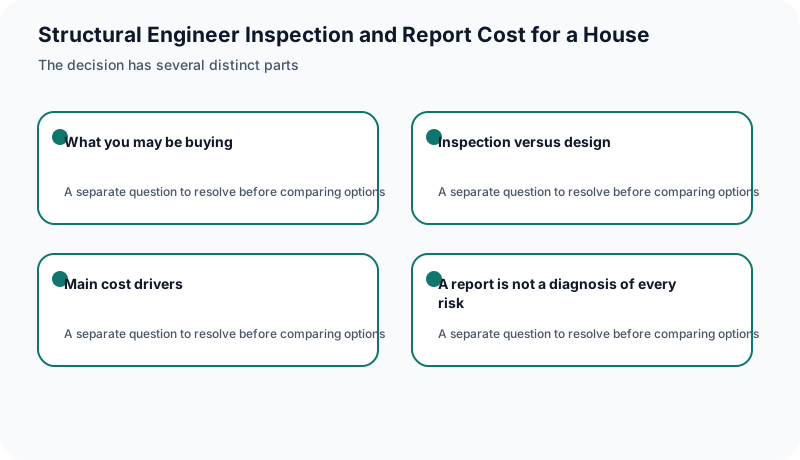
An inspection answers “what can be observed and what further work is indicated?” Engineered drawings answer “what is the designed solution, with the calculations and documents needed for the next stage?” The same firm may offer both, but the second service normally needs a separate scope.
If the engineer recommends a beam, foundation repair, underpinning, or alteration, ask whether the quoted report includes calculations, details, permit drawings, a professional seal, construction support, or only a recommendation to obtain those services. See structural engineered drawings cost for the design stage.
Main cost drivers
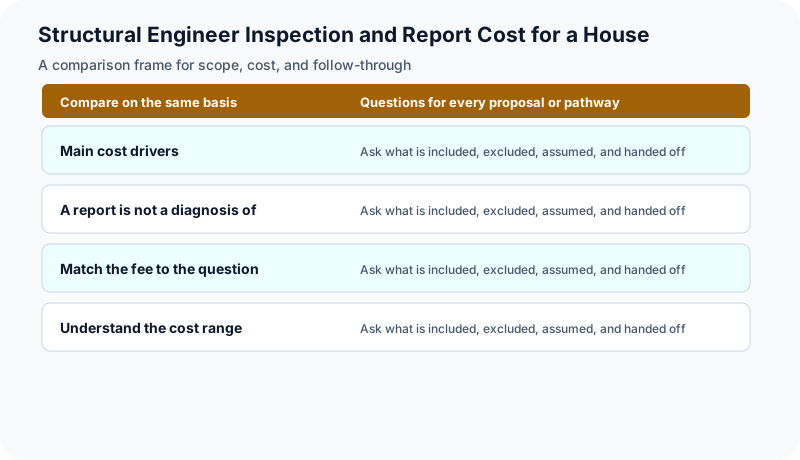
- The question: A limited beam or wall review is not the same as investigating settlement across a house.
- Access: Covered, finished, unsafe, or inaccessible areas may limit observation or require additional visits.
- Records: Existing plans, photos, prior reports, and repair history can reduce duplication, but they do not prove hidden conditions.
- Calculations and testing: Additional analysis, openings, survey information, or testing changes the scope.
- Written documentation: A formal report with photos and recommendations takes more time than a brief consultation.
- Travel and urgency: Distance, rush scheduling, and post-storm demand can affect fees.
- Follow-up: Meetings, contractor questions, redesign, and site observation should be listed separately.
A report is not a diagnosis of every risk
An engineer can only evaluate the scope and conditions covered by the engagement. A limited inspection is not a guarantee that concealed defects do not exist. Do not treat a general statement such as “appears stable” as approval for unrelated alterations. If the issue could affect immediate safety, keep people away from the area and contact an appropriately qualified local professional or emergency service.
Do not repair, remove, shore, or expose structural elements based solely on a generic online description. Structural conclusions are property-specific and may require local licensing, calculations, or permit review.
Match the fee to the question
Before asking for a number, describe what decision the inspection needs to support. “Look at a crack” is too broad by itself. Say where it is, when it appeared, whether it is changing, what repairs were made, and whether doors, floors, walls, or exterior features have also changed. The engineer can then say whether the requested service is a limited consultation, a written report, a broader investigation, or a design assignment.
A simple visit with accessible framing and clear records may require less time than an investigation of movement across several rooms, a buried foundation, or a roof alteration with no plans. The professional may need additional visits, measurements, calculations, testing, or coordination with a surveyor or contractor. Those are separate fee drivers, not details that can be priced accurately from a single photo.
Ask the firm to identify the assumed inspection area and the limits of what will be visible. A written report may describe observed conditions and recommend further investigation without proving the cause of every symptom. If finishes block access, the engineer may note a limitation or quote a later visit after access is arranged. Opening walls or excavating should be coordinated with qualified local professionals; the engineer’s scope should identify what information they need before forming a conclusion.
Understand the cost range without overreading it
The market figures above are useful only as a rough U.S. reference for particular service scopes. They do not tell you the fee for a complex foundation assessment, a report required by an authority, a Canadian property, or follow-up design. An online range can help you recognize that professional time has a cost, but it cannot replace a written quote based on the address and the requested deliverable.
Ask whether the fee is fixed or hourly, what travel and taxes are additional, when payment is due, and how much follow-up is included. If a report is needed by an insurer, lender, buyer, or permit authority, send that entity’s requirements before the visit. A report prepared for an owner’s repair decision may not contain the certifications or format another party expects.
Plan for the next service separately
An inspection fee can be the first part of a larger path. The engineer may recommend monitoring, more information, a repair design, or no further structural work within the inspected scope. Ask the engineer to state which recommendation can be priced now and what additional evidence would be needed. Do not assume that a report’s repair recommendation includes drawings, permit responses, contractor selection, construction observations, or certification of completed work.
If design is recommended, request a separate proposal that lists calculations, drawings, revisions, authority coordination, and construction support. Structural engineered drawings covers that next stage. If you are still deciding whether to proceed with a larger remodel or addition, feasibility study cost can help organize the other site and approval questions.
For budgeting, keep the initial inspection, additional diagnostics, design, and repair construction as separate lines. That lets you stop and reassess after the report instead of committing to a repair package before the engineer has evaluated the condition.
Budget for findings, not a guaranteed repair price
The inspection fee buys a defined evaluation, not necessarily the entire route to a finished repair. A report might conclude that no structural design is needed within the inspected area, recommend monitoring, ask for selective exposure or testing, or lead to engineered repair documents. Each outcome can create a different next cost. Ask the engineer to describe likely next steps without treating them as included unless the proposal says so.
If several areas are involved, ask whether they can be assessed in one visit and how the report will distinguish the observations. If a condition changes over time, ask whether one inspection can answer the question or whether a monitoring plan or later visit is needed. A structural inspection fee should not be compared with a home inspection that has a different scope and level of professional responsibility.
Before authorizing a report, confirm who may rely on it. If the intended reader is a local authority, insurer, lender, buyer, or contractor, ask that party what wording and documentation it requires. A report written for an owner’s planning decision may not be suitable for a permit application or a transaction.
Choose the report form that is useful later
Ask whether the deliverable is a phone consultation, site letter, formal report with photographs, calculation, or stamped design document. The right form depends on who will use it and what decision they must make. A letter can be adequate for an owner’s next-step decision but may not satisfy an authority or insurer. Send any required form or checklist to the engineer before the visit.
Ask when the written deliverable will arrive and whether a follow-up call is included. If the report identifies a concern, ask whether the engineer can provide a separate proposal for the next investigation or design phase. Keeping that second scope separate helps the owner decide after the report rather than committing in advance to work that may not be needed.
Keep the decision and the report scope aligned
If the owner needs a decision for a purchase, permit, insurance claim, or repair contract, tell the engineer before the visit. Ask whether the report will answer that question or only describe visible conditions. This avoids paying for a format that is technically sound but not useful to the person who must act on it.
How to request comparable quotes
Send the same information to each firm:
- The property location and reason for the inspection.
- Photos, plans, inspection reports, and a concise history of the condition.
- The areas to be inspected and whether access is available.
- Whether you need a verbal opinion, letter, formal report, calculations, or drawings.
- Who will use the report: owner, buyer, insurer, authority, contractor, or another professional.
- Included travel, follow-up questions, turnaround, and revision terms.
Ask for the engineer’s qualifications and local authorization where relevant. A general home inspector, architect, contractor, and structural engineer may each have a useful but different role. The lowest fee is not comparable if it supplies a different level of evidence or responsibility.