
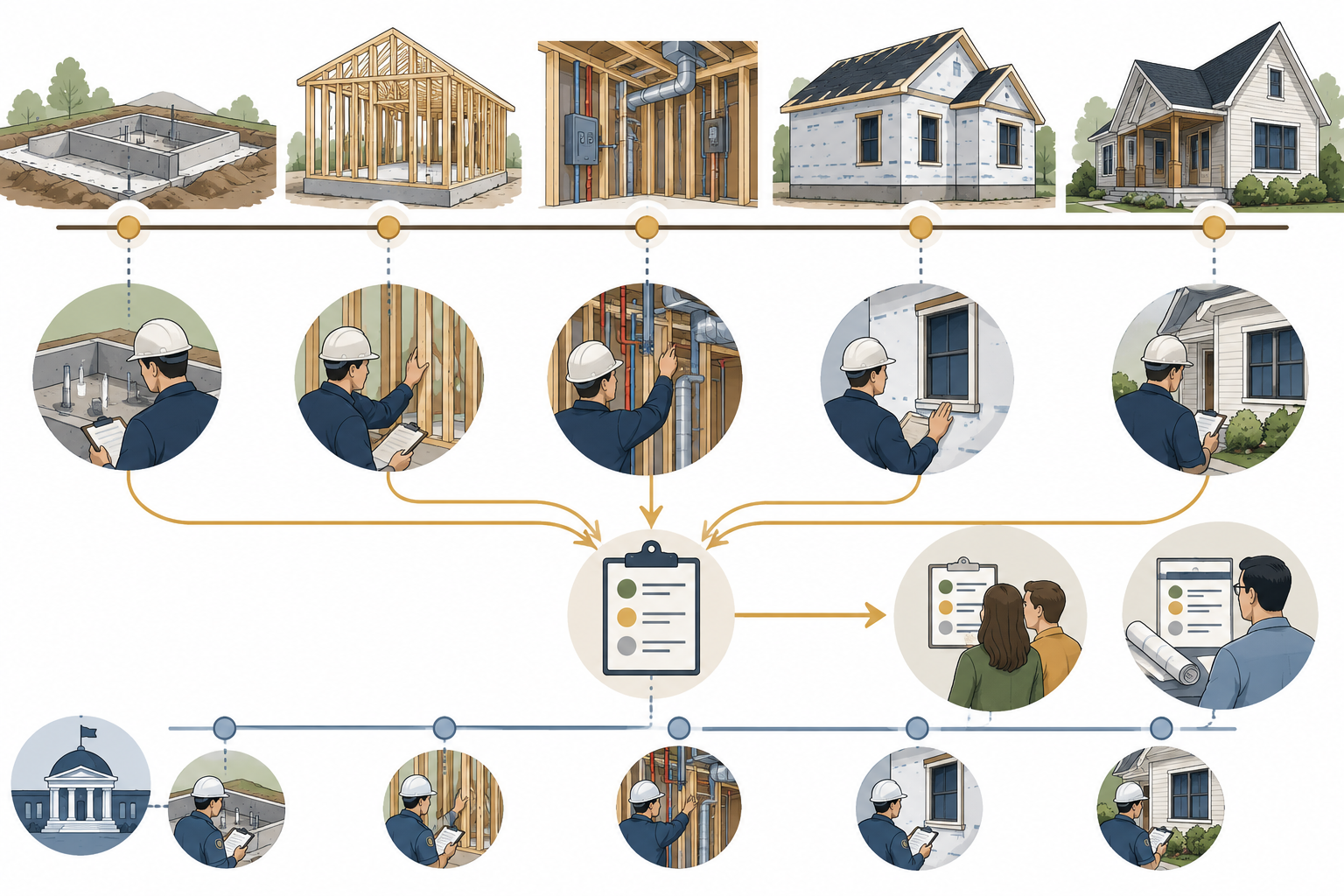
An independent construction inspection is an owner-hired review of a specified phase or condition during active work. It can provide another set of eyes before work is covered, but it is not a municipal inspection, permit approval, structural design, or guarantee of workmanship. The value comes from a clearly defined scope and a report the owner can act on.
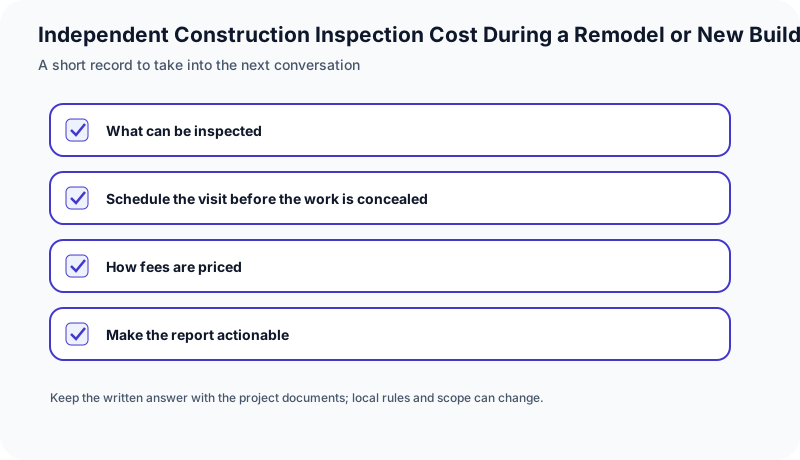
What can be inspected
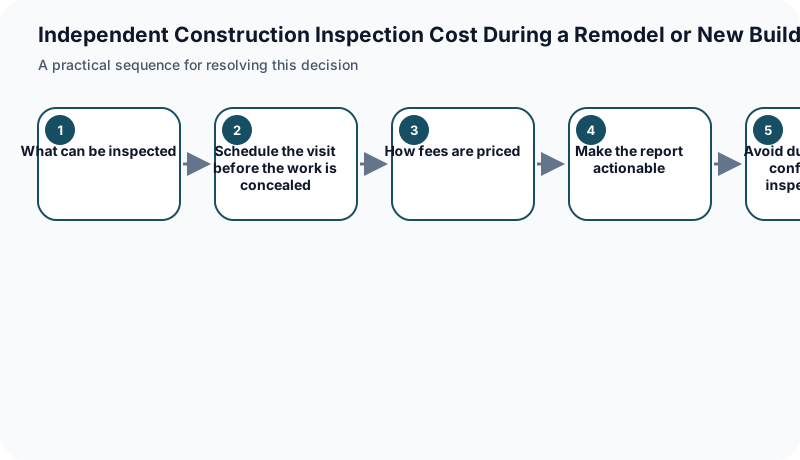
A general construction consultant may review visible work at milestones such as foundation, framing, rough systems, enclosure, or completion. A structural engineer may be appropriate for structural elements. An envelope, waterproofing, HVAC, or electrical specialist may be needed for a narrower technical question. Ask what the provider is qualified and contracted to inspect.
The inspection should state what was visible, what was inaccessible, which documents were reviewed, and what was not tested. A visual review cannot establish concealed conditions or certify every installation.
Schedule the visit before the work is concealed
An inspection has value only if the relevant work can be observed and the owner has time to act on the findings. Ask the contractor for the construction sequence and identify milestones where a review could change the outcome. A visit after a wall is closed may not answer what was installed inside it. The inspection agreement should say how much notice is needed and what happens if the project is not ready.
Share the approved plans, specifications, change orders, prior reports, and the exact question the owner wants reviewed. Ask the inspector to identify the area and documents covered. If the concern involves a structural connection, electrical installation, waterproofing assembly, or HVAC performance, confirm the provider has the relevant qualifications and that the inspection method can answer the question.
How fees are priced
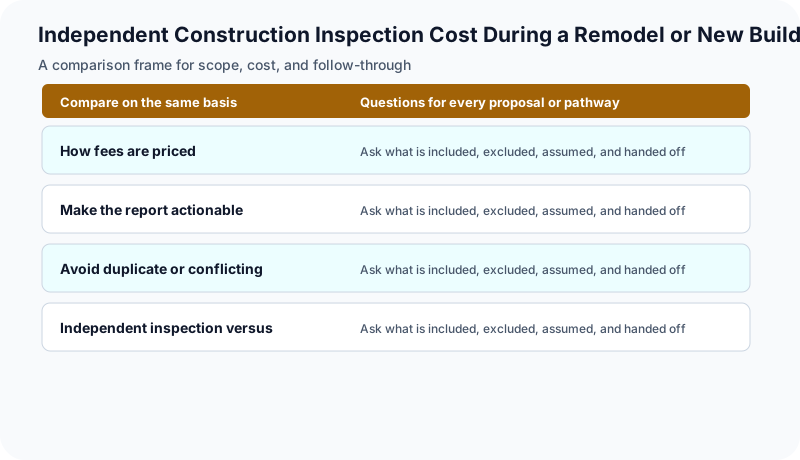
Providers may charge per visit, hourly, by phase, by report, or as a package. Cost rises with travel, project size, number of phases, site complexity, documentation, technical specialization, urgency, and follow-up. Current residential pricing is fragmented, so there is no reliable national range. Request a fee tied to visits, duration, deliverables, and response time.
Compare whether the proposal includes a brief visit note or a detailed report with dated photographs, locations, references to plans, observed deficiencies, and follow-up questions. Ask whether testing tools, destructive investigation, laboratory analysis, or a specialist consultation are separate. A more detailed report can take longer to prepare but may be more useful for documenting what was visible on the inspection date.
Make the report actionable
Ask the inspector to separate observed facts, possible concerns, and recommendations. A visual note that a component differs from a drawing is not automatically a design solution. If a concern needs engineering, code interpretation, or a warranty determination, the report should say what professional or authority can resolve it.
Agree who receives the report and whether the contractor can respond. Ask the inspector to identify urgent conditions promptly and the normal delivery time for the written record. If the owner wants a second visit after correction, define whether it is included and what evidence the inspector needs to verify the item.
Avoid duplicate or conflicting inspections
Compare the private scope with required municipal inspections, architect or engineer construction administration, builder quality checks, and commissioning. One provider may review several subjects but may not be qualified to make every technical determination. Ask which inspection has contractual or regulatory authority and which is an owner information service.
Keep inspection findings with the permit and construction record. If a finding conflicts with approved documents or creates a potential safety issue, pause the affected decision and ask the responsible professional and authority how to proceed. Do not ask a private inspector to approve a design change or waive a permit correction.
Independent inspection versus required inspection
The building authority inspects under its permit process. A private inspector works for the owner under a separate agreement. Seattle’s permit guidance and Ontario’s inspection guidance illustrate that the authority’s process and inspection path are project-specific. A private report does not authorize concealed work, waive a permit, or override a correction notice.
When it may help
An owner-hired review may be worthwhile when the owner is remote, cannot observe milestones, has a complex or high-consequence project, needs documentation for a dispute, or wants an independent check before finishes hide work. It may duplicate architect construction administration, a builder’s quality process, or a program-required verifier. Define the gap before paying for another layer.
Compare inspector qualifications with the work
Ask what licenses, training, or experience apply to the specific component and whether the provider carries appropriate insurance. A general construction inspector may be suited to a visual milestone review but not a structural calculation, electrical test, or enclosure diagnosis. If a program or contract requires an approved inspector, verify that requirement before booking.
The inspector should explain how findings are reported and whether they will communicate directly with the designer or contractor. Ask whether a recheck is needed after correction and whether the original fee includes it. Do not ask the inspector to direct a contractor unless the agreements expressly give that authority.
Plan for action after the visit
Ask how quickly urgent observations are reported and how quickly the written report arrives. If a finding suggests immediate risk, the owner may need prompt professional or authority guidance before the full report is complete. For ordinary items, assign each finding to the contractor, designer, engineer, or owner and set a response date.
Keep the report with the approved plans and inspection history. This helps distinguish a field observation from an approved change and supports warranty or closeout discussions later.
Budget by visit and report
Ask for a base fee for the planned visit, travel, written report, and follow-up questions. If the project needs several milestones, request a package or phase price and state how cancellation or a missed readiness date is charged. A provider may offer a quick walk-through or a more detailed inspection; compare the deliverable and technical scope, not only the visit length.
Identify what happens if the inspector finds that access is blocked or the work is incomplete. Will the provider inspect available areas and note limitations, wait for access, or schedule another visit? Get the price for each route in advance.
Coordinate findings with the contract team
Before the visit, tell the contractor what area will be inspected and ask whether the work can remain visible. Give the architect or engineer the inspection date if their documents are involved. Afterward, ask the contractor for a written response to each finding and identify which items need professional review.
If a disagreement arises, preserve the report and photographs and ask the responsible professional to clarify the applicable drawing or contract requirement. The private inspector can explain their observation but may not decide a contractual dispute.
Write the inspection scope in observable terms
The proposal should identify the date or phase, locations, assemblies, documents, and method. “Inspect the framing” may be too broad if the owner needs a particular connection reviewed. Ask the professional to name what will be visible, whether measurements or tests are included, and how limitations will be reported.
If the owner needs a report for a dispute, lender, insurer, or warranty program, ask that party what information it expects before hiring the inspector. The report’s format and certification may matter as much as the visit itself.
If the owner wants an inspection at several milestones, order them as a planned sequence and provide the current drawings each time. This gives the inspector a consistent basis and lets the owner compare findings.
Give the inspector a contact for urgent findings and ask how those are communicated before the full report is ready.
Questions for a proposal
- Which phase, assemblies, and documents are included?
- Is the review visual, measured, tested, or design-based?
- Who is qualified for the specific technical question?
- How much notice is required and what happens if work is concealed early?
- What report, photos, deficiency list, or follow-up is delivered?
- Does the inspector have authority to direct correction, or only to report to the owner?
- Are municipal inspection, engineering, testing, and permit fees separate?
If a report identifies a structural or life-safety concern, ask the responsible professional and authority what must happen next. Do not treat a private inspection as permission to proceed. For a warranty deadline, see warranty inspection cost; for architect-led document administration, see architect CA fees.
Schedule observations before work is covered
Private inspections are most useful when timed to the construction sequence and when the inspector has the approved drawings and written scope. Ask the contractor to provide reasonable notice before concealment, and agree how access, photographs, and reports will be handled. A report should identify the observed condition, location, date, and any limits caused by blocked access. It should also say whether a finding needs review by the design professional or authority. Do not let a private report replace a required municipal inspection or authorize a deviation from approved documents. Clarify who receives findings and who decides whether work should pause while a concern is investigated.