
Unpermitted work is not solved everywhere by simply buying a “retroactive permit.” The authority may use terms such as permit after the fact, legalization, revision, investigation, or a new application. The process can require drawings, professional evaluation, inspections, opening concealed work, corrections, fees, and reconstruction. The local authority decides what path is available.

First confirm the record
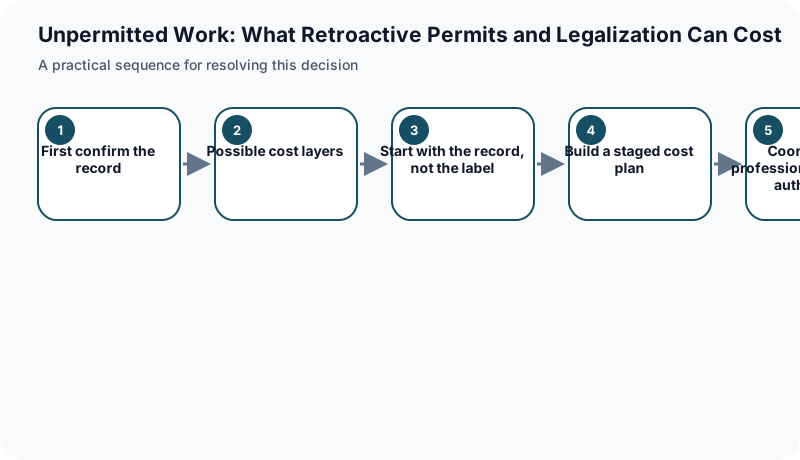
Before assuming a violation, check the permit history with the responsible authority and compare it with the work actually performed. A permit may exist under a different address, owner, scope, or trade record. Ask what documentation the authority needs to evaluate the discrepancy.
Do not conceal, remove, or alter evidence to avoid review. If the work may involve structure, fire safety, hazardous materials, utilities, flood exposure, or a change of use, obtain appropriate local professional and legal advice.
Possible cost layers
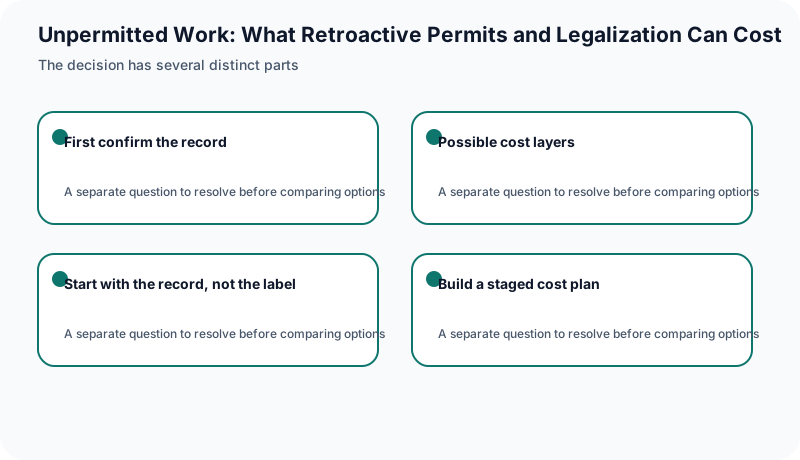
- Records and application: permit-history research, applications, forms, and government fees.
- Existing-condition documentation: measured drawings, photographs, opening-up, or surveys.
- Professional review: architect, engineer, designer, or specialty consultant.
- Inspection and testing: authority inspections, special inspections, and material or system testing.
- Corrections: design changes, removal, reconstruction, or bringing concealed work into compliance.
- Closeout: reinspection, certificates, final documents, and record updates.
Toronto’s 2026 schedule provides a local example of a surcharge for construction without a permit and separate charges for inspection or revised information. That amount is not a prediction for another municipality and does not determine the final cost of correction or legal exposure.
Start with the record, not the label
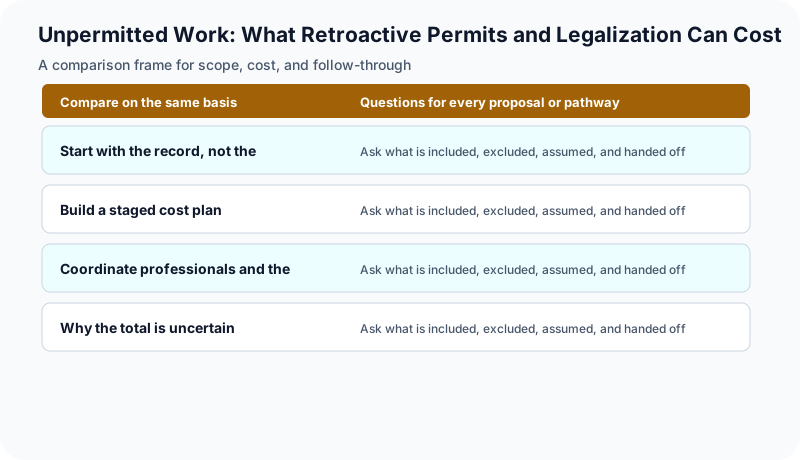
The phrase “unpermitted work” can describe several situations: no application was made, a permit was issued for a different scope, one trade permit is missing, a permit was not closed, or the owner cannot locate the records. Ask the authority to search by address, parcel, prior owner, and known permit number. Request the inspection history, approved plans, open corrections, and any notices that affect the property.
Compare the actual construction with the authorized scope. A permit that exists does not prove that every part of the work was approved or inspected. Conversely, a missing document in the owner’s file does not prove that no permit exists. Get the authority’s current record and instructions before hiring someone to recreate the project package.
Build a staged cost plan
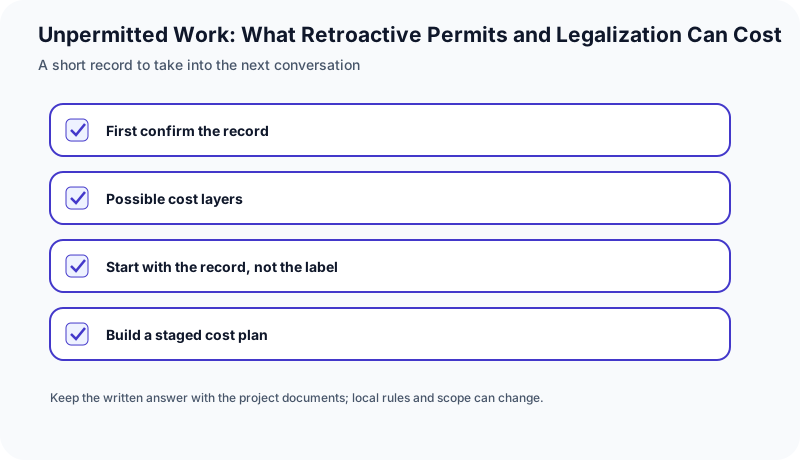
Do not ask only for a “retroactive permit price.” Ask the authority what path it uses and what it needs to make a decision. Then obtain a professional scope for documentation or evaluation and a contractor scope for any physical correction. Each phase can reveal new work, so use a staged budget:
- Record search and initial authority consultation.
- Existing-condition measurements and file comparison.
- Professional inspection or testing of affected work.
- Application, review, and required document preparation.
- Opening concealed areas if needed for inspection.
- Design revisions, corrective construction, and resubmission.
- Required inspections and final record update.
Ask the authority whether application or investigation fees are due before the full condition is known. Ask whether a local fee schedule treats the work differently from an ordinary permit. Keep any surcharge or enforcement charge distinct from the cost to make the work acceptable.
Coordinate professionals and the authority
The person who prepares measured drawings may not be qualified to evaluate the structure. The engineer may need access to framing or foundation elements. An electrician, plumber, or mechanical professional may need to assess separate systems. A surveyor or land-use professional may be needed if the work changed the site or use. Ask each provider to state the question they can answer and the documents they can sign.
Provide contracts, invoices, photos from before and during the work, product records, dates, old plans, and the name of the people who performed the work. Accurate records may help the authority and professionals understand what is concealed or altered, but they do not substitute for required inspection or testing.
Why the total is uncertain
The authority may need to see concealed work that is no longer accessible. Existing plans may be inaccurate. The work may conflict with zoning, structure, fire separation, electrical, plumbing, energy, heritage, or flood requirements. A professional may be unable to certify an installation without investigation or may recommend reconstruction.
Do not assume a current code applies in one simple way to older work. The authority and qualified professionals must determine the applicable path. Do not assume that paying a fee makes the work safe, compliant, or approved.
If you are evaluating a property purchase
Ask the seller for permits, approved plans, inspection records, and invoices for visible alterations. Compare those records with the current layout and systems. A home inspection can identify visible signs that work may have changed, but it does not establish permit history or legal compliance. Contact the authority with the address and describe the work you are trying to verify.
If the record is incomplete, ask a qualified local real-estate or legal adviser what additional checks are appropriate before closing. The cost to investigate is distinct from the cost to document or correct the work. Include a contingency only after defining which unknown remains and who will obtain the authority’s answer.
Separate investigation from correction
An initial professional visit may only identify what is visible and what needs more evidence. A measured plan, structural evaluation, testing, application, and physical correction can each be separate scopes. Ask the provider to stop and report before opening additional areas or ordering extensive repairs. This lets the owner review the next step and cost.
Keep records that can reduce guesswork
Make a timeline of the work, including when it began, who performed it, which areas were opened or concealed, what materials were used, and whether any inspections occurred. Collect invoices, photos, product labels, contractor proposals, old plans, and communications with the authority. Mark what is confirmed and what is only remembered.
Ask each professional to identify what they reviewed and what they could not verify. A structural engineer may address a structural question but not electrical compliance. A surveyor can measure a location but not determine whether a use was approved. The authority may require separate applications for different trades.
Get an itemized correction plan
Before agreeing to a large remediation contract, ask for the authority’s requirements and the responsible professional’s recommended sequence. Separate design and testing fees from demolition, repair, restoration, permit fees, and contractor overhead. Ask which work can be priced now and what depends on exposing or testing concealed conditions.
If the authority allows more than one compliance route, ask the professional to compare the cost and consequences of each. The cheapest route may not resolve all records or may create additional work later. The owner should understand what approval or inspection record will exist at the end.
If the authority determines that the work can be documented and inspected, ask what record will show that the process is complete. If the authority requires correction or reconstruction, request the basis and scope in writing before accepting a contractor price.
Keep every authority submission and response. If the file is transferred to a new professional, provide the full record so earlier instructions are not repeated or contradicted.
Do not promise a buyer or insurer that work is compliant until the authority and qualified professionals have reviewed the relevant facts.
If the property changes hands before the issue is resolved, transfer the complete authority and consultant file to the new owner and their adviser.
How to proceed responsibly
- Stop extending the questionable work until the authority explains the process.
- Gather contracts, invoices, photographs, plans, inspection reports, and dates.
- Ask the authority which application and inspections are required.
- Retain the professional needed to document or evaluate the affected scope.
- Obtain a written correction and cost plan before opening finished areas.
- Track government fees, professional work, physical corrections, and delay separately.
Do not order demolition or reconstruction until the authority and responsible professional explain what evidence is needed and who will inspect it. Opening a finished area can create additional repair work, but covering a possible deficiency without review can make the record harder to resolve. Ask for a written sequence that coordinates opening, inspection, correction, and restoration.
If an authority issues a notice or deadline, keep the notice and ask a qualified local professional or legal adviser what response is due. This article cannot determine rights, penalties, insurance consequences, or disclosure duties for a specific property. Record the authority’s directions and follow the applicable process.
If you are buying a property, do not rely on a seller’s verbal assurance that the work is “grandfathered.” Ask the authority, your inspector, and your legal or real-estate adviser what can be verified. Permit closeout covers a valid permit that was never formally closed; this article addresses work with an approval gap.
Organize facts before seeking a remedy
Make a dated record of what work was performed, who performed it, what drawings or invoices exist, and which areas have been covered. Do not remove finishes or alter a condition simply to make it easier to inspect without first checking with the authority or a qualified professional. The authority may require selective exposure, testing, revised drawings, or correction of noncompliant work; the scope cannot be predicted from the visible result alone. Ask for written instructions and keep each submission and response. If there is an immediate safety concern, follow emergency guidance from the responsible authority. The best next step is a documented assessment, not an assumption that a regularization fee will resolve every issue.