
The material price is not always the delivered-and-placed price. A supplier may bring lumber, roofing, masonry, windows, equipment, or other material to the property, but curbside delivery may stop well short of the actual work area. Getting the load to that location can require a forklift, boom, crane, extra crew, hand carrying, or a second trip.
Delivery levels to distinguish
| Delivery level | What it usually means to clarify |
|---|---|
| Curbside or driveway | Where the truck stops, how close it can get, and who unloads |
| Forklift placement | Surface, reach, load limits, and whether the machine is included |
| Boom or rooftop placement | Reach, setup space, load sequence, and operator/service scope |
| Crane placement | Lift plan, radius, ground, rigging, utility, traffic, and minimum service window |
| Hand carry | Crew labor, route length, stairs, protection, and timing |
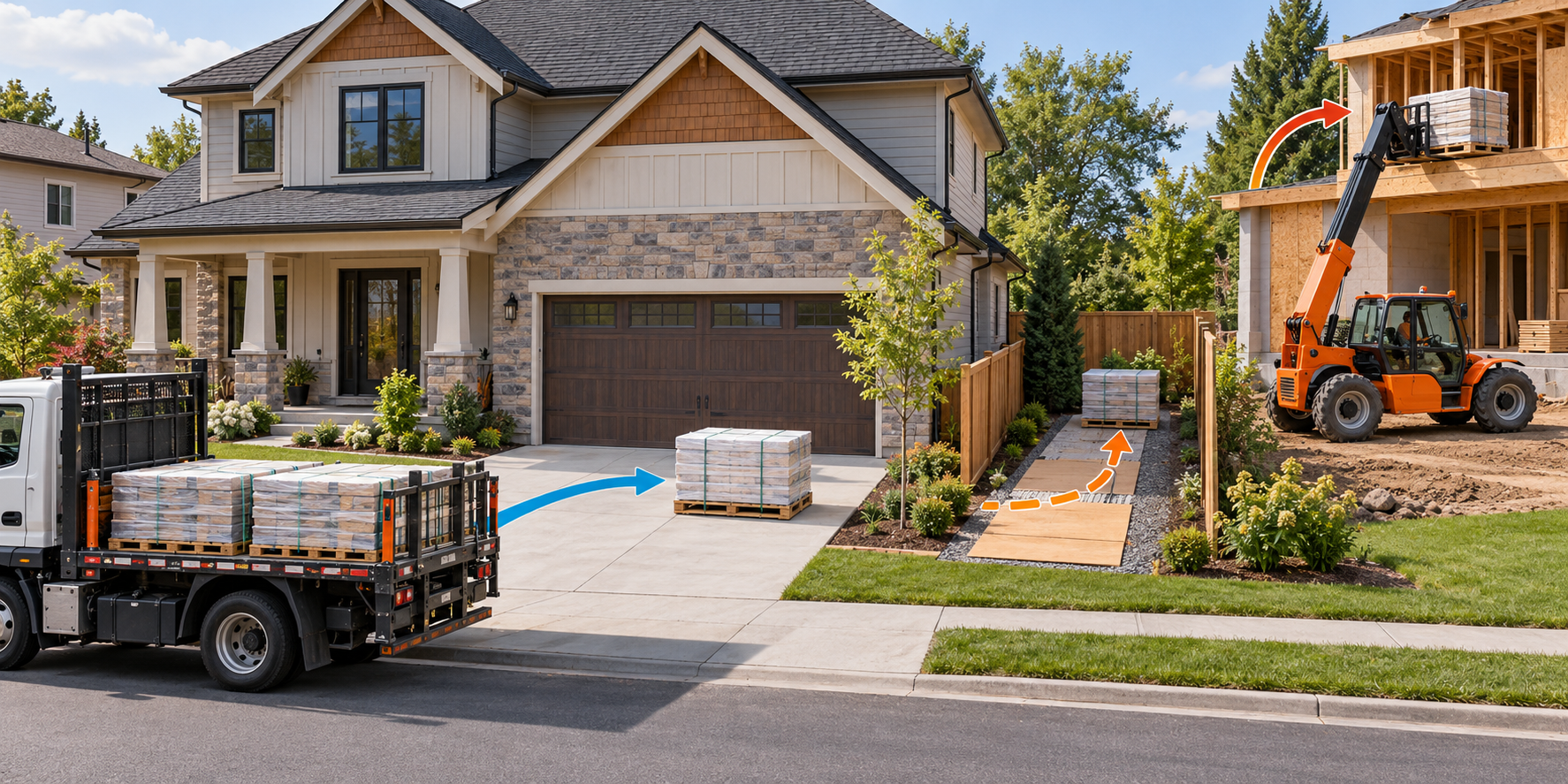
Provider definitions vary. A quoted delivery fee should not be assumed to include placement at the roof, rear yard, upper floor, or inside the home.
What can add to the delivered price
Ask about:
- delivery zone and distance;
- minimum order or minimum truck charge;
- unloading and placement equipment;
- timed delivery, waiting, or restricted delivery windows;
- narrow gates, slopes, overhead wires, soft ground, and turning room;
- return or redelivery if the site is not ready;
- damaged material and who inspects it;
- weather, security, and temporary storage after delivery.
The same material can have different handling economics at two properties. The access route, not the material price, may be the largest variable.
Curbside is not jobsite placement
If a truck cannot reach the usable work area, the crew may need to carry material across a yard, through an occupied building, up stairs, or around a finished surface. That adds time and protection. If the material must be placed on a roof or behind an obstacle, the supplier may need equipment or the contractor may coordinate a separate lift or crane service.
For cranes and suspended loads, OSHA’s U.S. construction scope describes equipment that can hoist, lower, and horizontally move a suspended load, with specific scope conditions and exclusions. This does not turn a delivery truck into a crane service or provide a homeowner with operating guidance. Qualified providers should determine the equipment, rigging, clearances, and site requirements.
Combining deliveries can help—or hurt
Combining orders may reduce delivery trips and repeated setup. It can also increase staging, weather exposure, theft risk, double handling, or the cost of material that arrives before it is needed. Ask the contractor to compare one larger delivery with sequenced deliveries using the actual storage and protection plan.
Questions before ordering
- Where will the truck stop, and where will the material be left?
- Is unloading included, or is it curbside only?
- What distance, reach, order minimum, waiting, and redelivery charges apply?
- Can the route support the truck or placement equipment?
- Who provides a forklift, boom, crane, rigging, or hand-carry labor?
- Who protects finished surfaces and material from weather or damage?
- What happens if the site is inaccessible or the delivery window is missed?
- If material arrives early, who pays for staging or storage?
For the route and site constraints behind these charges, see difficult site access. For storage between delivery and installation, read construction staging and temporary storage costs.
Identify where the delivery obligation ends
“Delivered” can mean several different things: the truck reaches the property; the material is unloaded at a curb or driveway; it is carried to a designated staging area; or it is placed near its point of use. A supplier may include one level, while the contractor’s estimate assumes another. Define the endpoint in physical terms, especially where material is heavy, fragile, oversized, or needed at an upper floor or rear addition.
The last distance can create meaningful labor and equipment cost. A truck may not reach the work area, a forklift may not fit through a gate, or a crane may be needed to move a load over an obstruction. The next trade may still need to carry, unbundle, sort, or distribute it. Ask who unloads, who signs for the delivery, and who is responsible if the material is set down in a location that blocks access or exposes it to weather.
Delivery timing affects labor and storage
Materials that arrive too early may occupy a driveway, require storage, or need to be moved more than once. Materials that arrive late can leave a crew waiting or require a return visit. Confirm the delivery window, required notice, offloading time, and site contact. If the supplier charges for waiting, failed access, redelivery, or a missed appointment, identify who pays and what conditions trigger that charge.
Multiple partial deliveries may be necessary because of supplier availability, project phases, storage limits, or the size of a truck. Combining deliveries can reduce some transport costs, but it can also create a larger onsite pile, more handling, and a greater chance of damage or loss. Compare the full sequence with the construction schedule rather than assuming fewer trucks are always cheaper.
Placement method and responsibility
Ask whether the proposal includes only transportation or also a specific placement service. A crane or conveyor may move material where a delivery truck cannot go; a lift or forklift may provide a different path; manual handling may take more labor but require less equipment. The contractor must determine appropriate equipment and qualified operation. A quoted placement method should be reviewed for site access, time, setup, ground, overhead conditions, and what happens if the planned route is unavailable.
Clarify who protects finished surfaces during unloading and who is responsible for damage to the driveway, lawn, steps, siding, or neighboring property. If the material must remain dry or secure before installation, identify who covers, moves, and checks it. Temporary protection or weather protection may be separate charges. Keep any approved public-way use, traffic arrangement, or neighbor coordination as a visible responsibility rather than assuming that delivery includes it.
A driveway drop and a placed load are different bids
Imagine a pallet delivered to a front driveway for a project at the rear of a narrow lot. The supplier’s price may cover truck transport and unloading at the driveway, but not carrying the pallet to the work zone. A second estimate may include specialized placement, while a third may assume the general contractor’s crew handles the last distance. The bids describe different outcomes even if the material and delivery date match.
For each proposal, list the pickup point, delivery address, exact drop location, unloading equipment, included handling, and final placement point. Include any setup or mobilization charge and expected duration. If the contractor offers an allowance, ask what it assumes about load size, access, number of deliveries, and waiting time. This makes the cost difference explainable before the material arrives.
Protect the schedule and the material
The delivery plan should account for when the material can be accepted, where it can be staged, and whether installation can begin promptly. Confirm the receiving party, quantity check, condition check, and process for recording damaged or missing items. The article does not advise a homeowner to handle a heavy load; use the supplier’s and contractor’s assigned roles and follow their safe receiving process.
If the product is weather-sensitive, ask how long it may remain onsite and who is responsible for covering, securing, or relocating it. If repeated movement would add labor or risk damage, coordinate delivery closer to installation—but leave enough time for inspection and correction of a short shipment. The best sequence balances transport cost, crew readiness, storage conditions, and site congestion.
For the access constraints that change placement cost, see difficult site access. For the space and duration needed after a delivery, read construction staging and storage costs. For crane-assisted movement, compare residential crane service.
When the supplier and installer are different parties, put the handoff time in the schedule and identify who is present to accept the load. Ask whether a late arrival, damaged item, or inaccessible drop point changes the install date and generates a return charge. The parties can resolve a delivery problem while the supplier, contractor, and receiving crew are still available, instead of discovering the scope gap after the truck has left.
Protect the route as well as the shipment
A delivery path can cross floors, steps, landscaping, or finished rooms that remain in use. The estimate should distinguish protection for the route from the unloading and placement service. Ask whether coverings or boards are installed before the truck arrives, who checks them after the load is moved, and who removes them once placement is complete. If a crane or other equipment is used, identify any ground or surface protection as a separate scope where appropriate. This is especially useful for an occupied remodel, where the delivery may share a path with residents and later trades. For broader finish protection, compare the dedicated temporary protection article.