
Mobilization is the physical effort of getting a crew, machine, or specialized service ready at the property. It can include transport, loading, unloading, setup, temporary access preparation, operator travel, and teardown. It is different from the productive hours spent doing the repair itself.
What may be included
The word is used inconsistently, so ask the contractor to define it. A mobilization line may cover:
- bringing an excavator, crane, lift, scaffold, container, or specialty truck to the site;
- loading and unloading equipment;
- assembling, leveling, tying, stabilizing, or testing a setup;
- placing mats or protecting a route;
- crew travel directly associated with the specialty work;
- removing the equipment and restoring temporary access;
- returning for a second phase or a missed/shortened work window.
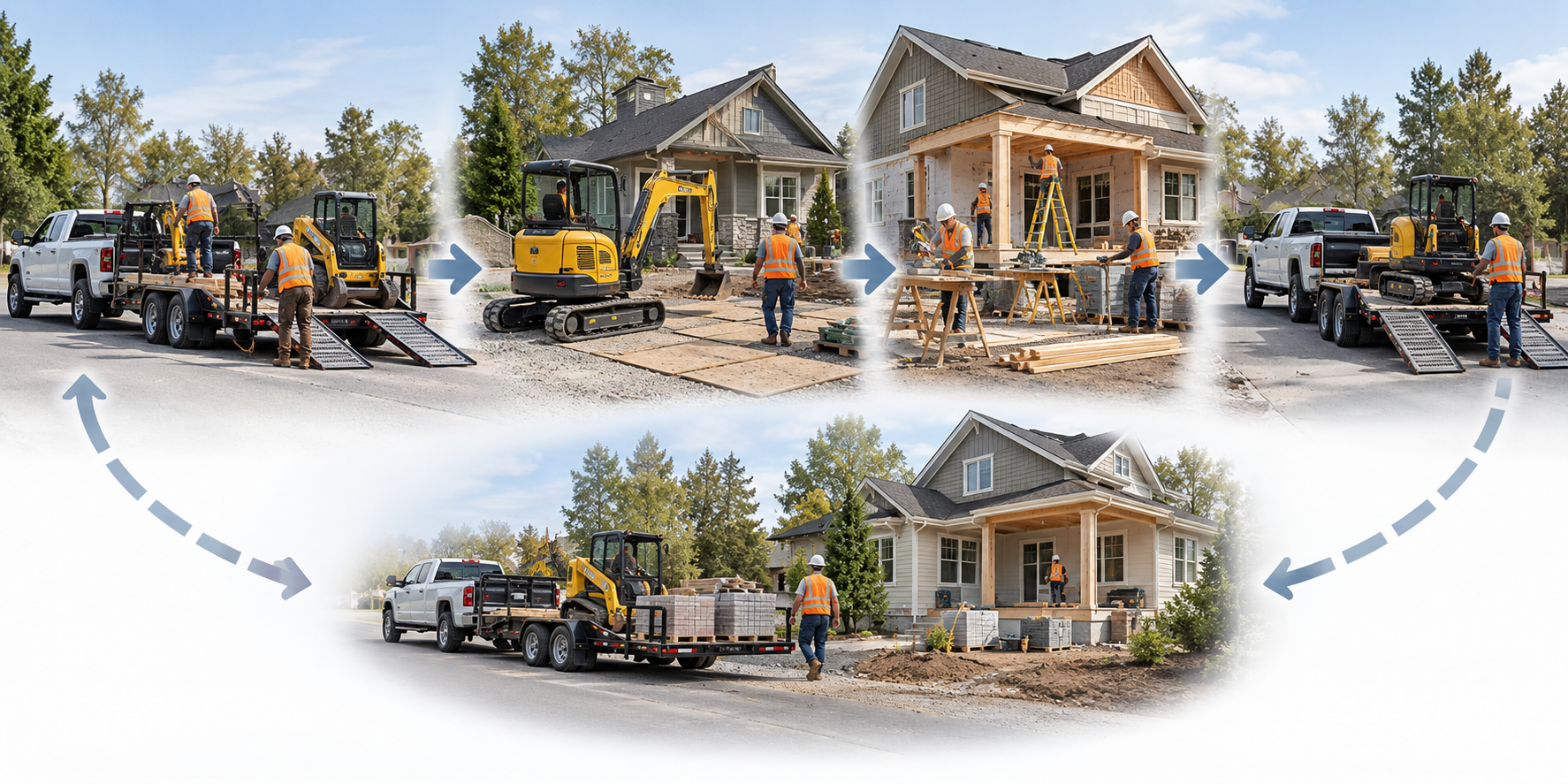
Another contractor may call some of these delivery, setup, general conditions, or overhead. The label is less important than the included physical work and the trigger for another charge.
Why one mobilization is not always enough
A project may require separate visits for demolition, access equipment, delivery, installation, and cleanup. Delays between trades can cause an equipment return and a later remobilization. A narrow route or difficult staging area can also make each move take longer or require smaller equipment and more crew members.
The cost mechanism is usually additional transport, setup, labor, equipment time, or risk—not a universal percentage of the construction price. There is no defensible one-size-fits-all mobilization percentage across trades.
Access and setup affect the charge
For example, an aerial platform may need a delivery route wide enough to reach the work, while a scaffold may need base preparation, tie-in planning, and protection along a façade. A crane may require ground support, a larger setup footprint, utility planning, and a minimum service window. These are different mobilization problems even if each appears as “equipment delivery” on an estimate.
How to reduce avoidable remobilization
You can ask the project team to coordinate, without directing unsafe equipment operation:
- Confirm the work area, access route, utilities, and staging space before the delivery date.
- Sequence related tasks so the same setup can serve more than one planned activity.
- Confirm that the next trade and materials will be ready before specialty equipment arrives.
- Ask what weather or site-readiness conditions trigger a trip charge or cancellation fee.
- Keep equipment on site only when the rental and security cost is lower than another delivery.
These are planning questions, not a reason to keep equipment operating or stored in an unsafe position.
Mobilization versus overhead
General contractor overhead and profit may cover office work, supervision, insurance, and business costs. Mobilization should describe physical site logistics when it is shown as a project line item. Some contracts combine them, but a homeowner should ask for enough detail to understand whether the charge is tied to a machine, a specialty crew, a setup, or general administration.
Questions to ask
- What exact transport, setup, teardown, and travel are included?
- Is the charge per phase, per trip, per machine, or a lump sum?
- What is the minimum service window?
- What causes standby, overtime, cancellation, or remobilization?
- Are mats, temporary access work, surface protection, traffic control, or cleanup included?
- Which parts are already included in the demolition, delivery, scaffolding, lift, or crane price?
For site conditions that create repeated moves, read difficult site access. For heavy-lift setup, see residential crane service cost.
Treat mobilization as a sequence of activities
An estimate’s “mobilization” line can refer to bringing people, tools, machines, temporary facilities, or vehicles to the property and preparing them to start. It may be one-time setup for the entire project or a charge that recurs when a crew must return with different equipment. Because contractors use the term differently, ask what the particular line includes rather than assuming it is a standard fee.
The cost can reflect travel, loading and unloading, equipment transport, setup, access preparation, orientation, utility coordination, protection, and time spent waiting for the site to become ready. Some of these items may be priced elsewhere under delivery, equipment rental, supervision, or general conditions. Ask the bidder to identify any overlap and say whether the mobilization amount covers an entire phase or only the first visit.
A return visit can be a new mobilization
Projects rarely move in one uninterrupted sequence. A trade may arrive after demolition, wait for a utility or inspection, return after another trade, or bring a specialized machine later. The initial mobilization may not include those subsequent trips. If a quote covers a single visit, the contract should say how additional trips, standby, cancellation, or remobilization will be priced.
For example, a demolition crew may be ready to work but find that a required service has not been disconnected. Another crew might need a second delivery after the installation surface is prepared. In both situations, the cost depends on responsibility, notice, travel, equipment needs, and whether the delay could reasonably have been coordinated. Do not assume every return visit is avoidable; concealed conditions or necessary sequencing can require one. The useful goal is to make the trigger and price method known before the project starts.
Coordinate readiness across trades
The project schedule should identify the dependencies that make a mobilization productive: access route clear, work area protected, prior trade complete, materials onsite, required utility available, and destination for debris ready. If a crew’s work depends on another party, ask who confirms readiness and how much notice is required. A simple call-ahead step can prevent a truck, lift, or crew from arriving before the site can use it.
The property may also have limited space for equipment, deliveries, containers, and stored materials. A mobilization plan that reserves the area for one operation can force other work to pause or move. Discuss the planned sequence with the general contractor and identify which costs are included for relocating equipment or staging between phases. A site with a shared driveway or narrow access may need a specific delivery window, neighbor coordination, or an alternate parking arrangement.
Separate mobilization from overhead and production work
Mobilization may be a direct project cost, while contractor overhead supports the business across jobs. The term should not be used as a vague replacement for every general condition or coordination charge. Ask the contractor to explain the activity, quantity, equipment, and event behind the line. If the cost is part of a larger fixed bid, request the included visit or service assumptions even when each trip is not itemized.
An unusually small mobilization amount can indicate an efficient nearby crew, but it can also mean travel or setup appears elsewhere or is excluded. A larger amount may reflect long-distance equipment transport or a specialized initial setup. Neither is automatically excessive. Compare the proposal with the work and location it assumes, then ask how a project delay or added phase changes the total.
Keep schedule changes visible
When the owner, contractor, utility, inspector, or supplier changes a date, identify which crew or rented asset is affected. A schedule shift can create cancellation cost, idle rental time, a second setup, or an extra travel charge. The change order or schedule update should record the reason, affected service, and price impact rather than folding it into an unexplained allowance.
Weather, access, and material arrival can all affect readiness. The contract may allocate those risks differently, so ask whether the mobilization line includes weather delay, standby, or only the planned visit. If the work can be grouped into one trip without compromising the project sequence, the contractor can explain potential savings; do not compress separate safety-sensitive or dependent activities merely to avoid a return charge.
Questions that make the line useful
Ask: Which people and equipment are included? How many setup visits are assumed? What does “ready to mobilize” mean? What site conditions or missing approvals could cause a failed visit? Who arranges access, deliveries, and utility interfaces? What notice is required to cancel or reschedule? Which charge applies to standby, return visits, or remobilization? Is removal and demobilization included?
If equipment, containers, or materials have separate delivery charges, compare those terms with the mobilization allowance to find duplication or omissions. For related crane setup and minimum charges, see residential crane service cost. For access-driven return visits, compare difficult site access construction costs.
Fixed mobilization and actual-cost allowances
A fixed mobilization amount gives the parties one known charge for the visits or equipment described in the proposal, subject to its stated change terms. An actual-cost allowance can adjust to travel, delivery, or return visits, but the homeowner needs a way to verify the quantity and rate. Ask whether the contractor will provide a trip record, equipment invoice, or written reason for each additional mobilization. If the charge is embedded in a general-conditions total, request the same explanation of included visits and exclusions. Compare the risk allocation as well as the amount: a fixed line may transfer more overrun risk to the contractor, while a provisional allowance may leave some uncertainty with the owner.