
Porch flooring may use tongue-and-groove boards, deck-style boards, tile, or another product over a supporting structure. The surface is only one layer. Water exposure, slope, ventilation, joists, columns, edges, and finish can change the repair.
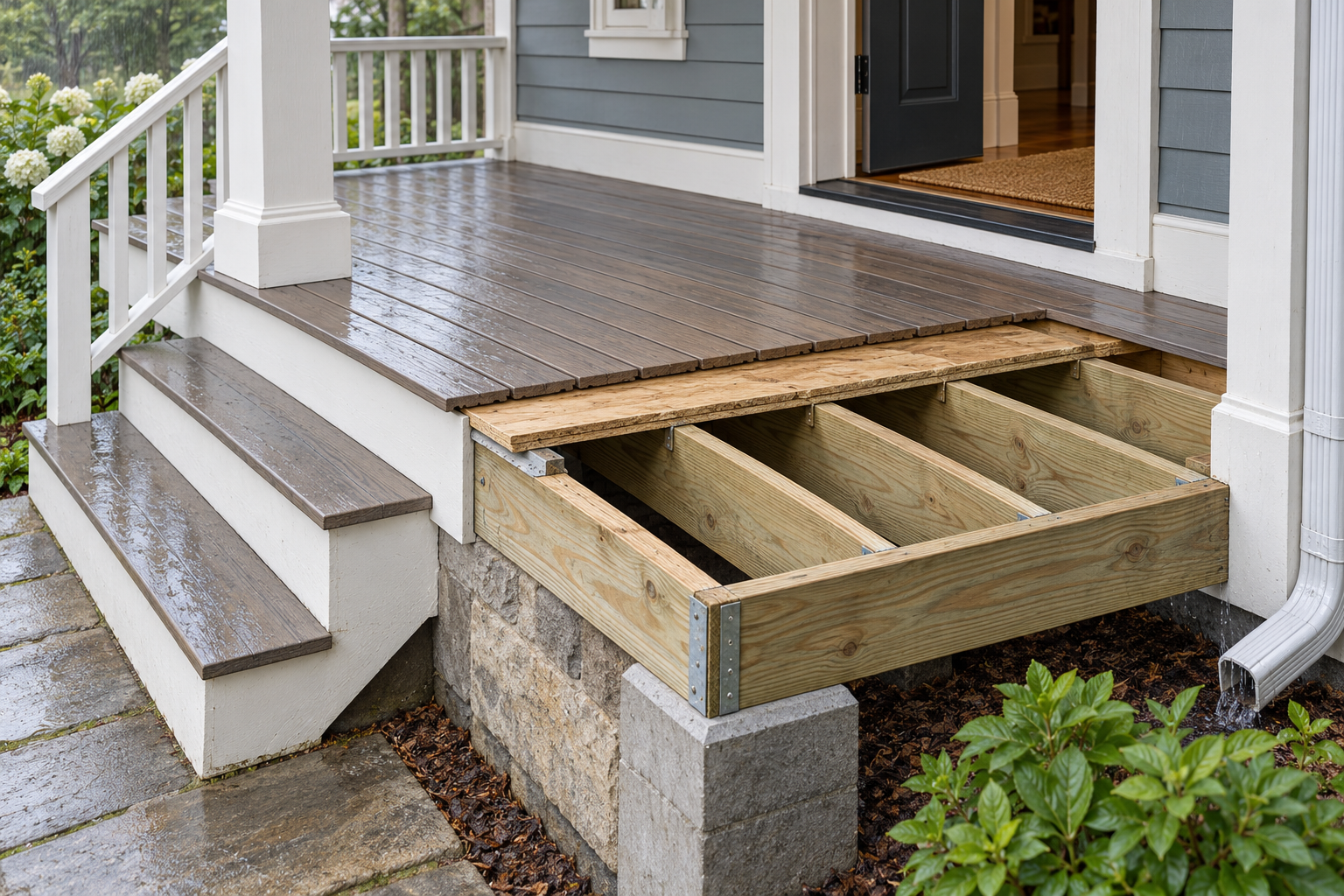
Surface or structure?
Ask whether the quote includes only boards or also the substructure, rim and trim, drainage, columns, stairs, house interface, and finish. Removing a floor can reveal joist rot, damaged supports, poor water management, or movement. A partial replacement should explain how new material will meet old material.
Material compatibility
Porch flooring is not automatically interchangeable with deck boards. Product-specific support, fastening, gapping, exposure, and finish requirements control. Trex’s guide, for example, treats its decking as a non-structural surface over approved framing and states product-family requirements; it is not a universal porch-floor specification.
Finish and cost context
USDA guidance says exterior finish performance depends on wood, product, surface condition, climate, and exposure. It does not support a universal maintenance interval. Angi’s broad porch signal is useful only for overall porch scope; current research does not establish a national installed price for every porch-floor system. Canadian pricing needs local evidence.
Diagnose the water path before replacing boards
Porch flooring is exposed to rain, roof runoff, splash, humidity, and sometimes water entering at the house or stair connection. A floor that deteriorates repeatedly may have a surface problem, but it may also have an unresolved drainage, slope, flashing, or ventilation issue. Ask the contractor to describe the likely water path and what the estimate includes to address it. Replacing boards without the cause can lead to another repair.
Inspect the project as layers: surface boards or tile, joists and supports, rim and trim, columns, stairs, house connection, and edge drainage. If the surface has softened or moved, ask whether the substructure will be inspected once the material is removed. A proposal should say what can be seen now and how newly exposed damage will be documented and priced.
Match the replacement material to the porch system
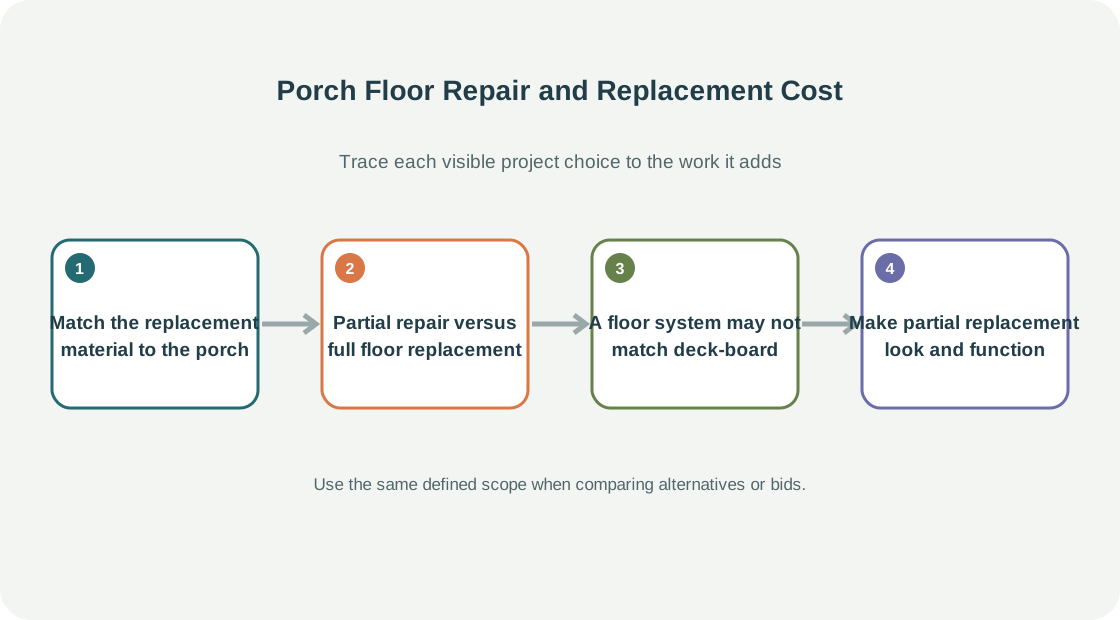
Tongue-and-groove porch boards, deck boards, tile, and proprietary products have different profiles and installation needs. Check whether the selected material is intended for the exposure and support conditions. Trex’s product guidance illustrates the general point: its decking is a non-structural surface over framing and has product-specific support and fastening rules. That does not make it a universal specification for porch floors or other brands.
Ask for the manufacturer, product, profile, finish, and current installation directions. Compare how the surface meets door thresholds, columns, stairs, walls, and trim. If the old floor is painted, stained, or sealed, ask how new material will be finished and whether the existing substructure has compatible ventilation and drainage. A visually similar replacement is not necessarily a compatible system.
Partial repair versus full floor replacement
A partial repair can make sense when damage is isolated and the remaining material and substructure are suitable. It may be hard to match old material or create an even transition, especially if the porch surface has weathered. Full replacement may improve consistency but can expose more framing and increase demolition, disposal, and finish work.
Ask each bidder to identify the area, board quantity, material match, removal, disposal, substructure inspection, trim, stair connection, and finish. If columns, roof support, or the house interface are affected, price those separately so the homeowner can compare a floor-only repair with a broader porch project. A scope that says only “replace porch floor” may not reveal whether joists and edges are included.
A floor system may not match deck-board assumptions
Porch floors can use boards that interlock, fit tightly, or depend on an enclosed ceiling and wall details. A deck board designed for open, ventilated framing may not be suitable for a porch with different moisture exposure or support. Ask whether the selected product is designed for this exact application and what its manufacturer requires for gaps, drainage, fastening, and finishing.
If the homeowner changes from painted wood to composite or another product, consider the floor thickness, threshold height, stair connection, and porch perimeter. New material may change how the floor meets columns and trim. Ask the contractor to show those transitions in the estimate or sketch.
Make partial replacement look and function intentional
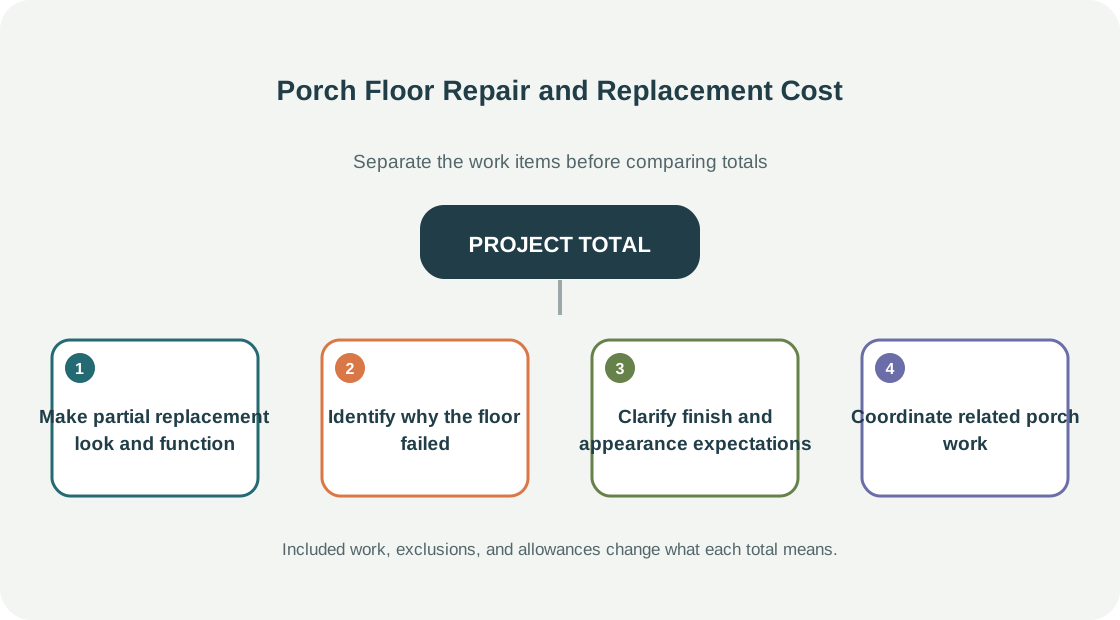
Replacing only a few boards can preserve sound flooring, but old and new material may differ in width, finish, or color. Ask whether the repair can follow a natural joint or whether replacing a larger area would create a cleaner edge. A visual match is not guaranteed for weathered wood. If the floor is painted, stain or paint compatibility and preparation should be stated.
If the porch floor is used as the main entrance, include temporary access and the time before the new finish can be used. Ask how the contractor protects the house and nearby areas while boards are removed and whether debris is disposed of at the end of each day.
Identify why the floor failed
Ask the contractor to distinguish surface wear from water entry, poor drainage, damaged framing, or movement. If only the visible coating has failed, a finish project may be enough. If boards are soft or flexing, inspect the support below. If water enters at a wall, stair, or roof edge, price that interface separately. The quote should state whether the proposed repair addresses an observed cause or only replaces the finish layer.
Clarify finish and appearance expectations
Painted, stained, and unfinished surfaces age differently. A replacement board may absorb finish differently from old material, and a partial repair may remain visible. Ask whether the contractor will finish the entire surface, only the new boards, or leave finish to the owner. Confirm product, number of coats if specified, preparation, drying, and protection of adjacent surfaces.
Coordinate related porch work
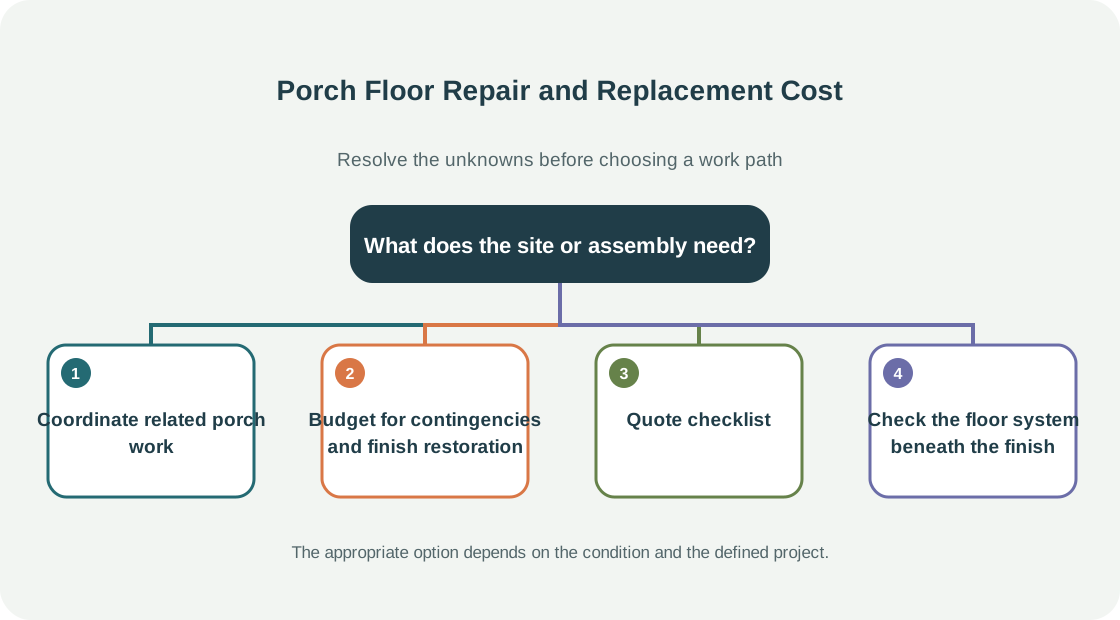
If columns, stairs, or railings connect through the floor, ask whether they will be removed and reset or remain in place. If the porch roof is being repaired, coordinate the work so new floor material is not damaged later. Price demolition and disposal of old material, including any trim or threshold that must be removed for access.
Budget for contingencies and finish restoration
Request a base price for known surface work and a clear method for hidden damage discovered during removal. The contractor should identify the conditions that trigger added repair and seek owner approval before proceeding. Include painting or staining, threshold and trim work, disposal, access, protection of landscaping, and cleanup. Ask whether the finished floor will need a drying or curing period before normal use.
USDA guidance explains that exterior finish performance depends on wood, product, condition, climate, and exposure, so a universal maintenance interval is not reliable. Angi’s broad porch signal does not provide a dependable installed price for every flooring type, and Canadian work should be priced locally. Compare the work description rather than a broad cost-per-square-foot number.
Quote checklist
Request material and profile, removal, disposal, exposed-substructure inspection, repairs, columns and stairs, finish, access, and hidden-condition allowances. If the floor moves or supports look damaged, obtain qualified evaluation before treating it as a finish project.
Check the floor system beneath the finish
A porch floor can look worn because of failed paint, damaged boards, poor drainage, or movement in the supporting frame. Ask whether the quote covers only the walking surface or also joists, rim members, subfloor, flashing, and connection repairs. If the floor is soft or slopes unexpectedly, have the cause evaluated before installing new boards or sheet goods over it.
Material options should be compared in the context of exposure and the porch’s enclosure. A floor exposed to rain and sun has different finish needs from one protected by a roof, and the latter can still receive wind-driven moisture. Ask for the exact product, installation method, spacing, finish, and maintenance directions. If replacing boards changes the finished height, check thresholds, door clearance, stair risers, and transitions to adjoining surfaces.
The estimate should state demolition, disposal, protection of nearby finishes, repair of the substrate, and any paint or stain. Clarify whether furniture removal and access are included. Photograph existing damage and keep a record of any concealed framing repair. A floor replacement is not a substitute for fixing the source of recurring water entry.
Prepare for concealed conditions
Removing floorboards can expose joists, blocking, fasteners, or a rim area that was not visible during the initial estimate. Ask whether the bid includes a limited allowance, a unit price, or a pause-and-approve process if damage is uncovered. The estimate should explain how photographs and measurements will be shared before additional work is authorized. This avoids confusion if the original surface concealed more deterioration than expected.
If the porch is above occupied space or near a finished ceiling, ask how dust, debris, and water are controlled. Clarify whether the contractor protects interior areas and who repairs any surfaces disturbed by access. Keep structural repairs and finish replacement as separate line items so you can see how much cost relates to the walking surface itself.