
Replacing deck boards can be a small spot repair or the first stage of a full resurfacing project. The difference depends on how much of the surface is failing, whether matching material is available, and what the boards reveal about the framing below.
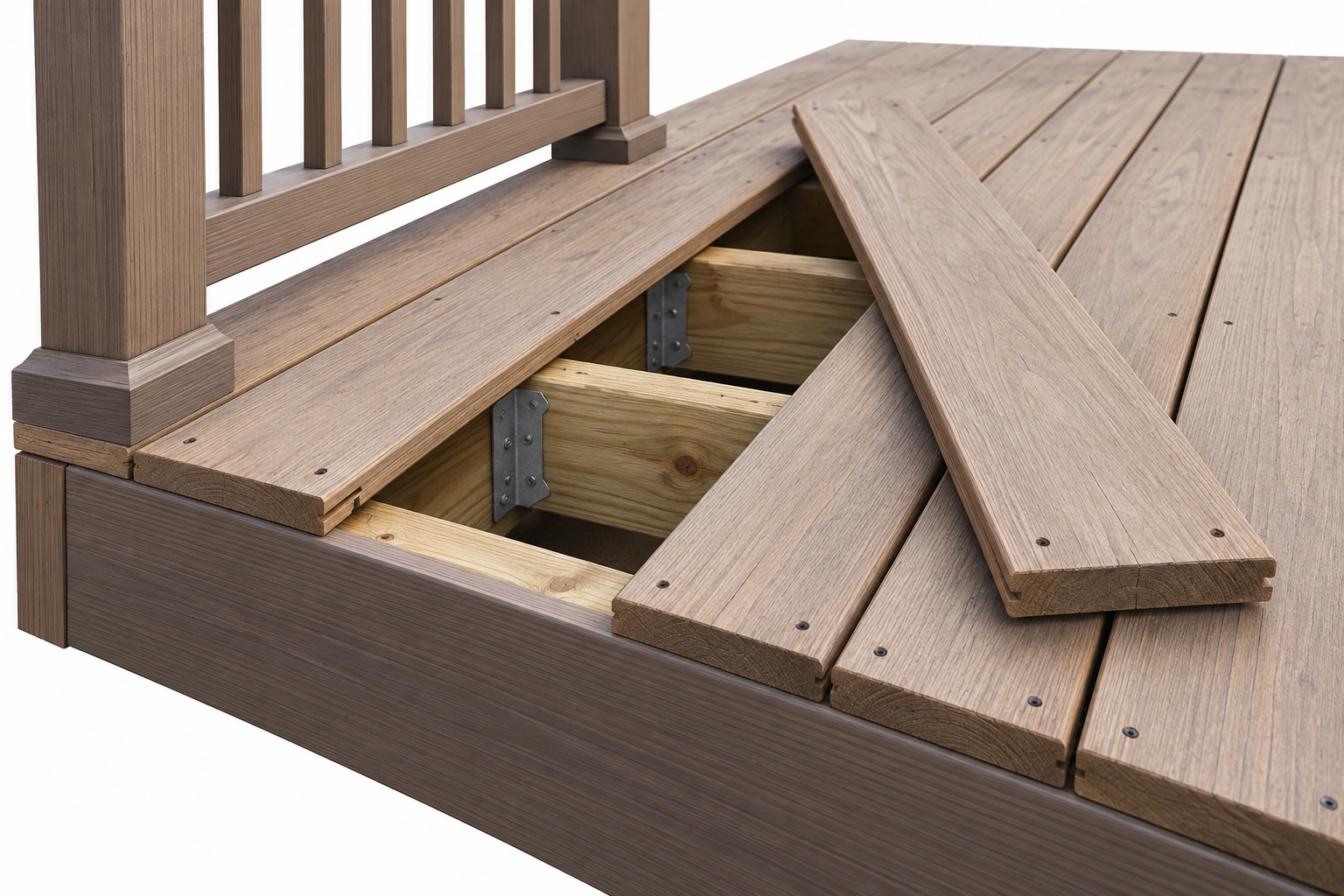
Spot replacement versus full surface
Spot work may be sensible when damage is isolated and the existing product can be matched. A larger project may include removing the entire walking surface, replacing fascia, correcting joists or flashing, rebuilding stairs, and refinishing. Old or weathered boards can make a new board stand out even when the profile matches.
What the quote should include
Ask for board quantity and product profile, fasteners, removal, disposal, access, inspection of exposed joists, fascia, stairs, finish, and restoration. Hidden fasteners and discontinued composite profiles can change labor and availability. Current market evidence supports broad deck and board-price orientation but not a universal installed price for every board replacement.
Trex’s installation guide emphasizes that its decking is not structural and must be supported by code-approved framing, with product-specific fastening and support requirements. Do not assume a new board can use the old support pattern without checking the exact product instructions.
What can be found underneath
Removing boards can reveal rot, corrosion, poor drainage, or unsupported edges. If the joists, beams, ledger, posts, stairs, or guards are affected, the job is no longer only board replacement. Compare the revised scope with resurfacing or replacement before approving a series of small changes.
Finish and ownership
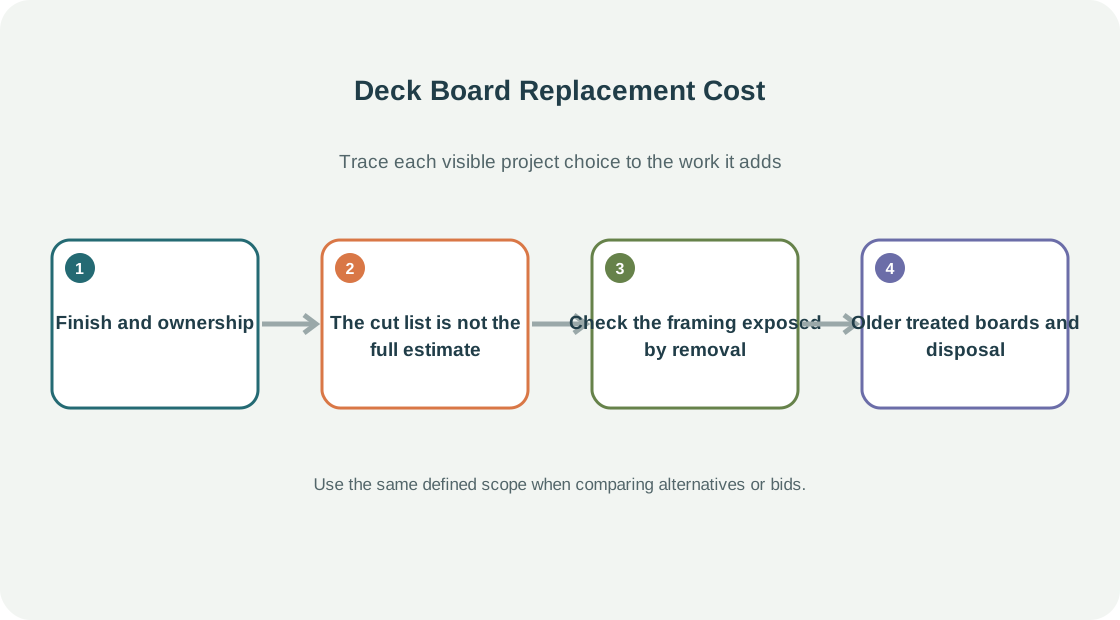
Wood boards may need cleaning and finishing after replacement so the surface weathers more evenly. USDA guidance explains that finish performance depends on wood, product, climate, exposure, and surface condition; it does not support a universal refinishing interval.
The cut list is not the full estimate
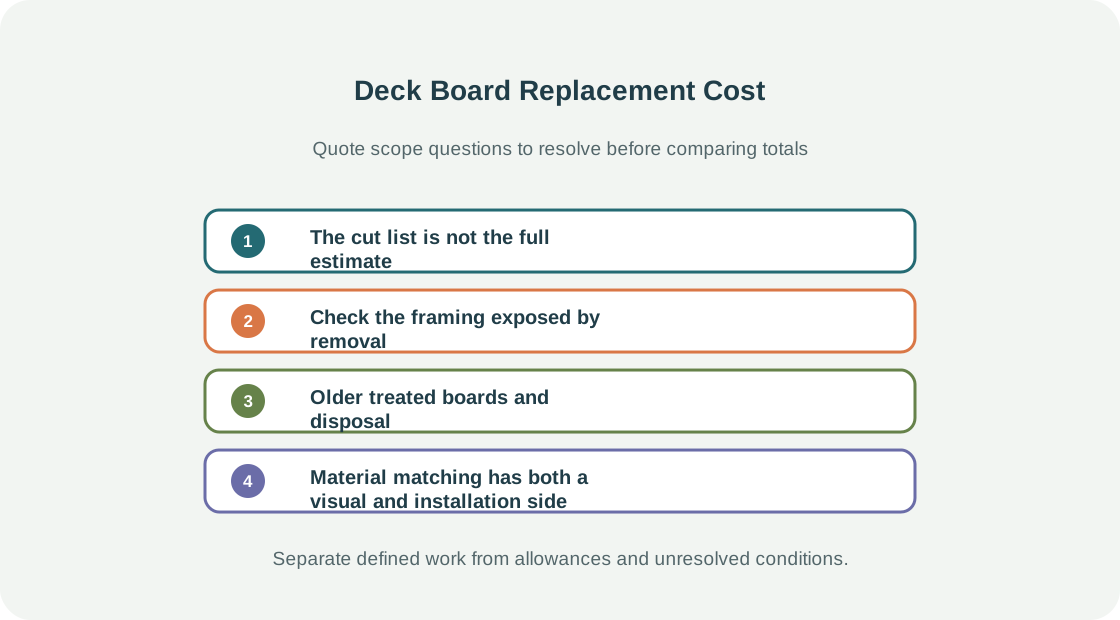
The visible number of damaged boards does not directly predict labor. A contractor may need to locate fasteners, remove trim, lift or cut boards without harming adjacent material, and restore a consistent edge. Hidden fasteners can require more careful disassembly than exposed screws. If boards are glued, clipped, or captured by a railing or border, the replacement may involve more than the damaged piece itself.
Ask the estimate to identify the number, length, profile, and grade of replacement boards; how much adjacent decking may need to be lifted; whether fasteners are included; and what finish or color matching is expected. Old wood can weather differently from new material, and a new composite board may differ from a faded or discontinued profile even when dimensions appear close. The quote should describe whether matching is possible, approximate, or not guaranteed.
Check the framing exposed by removal
Removing a board creates an opportunity to see the joist surface and attachment points beneath it. That view can reveal moisture damage, corrosion, or a support condition that changes the scope. Trex’s 2026 guide is a product-specific example of why framing matters: it describes Trex deck boards as non-structural and requires board ends to bear on framing, with current support and fastening details tied to the exact product. The U.S.-oriented guide is not a rule for every product or jurisdiction.
If the repair uses a different board system, ask whether the old joist layout and edge support meet the manufacturer’s instructions for that product. Do not assume a replacement piece is compatible just because it fits in the opening. If a board end is unsupported or the framing is damaged, price the needed correction separately from the surface-board work.
Older treated boards and disposal
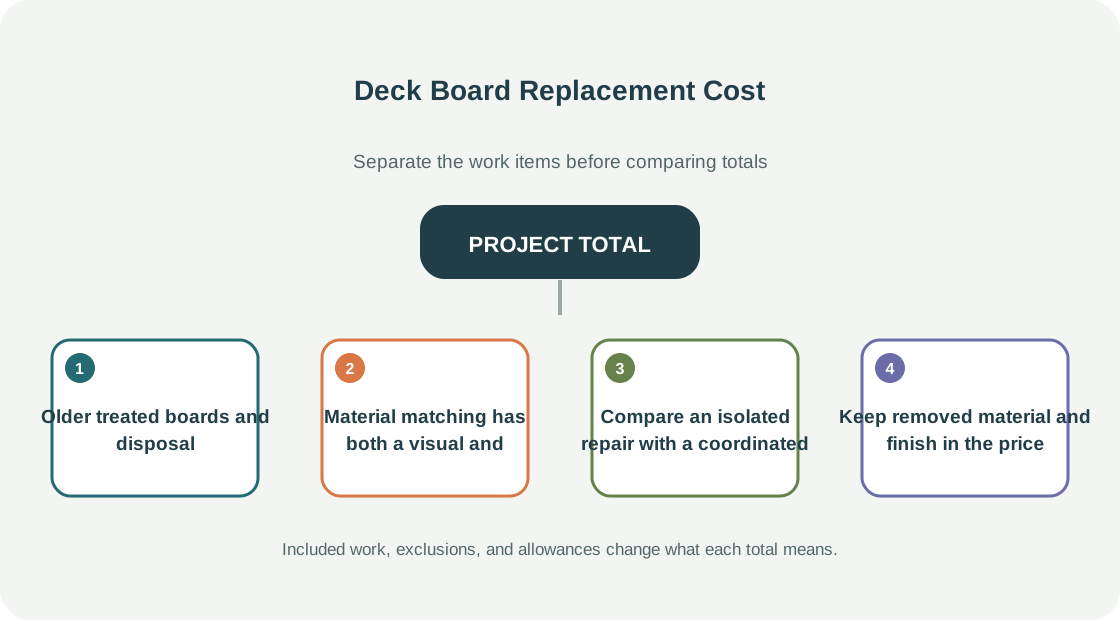
If an older deck is being opened up, treatment may be unknown. Health Canada says Canadian residential decks built before 2004 are likely to contain CCA-treated wood, but age does not confirm a specific board’s treatment. It advises minimizing exposure to damaged or deteriorating material. The U.S. EPA’s separate guidance says existing CCA structures do not require blanket removal, recommends minimizing dust when handling, advises against burning the wood at home or using it as mulch, and points to state and local disposal requirements.
Ask who will handle removed boards and small offcuts and how local disposal rules will be checked. The possibility of treated wood is a handling consideration; it does not automatically make a small, otherwise sound repair inappropriate. If boards need cutting or extensive removal, include the handling and disposal plan in the quote rather than leaving it to the homeowner after demolition.
Material matching has both a visual and installation side
For wood, a replacement board may be the same species or nominal size but still differ in moisture, color, grain, or finish. For composite and PVC, manufacturers may change colors, profiles, or fastener systems. Ask the supplier whether the original profile is still available and whether a transition or border can make the repair look intentional. Do not promise a perfect match when the old material has weathered.
The installation fit matters too. Confirm board thickness, edge profile, fastening, end support, and whether adjacent boards must be moved. Trex’s 2026 guide is an example of current product-specific requirements, including board-end support; it is not a universal detail for every decking system. The quote should identify the selected product and current instructions.
Compare an isolated repair with a coordinated project
If the repair is near stairs, rails, fascia, or a deck edge, compare the cost of coordinating that work now with a second visit later. Do not expand the project automatically; ask which adjacent components are actually affected. If the frame is suitable and only a few boards fail, a spot repair may remain appropriate. If many boards are damaged or hard to match, resurfacing could offer a more consistent result.
Keep removed material and finish in the price
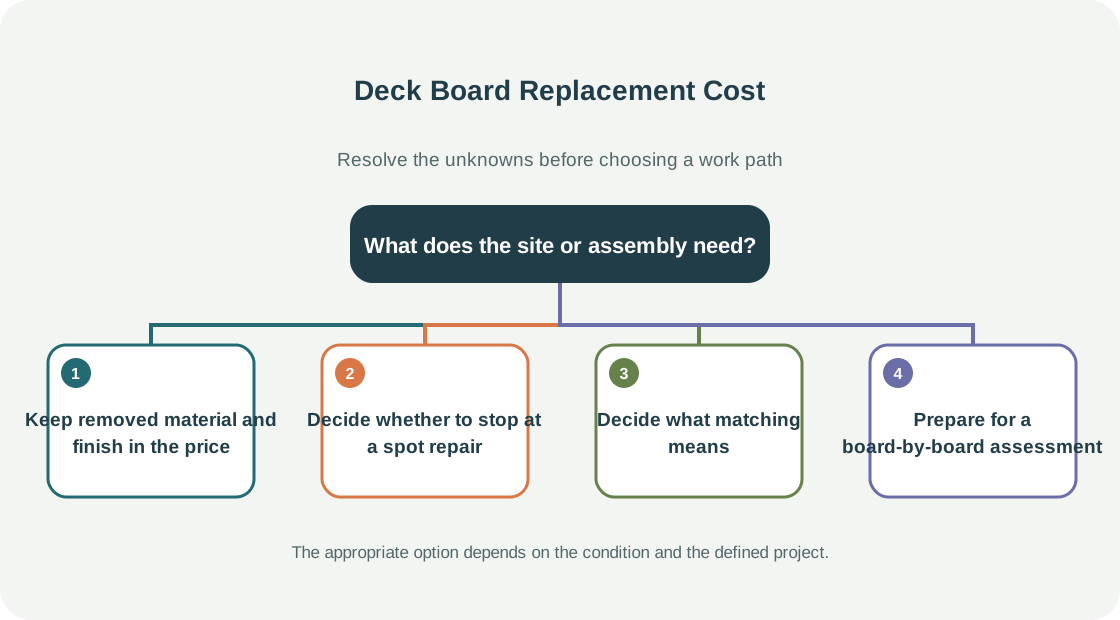
Ask whether the estimate includes haul-away, disposal, fastener removal, and cleanup. If the deck will be refinished, identify which sections receive the treatment and whether the result will be uniform. If only a few boards are replaced, the finish may age differently from the existing surface; an appearance guarantee should not be assumed.
If older treated wood may be present, agree on handling and local disposal before the contractor starts cutting or removing boards. Health Canada and U.S. EPA guidance differ by jurisdiction and do not identify a specific board from its appearance. The work plan should reflect the property and applicable local requirements.
Decide whether to stop at a spot repair
Spot replacement is most useful when defects are isolated, the rest of the surface and frame remain serviceable, and a compatible board can be obtained. A repeated pattern of soft boards, loose fasteners, water damage, or many mismatched repairs may indicate that the project has become resurfacing. If rails, stairs, fascia, ledger, or framing need work too, compare a coordinated scope with a sequence of small service calls.
Ask the contractor to show what was inspected and what remains concealed. If the revised price changes after opening the deck, request photographs and a description of the affected framing, then compare the added repair with full resurfacing or rebuilding. A clear decision point prevents the project from growing through unreviewed changes.
Decide what matching means
A replacement board can differ from the existing deck in color, grain, surface pattern, and weathering even when the nominal material is the same. Ask whether the contractor will search for the original profile, use available stock, or propose a visibly different repair. Keep an extra board or product label from the original installation if available. If only a small quantity is damaged, compare the cost of a targeted repair with the appearance and labor implications of replacing a larger continuous area.
The number of boards is not the only measure of scope. Work near a railing, stair, border, or house wall may require removing and resetting adjacent components. Concealed fasteners can take longer to access than exposed fasteners, and a damaged board can be a symptom of water retention or a framing problem. Ask whether the contractor will check adjacent supports and explain any access assumptions before agreeing to a per-board price.
For a manufactured product, identify the exact series, profile, and installation guide. Trex guidance, for example, describes product-specific support and fastening requirements; it does not establish rules for other brands or all decking. A replacement should be compatible with the existing assembly and installed according to the selected product’s current requirements. If the original line is discontinued, ask what transition or replacement strategy is proposed and whether it affects the warranty.
Prepare for a board-by-board assessment
Before a contractor visits, mark or photograph damaged boards and note when the problem appears, such as after rain or under a particular load. This helps distinguish an isolated surface defect from a repeated pattern near a joint or support. The contractor should still inspect the assembly directly and avoid assuming that every board with similar appearance has the same cause. Ask for a written count and location list so the bid can be checked against the work completed.
If matching boards are unavailable, decide whether a visible patch is acceptable or whether a larger continuous area should be replaced for consistency. Price both options when feasible, including added labor to remove and reinstall trim, rails, or stairs. Keep any framing or water-management repair as a separate scope so that the surface quantity does not hide a larger underlying condition.