
Refinishing is an ownership and appearance project, not a substitute for structural repair. The cost depends on cleaning and preparation, surface condition, finish choice, rails and stairs, access, and whether damaged boards or framing must be repaired first.
What refinishing may include
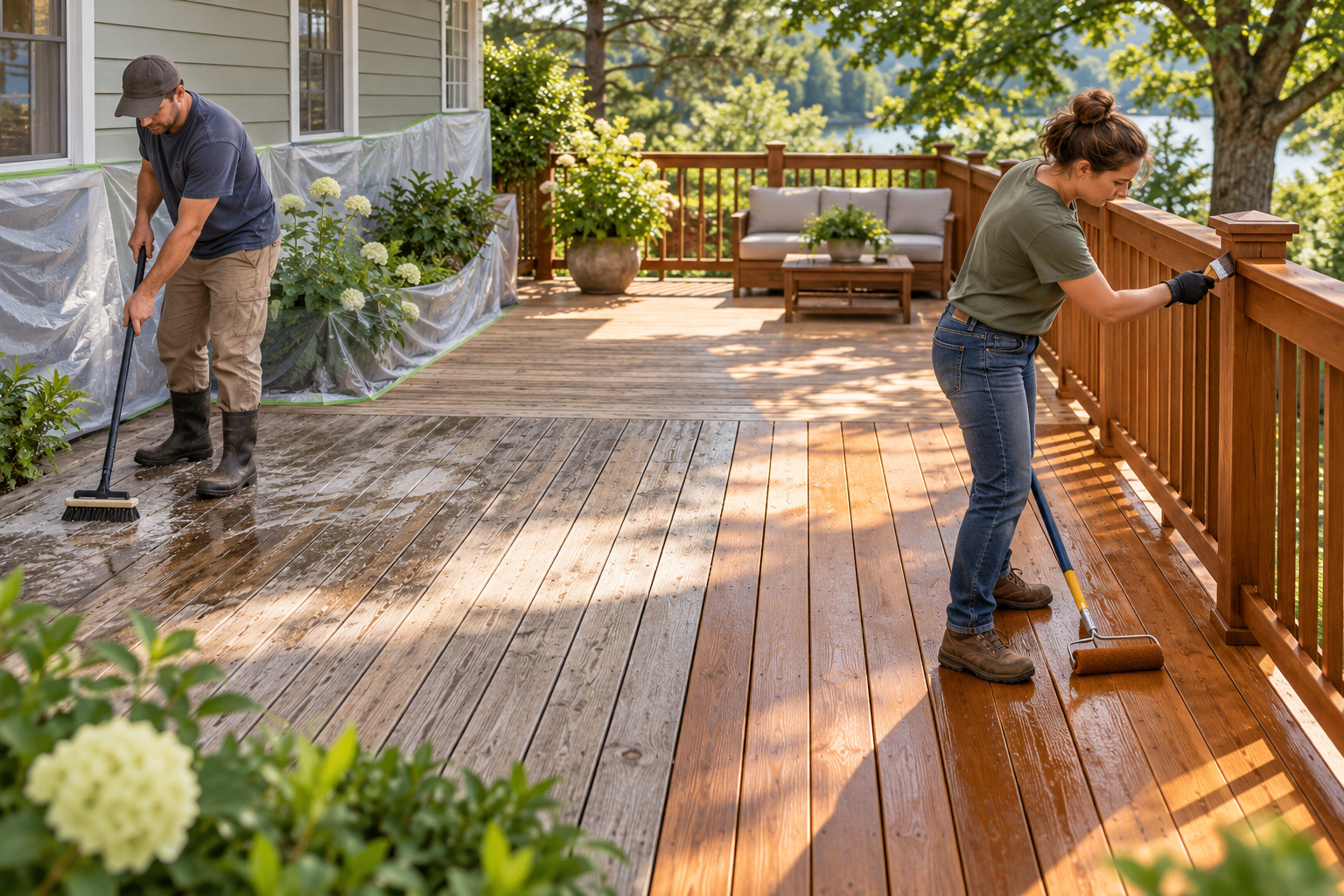
Separate routine cleaning from stripping, sanding where appropriate, stain or sealer application, paint or coating work, rail and stair preparation, spot repairs, and restoration of nearby surfaces. A contractor should identify whether the quoted service is a wash-and-coat job or a full preparation process.
Why finish life varies
USDA Forest Service guidance explains that an exterior finish may provide appearance, water and weather protection, and cleanability, but performance depends on the wood, finish, surface condition, climate, and exposure. That is why a universal “recoat every X years” promise is misleading. South-facing exposure, wet shade, snow, traffic, and local weather can produce different maintenance needs on the same deck.
Quote drivers
- square footage and layout;
- railings, stairs, skirting, and difficult edges;
- old coatings, mildew, dirt, and preparation;
- repairs or board replacement discovered before coating;
- access, weather windows, and curing requirements;
- selected finish and number of coats.
Current market signals are more useful for broad deck context than for a universal refinishing price. Compare the preparation standard and finish product, not only the total.
When to repair first
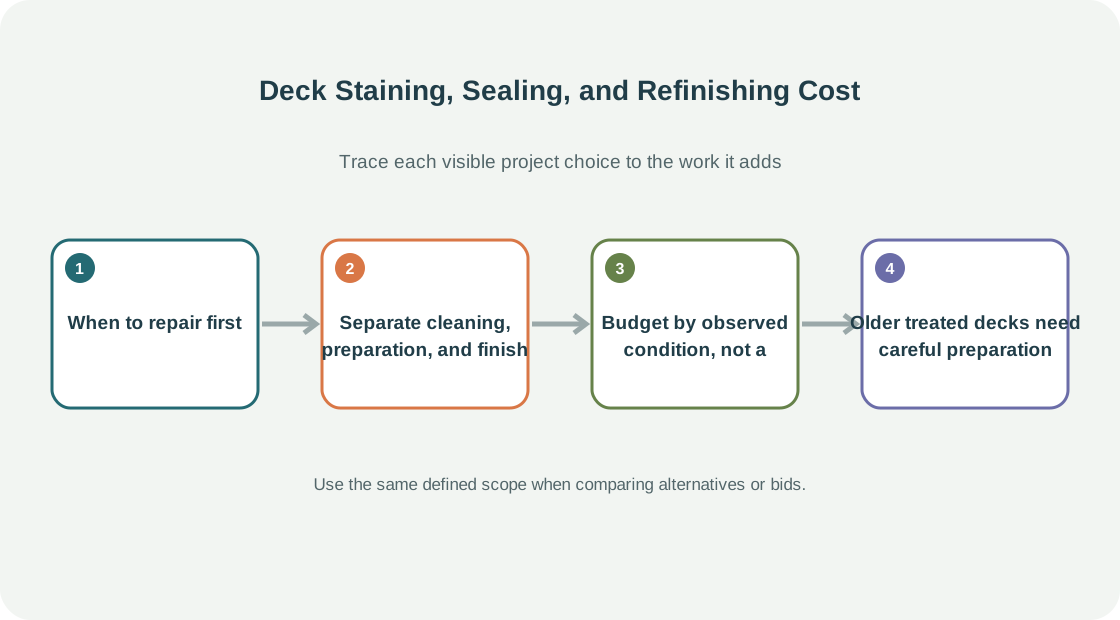
Rot, loose boards, unstable rails, movement, or defects at the ledger, framing, or footings should be evaluated before coating. A fresh finish can make a surface look better without changing its structural condition.
Separate cleaning, preparation, and finish application
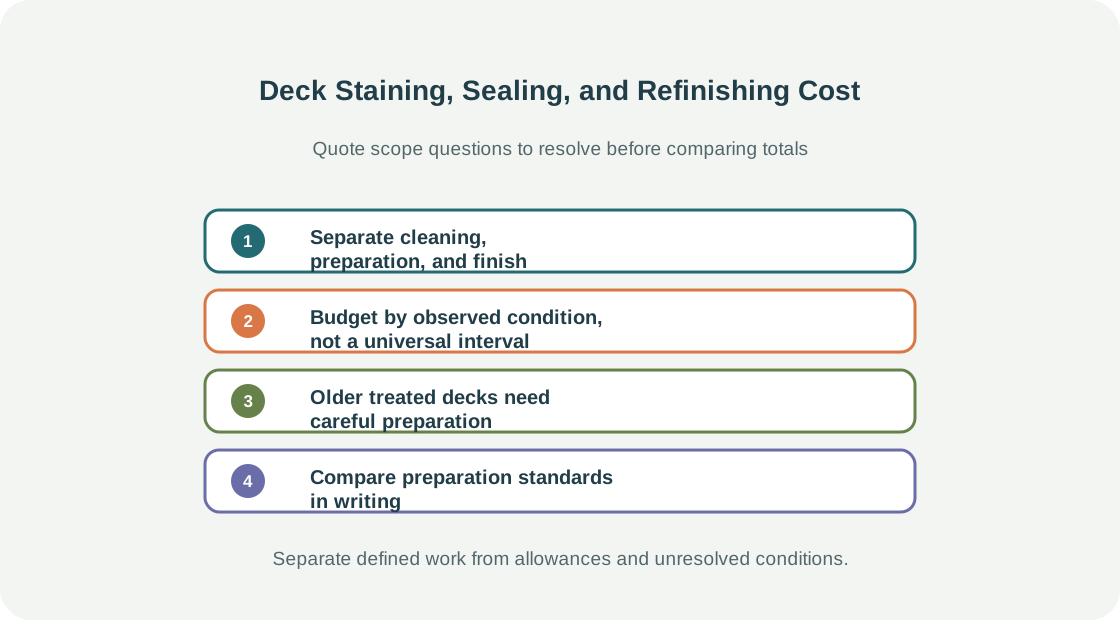
Ask a contractor to describe the starting condition they observed and the result the proposed preparation is meant to achieve. A cleaning-only service may remove surface dirt while leaving an old coating in place. A refinishing service may involve more work to prepare a surface for a new product. If previous coatings are failing, ask how the new finish is compatible with what remains and whether removal is included. Avoid comparing bids solely by deck square footage when one includes only the floor and another also prepares rails, stairs, fascia, or built-in benches.
The product label and current manufacturer directions should control surface preparation, application conditions, and number of coats. A clear quote can identify the product, surfaces included, preparation method, protection of adjacent areas, and treatment of areas that cannot be reached. Weather, drying, and curing windows can affect scheduling; ask how rain or unsuitable conditions change the job rather than assuming a fixed calendar date.
Budget by observed condition, not a universal interval
Exterior finish performance depends on wood species, treatment, previous coating, exposure, climate, and maintenance. The same deck can wear unevenly where one side receives direct sun and another stays damp or shaded. A universal promise to recoat every set number of years hides these differences. Inspect the surface and follow the chosen product’s instructions; budget for maintenance when it is actually due rather than applying a generic schedule.
Include the whole surface the homeowner wants to maintain. A floor-only quote may leave rails and stairs with a different appearance, while adding them may increase preparation time substantially. If a deck has narrow balusters, built-in seating, skirting, or complex edges, ask how those pieces are measured and priced. If a finish is being applied to newly replaced boards, note that new and weathered wood may absorb or display it differently.
Older treated decks need careful preparation
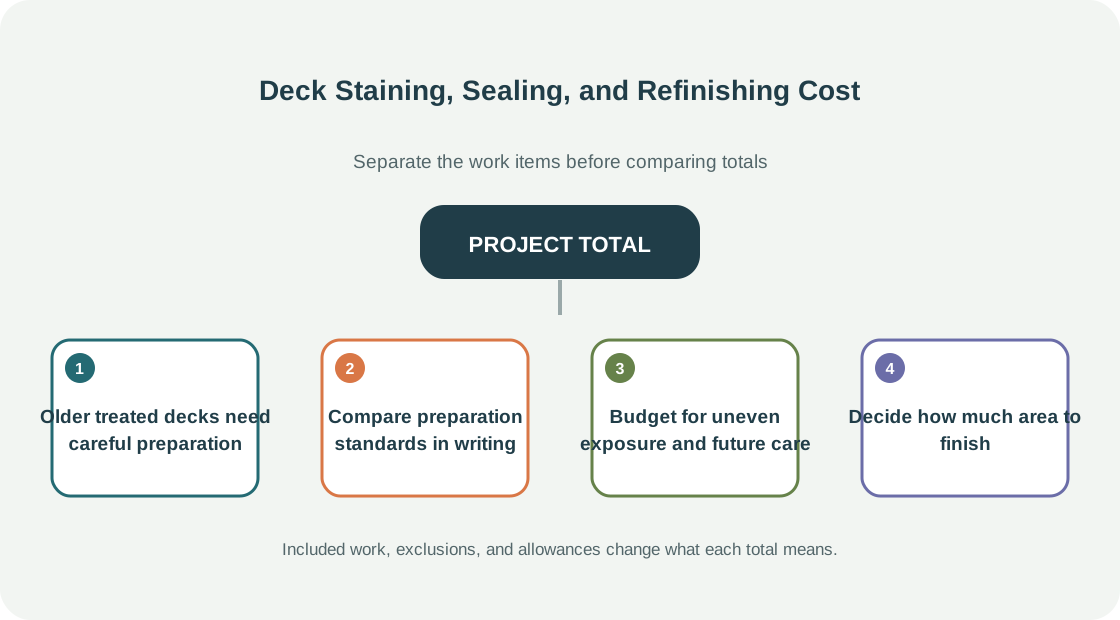
Age and appearance alone do not establish whether a deck contains CCA-treated wood. Health Canada says Canadian residential decks, fences, and play structures built before 2004 are likely to contain CCA, and aged material may resemble untreated wood. It advises minimizing exposure to damaged or deteriorating treated wood; its discussion of sealant is an option, not a universal schedule. The U.S. EPA separately says it does not require blanket removal of existing CCA structures, recommends limiting dust when handling, and advises against home burning or reuse as mulch, with disposal directed by local rules.
If older treated wood may be present, tell the contractor before preparation begins and ask what handling practices and product directions apply. Do not casually sand an unidentified old surface simply to make it look uniform. If the wood is damaged, evaluate replacement rather than trying to hide the condition beneath a coating. Check the current local disposal route if material will be removed. Canadian and U.S. guidance are jurisdiction-specific and do not identify the treatment of a particular deck.
Compare preparation standards in writing
Ask each contractor to describe the surface they expect to receive and what they will do to prepare it. Identify whether the estimate includes basic washing, removal of loose coating, stripping, sanding, spot repairs, drying, masking, and finish application. These terms can mean different work from one provider to another. A product name alone does not explain the preparation or the final appearance.
If bids differ, ask whether they are using the same product type and treating the same surfaces. A floor-only bid will not match a proposal that includes rails, stairs, skirting, or a privacy edge. Confirm whether furniture moving, landscaping protection, cleanup, taxes, and additional coats are included. Current market evidence does not provide a reliable universal refinishing price, so the written scope is the key comparison.
Budget for uneven exposure and future care
Different parts of one deck may weather at different rates. A covered porch section, sunny steps, wet stair landing, and shaded rail can have different surface condition. Discuss those areas separately with the contractor rather than assuming one coat or schedule solves all of them. Ask how to check whether the finish needs renewal and what signs the product manufacturer identifies.
An ownership budget can include an allowance for future cleaning and finish work without assigning an exact universal interval. Use the product directions and observed condition. If a household is unwilling to repeat finish work, compare the maintenance implications of a different surface material as a separate project decision.
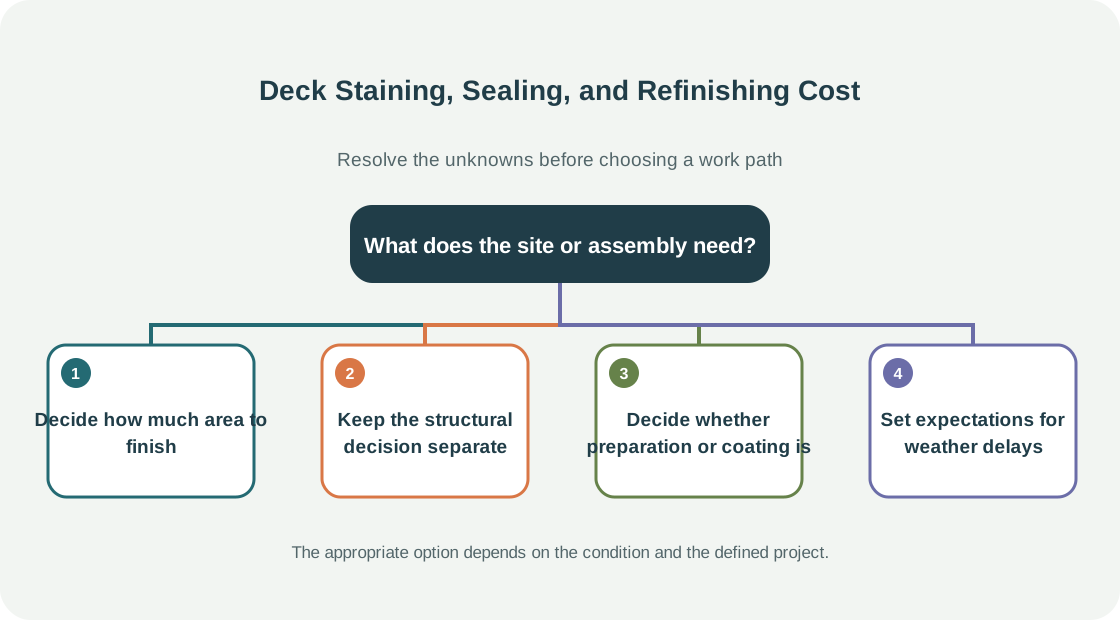
Decide how much area to finish
Ask whether the price covers the floor only or also stairs, rails, fascia, posts, skirting, and built-ins. A homeowner may choose a floor-only project, but adjacent surfaces can look different afterward. If consistency matters, request an option price for each additional surface rather than assuming it is included.
The shape of the deck can affect labor even when area is similar. Narrow edges, many balusters, stair treads, and built-in benches take different preparation from a large open floor. Ask how the contractor measures and prices these details and whether a small test area can reveal the expected appearance.
Keep the structural decision separate
Finishing can renew appearance and may protect a suitable wood surface, but it cannot repair decay, restore a failed connection, or stabilize a loose guard. Ask the contractor to flag soft boards, movement, corrosion, or deterioration around posts and framing before coating. If the issue changes the project’s scope, price repair first and decide whether a finish remains worthwhile after that work. This avoids spending on a surface that must soon be cut out or replaced.
Decide whether preparation or coating is the larger task
A finish quote should identify the condition of the existing surface and the preparation needed to receive the proposed product. Cleaning, brightening, stripping, sanding, spot repair, and coating are separate operations; a price that names only “stain” does not show which are included. Ask what happens if test areas reveal a coating that cannot be removed with the assumed method or if boards need repair before application.
Ask for the exact product and application method, including the number of coats, coverage assumptions, drying conditions, and areas excluded. Product instructions govern application and recoat timing. Weather, shade, moisture, and ventilation can affect the schedule, so a promised completion date may depend on conditions outside the contractor’s control. Clarify whether furniture moving, masking, cleanup, and protection of siding or landscaping are included.
For comparing proposals, use the same measured surfaces and condition assumptions. A deck floor, rails, stairs, fascia, and privacy panels can require different access and preparation. If appearance is the main goal, ask whether a sample patch can show likely color on aged wood. A finish can reduce weather exposure but does not repair structural decay or guarantee a fixed service life. Record the maintenance instructions and keep the product label after the work.
Set expectations for weather delays
Exterior coating work depends on surface condition and suitable weather. Ask the contractor which temperature, moisture, and forecast conditions are required by the named product and how rain or overnight dew affects the schedule. A delay can be preferable to coating over a surface that is not ready. Clarify how the contractor protects prepared wood if the work is paused between cleaning, sanding, and application.
For a project with multiple surfaces, confirm the order of work and how access to doors, stairs, and paths will be maintained. Ask when furniture can be returned and when the coated area can be used. Put the manufacturer’s care information and product name in the closeout documents so future cleaning or recoat decisions can follow the actual product instructions.