
A pump can operate and still fail to protect the basement if its line leaks, freezes, clogs, backflows, or returns water toward the foundation. Price the pump connection, route, outlet, restoration, and local receiving assumptions together.
Trace the line and compare the repair
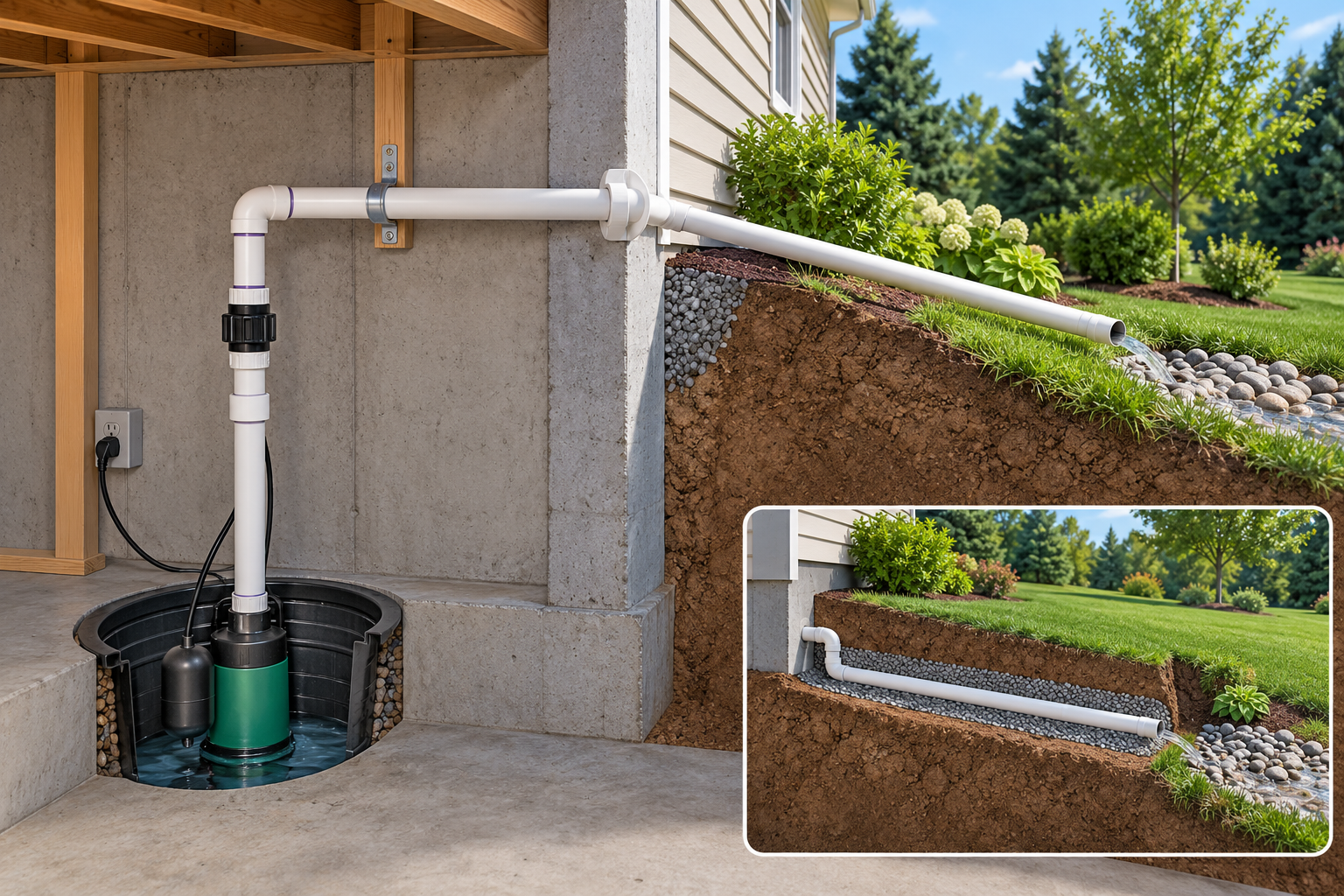
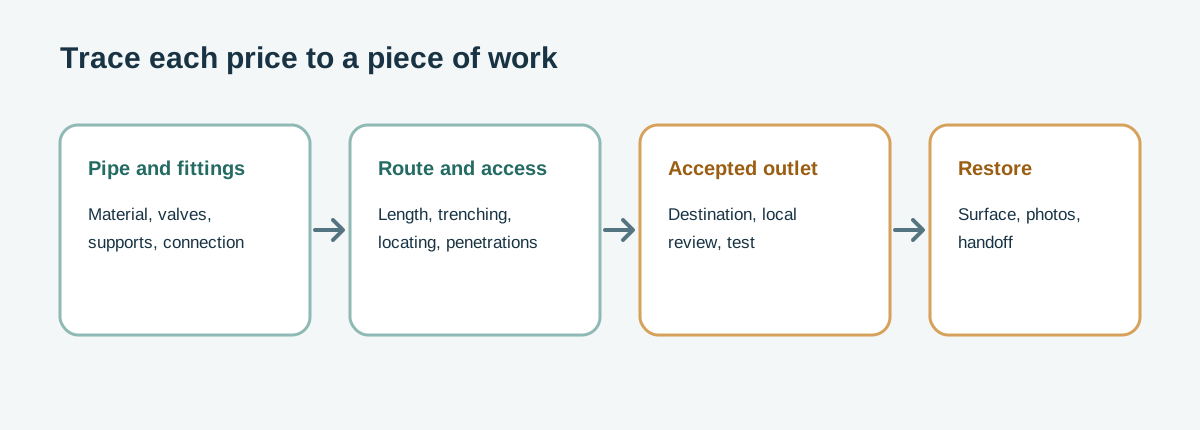
A short interior repair may replace a fitting, check valve, or section of pipe. Exterior work may extend, protect, bury, or reroute the line and restore soil or hardscape. A buried route adds utility locating, trenching, access, and a need to test the outlet after backfill.
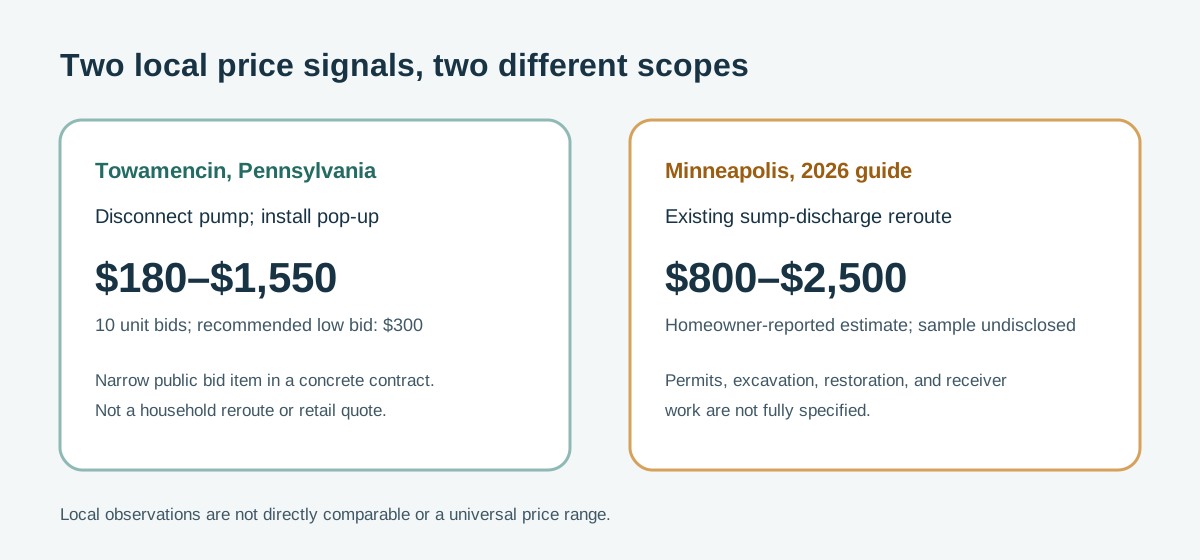
The active evidence does not establish a general market rate for discharge-line repair. A Minneapolis 2026 guide lists $800–$2,500 for rerouting an existing sump discharge from a sanitary connection to a compliant destination. The publisher describes these as general estimates gathered from homeowner-reported quotes but gives no sample size, quote records, or estimation method. Currency, taxes, permits, excavation, restoration, and exact receiving work are not specified. Treat it as a low-confidence Minneapolis planning signal, not a current bid or a price for foundation-drain conversion; do not combine it with the guide’s separate pump or backup lines.
One Pennsylvania public bid lists a much narrower task: disconnecting a sump pump and installing a pop-up outlet. Ten submitted unit prices ranged from $180 to $1,550, with $300 shown for the recommended low bidder. The bid item appeared in a larger concrete-replacement contract, and the document does not establish a homeowner retail price or the full work needed to select and approve a receiving route. It is a local component example, not a direct comparison with the Minneapolis reroute estimate.
Compare the reroute scope
| Work path | Cost items to identify |
|---|---|
| Accessible interior leak or failed fitting | Pipe and fitting replacement, check valve if needed, access, cleanup, and a test of the pump cycle |
| Exposed extension or outlet correction | Pipe length and material, supports or protection, wall penetration, terminal point, grading, and restoration |
| Buried or longer route | Utility locating, trenching, obstructions, dry-well or other destination where permitted, backfill, surface repair, and outlet test |
| Destination or approval change | Utility or authority confirmation, application or permit charges if applicable, required inspection, and recurring obligations kept separate from construction price |
These are quote components, not standard designs. A route that crosses a property boundary or relies on a city connection needs the receiving authority’s review. Ask the contractor to state which approvals are included and which remain the owner’s responsibility.
The quote should identify the measured length, material, fittings, wall penetration, excavation, freeze and blockage assumptions, outlet location, restoration, test, warranty, and exclusions. Ask what happens during heavy rain, a surcharge, or an outage, and whether a backup pump shares the same route. A temporary hose or seasonal outlet should have a stated duration, limitation, and permanent follow-up decision.
Know when the work is more than a pipe repair
A short exposed section with a failed joint can be priced as a local repair if the existing route and outlet remain appropriate. A reroute changes where water goes and can add distance, excavation, utility locating, a wall penetration, or repair to concrete, paving, or landscaping. A change from a sanitary connection to an outdoor destination also needs confirmation that the existing connection and proposed alternative have been correctly identified and locally accepted.
An estimate should state whether the contractor is replacing a damaged section, extending an approved outlet, or redesigning the whole route. Ask how pipe length was measured, whether fittings and supports are included, how the line will be protected from likely damage or freezing, and what must be restored after trenching. If a dry well or other receiving feature is proposed, ask who determines its feasibility and whether soil, groundwater, and local rules affect that decision. These are property-specific design questions, not a standard add-on implied by the article’s cost examples.
| Observed problem | Scope to price | Boundary to confirm |
|---|---|---|
| A leaking joint or failed fitting on a suitable existing route | Local pipe or fitting repair and a pump-cycle check | Whether the outlet and remaining line are still serviceable |
| Water returns toward the foundation or the outlet is poorly placed | Extension or reroute, with measured distance and surface work | Whether the proposed receiver is accepted and avoids affecting adjacent property |
| A buried line is blocked, damaged, or being replaced | Locating, excavation, replacement, backfill, restoration, and outlet testing | Utility conflicts, unknown line condition, and what changes trigger approval |
This comparison keeps a low-cost local repair from being mistaken for a full route change. It also makes it easier to request a second quote for the same observed problem. If one proposal includes excavation and a new destination while another prices only exposed piping, the totals answer different questions.
Pump replacement and discharge repair can appear on the same invoice, but they solve different failures. A new pump does not correct a blocked, damaged, or inappropriate outlet; a new line does not guarantee that the existing pump has the capacity or controls needed for the system. Ask the contractor to separate the pump’s condition, the line’s condition, and the receiving route. If a second contractor proposes replacing both, request the observations that support each part and the price of the narrower repair when it is technically suitable.
The decision also affects later maintenance. An exposed route may be easier to inspect but more exposed to impact or seasonal conditions; a buried route may reduce visible piping while making its endpoint and condition less obvious after backfill. These tradeoffs do not identify the correct design for a property. They help the homeowner understand what the bid includes and what should be documented for future service.
Separate construction cost from approval and ongoing obligations
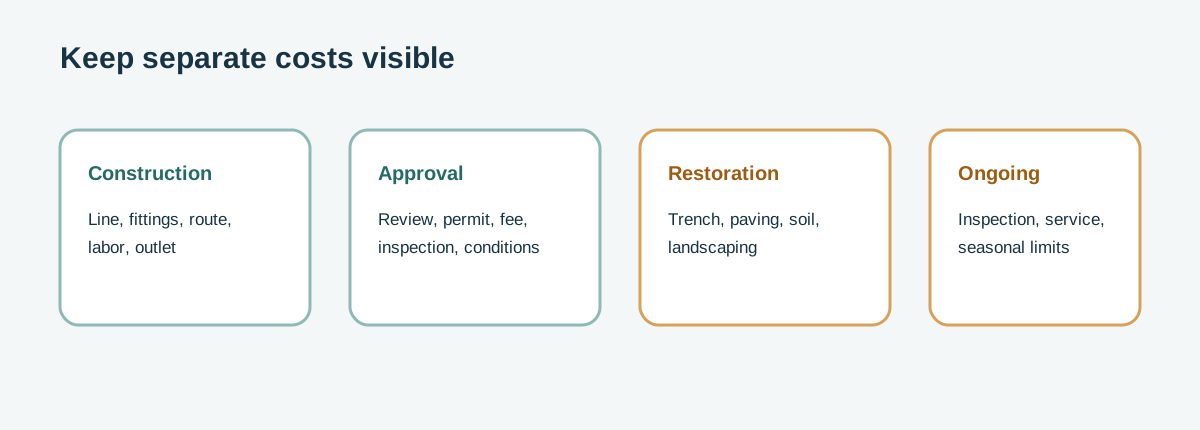
Permits, inspections, utility review, and recurring fees should be shown separately from labor and materials. An authority may require a specific application, approved endpoint, inspection, or continuing fee; the relevant authority must confirm the current terms. A seasonal allowance or temporary discharge arrangement can also create a return visit or a later permanent project. Record the dates and conditions that apply rather than treating a temporary approval as a year-round route.
Route length and access affect more than pipe footage. A line that crosses a paved walk or landscaped area may require surface restoration. A route near a property line can raise runoff or neighbor concerns. A buried line may become difficult to inspect after backfill, so a proposal should include its location, outlet, test, and any photographs needed for future service. Keep a changed route distinct from a foundation-drain conversion: these examples concern an existing sump discharge, not every drain connected to a sump basin.
Confirm the receiving destination
The Government of Canada gives 1.5 m (5 ft.) from the foundation as a possible discharge distance where feasible and says good drainage and local requirements matter. This is guidance, not a universal legal rule. A route that crosses a property line or connects to a storm or sanitary system needs local review. Do not use a generic article to approve a connection.
Local arrangements can add recurring duties. Fargo directs normal discharge to a yard or storm sewer and prohibits sanitary connection, while its page describes a seasonal waiver from October 1 through March 31 and a separate hardship waiver that may carry a monthly utility fee. Those rules are Fargo-specific; check the actual authority for the property before pricing a route.
A separate local assistance example shows why the connected work must be identified precisely. Lambton Shores publishes a grant for disconnecting an existing sump-pump discharge from sanitary sewer, with up to $2,500 toward eligible paid authorized-contractor costs and permit fees when program conditions, including downspout disconnection, are met. This is assistance, not an installed-price estimate, and it concerns an existing pump discharge—not a foundation-drain conversion. Verify current eligibility and do not treat the program as permission elsewhere.
Keep the pump and broader site work distinct
A discharge repair is the sump-system portion of the project. If the cause is broader grading or yard drainage, compare that work in the site-drainage category. If a foundation drain is connected to a wastewater receiver and a change is proposed, that is a separate conversion decision: confirm the existing receiver, proposed approved destination, and local feasibility before comparing bids.
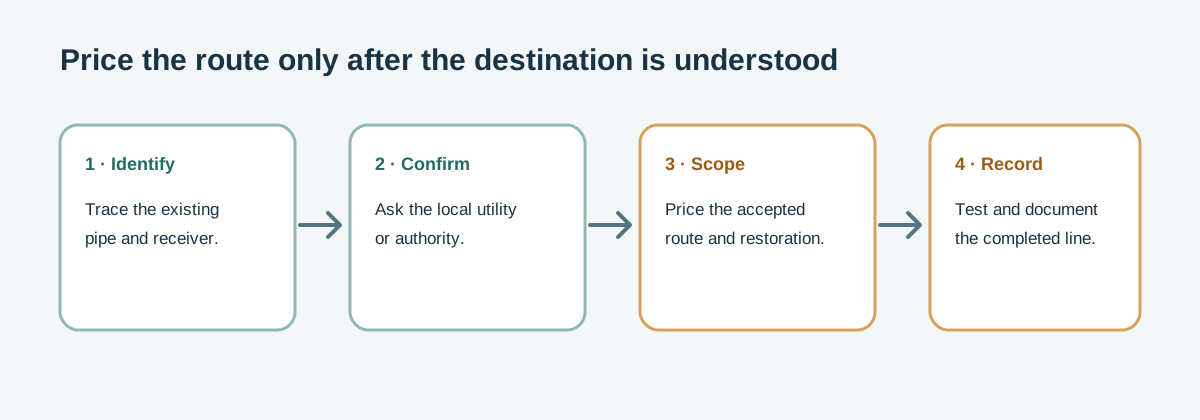
At completion, record the route, outlet, local approval assumption, seasonal limitation, test result, and maintenance responsibility. Photograph a buried line before backfill. A complete handoff makes the destination and remaining uncertainty as visible as the replacement pipe.