
A window well can collect water at a below-grade opening, but the well is not always the original source. Poor grading, a blocked or absent drain, a damaged well, failed flashing, foundation leakage, or a window problem can overlap. Price the water-management scope separately from window replacement or egress construction.
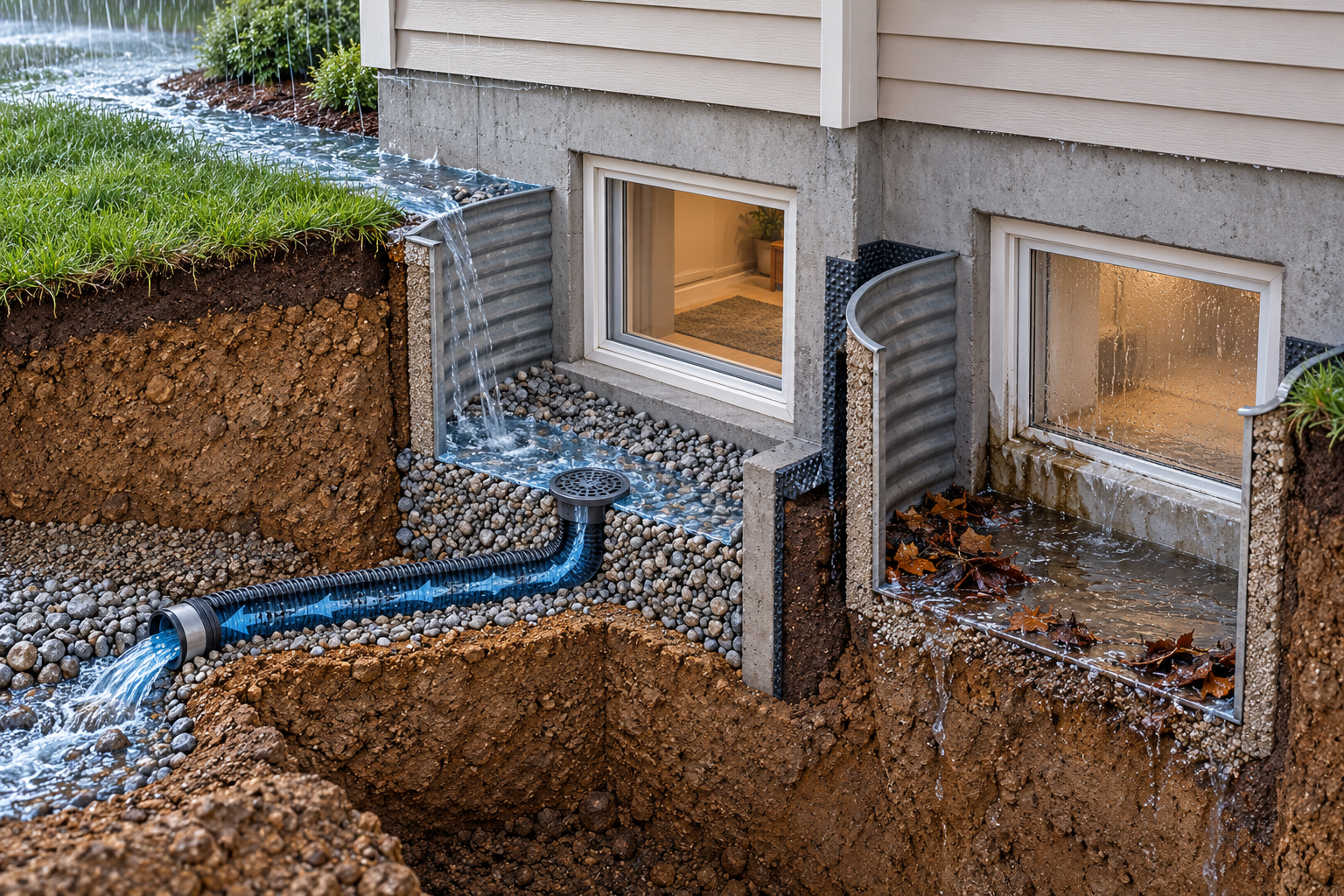
Possible work scopes
- remove debris and correct local grading;
- add or repair gravel and a well drain where a suitable connection exists;
- replace a damaged or undersized well;
- install a cover as part of the water-management plan;
- coordinate foundation membrane, drain, or opening repairs;
- repair the window, frame, flashing, or egress assembly in its own scope.
Existing foundation-drain access can materially change the cost of a new connection. Excavation, soil, depth, nearby hardscape, and finish restoration also matter. The available evidence does not establish a reliable universal window-well installed price.
Compare the water path
If water appears only after rain or snowmelt, examine the well, downspout, surface grade, and foundation drainage together. If the window leaks during ordinary wet conditions, the opening and surrounding foundation may need closer review. A well cover can reduce debris and direct rainfall, but it is not proof that the drain or foundation is working.
Quote checklist: water destination and local rules
Ask what area will be excavated, how water will drain, whether the connection is approved locally, what happens if the foundation drain is inaccessible, and whether the price includes restoration. If the window itself must be replaced or an egress opening must meet current requirements, route that work to the window-and-openings scope rather than assuming a drainage quote covers it.
Common window-well cost paths
Maintenance or local correction may include removing debris, restoring gravel, correcting a small surface path, or replacing a cover. This is only useful when the well and the surrounding drainage can actually carry the water away.
Drain connection or repair may require access to an existing foundation drain, a collection pipe, a sump, or another approved destination. Excavation depth and the condition of the old connection can dominate the price. Do not assume that a visible drain has an open route.
Well replacement may involve removing the old well, reshaping the excavation, installing a new well, sealing the opening, adding gravel or drainage, and restoring soil or hardscape. A larger well may improve clearance or maintenance access but does not automatically correct a failed foundation drain.
Foundation or window work becomes a separate scope when flashing, the frame, the glass, the wall opening, or egress requirements are the dominant issue. A cover can reduce debris and direct rainfall, but it cannot compensate for a leaking window or a blocked drain.
Compare what the water is doing
Ask whether the well fills from rainfall, receives runoff from an upper surface, or remains wet when the weather is dry. Look at the downspout, grade, well depth, gravel, drain, foundation wall, and window edge as a connected area. The source may be exterior surface water, groundwater, a foundation defect, or the window assembly itself.
The available U.S. and Canadian market observations do not establish a dependable universal installed price for window-well drainage. Request the measured excavation, well and cover, drain connection, foundation treatment, disposal, and restoration. Keep currency and market context separate rather than converting one country’s signal.
Quote checklist: included work and exclusions
Ask how the contractor will test flow, whether the drain is accessible, how water is routed during heavy rain and freezing conditions, what happens if the foundation drain is absent, and which permits or inspections are local. Ask whether the price includes the window, flashing, egress, landscaping, and interior finish restoration.
The right project may be a small water-management correction or part of a larger foundation system. It should not be chosen from a window-well label alone.
Treat the well as a connected assembly
Water at a window well can come from roof drainage, surface runoff, a missing or blocked well drain, groundwater, a foundation crack, or a window and flashing detail. Inspect the downspout termination, grade, well height, gravel or drain, foundation wall, sill, and window edge together. If water appears when the weather is dry, a simple rainwater correction may not be enough.
The well also has a function beyond drainage. A cover may limit debris and rainfall, but it must remain compatible with access, ventilation, and any required egress. Replacing a well or adding a cover can change the opening, restoration, and safety scope. Ask the contractor to state which part of the assembly the price addresses.
Cost scenarios
- Surface-water correction: extend or repair a downspout, change grade, clear debris, or correct runoff before it reaches the well.
- Well and drain work: excavate, clean or replace the well, improve the stone or drain, connect to an approved destination, and restore the site.
- Foundation or window repair: address a crack, membrane, flashing, seal, or window condition when water is entering at the structure.
- Larger drainage system: connect the condition to footing drainage, a sump, or broader site-water work when several areas are affected.
These paths can overlap, but the quote should identify the primary mechanism. A new well may collect more water without giving it a destination. A drain may be open while water still reaches the wall from grading or a damaged window.
Test before and after the work
Ask how flow will be tested, where the water will go during a heavy event, and whether the drain can be inspected later. Photograph the well, drain, connection, foundation treatment, and grade before restoration. Confirm that soil and landscaping are included and that future maintenance is possible.
If the basement is finished, separate exterior work from interior drying and finish repair. If the window is an emergency exit, route egress questions to the appropriate local and professional scope. The useful budget corrects the water path while preserving the opening’s intended function.
Questions for competing proposals
Ask what observation supports the repair, how much excavation is included, whether the well, cover, drain, foundation, window, and interior finishes are included, and what happens if the foundation drain is absent or blocked. A window-well quote should make the boundary between local drainage and whole-foundation waterproofing clear.
Protect the interior while the outside is opened
Exterior work can expose a foundation condition that was not visible from the room. Ask how the contractor protects the window, wall, insulation, flooring, contents, and any finished surfaces. If water has already entered, drying and restoration should be priced separately from the well work. Do not rebuild a finished area merely because the well looks improved; confirm that the source and affected materials have been evaluated.
If multiple wells or walls are wet, compare a local repair with a site-wide drainage pattern. A single well may explain one event, while grading, footing drainage, or groundwater may explain several. The best scope is the one that follows the water to its destination and preserves the window’s intended access or egress function.
Define the test and the boundary
Ask whether the contractor will test the well, drain, downspout, grade, connection, and window after the work. A water test should be safe and appropriate to the assembly; it should not be treated as proof that every future storm or groundwater condition is controlled. Record the date, weather, observed flow, and any remaining limitations.
If a drain connects to a foundation system, ask how that connection will be maintained and what happens if it is blocked or absent. If a cover is installed, confirm that it does not compromise access or required egress. A complete budget makes those functions visible rather than treating the well as a decorative exterior item.
Keep the quote boundary clear if the well is only one part of the problem. The homeowner should know whether the work includes downspout or grade correction, well and drain, foundation treatment, window or flashing, interior drying, and restoration. That list makes it possible to approve a local correction without mistaking it for a complete waterproofing system.
At handoff, photograph the restored grade, well, cover, drain, and connection. Record what to inspect after heavy rain and who owns any remaining foundation or interior work. That evidence keeps a local drainage repair from becoming an unexplained warranty dispute.
If the well is part of an emergency opening, retain any required access information with the repair record. Drainage improvement should not erase the opening’s other intended function.