
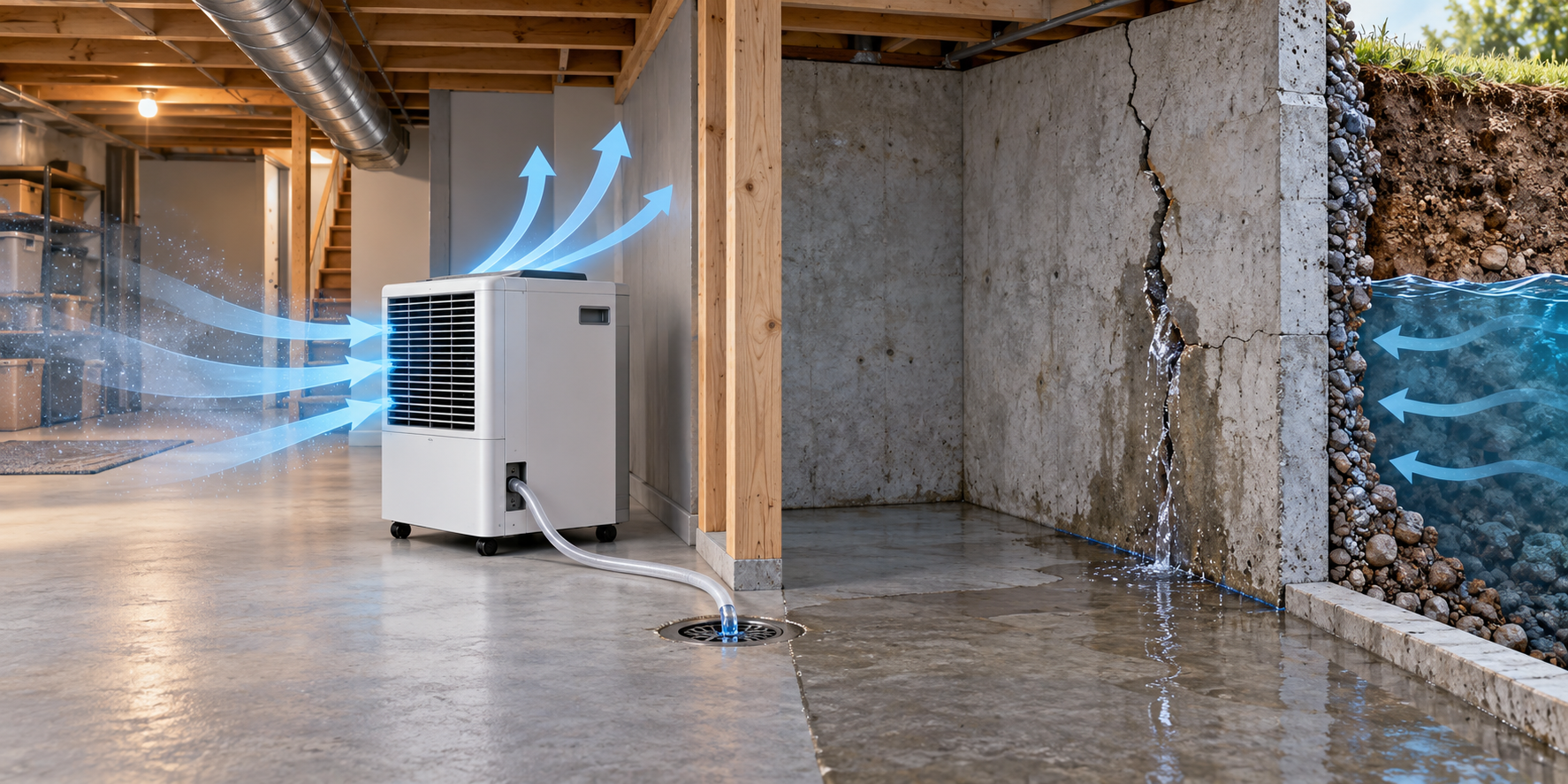
A dehumidifier controls moisture in air; it does not waterproof a foundation or stop a plumbing leak. It may be a sensible purchase when condensation or residual humidity is the problem and bulk-water sources have been addressed or ruled out.
Price evidence and project scope
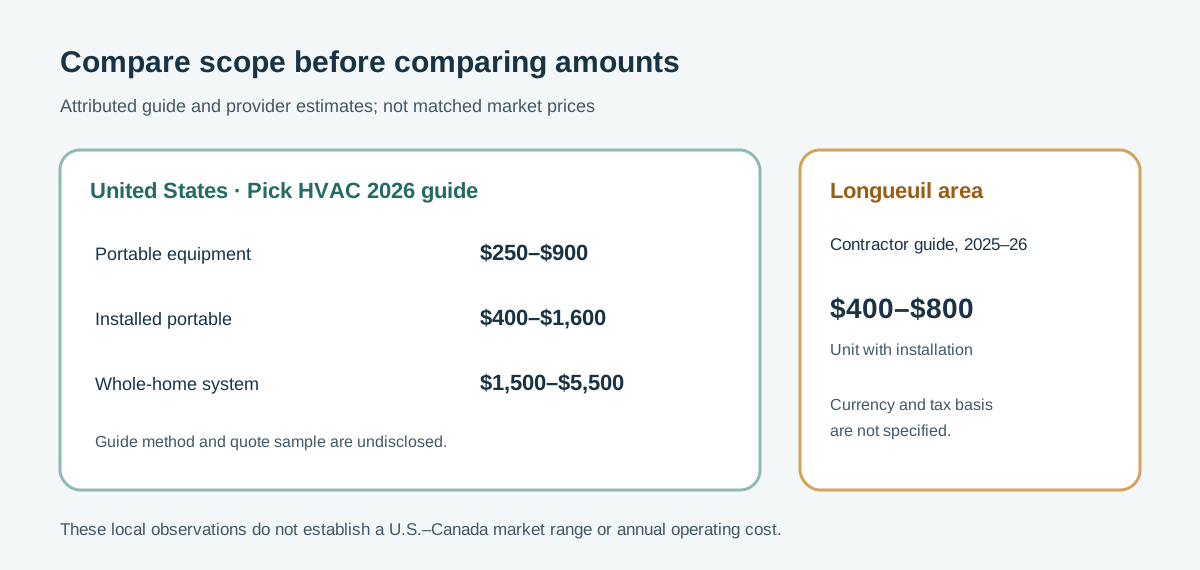
The available sources do not establish a comparable U.S.–Canada market range for basement dehumidifiers. Two source-specific estimates offer limited planning context, but their scopes and methods differ:
| Local estimate | Source-stated amount | What it represents and what remains uncertain |
|---|---|---|
| U.S. portable equipment | $250–$900 | Pick HVAC’s 2026 guide estimate; no quote sample or reproducible pricing method is disclosed. |
| U.S. installed portable unit | $400–$1,600 | The same guide’s estimate may include basic drain setup or electrical work; confirm the exact proposal. |
| U.S. whole-home system | $1,500–$5,500 | A separate ducted or dedicated scope; duct or electrical changes may exceed the guide figure. |
| Longueuil/South Shore unit with installation | $400–$800 | A contractor’s 2025–2026 estimate for a 50–70 pint/day unit; the displayed dollar currency and tax basis are not specified. |
These are attributed local observations, not matched quotes, a national average, or a defensible single range. Do not convert the Longueuil amount or use it to fill a Canadian market gap. Request a current written quote and separate:
- portable or dedicated equipment, controls, and delivery;
- condensate hose, permanent drain, or condensate pump;
- electrical work, placement, monitoring, and service access;
- filter and coil cleaning, warranty, repair, and eventual replacement;
- any drainage, plumbing, air-sealing, or finish work outside humidity control.
A portable unit can have a lower initial scope but require emptying or a suitable nearby drain. A dedicated installation can add permanent condensate routing, power, controls, and service. The quote should identify the moisture condition it targets and whether the unit is intended as a standalone measure, part of an enclosure project, or temporary control while a source is investigated.
Price the installation that is actually proposed
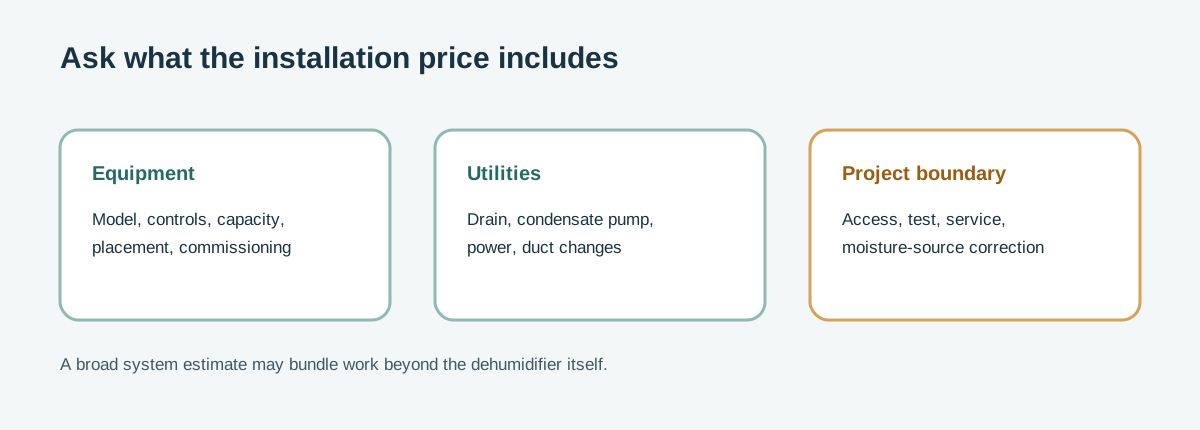
For a portable unit, distinguish the purchase from accessories, delivery, setup, and a condensate hose or pump. A unit placed by the homeowner may not need contractor installation, but continuous drainage or a dedicated circuit can change the scope. For a whole-home or dedicated system, ask whether the estimate includes the unit, duct changes, controls, electrical work, condensate routing, wall or floor penetrations, commissioning, and service access. A broad project estimate may bundle unrelated moisture correction or enclosure work, so request separate prices before comparing it with equipment-only listings.
Capacity and temperature suitability should be tied to the actual basement. Ask which room conditions and moisture load the model is meant to handle, what the rating assumes, and where the condensate goes. A larger unit or ducted system is not automatically a better value if the source is bulk water or if the equipment cannot operate effectively at the space’s temperature. The estimate should describe the problem it will address and what it will leave unresolved.
Diagnose before buying
EPA moisture guidance distinguishes condensation from rainwater, groundwater, foundation entry, and plumbing leaks. Record temperature and humidity over time and note where condensation, staining, odor, or visible water appears, including whether it follows rain, snowmelt, plumbing use, or seasonal changes. A dehumidifier may reduce room humidity while an active leak or damp assembly remains.
If liquid water is present, investigate the source first: plumbing, window wells, wall-floor joints, cracks, the slab, drainage, discharge, or surface runoff may require separate work. Keep structural movement, sewage, suspected mold, radon, and damaged materials in their appropriate assessment scopes. Better comfort or a lower humidity reading is not proof that concealed wall or floor materials are dry and ready to cover.
Compare capacity and cool-space efficiency
Capacity and runtime depend on room volume, air leakage, enclosure, climate, temperature, moisture load, and the target condition. Natural Resources Canada’s certified-product listing reports Integrated Energy Factor (IEF), measured as litres of water removed per kilowatt-hour. Compare IEF among models with suitable capacity and intended operating conditions; it is not a property-specific bill estimate.
For a cool basement, check whether the model is designed for temperatures below 18°C and how its capacity changes at the actual room temperature and moisture load. Ask the seller or installer to state the expected operating range and measurement assumptions. Do not infer that a higher IEF alone means the unit is correctly sized or will resolve moisture from another source.
Estimate operation and maintenance
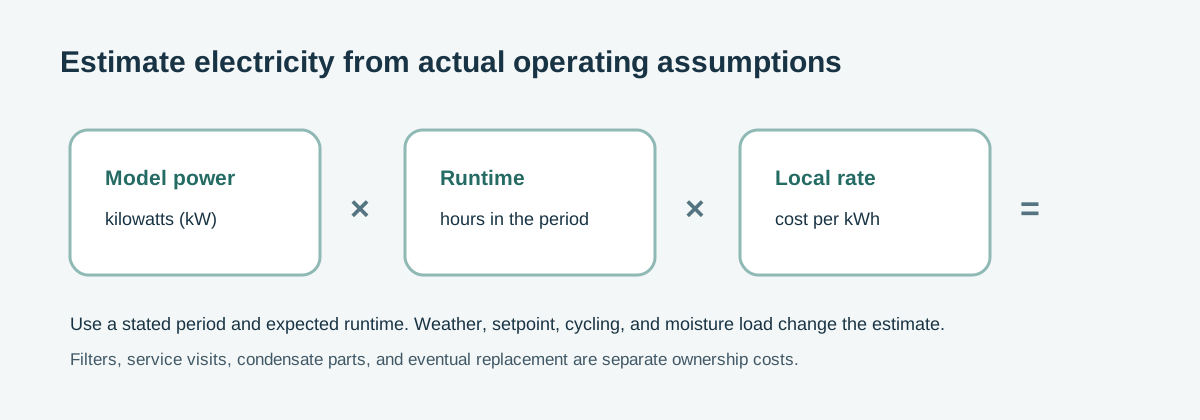
Electricity depends on the model’s input, actual runtime, local rate, and how often the unit cycles. For a period estimate, request the model’s power draw and expected runtime during that period, then calculate: input in kilowatts × operating hours × electricity rate per kilowatt-hour. Treat the result as an estimate; weather, setpoint, cycling, and moisture load can change runtime. No universal annual operating cost or savings figure is established.
For illustration only, a unit averaging 0.6 kW for 8 hours a day over 90 days, at an electricity rate of $0.18 per kWh, would use about 432 kWh and cost about $78 for that period. This is a made-up scenario, not an expected dehumidifier bill. Substitute the selected model’s measured or documented power, a realistic runtime for the basement, and the household’s actual rate. If a unit cycles less often or runs during a different season, the estimate changes accordingly.
Ask whether the condensate can drain continuously and where it goes. A hose can kink or block, while a condensate pump adds a component to maintain. Include filter or coil cleaning, service visits, repair, and eventual replacement in the ownership comparison. Keep the drain, controls, sensor, filter, power, and unit accessible after any finish work.
Pick HVAC’s same U.S. guide lists service visits at $75–$175, repairs at $100–$350, and compressor-related work at $300–$600. Its underlying sample and pricing method are not disclosed, so these are weak guide estimates rather than repair-rate expectations. They can help a homeowner remember to ask whether a quoted service call includes diagnosis, parts, labor, and refrigerant-related work, but they do not establish a repair-versus-replacement threshold.
Compare the first cost with the ownership plan
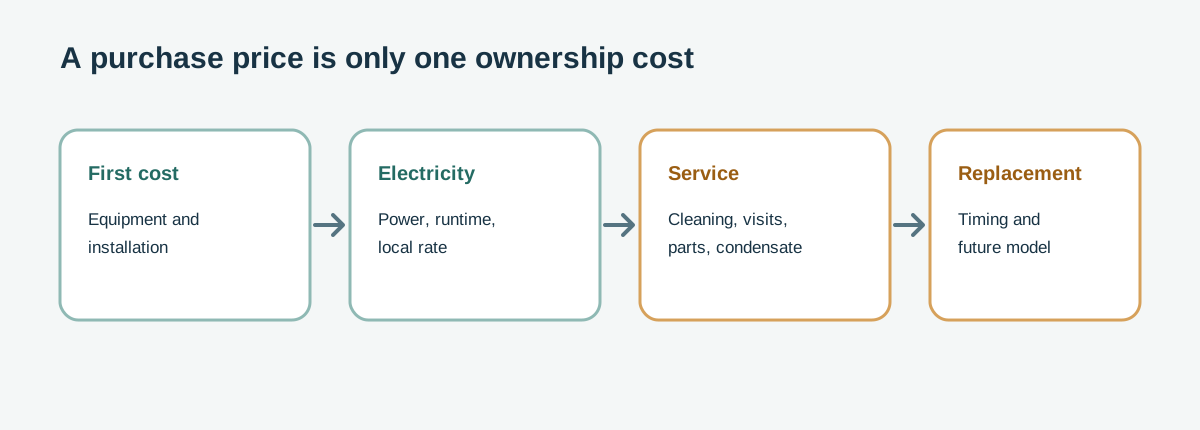
The lowest purchase amount may involve more homeowner attention, such as emptying a reservoir, while a permanent drain can require a pump or suitable gravity route. A dedicated installation may reduce routine handling but adds installation and service assumptions. Compare the equipment price, installation, electricity, cleaning, repairs, and expected replacement as separate lines rather than multiplying a guide estimate into a lifetime total.
Ask who will maintain filters, coils, condensate tubing, pump, controls, and sensors; whether service is included or charged per visit; and how parts or labor are covered. An advertised maintenance membership may bundle checks that are not needed for every unit, while a one-time repair can exclude diagnosis or replacement parts. Record the scope and renewal terms before treating a service offer as an annual ownership cost.
If the unit is being installed as part of basement finishing, protect access to the filter, drain, pump, sensor, and electrical disconnect. If it is temporary while a water source is investigated, agree on what observation or date will trigger the next decision. A unit that runs continuously against active groundwater can increase electricity use without correcting the underlying project.
Compare the decision paths
| Situation | Cost decision |
|---|---|
| Cause is uncertain, with no active damage or urgent condition | Monitor humidity and temperature and define what change would trigger an assessment. |
| Condensation is documented and liquid-water sources are controlled | Compare portable and dedicated equipment, installation, operating assumptions, and service. |
| Groundwater, plumbing, drainage, or a damp assembly is contributing | Price source correction separately; add humidity control only if a remaining air-moisture need is identified. |
The least expensive equipment choice may not be the least expensive project if it runs continuously against an unresolved source. If a basement will be finished or rebuilt, sequence source correction and material drying before closing the assembly, and preserve access to the installed unit and condensate route.
Make the quote and handoff useful
Require the proposal to state the observed moisture mechanism, equipment model and capacity, target condition, expected runtime or operating estimate, condensate destination, power, placement, maintenance, warranty, exclusions, and what would trigger a broader investigation. Keep equipment cost separate from electrical, drainage, moisture-source, and restoration costs.
At installation, record the model, sensor location, starting and target conditions, condensate route, test date, and maintenance interval. If staining, odor, visible water, or damaged material persists after humidity falls, keep the water-source or restoration question open. The value of the equipment depends on the specific air-moisture problem it was selected to control.