
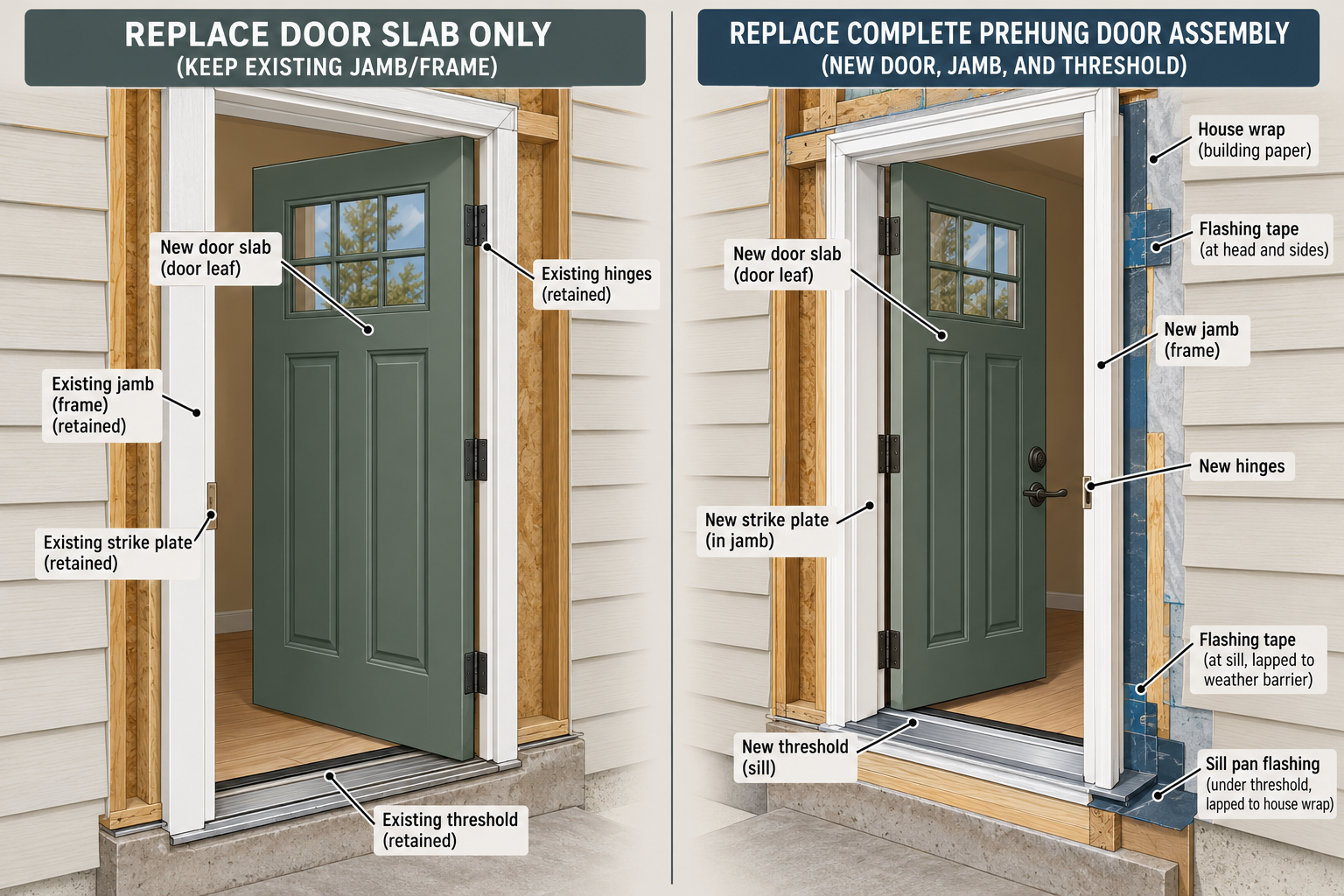
A slab is the door panel alone. A prehung unit usually combines the slab with a frame, hinges, and often a threshold and exterior trim. The choice depends on the condition and geometry of the existing opening, not on a universal claim that one option is cheaper.
What each option involves
| Option | Retains or changes | Main fit question |
|---|---|---|
| Slab replacement | Retains the existing jamb, threshold, trim, and much of the opening | Is the existing frame square, sound, compatible with hinges and lock hardware, and able to seal the new slab? |
| Prehung replacement | Replaces more of the door-and-frame assembly | Does the new unit fit the rough opening and include the threshold, flashing, trim, and finish needed? |
Slab work can involve measuring, hinge mortising, lock and strike alignment, threshold adjustment, weatherstripping, and finish work. A product-only slab price is not the completed labor scope. A prehung installation can involve removal, rough-opening repair, sill or pan flashing, jamb and head flashing, shimming, trim, and interior and exterior restoration.
Use the opening condition to choose the method
A slab replacement is most defensible when the existing jambs, sill, threshold, hinges, strike, trim, and water-management details are sound. Measure the actual slab and frame, confirm handing and hinge positions, and inspect for rot, distortion, water staining, movement, and worn weatherstripping. A slab that fits the door stop can still fail to seal if the frame is out of square.
A prehung unit changes more of the opening. That can make sense when the frame, threshold, hinges, weather seal, or trim are failing, or when the new door’s size and hardware do not match the old assembly. It can also create more demolition, flashing, cladding, interior finish, access, and disposal work. The method is a scope choice, not a universal price rule.
Compare the total work
| Scope | Slab replacement | Prehung replacement |
|---|---|---|
| Product | Door panel, glass, finish, and possibly hardware | Panel, frame, hinges, threshold, and often trim |
| Fit work | Hinge mortising, lock preparation, alignment, and weather seal | Rough-opening fit, shimming, plumb, square, and fastening |
| Existing conditions | Frame and sill remain responsible for performance | More condition is exposed and replaced |
| Water control | Existing flashing must remain sound | Sill, jamb, and head details can be rebuilt |
| Finish | Often less disturbance when trim is retained | More removal and interior/exterior restoration may be needed |
The lowest product price can be misleading. Include measurement, service labor, removal, disposal, threshold, weatherstripping, flashing, air sealing, trim, paint, flooring protection, access, and conditional repairs. Ask whether the contractor will return if the selected slab does not fit the existing frame.
Performance and maintenance
An exterior door is a complete weather boundary. Building America guidance treats the sill or pan, jamb and head flashing, weather seal, and wall drainage connection as one system. A slab can preserve a good system, but it can also preserve a leaking or poorly sealed one. A prehung unit can expose the joint, but it is only an improvement if the new installation reconnects the wall’s water and air controls.
Ask who will service the hinges, lock, closer, weatherstripping, and glass, and whether replacement parts are available. A new slab may reuse old hardware with compatibility or alignment limitations. A prehung unit may include new hardware but still have warranty exclusions for labor, finish, or concealed conditions.
Slab-only work is not automatically the lower-cost option
A slab replacement can be efficient when the existing jamb is square, the hinges and strike line up, the threshold seals properly, and the door size and swing remain unchanged. If any of these conditions is poor, fitting a new slab may require planing, hinge mortising, lock preparation, weatherstrip adjustment, or repeated alignment. A prehung unit arrives with a matched frame and slab, but removing the old frame can add flashing, trim, cladding, and finish work.
Ask the installer to check the existing opening before comparing prices. The proposal should state which frame sections remain, whether the threshold is reused, how the new slab’s weight matches the hinges, and how the latch and weather seals will be adjusted. If a prehung door is quoted, confirm whether it includes the sill or threshold, brickmould, weatherstripping, hinges, hardware, and any glass or sidelight configuration.
Certification and performance labels must apply to the assembly being installed. If a proposal advertises an energy rating or certification, ask whether it covers the quoted slab alone or the complete door in its actual frame and glazing configuration. A certified component does not automatically make a field-modified or mixed assembly equivalent to the tested product.
Use three comparison lines: product and hardware, installation and frame work, and finishes and opening repair. The slab option may have a lower first cost but can require custom labor or leave a deteriorated threshold. The prehung option may have a larger removal scope but resolve persistent alignment and sealing issues. Neither method is universally less expensive; condition and included labor decide the total.
A repair can remain a third option when the slab, jamb, threshold, and water-management details are sound and the failure is limited to a hinge, lock, or weatherstrip. If the frame is wet, split, or out of square, compare repair of the opening with a prehung replacement before buying a new slab. State what the finished door must do—close, latch, lock, seal, and drain—so the bids can be assessed against the same result.
If the existing frame will remain, ask whether the installer has checked its plumb, square, hinge alignment, stop position, and sill. A slab that is slightly different in thickness or weight may require new hinge locations, latch adjustment, or closer tuning. If the frame itself is out of square, the homeowner should see that finding before approving a slab-only proposal. A prehung alternate can then be compared against a clearly stated frame condition rather than offered as an unexplained upgrade.
A prehung quote should specify how the new frame is connected to the wall and what the installer will do with the exterior drainage plane. A door can be square within its jamb but still leak at the rough opening if flashing and sealing are incomplete. For slab-only work, clarify that the retained jamb and sill are considered suitable and identify the perimeter joints that are not being changed. This keeps the comparison focused on method rather than on an unstated water-management difference.
Some homeowners choose slab replacement to preserve historic casing or a distinctive frame. In that case, ask whether the existing parts can be protected during removal and whether the new hardware can use the old mortises. The installer should state any visible change, gap, or finish repair expected. A prehung unit may require more disturbance but can be the clearer scope if the old jamb has movement or moisture damage.
For an entry with sidelights or a transom, a slab-versus-prehung comparison may not cover the full assembly. Ask whether the surrounding glass and mullions remain, and whether the frame configuration supports the selected door. If the unit is a coordinated assembly, use the complete entry-system estimate instead of relying on a slab-only price.
If the door is unusually heavy or has a closer, verify that the reused hinges and jamb can support the intended operation. The proposal should include adjustment after the hardware is installed.
If a slab-only proposal keeps the existing frame, ask what measurement confirms the replacement leaf will fit without extensive cutting. A custom fit can erase the expected labor savings.
Ask the contractor to state whether the old threshold and jamb will be retained. If the answer changes after removal, request a revised scope before proceeding with additional work.
Situations that change the decision
Slab work may be useful for a sound frame, a matching replacement, preservation of trim, or a bounded appearance change. Prehung work deserves priority when the frame or threshold is rotten, the opening is out of square, water enters at the perimeter, multiple components have failed, or a complete performance reset is desired. A changed opening, new landing, accessibility requirement, fire-related condition, or high-wind exposure may require a separate professional or authority review.
Older materials can affect either method. Paid work disturbing paint in pre-1978 U.S. housing generally falls under EPA RRP guidance. Canadian health guidance warns about lead paint and asbestos-containing materials in older homes. Confirm the current assessment, containment, cleanup, certification, and disposal plan before disturbance.
Require the quote to state which components are retained, the dimensions, hardware, threshold, flashing, trim, finish, access, warranty, and expected outcome. Choose a slab or prehung unit based on the whole opening and the work needed to make it close, latch, lock, seal, and drain.
Ask whether the frame is retained, what was inspected, which hardware is reused, how the threshold and sill are handled, and whether flashing and finish restoration are included. Ask the contractor to state whether the door will close, latch, lock, weather-seal, and drain as intended. If the existing frame is sound and the product fits, a slab can be reasonable. If frame, threshold, alignment, or water management are part of the problem, compare a prehung assembly.