
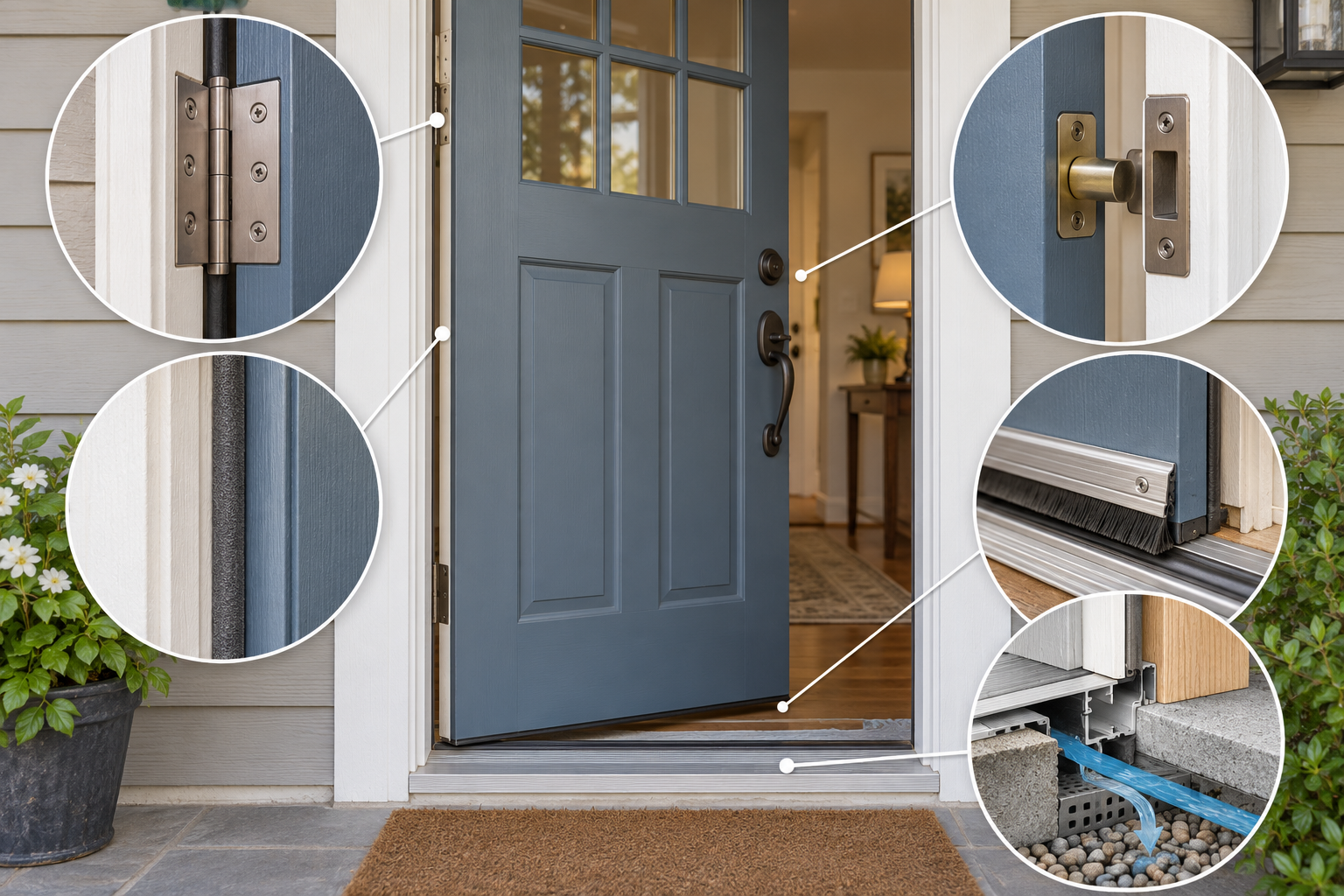
An exterior door that sticks, sags, leaks air, will not latch, or has damaged hardware may need a focused repair. It may also have a distorted slab, rotten jamb, damaged threshold, or water problem that makes replacement more credible. The estimate should identify the failed part and the outcome the repair is expected to deliver.
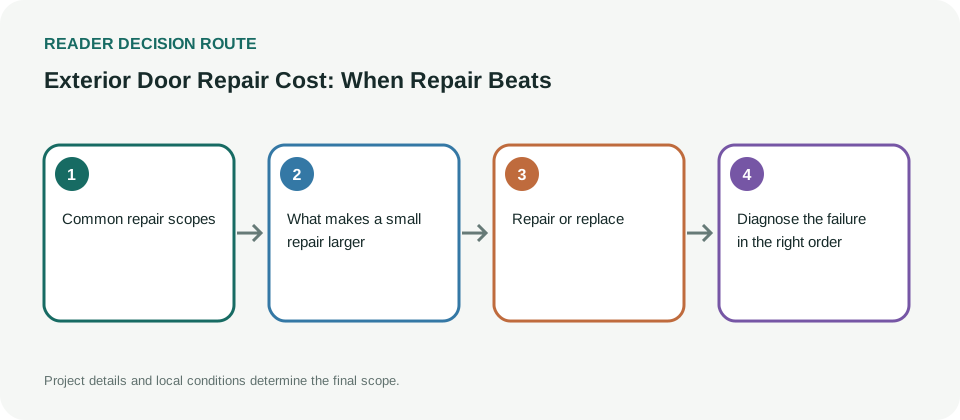
Common repair scopes
- hinge adjustment, screw repair, or slab alignment;
- latch, lock, strike, keeper, closer, or handle replacement;
- weatherstripping and threshold-seal replacement;
- glass or insert replacement;
- localized panel, surface, or finish repair;
- screen or storm-door adjustment;
- diagnostic labor, service minimum, access, and a return visit.
Security is an outcome to test, not a rating to assume. A new lock may not correct a sagging slab or a weak frame, and a repaired latch should not be described as restoring a tested security classification without product evidence.
What makes a small repair larger
The frame may be out of square, the sill may be soft, the threshold may be allowing water into the wall, or the door may have been installed without an effective perimeter air or water seal. Building America guidance treats door sill or pan flashing, jamb and head flashing, weatherstripping, and the wall drainage plane as connected opening work.
Ask whether the contractor inspected the frame, threshold, hinges, strike, weather seal, and wall transition. A service call that only adjusts the latch may restore closing without correcting the water or air path.
Repair or replace
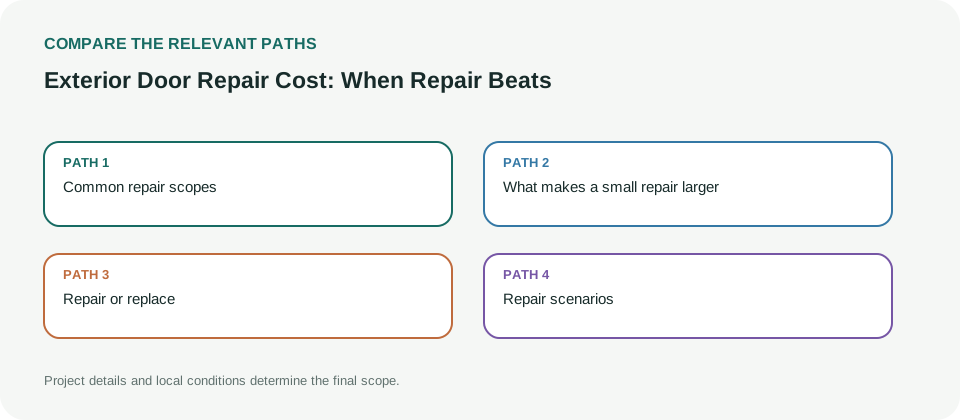
Repair is more plausible when the slab and frame are sound, the defect is bounded, compatible parts are available, and the repair meets the required operation and weather outcome. Compare a slab or prehung replacement when the slab is broadly distorted, the frame or threshold is rotten, multiple systems have failed, parts are obsolete, or the repair leaves a recurring leak or alignment problem.
There is no universal “repair above this percentage means replace” rule. Include the cost of another service call and the remaining service horizon when comparing options.
Older homes need a disturbance check. Paid work that disturbs painted surfaces in pre-1978 U.S. housing may be subject to EPA RRP requirements. Canadian older-home guidance supports checking for lead paint and other suspect materials before renovation. Ask who handles testing, containment, cleanup, certification, and disposal.
Diagnose the failure in the right order
Begin with the outcome that is missing. Does the door need to close without rubbing, latch, lock, keep out rain, stop a draft, retain glass, or operate safely? A door can stick because of hinges, a shifted frame, settlement, a swollen slab, or a threshold problem. A lock can fail because of alignment rather than the lock body. A water stain can come from the sill, jamb, head, cladding, or a transition above the opening.
Ask what the technician inspected and whether the frame, threshold, hinges, strike, weather seal, and wall transition were included. A service call that adjusts a latch may restore closing while leaving a leaking sill or distorted frame. The estimate should distinguish a confirmed component repair from an unresolved possibility.
Repair scenarios
| Condition | Possible repair | What can expand the job |
|---|---|---|
| Sagging or rubbing | Hinge adjustment, screw repair, or alignment | Out-of-square frame or settlement |
| Won’t latch or lock | Latch, lock, strike, keeper, or adjustment | Frame movement or weak mounting |
| Draft | Weatherstripping, threshold seal, or perimeter air sealing | Missing flashing or distorted slab |
| Broken glass or panel | Glass or insert replacement | Safety specification, panel fit, or frame damage |
| Water damage | Sill, jamb, flashing, cladding, or wall repair | Concealed rot and finish restoration |
The material may be modest, but service minimums, custom parts, access, return trips, and finish work can control the invoice. Ask whether the first visit is credited, whether parts are available, and what happens if disassembly reveals a different failure.
Security claims need a clear boundary
A repaired door should meet the requested operational outcome, but a new lock or strike does not automatically restore a tested security rating. Ask whether the repair changes only the hardware or also the alignment, frame, strike reinforcement, and surrounding wall. If security is the main reason for work, obtain the relevant product documentation or qualified assessment rather than relying on a generic label.
Likewise, a weatherstrip can reduce a gap without correcting a water path. Building America guidance treats the sill or pan, jamb and head flashing, weather seal, and wall drainage connection as related opening details. Repair the source when the opening is wet; do not use a surface patch to hide an unresolved condition.
Repair or replacement
Repair is stronger when the slab and frame are sound, compatible parts exist, the defect is bounded, and the work will restore close, latch, lock, seal, and drainage. Replacement becomes more plausible when the slab is broadly distorted, the frame or threshold is rotten, several systems have failed, parts are obsolete, or the homeowner wants a new size, glazing, or performance package.
Compare a repair with a slab and a prehung alternative when the choice is unclear. Include diagnosis, service minimums, parts, access, finish, disposal, and the remaining service horizon. There is no universal percentage at which repair must become replacement.
Price the intended result, not only the part
Repair proposals are easier to compare when they state what the door should do afterward. A hinge adjustment may correct sag but not fix a weak strike plate. New weatherstripping may reduce drafts but will not repair a rotten threshold. A replacement lock can improve operation while leaving frame alignment or water entry unresolved. Ask the contractor to list each symptom, likely cause, repair action, and test that will confirm the result.
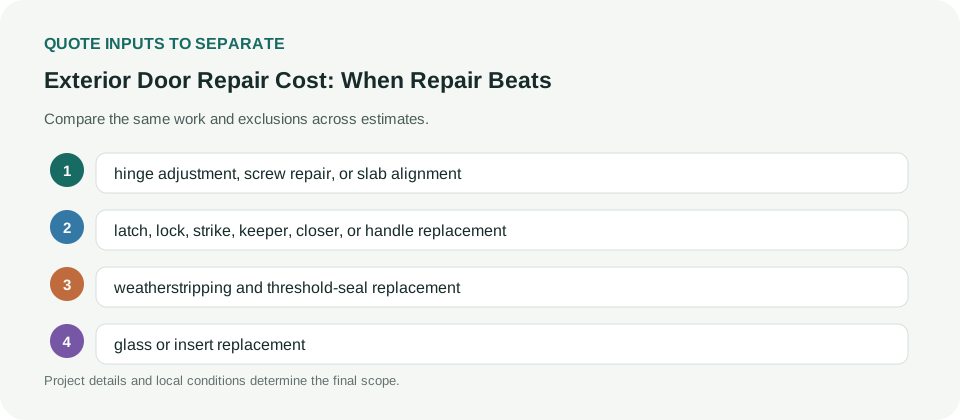
For an initial visit, clarify whether the fee covers travel, inspection, adjustment, a written diagnosis, and a return visit after a part arrives. For custom or discontinued hardware, confirm the part number, handing, backset, finish, and compatibility before ordering. A low part price can be misleading if the repair requires a second trip, special fabrication, or work on the frame.
Compare the cost of a bounded repair with the complete replacement scope when the door is badly distorted, insecure, damaged by water, or repeatedly adjusted. Replacement can include a new frame and threshold, but it can also require removal, flashing, cladding, trim, paint, and disposal. Do not compare a repair service call with a replacement product-only price.
If the door may be covered by a manufacturer or installer promise, identify the product and written terms before authorizing work that could overlap with a claim. Coverage can distinguish the slab, frame, glass, finish, hardware, labor, and transportation. A possible claim is not a guarantee that the repair is free or that every independent repair affects the warranty; ask the responsible party about the exact proposed work and keep the response in writing.
A useful final check confirms closing, latching, locking, weather seal contact, threshold drainage, and any remaining limitation. Ask whether the repair is warranted and who will return if the same symptom persists. That establishes whether the repair price buys a completed result or only an attempted adjustment.
For an entry door, include security and weather outcomes in the repair decision. If the latch does not engage reliably, ask whether the problem is the lock, strike alignment, frame strength, or a distorted slab. A cosmetic patch is not a security upgrade, and a new deadbolt does not correct a door that cannot close squarely. Where the estimate changes the frame or strike, ask what material it will be anchored into and what testing will confirm the repair.
Ask whether the repair is intended to restore only appearance or also weather and security performance. A surface patch, new sweep, or adjusted closer can have different results. The contractor should state what remains unchanged so the homeowner does not mistake a cosmetic repair for a complete correction.
For a seasonal sticking problem, tell the contractor when it occurs and whether it changes with temperature or rain. That may help distinguish normal adjustment from a moisture or frame issue and avoid paying for a part that does not address the cause.
Older materials and finish work
Door repair can disturb painted trim, putty, caulk, siding, plaster, or insulation. EPA’s U.S. RRP guidance generally covers paid work disturbing paint in pre-1978 housing. Canadian guidance recommends checking lead paint and other suspect older materials before renovation. Confirm the current qualified-work, containment, cleanup, and disposal plan.
The best estimate names the observed failure, proposed part or adjustment, expected outcome, access, finish restoration, warranty, and limitation. If the door will only be made to close but not weather-sealed or secure, the quote should say so. That clarity helps the homeowner choose repair or replacement based on the actual need.
Ask for the observed failure, part numbers or specifications, labor, service fee, access, finish, testing, warranty, and limitations. Ask what the door should do after the repair: close, latch, lock, seal, shed water, or all of these. If the quote recommends replacement, compare the complete door, frame, threshold, flashing, trim, and disposal scope rather than a product-only price.