
Fiberglass, steel, and wood are material families, not complete performance ratings. The slab, frame, glazing, threshold, weather seal, finish, hardware, and installation determine how the exterior door behaves. High-end products in all three families can overlap in price, so compare the actual system and exposure.
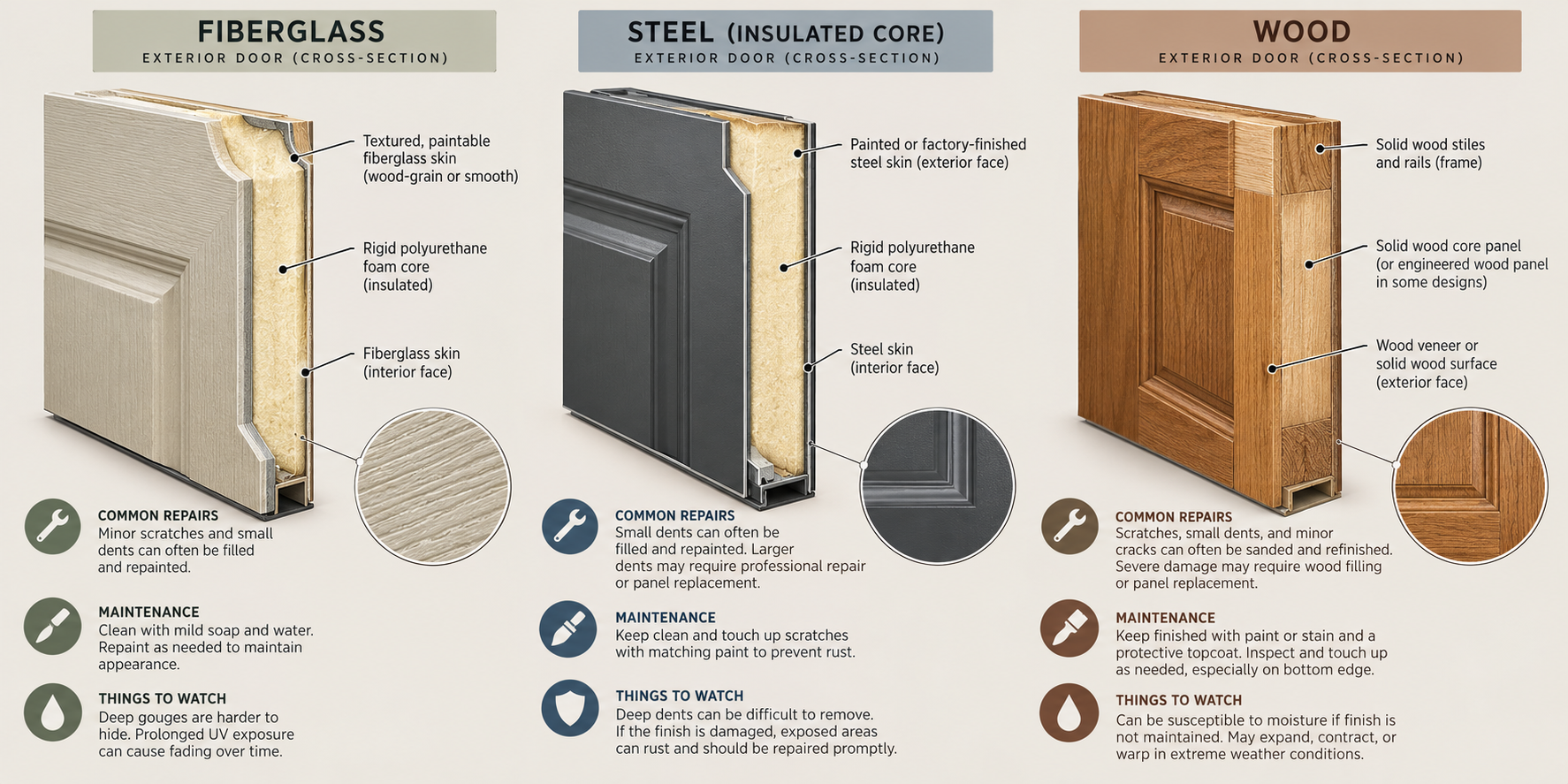 Representative cross-sections only; manufacturers and product lines use different constructions.
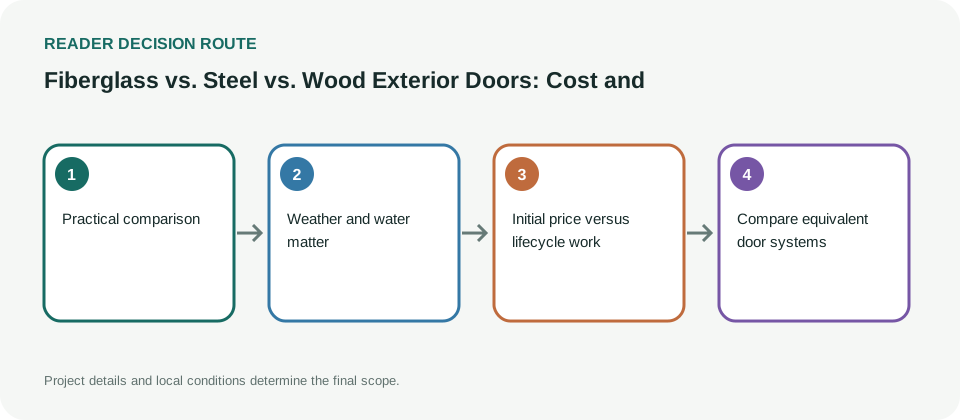
Practical comparison
| Material | Potential advantages | Questions before buying |
|---|---|---|
| Fiberglass | Low routine maintenance and finishes that can imitate or vary from wood | How does the product handle impact, edge damage, finish repair, and direct weather exposure? |
| Steel | Stiffness and a broad range of insulated entry products | How are dents, corrosion, thermal bridging, finish damage, and frame details handled? |
| Wood | Natural appearance, repair or refinishing possibilities, and historic compatibility | What exterior protection, moisture exposure, maintenance, and threshold details are included? |
The product’s glass area, U-factor, SHGC where applicable, air sealing, weatherstripping, frame, and installation can outweigh the material name. ENERGY STAR’s U.S. criteria vary by climate zone and door glazing level; certification is not a universal Canadian code or performance statement.
Weather and water matter
Building America guidance treats the sill or pan, jamb and head flashing, weatherstripping, and connection to the wall drainage plane as part of the opening. A durable slab with poor flashing can still allow water into the wall. Ask how the threshold drains, how the opening is protected during installation, and what exterior trim and cladding restoration is included.
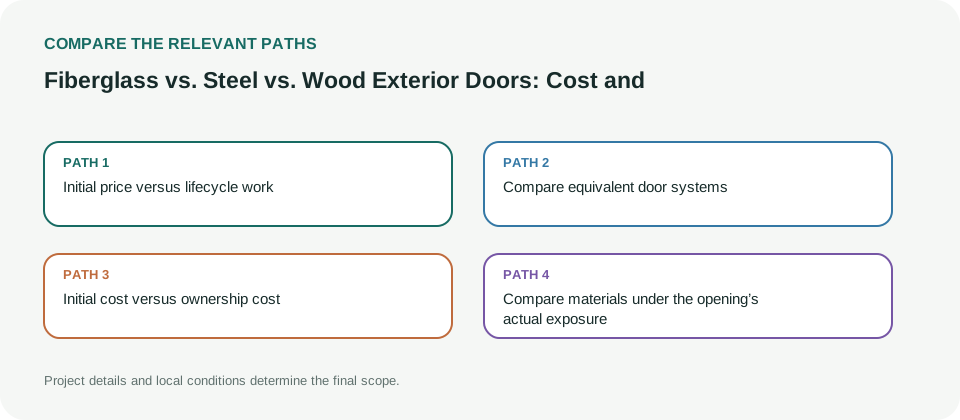
Initial price versus lifecycle work
Compare product, frame, glass, hardware, finish, delivery, removal, installation, flashing, trim, painting, maintenance, and repair. A wood door may carry a different maintenance plan from a steel or fiberglass door. A steel or fiberglass product may still have finish or impact repairs. A premium system may be reasonable for appearance, exposure, or serviceability, but a material label alone cannot establish payback.
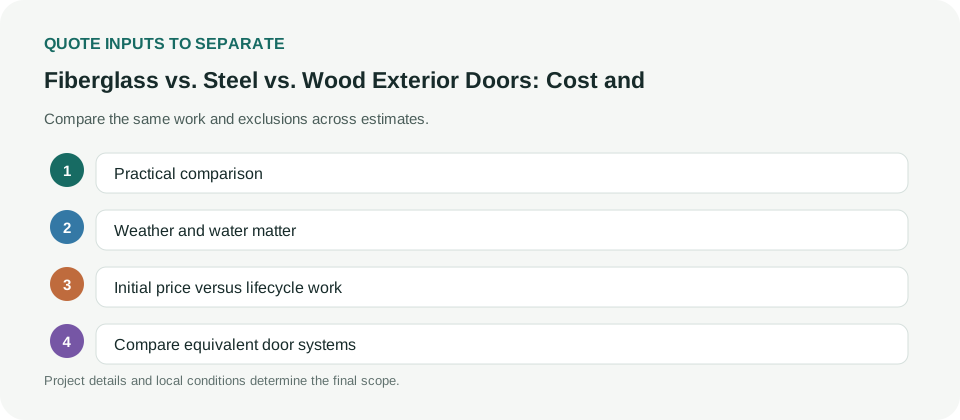
A Canada-focused HomeStars guide lists material-only observations of $200–$2,000+ for wood, $150–$800 for steel, and $300–$2,500 for fiberglass doors. The page uses $ without a currency code and does not explain its sampling method. These overlapping product-only observations are not confirmed CAD prices, installed quotes, or a reliable ranking of material cost; do not add them mechanically to labor, hardware, or project ranges. Ask local suppliers to price equivalent complete systems in the project’s currency.
Compare equivalent door systems
Make the comparison fair by holding the opening, size, handing, glazing area, frame, threshold, hardware, finish, installation method, and finish restoration constant. A basic steel service door, a decorative wood entry assembly, and a fiberglass door with sidelights are not comparable products. Material-only prices can make one option look cheaper because frame, glass, trim, or labor has been excluded.
Ask for the complete product’s U-factor, SHGC where applicable, air leakage or weather-performance information, warranty, finish requirements, and installation instructions. ENERGY STAR’s U.S. criteria use climate-zone and glazing context. They do not turn a material name into a complete performance rating or establish Canadian code requirements.
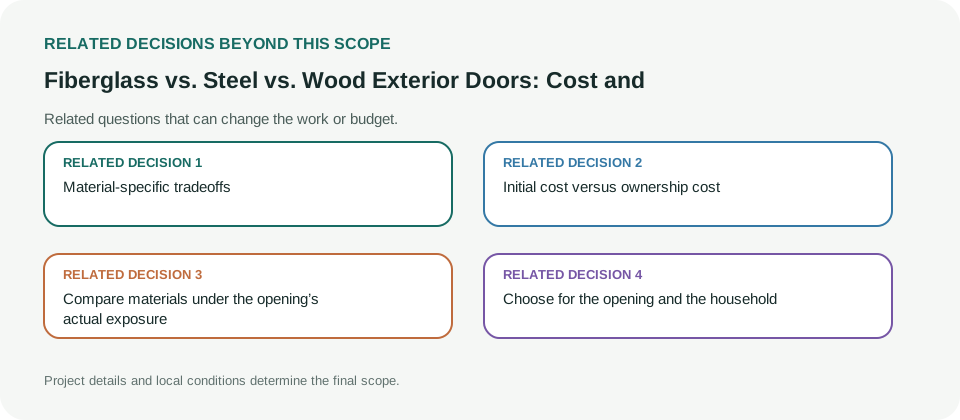
Material-specific tradeoffs
Fiberglass may suit a homeowner who wants low routine maintenance, a range of finishes, or a wood-like appearance. The actual product still needs evaluation for edge damage, finish repair, impact, hardware, and exposure. Steel can provide stiff insulated entry products, but dents, corrosion, thermal bridging, and finish damage require a repair plan. Wood can provide natural character, refinishing, repairability, and historic compatibility, while demanding attention to moisture, exterior protection, and maintenance.
These are tendencies, not guarantees. A well-designed product in one family can outperform a poorly matched product in another. Frame, sill, threshold, weatherstripping, glass, hardware, and installation can dominate the result. In a wet or wind-exposed location, water management and finish may be more important than the material label. In a historic setting, appearance and repairability may carry more value than a simple product premium.
Manufacturer guidance is useful for the exact product but should not be generalized to every door in a material family. ProVia’s comparison discusses maintenance and repair tradeoffs for its own fiberglass and steel lines; use the selected manufacturer’s care instructions and warranty terms to compare a real product rather than assuming one universal maintenance interval.
Initial cost versus ownership cost
For each option, list product, frame, glass, hardware, delivery, removal, installation, flashing, air sealing, trim, painting, disposal, maintenance, and likely repair paths. A wood finish may need periodic attention; a steel or fiberglass finish can still be damaged by impact or weather. A product with a long warranty may leave the homeowner responsible for labor, access, or finish work.
Do not publish a universal lifespan or payback from material alone. Exposure, maintenance, installation, usage, and product quality change the service horizon. Ask how a replacement sash, glass, lock, hinge, or threshold would be obtained and whether a local contractor can service the assembly.
Check what the warranty actually covers: finish, glass, slab, frame, hardware, labor, transfer to a later owner, and damage from installation or exposure may have different terms. A long product warranty does not necessarily cover removal, access, labor, or a finish mismatch. For a wood door, confirm whether refinishing can be done locally and what parts can be repaired; for steel or fiberglass, ask how dents, scratches, chips, or damaged edges are handled by the manufacturer.
Compare materials under the opening’s actual exposure
Material choice is only one part of the door system. Before ranking fiberglass, steel, or wood, identify whether the opening is protected by an overhang, exposed to repeated rain or strong sun, near salt air, or subject to large temperature swings. The frame, threshold, glazing, finish, hardware, and installation details may matter as much as the slab. Product-specific care instructions are more useful than assuming every door of one material behaves alike.
The initial price can overlap across product lines. A basic steel leaf, a decorative fiberglass unit, and a custom wood door are not like-for-like choices. Compare the same size, glass, finish, panel design, hardware, frame, and installation boundary. Add any needed repainting, staining, weatherstripping, or threshold work to the ownership comparison, and ask which tasks are covered by a manufacturer’s written warranty.
Repair behavior can affect long-term cost. A dented steel surface, damaged veneer, cracked fiberglass skin, or weathered wood finish may have different repair options and appearance outcomes. Ask local door service providers whether the specific product line can be refinished or repaired and whether the needed parts are available. The warranty may have exclusions for installation, maintenance, exposure, or aftermarket modification; read the exact schedule rather than infer a universal material warranty.
For an exposed opening, request the product’s tested performance and installation requirements for the complete assembly. A material label alone does not establish water, air, wind, or energy performance. If the door includes glass, compare the glass specification and frame separately. If the goal is a new look rather than a failing door, include refinishing or replacing only the slab as alternatives where the frame remains suitable.
The best material is the one that meets the opening’s function and appearance while matching the homeowner’s maintenance capacity. A quote comparison should include purchase price, installation, finish, routine care, likely repair path, and warranty limits, not just a material-only number.
A homeowner comparing ownership cost can ask each supplier to price a maintenance plan over the first several years using the actual product instructions: cleaning, refinishing, touch-up, and hardware care. The supplier should identify which tasks are required to keep a warranty in force and which are optional appearance maintenance. This avoids treating a high-level material reputation as a dollar forecast.
If the comparison is driven by appearance, ask for finish samples exposed to the actual light at the entry. A color or wood-grain sample in a showroom may not show how the whole door will look. The selected finish can affect the price, care instructions, and repair path, so record it on the final proposal.
Choose for the opening and the household
Consider traffic, weather exposure, direct sun, snow or water, security objective, swing clearance, threshold height, accessibility, glazing, privacy, appearance, and future maintenance capacity. A premium material may be justified for preservation, a difficult exposure, a custom profile, or lower maintenance, but the reason should be explicit. A lower-cost product may be adequate when the opening is sheltered and the complete system is well installed.
If the project changes the opening, landing, clear width, fire or wind performance, or accessibility route, obtain the applicable local and professional review. If older trim, paint, caulk, siding, plaster, or insulation is disturbed, confirm U.S. lead-safe and Canadian older-material requirements. The available health guidance supports assessment and qualified work, not a universal hazard determination.
The best material comparison ends with a complete quote and a defined outcome: a door that closes, latches, locks, seals, drains, and can be maintained for the expected service horizon. There is no single “best” material apart from that context.
Ask for the product documentation, climate or performance assumptions, warranty exclusions, maintenance instructions, frame and threshold, hardware, finish, and installation boundary. If the opening is enlarged or the wall is damaged, price that structural and finish scope separately. Choose the material that fits the exposure, appearance, repair and maintenance expectations, and budget rather than accepting a universal “best” material claim.