
Here, “French door” means an exterior hinged, glazed double-door system, not an interior pair of doors. The system may have an active leaf, an inactive leaf, a sill or threshold, multipoint or conventional hardware, weatherstripping, frame, glass, and trim. Existing-opening replacement and a new or widened opening are different projects.
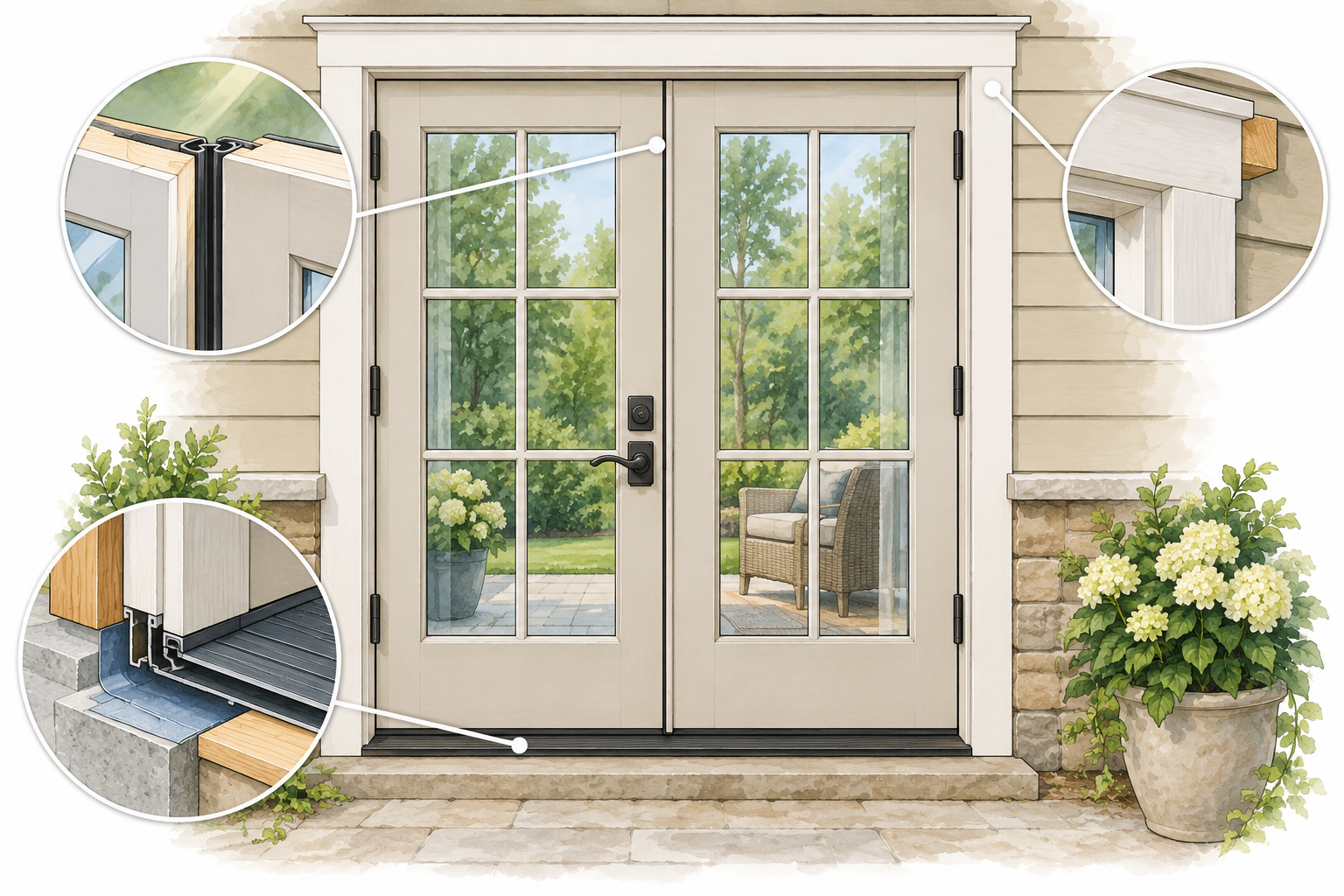
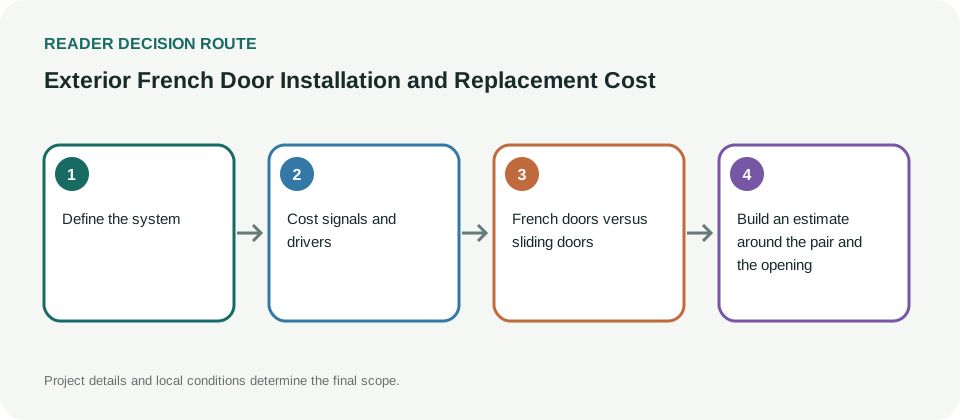
Define the system
Ask whether the quote includes both leaves, frame, hinges, lock and strike, threshold, screens, glazing, trim, flashing, and interior and exterior finish. Confirm the handing, active leaf, swing, clear opening, and whether the existing opening is wide enough. A conversion from a single opening to a double opening may require framing, cladding, utility, permit, and finish work.
Building America treats the door sill or pan, jamb and head flashing, weather seal, and wall drainage connection as one water-management scope. The threshold is not just a transition strip; it is part of keeping wind-driven rain and water out of the opening.
Cost signals and drivers
Mullions reports a Canada-focused installed example of roughly $2,800–6,000 for a double French door in an existing opening, but its page does not identify the currency. Treat it as an un-denominated specialist observation, not a confirmed CAD or USD price, a national Canadian range, or evidence for U.S. pricing. Product size, glass, frame, material, hardware, opening condition, finish, and access can move the actual quote outside it.
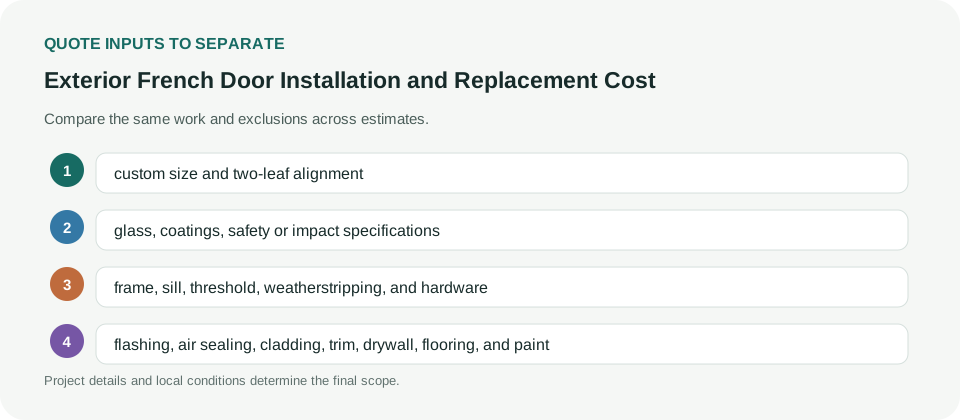
Main drivers include:
- custom size and two-leaf alignment;
- glass, coatings, safety or impact specifications;
- frame, sill, threshold, weatherstripping, and hardware;
- flashing, air sealing, cladding, trim, drywall, flooring, and paint;
- removal, disposal, access, and older-home disturbance;
- opening modification, structural review, or local approvals.
French doors versus sliding doors
Hinged French doors need swing clearance and a reliable meeting point between leaves. Sliding systems use tracks, rollers, and a different threshold. Neither is universally cheaper. Compare the opening, ventilation, access, furniture path, weather exposure, repairability, and desired clear width.
Build an estimate around the pair and the opening
A two-leaf exterior French-door price depends on more than the number of slabs. First establish whether the home already has a double opening with a sound frame or whether a single door is being widened. A same-size replacement can reuse some framing and trim; a conversion may add demolition, a new header or support, cladding repair, utility relocation, and a landing. If a new opening is involved, compare it with the separate cost-to-add-door guide rather than treating it as a routine replacement.
The product schedule should specify both leaves, which leaf is active, the swing direction, clear opening, threshold, frame material, glazing, screens, lockset, hinges, and any multipoint hardware. Confirm whether the quote includes the inactive-leaf flush bolts and the alignment needed for both panels to close and latch together. A decorative glass upgrade or custom size may change the product price and lead time. A wider visible glass area also makes the selected glazing and local safety requirements worth confirming before purchase.
The installation scope should show removal and disposal, sill or pan preparation, flashing, perimeter sealing, weatherstripping, trim, cladding, flooring transition, and paint. If the contractor assumes the old frame remains, ask how its condition will be assessed and what happens if it is out of square or wet. A threshold that does not drain or a meeting stile that does not align can leave a costly assembly that looks new but does not operate or seal as expected.
Read the available cost signal carefully
Mullions reports a Canada-focused installed example of about $2,800–$6,000 for a double French door in an existing opening. The page does not identify the currency, sampling method, product specification, or exactly which finish details are included. Treat it as a bounded publisher observation, not a confirmed CAD price, U.S. estimate, or complete range for every pair. The quote still needs to state whether it includes both leaves and the full installation scope described above.
An existing double opening with a standard-size assembly and limited finish repair is a different budget case from a custom pair in a damaged opening. A high-end glazed system with multipoint locks, difficult access, extensive trim matching, or wall repairs may exceed the example. Conversely, a product-only or partial-replacement proposal may appear lower because labor, threshold, disposal, or exterior restoration are separate. Keep the source observation separate from a local contractor’s written estimate.
Compare the pair with the alternatives
Hinged doors need swing clearance and an aligned meeting point. A sliding patio door may suit a narrow furniture path, while a French-door pair can provide a wider opening when both leaves operate. Compare the actual clear passage, screen option, ventilation, threshold, cleaning, and serviceability rather than assuming either format is cheaper. For a large multi-panel system or pocketed opening, use the dedicated large-opening guide; those costs are not comparable to a conventional pair.
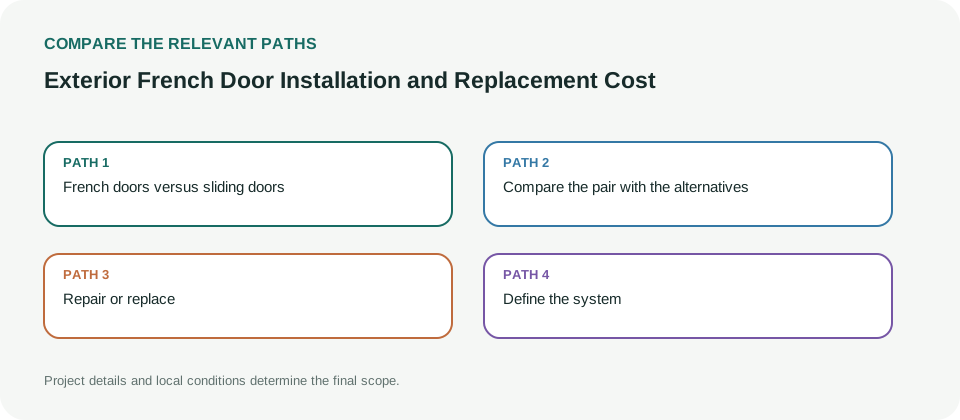
Ask for one quote that preserves the existing opening and, if you are considering a wider conversion, a separately priced alternate. The alternate should identify the structural assumptions, local design or permit work, and interior and exterior finish restoration. If only a hinge, pane, seal, or lock is failing and the frame is sound, price a repair too. A full replacement makes more sense when the frame, threshold, alignment, or intended configuration is the problem. Compare the final operating result and excluded work, not just the door package.
Before ordering a pair, confirm whether both leaves need to open for daily use or only for occasional wide access. A fixed inactive leaf may reduce hardware complexity but limits the usable passage; multipoint locking or removable mullions change the operation and maintenance. Ask for the clear opening with both leaves active and with the inactive leaf secured, then compare that with furniture movement and intended access.
A pair also has more meeting-point seals and alignment conditions than a single slab. The installer should state how the threshold, astragal or meeting stile, weatherstripping, and locking points will be adjusted and tested. If the existing floor is uneven, a new door may need sill or subfloor work for the leaves to meet correctly. Make these details part of the scope rather than assume a new product automatically corrects the opening.
Get the installation handoff in writing
The quote should identify who supplies the door and who warrants the installation. A manufacturer’s product schedule may address the door or components, while an installer’s promise covers a different set of workmanship issues. Ask who will return if the active leaf drops, the inactive leaf does not stay secured, a lock binds, or a threshold leaks after adjustment. Keep product and installation records together because future service may need both.
Also confirm delivery and protection. A pair of large glazed leaves can be damaged before installation, and a replacement lead time may leave the opening unavailable. Ask whether the amount includes on-site storage, temporary closure, removal of the old pair, disposal, and final adjustment. If the opening is being widened, coordinate structural inspection before the assembly arrives so a product delay does not become a weather-protection problem.
A complete pair estimate should state the finished clear opening with the active leaf alone and with both leaves open. If the reason for choosing French doors is moving furniture or creating occasional wide access, those dimensions are central to the value decision. If everyday traffic uses only one leaf, compare that use with a slider or single door plus sidelite. The homeowner can then decide whether the second operating leaf justifies its added hardware and alignment needs.
If there is a manufacturer warranty, confirm whether it covers each leaf, the meeting stile, glass, hardware, frame, threshold, and labor separately. The product term may depend on occupancy, transfer, finish, or installation conditions. Keep that written schedule with the proposal and ask which costs are outside the remedy. A warranty is not a reason to assume that a later service visit or trim repair will be free.
A written bid should identify whether the inactive leaf can be opened without tools and how the flush bolts operate. The homeowner should test this at handoff and confirm the screen arrangement and any key or multipoint-lock routine. These operational details can affect whether the pair delivers the access the household expects.
For a home with pets or children, ask whether the screen and latch arrangement can be operated safely with both leaves in use. The quote should list any screen, astragal, or removable mullion as a separate product item.
At the handoff, test both leaves, the screen, and the threshold. A written adjustment visit can be useful if the doors settle after initial use.
Repair or replace
Repair may fit when one leaf, pane, lock, hinge, seal, or trim component is failing and the frame remains square and weather-tight. Replacement is more plausible when the frame or threshold is damaged, alignment is persistent, multiple components fail, or a different opening configuration is wanted. Ask for the outcome, not just the product: both leaves should close, latch, lock, seal, and drain as intended.