
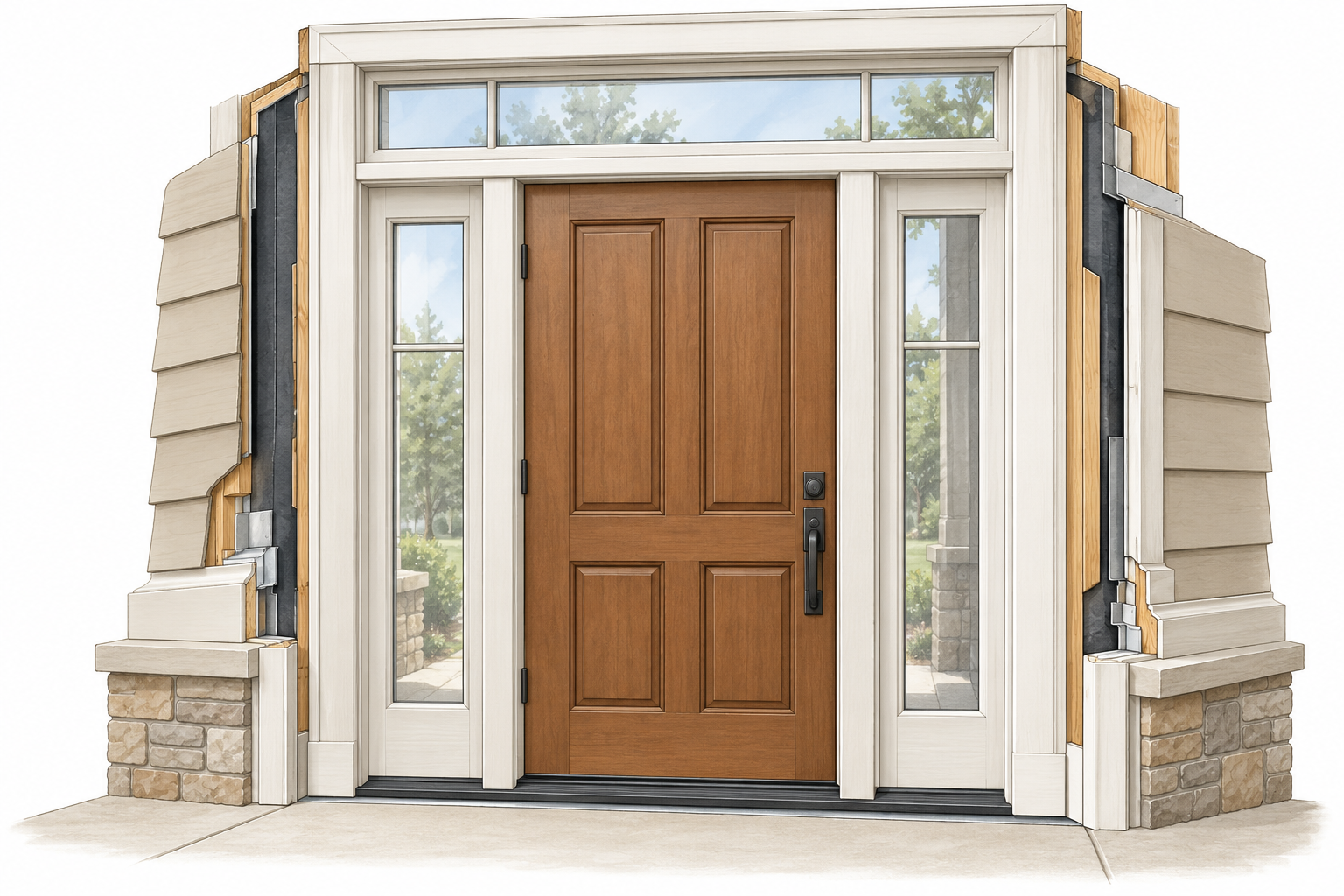
A front entry with sidelights or a transom is a multi-component opening, not a standard single-door replacement. More glazing, a wider or taller frame, custom sizing, structural changes, trim, flashing, and finish restoration can materially change the project.
Door-only versus complete entry system
First determine whether the existing sidelights and transom are staying. Replacing only the slab may preserve a sound frame and glazing, while replacing the complete assembly changes the jambs, mullions, threshold, glass, weather seal, and interior and exterior trim. Changing the configuration or width can become an opening-modification project with structural and approval questions.
Ask for finished and rough-opening dimensions, the number and size of glazed sections, active and inactive leaves, glass specification, frame width, sill and threshold, hardware, and finish. Contractor terms vary; “door replacement” may omit the sidelights, transom, trim, or painting unless the quote says otherwise.
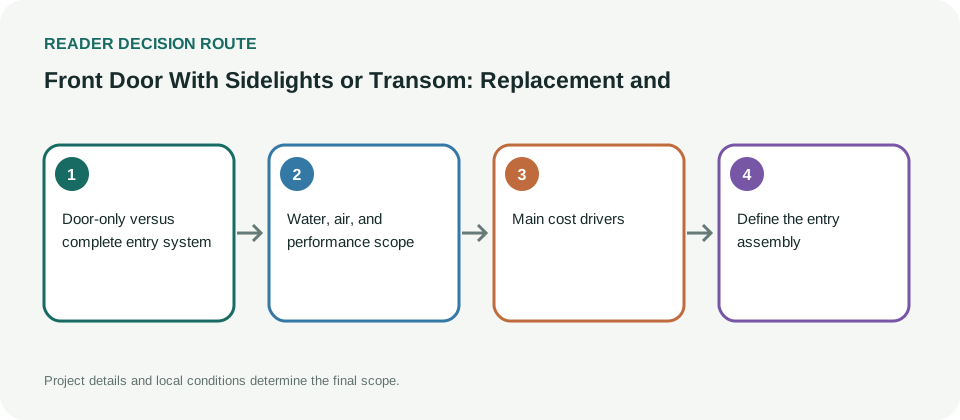
Water, air, and performance scope
Building America treats the opening as part of the wall drainage plane and calls for coordinated sill or pan, side, and head flashing. More joints and more glass create more places where water and air sealing need attention. ENERGY STAR U.S. criteria also vary with climate zone and door glazing level; do not infer complete-door performance from the frame material or glass appearance.
Main cost drivers
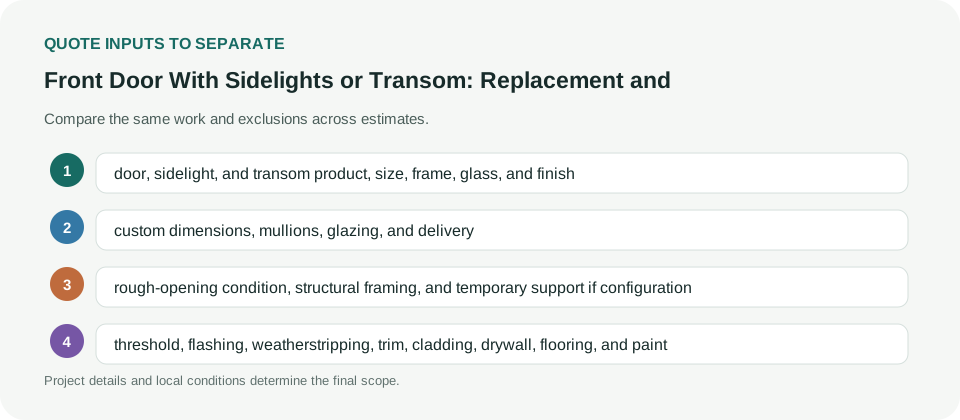
- door, sidelight, and transom product, size, frame, glass, and finish;
- custom dimensions, mullions, glazing, and delivery;
- rough-opening condition, structural framing, and temporary support if configuration changes;
- threshold, flashing, weatherstripping, trim, cladding, drywall, flooring, and paint;
- removal, protection, access, disposal, and older-home disturbance;
- permits, inspections, or professional design where applicable.
Canadian patio-door evidence shows why complete systems and existing-opening work should be separated, but it does not establish a universal price for entry assemblies. Use local quotes in the relevant currency.
Define the entry assembly
Before comparing prices, decide which parts remain. A door-only change may retain sidelights, a transom, mullions, frame, threshold, trim, and interior finish. A complete system replaces more of the weather boundary. A configuration change can require a new rough opening, framing, temporary support, cladding, flashing, and finish restoration.
Record the rough and finished dimensions, door handing and swing, active and inactive leaves, sidelight and transom sizes, glass, frame width, threshold, hardware, trim, floor transition, and exterior cladding. “Front-door replacement” is not a sufficiently precise scope when the assembly has several glazed sections.
Project scenarios
A limited repair may replace one pane, seal, lock, or trim element in a sound assembly. A same-opening replacement may change the complete door, sidelights, transom, frame, threshold, flashing, and finish. A complex project may enlarge or narrow the opening, change the relationship between door and glass, require custom fabrication, address masonry or stucco, or restore damaged wall and interior finishes.
Price the product and the opening separately. Include measurement, fabrication, delivery, removal, disposal, access, protection, frame, glass, hardware, threshold, flashing, air sealing, exterior trim, cladding, drywall, flooring, paint, and conditional concealed work. A product-only price is especially misleading for custom entry assemblies.
Glazing, weather, and performance
More glass and more joints create more questions about solar gain, privacy, comfort, and air and water sealing. U.S. ENERGY STAR criteria use climate-zone and door-glazing context. Ask for complete-product information rather than judging performance from the frame material or glass appearance. Canadian requirements and market costs need separate verification.
Building America guidance treats the sill or pan, jamb and head flashing, weather seal, and wall drainage connection as integrated opening work. A new door and glass assembly does not correct a failed wall transition unless the installation scope addresses it. Ask how the threshold drains and how the opening is protected while the old assembly is out.
Size the complete entry before selecting a configuration
A door with sidelights or a transom is a coordinated entry system. Measure the full outside frame and the rough opening, not only the movable door leaf. Changing from one sidelight to two, adding or removing a transom, or changing door width can alter the framing and finish around the assembly. Confirm whether the homeowner wants to preserve the existing proportions or is intentionally changing the façade.
Quotes should list the door, each glazed section, frame, mullions, threshold, hardware, weatherstripping, trim, and installation. Ask whether the glass units are replaceable individually and how future service would work if a sidelight seal fails. A complete-product rating or certification may not apply to every combination; check whether the stated performance covers the actual door, sidelight, transom, size, and frame being sold.
When the existing unit is sound except for one pane or hardware item, ask for a component repair quote as well as a full-system replacement. Repair can preserve the interior and exterior finish, but parts may be proprietary or the frame may be difficult to match. Replacement can correct a poor threshold or recurring leak, but it may disturb more wall material and require cladding, drywall, paint, or structural work.
A high glass area can also affect privacy, solar exposure, and the amount of light entering the foyer. Compare the actual glass type and shading or privacy options rather than assuming a clear appearance from a brochure. If safety glazing or a particular performance rating is important at the location, confirm the locally applicable requirement and the exact product documentation before approving the design.
For each proposal, state which side panels and top glass are included, whether the opening is altered, which finishes are restored, and what is excluded. A separate price for preserving the existing configuration versus changing it helps the homeowner see whether the added cost comes from the door package or from rebuilding the opening.
If the configuration is changing, ask whether the new rough opening can reuse the existing header and side framing or whether the proposed width/height needs design review. The supplier’s unit drawing and the installer’s opening measurements should agree before the custom assembly is ordered. This is especially important when the sidelights make the total unit wider than the original door.
For a broad entry assembly, access and delivery can affect the bid even when no structural change is planned. Confirm whether the unit arrives preassembled, how it will be protected during transport, and whether the entry path can accommodate the full frame. If an existing porch or stair limits handling, ask whether the contractor has included temporary removal or lifting equipment. These logistics should be visible before the custom unit is ordered.
A supplier may quote the door slab and glazed side panels from different product lines. Ask whether they are designed and tested as one system and whether the frame, mullions, and glass options are compatible. If a homeowner wants decorative or privacy glass, confirm which panes are available and how they affect replacement lead time. Do not compare one full assembly against another product-only door price.
If a replacement preserves the existing opening, ask whether the entire unit can be removed without damaging nearby siding, brick, or interior casing. For a custom-width system, include the cost and availability of matching trim. If the finish cannot be matched, the homeowner may prefer a planned larger-area restoration over a small patch.
Before ordering, confirm the manufacturer’s lead time for the chosen decorative glass and whether it is replaceable as a single unit. A custom pattern may extend the project schedule if a pane is damaged in transit.
If a glazing unit breaks later, ask whether it can be replaced independently or requires a larger panel assembly. The answer can affect both service cost and the time the entry remains protected.
Repair, replacement, or configuration change
Repair can preserve a sound frame when the defect is bounded. A full assembly may be more coherent when several glass units, mullions, the frame, threshold, or weather seals are failing. A configuration change may be justified for appearance, daylight, or access, but it should be priced as an opening modification if framing, width, or support changes.
If the opening is part of an accessibility path, emergency route, or wind-exposed facade, verify the applicable local and professional requirements. Do not assume a larger clear opening or a restricted sidelight satisfies a rule without checking the actual project.
Older homes may contain lead paint or asbestos-suspect materials in trim, caulk, plaster, siding, or insulation. EPA’s U.S. RRP guidance generally covers paid work disturbing paint in pre-1978 housing; Canadian health guidance recommends assessment of older materials. Include qualified work, containment, cleanup, and disposal where applicable.
Ask for a finished-outcome statement: the entry should be weather-tight, secure as specified, operable, drained, and fully finished. The right budget is the cost of that complete assembly, not only the price of a door surrounded by unpriced glass and trim.
Repair may fit when one pane, seal, lock, or trim component is failing and the frame is sound. Complete replacement is more plausible when the frame, threshold, multiple glazed sections, or water-management details are deteriorated, or when the homeowner wants a different configuration. Ask for the scope that leaves the entire entry weather-tight, secure, operable, and finished.