
A building loss can produce several different bills: the physical repair, the association’s insurance deductible, a unit owner’s deductible, uninsured damage, mitigation, and a possible chargeback or loss assessment. Those categories should not be collapsed into one question about “who pays.”
The answer depends on the cause, the governing documents, the insurance policies, and the association’s process for allocating a cost to one unit or to all owners.

Identify the event and the cost
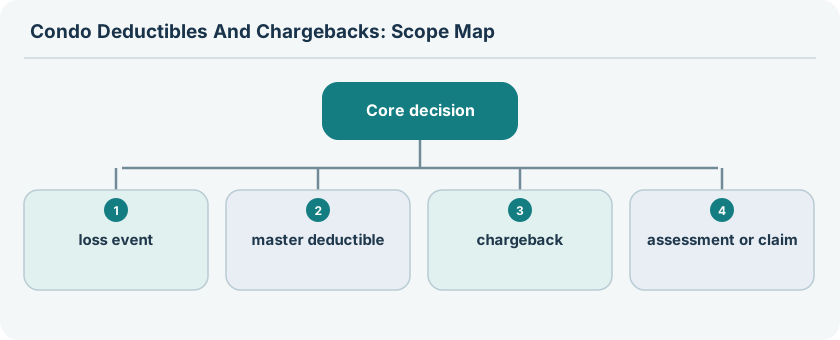
Create a timeline and separate the invoices. Identify:
- the event that caused the damage;
- the component that failed;
- emergency mitigation;
- permanent common-element repair;
- unit interior restoration;
- personal property and additional living expense;
- the association’s applicable deductible;
- the owner’s policy deductible;
- any proposed chargeback or assessment.
A leaking shared pipe, a unit appliance, a storm, a renovation error, and ordinary deterioration can invoke different rules. A deductible is a policy amount, not a finding that a particular owner caused the event.
Read the governing documents
Find the declaration, bylaws, insurance provisions, damage-restoration rules, maintenance matrix, and any board resolution or policy about deductibles. Look for:
- authority to file a claim;
- responsibility for common and unit components;
- chargeback standards;
- negligence or alteration provisions;
- notice and cooperation duties;
- allocation by unit, unit interest, or another formula;
- hearing, dispute, or appeal procedures.
The association may have authority to charge an owner only when the documents or applicable law support it. Do not rely on a manager’s informal explanation when the charge is material. Request the section and the calculation in writing.
Master deductible versus owner deductible
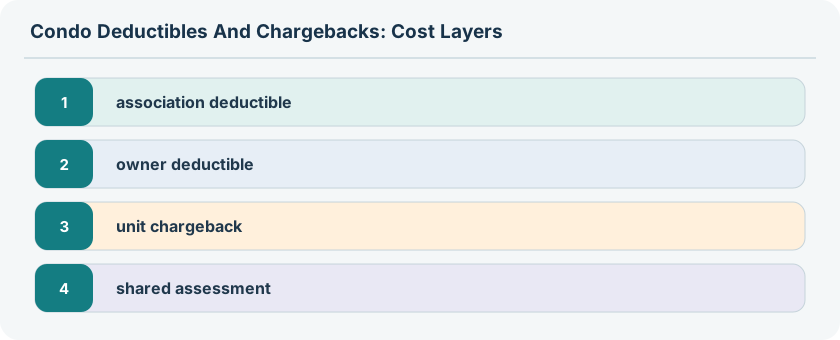
The master policy may have a deductible for water, wind, fire, earthquake, flood, or another peril. The owner’s unit policy has its own deductible and may include loss-assessment coverage. The two policies can respond to different property and different causes.
Ask the association’s broker or adjuster:
- Is the event covered?
- Which master-policy deductible applies?
- Is the deductible being paid from common funds or allocated?
- What property is included in the master claim?
- What should the unit owner report separately?
- Are loss-assessment or improvements endorsements relevant?
Coverage decisions can be revised as the cause is investigated. Keep claim numbers, written positions, and deadlines.
Freddie Mac mortgage applications received on or after July 1, 2026 have a program-specific $50,000 ceiling for a condo master-policy per-unit deductible. The lender must also document an HO-6 policy when the master policy has a per-unit deductible or does not cover some or all unit-interior or improvement property; required coverage is at least the greater of pre-loss repair cost or the per-unit deductible. This is a mortgage-program condition, not authority to charge the deductible to a particular owner and not a guarantee that the owner’s policy will pay. Check the master-versus-unit insurance guide and obtain the insurer’s written position on the actual event.
Chargeback is different from a shared assessment
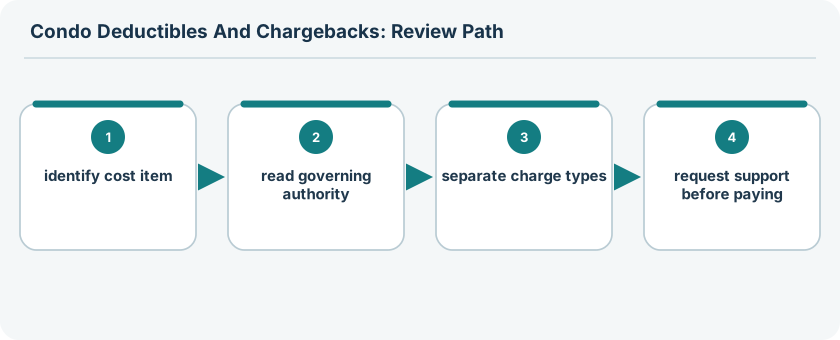
A chargeback usually seeks recovery from one unit under a specific rule, often because of a defined act, omission, alteration, or unit-specific cost. A shared assessment spreads an association obligation under its ordinary allocation formula. The labels can vary, so read the resolution and supporting authority.
A board should identify the factual basis, the document section, the amount, the calculation, the payment date, and the process for responding. An owner who disputes the charge should preserve the notice, report, photographs, and communications and use the stated dispute process promptly.
Mitigation and restoration
After water or fire damage, make the area safe and take reasonable steps to prevent more damage. Notify the manager, association insurer, and owner insurer. Photograph before demolition where safe, and ask who controls the restoration contractor.
The party paying the deductible may not be responsible for every repair line. Common structure, unit finishes, owner improvements, contents, temporary housing, mold treatment, and access repairs can have separate allocations. Ask for the emergency scope, permanent scope, and restoration scope separately.
Do not delay urgent drying while waiting for a final responsibility decision. Record who authorized the work and reserve the allocation question for the documented investigation.
Loss-assessment coverage
An owner policy may include coverage for an assessment arising from a covered loss, subject to a limit, deductible, exclusions, and conditions. It may not cover an ordinary capital assessment, deferred-maintenance project, or an uninsured expense. Ask the insurer to evaluate the actual resolution and covered cause rather than relying on the word “assessment.”
Also verify whether the policy covers increased costs caused by a code requirement, betterments, or upgrades. A replacement that improves on the original may leave an incremental amount outside the claim.
What to ask before paying
Request:
- the incident report and cause investigation;
- the master-policy coverage and deductible position;
- the governing-document authority;
- the board resolution or written allocation;
- invoices and credits from insurers or contractors;
- the formula used for the amount;
- payment terms and any interest or late consequences;
- the dispute, review, or records-access process.
A clear decision should explain the event, the component, the coverage, the deductible, the authority, and the allocation. If one of those links is missing, ask for it before treating the bill as final.
Assess whether a charge is supportable
Before paying or disputing a charge, create a table with the event, failed component, covered cause, policy, deductible, governing-document section, allocation formula, and amount. Ask whether the charge is a master-policy deductible, an uninsured repair, an owner-policy loss assessment, a common assessment, or a unit-specific chargeback. These categories can overlap in conversation but have different evidence.
Request the board resolution, claim position, invoices, credits, and calculation. Check whether the notice identifies a response deadline or hearing. A charge should not be treated as final merely because a contractor has issued an invoice; the association still needs a documented basis for allocating it.
Examples of separate scopes
A pipe failure can produce a common-pipe repair, water extraction, drywall replacement, custom flooring, contents loss, temporary lodging, and a deductible. One policy may cover the pipe and another the contents. The governing documents may assign the deductible based on cause or permit an owner-specific recovery. Each line should be identified rather than folded into “water damage.”
A storm may cover an association roof repair but exclude an owner-installed awning. A fire may cover structure and contents but leave an upgrade or code-related increment subject to different terms. Ordinary reserve work may have no insurance response at all.
Communication and prevention
Report the event even if the expected cost is below the owner’s deductible. The insurer may need timely notice, and an early inspection can preserve evidence. Keep the claim file, mitigation log, photos, and communications. Do not admit negligence or authorize permanent common work without coordinating with the association.
After closeout, ask what caused the loss and what prevention is planned. A repaired pipe, improved flashing, tested alarm, or updated maintenance practice may reduce recurrence. Retain the final coverage and allocation decisions with the unit records.
The useful answer to a deductible dispute is precise: name the loss, the policy, the deductible, the governing authority, the allocation, and the supporting records.
Keep coverage and allocation decisions separate
An adjuster’s coverage decision answers a policy question. A board’s chargeback decision answers a governing-document and allocation question. They may rely on overlapping facts, but one does not automatically establish the other. Ask for each decision in writing and keep the dates.
If the cause changes during investigation, update the claim file and allocation table. For example, a presumed unit leak may later be traced to a shared riser; the source repair, master deductible, interior finish, and unit-policy response may then need to be reconsidered. Do not destroy removed parts or close an opening before the relevant inspection when safe.
At closeout, record payments, deductibles, excluded upgrades, restoration warranty, and prevention work. A complete file lets an owner explain why a charge was paid, disputed, or submitted to insurance without confusing a policy limit with legal responsibility.
A practical dispute record
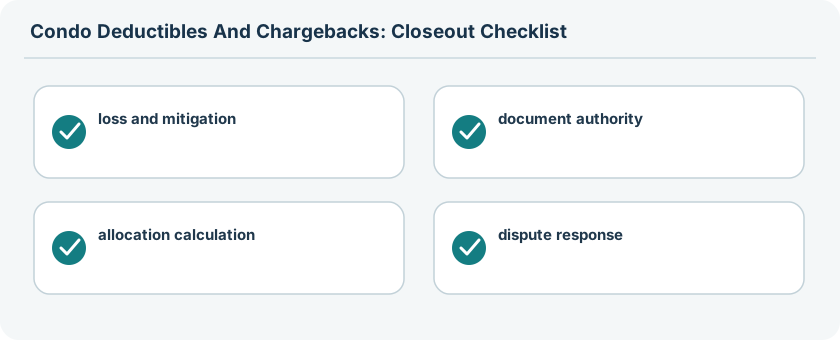
If a charge remains disputed, pay attention to any deadline while preserving the objection and supporting records. Request the policy position, governing-document authority, calculation, and hearing or review process. Keep proof of payment if payment is made under protest and do not let the dispute prevent reasonable emergency mitigation.
Example: a shared-pipe loss
A shared riser fails and the master policy applies a water deductible. The association may pay mitigation and source repair, while the governing documents determine whether the deductible is common or may be charged to a unit. The owner policy may separately address flooring, contents, temporary housing, or a covered loss assessment.
The file should show the source report, master coverage position, deductible amount, document authority, board resolution, invoices, and unit-policy notice. If a later inspection traces the event to an owner alteration, update the allocation analysis rather than treating the first assumption as final.
If the charge is material, ask for the association’s records-access and dispute process and observe the stated deadline. Keep the objection factual: identify the missing cause evidence, policy position, document authority, or calculation. Emergency mitigation and a later allocation challenge should remain separate.
The final notice should be compared with the resolution and invoices. If the amount or authority changed during the claim, preserve the revised decision and any credit or recovery.
When the association claims a deductible from one unit, ask whether the charge is based on cause, document authority, or a special allocation formula. Request the factual report and notice process. When a loss assessment is submitted to the owner insurer, provide the actual resolution and covered cause. Keep any disputed issue separate from the duty to mitigate the loss.