
An association may need to enter a unit to inspect or repair a common element, shared pipe, riser, wiring, facade, balcony, or mechanical system. Access authority and repair responsibility are related but not identical. The association may have the right to enter, while the cost of opening and restoring the unit is allocated under a separate rule.
Owners should cooperate with lawful access while documenting the scope, notice, protection, and restoration plan.
Why access is needed
Common systems often pass through or behind private finishes. A plumber may need to open a wall for a shared riser. An engineer may need to inspect a balcony from inside. An electrician may need a unit panel to test a feeder. A building-envelope contractor may need to remove trim or access a window opening.
Ask what the contractor needs to see, the minimum opening, the expected duration, and whether the work is investigative, emergency, or permanent. A vague request for “access to repair” should be clarified before belongings are moved or finishes are removed.
Confirm authority and notice
Read the declaration, bylaws, rules, and emergency-access provisions. Confirm who is requesting entry, the notice required, the dates and hours, and the process for urgent entry. The manager should identify the contractor and provide contact information.
For non-emergency work, request a written access notice and a point of contact. For emergency work, reasonable immediate access may be necessary, but the association should document why entry was urgent and what was done. An owner should not obstruct necessary work, but can ask for a safe and orderly plan.
Protect the unit and belongings
Before entry, photograph the area and move or protect valuable items. Ask who supplies floor protection, dust control, temporary barriers, air filtration, and cleanup. Confirm whether the owner must remove cabinets, shelving, curtains, furniture, or appliances.
If the association’s contractor discovers unrelated deterioration or an owner alteration, ask that the finding be recorded separately. Do not allow extra work to be folded into a common repair without a clear scope and authorization.
Opening, repair, and restoration
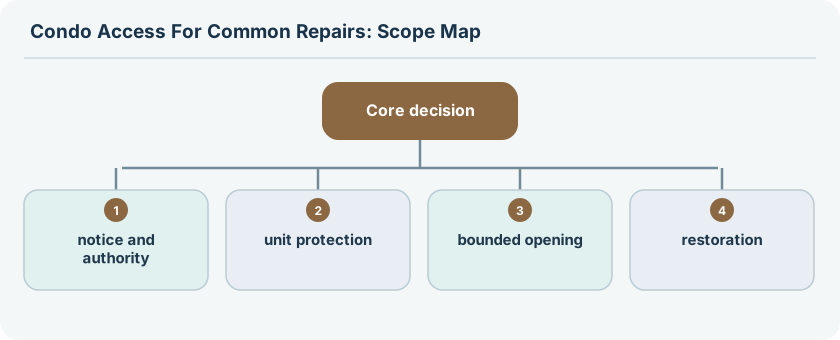
The project has at least three scopes:
- access and demolition;
- repair of the common or shared component;
- restoration of the unit finish.
The association may pay for all three, or the documents may assign the finish or an owner upgrade differently. A common pipe repair may require drywall and paint, while custom tile, cabinetry, flooring, or an unapproved alteration may require a separate decision.
Ask what standard of restoration applies: match existing, return to a defined original finish, or pay an allowance. Record concealed conditions with photos before closing the opening.
Damage and insurance
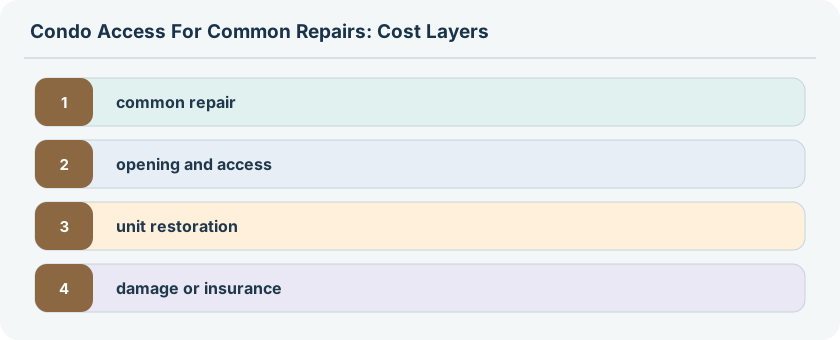
Access work can reveal or cause water, mold, electrical, or structural damage. Notify the association and insurer if a claim may be involved. Keep the original condition record, contractor reports, drying records, invoices, and communications. Emergency mitigation should not wait for a final allocation decision.
The party paying for access may differ from the party responsible for personal property, temporary accommodation, improvements, or an insurance deductible. Obtain the policy position in writing where the cost is material.
Disputes and missed appointments
If a scheduled entry is impossible, propose alternative times promptly and explain why. Keep a record of notices and attempted access. If an owner believes the scope is excessive or the protection inadequate, state the concern in writing and request a manager or engineer review; do not unilaterally prevent an urgent safety repair.
When restoration is incomplete, list each item, photograph it, and give the association a reasonable opportunity to correct the work. Separate workmanship concerns from disputes about who should pay.
Access checklist
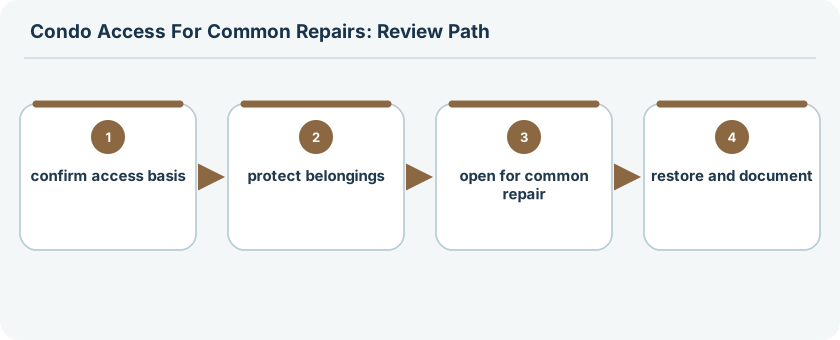
Before entry, confirm:
- authority and notice;
- contractor identity and insurance;
- affected component and minimum access;
- protection, dust control, and security;
- schedule, shutdowns, and owner presence;
- contents and improvement handling;
- opening, repair, and restoration scopes;
- insurance and deductible position;
- change-order approval;
- final testing, cleanup, and records.
An access request becomes manageable when the work is bounded. Document the reason for entry, the common component, the protection plan, the restoration standard, and the closeout evidence before the first wall is opened.
A written access agreement
For a planned repair, request a short written access agreement or notice that states the reason for entry, the affected common component, the contractor, dates, expected hours, access route, shutdowns, and emergency contact. It should explain how keys, security, pets, and alarm systems will be handled. If several entries are expected, identify the inspection visit, demolition visit, repair visit, and closeout visit separately.
Ask whether the association will provide a pre-work condition survey. Photograph flooring, paint, trim, cabinets, fixtures, and owner improvements. Note any existing damage so the closeout discussion does not confuse an old condition with construction damage.
Restoration standards and change orders
“Restore the unit” can mean different things. Ask whether the standard is a comparable material, an original finish, a builder allowance, or a reasonable repair under the governing documents. Identify whether custom tile, built-ins, soundproofing, flooring, and paint colors are treated as improvements. A contractor should not remove a custom finish without explaining what will replace it and who pays any difference.
If concealed conditions expand the work, request a change order that identifies the new condition, scope, cost, schedule, and payer. A common repair should not silently become a unit renovation. If the contractor cannot restore the finish immediately, record temporary protection and the deadline for permanent work.
When the owner is absent
Owners who rent or are away should designate a contact and provide the manager with access instructions. Confirm whether a representative can approve emergency stabilization, how notices will be delivered, and how the unit will be secured after entry. Tenants should receive instructions through the proper landlord or manager process.
A missed appointment can delay a building repair and increase damage. If access cannot be provided, communicate promptly and propose alternatives. Keep the notices, because they may matter if the association later claims that delay increased the loss.
Closeout review
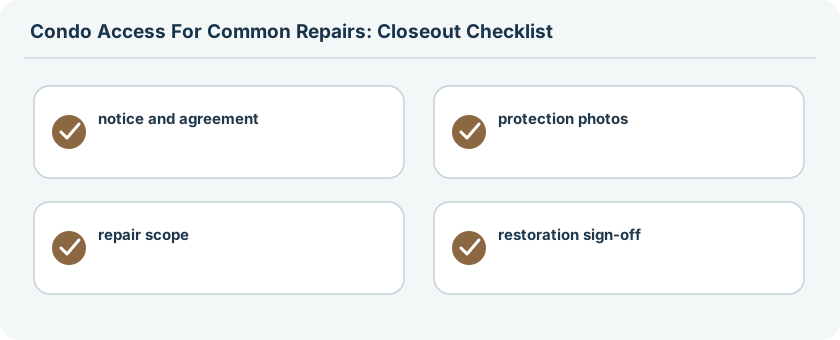
At completion, walk the area with the contractor or manager. Check that common equipment has been tested, openings are closed, firestopping or waterproofing is documented, surfaces are clean, and keys or access devices are returned. Photograph concealed work before closure whenever possible. Request final invoices, reports, permits, warranty information, and a written list of any unfinished items.
Access is a shared obligation with defined limits. A cooperative owner can still insist on a bounded scope, safe protection, accurate records, and a clear restoration standard. Those records are more useful than a later argument about what a contractor “was supposed to” do.
Responsibility when access causes damage
If a common repair damages paint, flooring, cabinets, or belongings, report the condition promptly and distinguish it from pre-existing damage. Ask for the contractor’s incident report and the association’s insurance position. If an owner declines a proposed restoration, explain the concern in writing and request a documented alternative.
Where a unit alteration is exposed, photograph it before work continues. The association may need to repair the common component while the owner maintains or replaces the alteration. A written allocation prevents the access visit from becoming an informal renovation.
Multiple units and schedule control
A riser, facade, electrical feeder, or structural repair may need access to several units. Request a master schedule, unit-by-unit scope, shutdown notice, and escalation contact. Owners should communicate rental or travel constraints early. The association should coordinate entries to reduce repeated demolition and keep a record of missed appointments.
At the end of each phase, confirm the unit is secure, safe to occupy, and protected from water, dust, and unauthorized entry. Record unfinished items and the date for return access. A phased closeout can be more accurate than treating a project as complete after the common component is repaired.
If the association cannot state who will restore an opening, ask for that decision before planned demolition. Emergency safety work may proceed first, but the access, repair, finish, and improvement scopes should be reconciled before the project is closed.
For a dispute about restoration, compare the pre-work survey, access photographs, contractor scope, and closeout list. Identify whether the issue is damage caused by entry, an unfinished common repair, an owner improvement, or a pre-existing condition. Each should be handled as a separate line item.
Example: a shared riser behind a kitchen wall
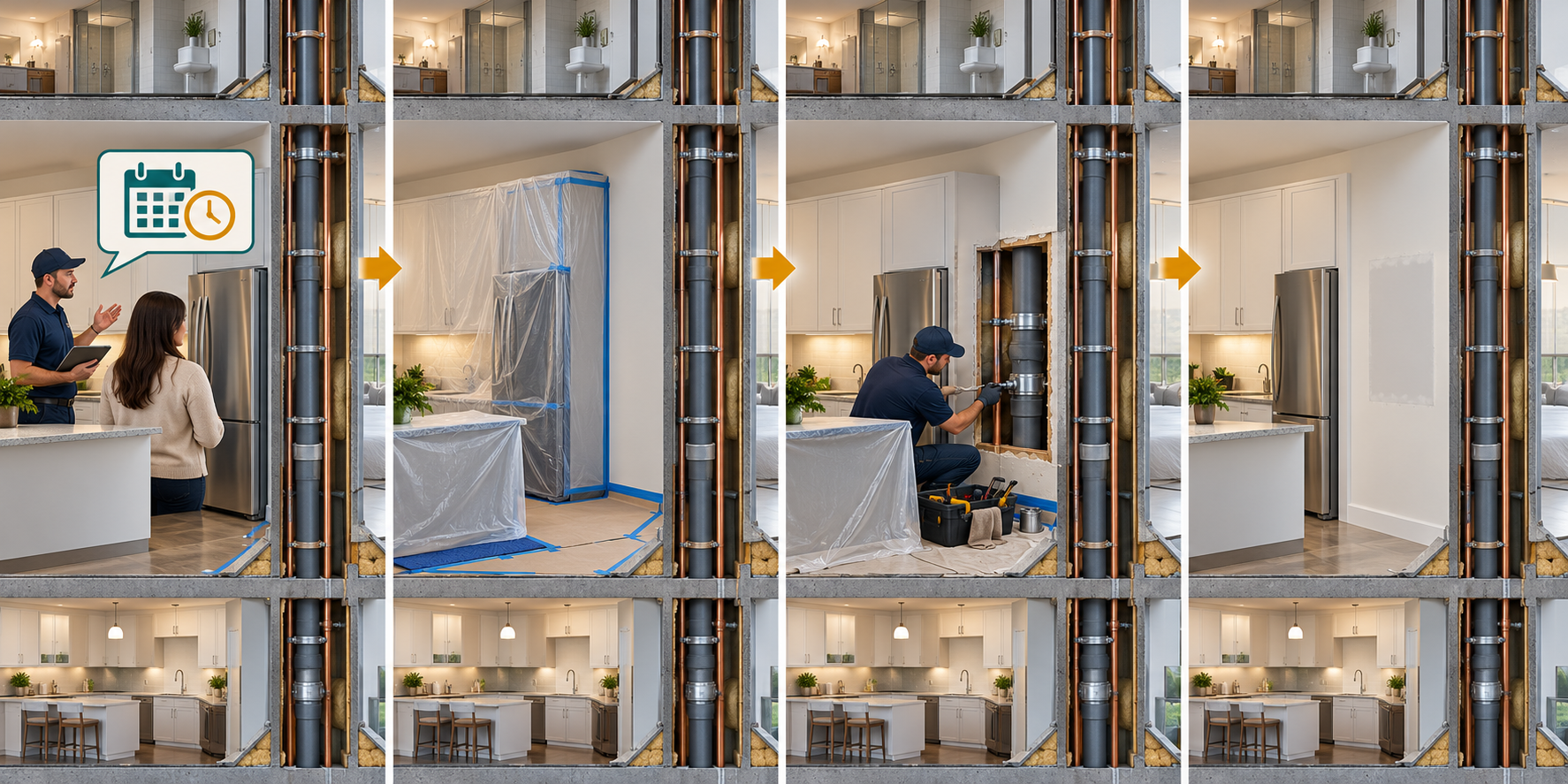
A plumbing riser may serve several homes even though the access opening is inside one kitchen. The association may have authority to enter and repair the riser, while the governing documents or insurance rules determine who restores drywall, cabinets, backsplash, flooring, and custom finishes. Before access, photograph the kitchen and list the finishes.
The notice should say whether the first visit is investigative, whether a shutdown is required, and how the opening will be protected. If the plumber finds an owner alteration or a second defect, require a separate scope and change order. At closeout, ask for a photograph of the repaired riser, the test result, the fire-stopping or waterproofing record, and a restoration list.
The example shows why access authority does not automatically answer restoration cost. The work must be divided into entry, common repair, unit finish, improvement, and insurance scopes.