
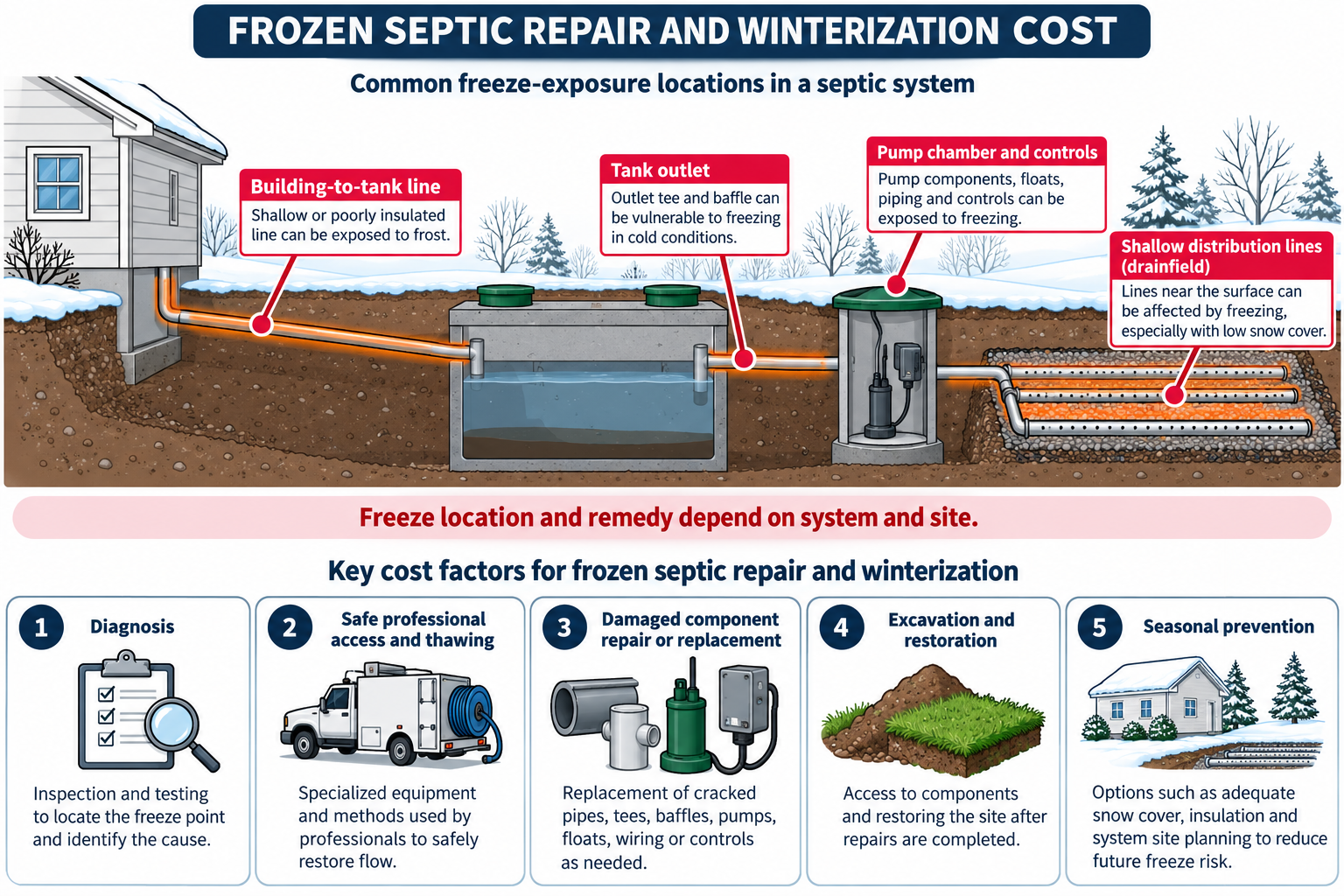
Freeze-related septic problems can occur in the building-to-tank line, tank outlet, shallow distribution, pump chamber, controls, or other exposed or poorly protected component. Repair cost depends on the location, access, damage, climate, burial and insulation conditions, occupancy, and system design. Available guidance does not establish a universal thawing method, winterization price, or buried-depth rule.
Directional U.S. cost anchors
The current U.S. specialist guides display ranges of $3,593–$12,463 for septic-system installation, $100–$1,300 for inspection, $627–$3,041 for septic-tank repair, and $5,000–$12,000 for tank-and-drainfield replacement. These are broad market observations, not quotes or universal rates; they are not Canadian prices and must not be converted into CAD.
Not every article in this category has the same scope as those anchors. Use the closest comparison only to set an order of magnitude, then ask the contractor, designer, pumper, or authority to separate the work specific to this decision from access, excavation, design, permits, restoration, pumping, disposal, equipment, service, or future operating costs.
Why one winter problem does not identify the cause
A seasonal home with little wastewater flow can have a different freeze exposure from a full-time home. Snow cover, leaks, shallow components, intermittent operation, pump controls, and local groundwater all affect risk. An odor or slow drain is not enough to identify a frozen septic component; diagnosis should distinguish the building plumbing, tank-side piping, pump system, and field.
Possible cost layers
- service call and frozen-system diagnosis;
- professional thawing or access to the affected line or component;
- pipe, insulation, cover, riser, pump, float, alarm, or control repair;
- excavation, rock, water management, backfill, and restoration;
- seasonal preparation such as correcting leaks, protecting covers, or improving insulation;
- repeat-visit, reopening, monitoring, or service-contract costs.
Do not treat a hardware-store product or improvised heat source as a safe universal solution. The work may involve sewage, electrical equipment, buried utilities, and fire or pipe-damage risks. A qualified professional should select the method.
Seasonal preparation
EPA seasonal guidance identifies measures such as insulating vulnerable covers or parts, fixing leaks and cracks, maintaining protective vegetation or snow cover, and considering pumping before winter vacancy. It qualifies pumping where groundwater is high and does not provide a universal shutdown procedure. Local septic professionals and authorities must adapt the plan to the property and system.
Repair and prevention scenarios
Localized freeze: A building-side or shallow line is blocked but no permanent damage is found. Cost is mainly diagnosis, professional thawing, and access.
Component damage: A pump, float, alarm, or pipe has been damaged. The repair needs compatibility and electrical or wastewater safety checks, not just thawing.
Recurring seasonal failure: Repeated freezing, poor access, shallow design, or intermittent occupancy makes each emergency visit expensive. Compare insulation or layout corrections, a seasonal operating plan, a different system strategy, or a broader redesign.
Seasonal-home budgeting
Separate the annual preparation visit, normal pumping reserve, service contract, power, reopening check, and emergency reserve. A holding tank has a different winter and hauling plan from a soil-dispersal system. Broader remote and seasonal property logistics belong to Category 034; this guide stays with septic-specific costs.
Questions before approving work
- Which component is frozen and what evidence establishes that?
- What thawing method is safe for this material and system?
- Does the quote include access, repair, insulation, restoration, and testing?
- What plan applies during vacancy, extreme cold, power loss, and reopening?
- Is a recurring repair pattern evidence that the design needs review?
The economical fix may be a one-time repair, but only if it addresses the cause. Where the same component freezes repeatedly, price prevention and redesign against another emergency visit instead of assuming each thaw is an isolated event.
Compare a repair with prevention
For a one-time event, compare diagnosis, safe thawing, repair, access, and restoration. For recurrence, add the cost of insulation or cover correction, leak repair, layout changes, monitoring, professional seasonal visits, and a future emergency reserve. The preventative option is justified only if it addresses the actual exposure; adding insulation to the wrong location does not resolve a blocked outlet or failed pump.
Conditions to disclose before service
Tell the provider whether the home is occupied, whether wastewater has been used, whether the system is pumped or gravity, whether an alarm is active, and whether flooding or high groundwater is present. Mention recent excavation, landscaping, or a new cover. Those facts can change safe access, diagnosis, and the price of restoration.
Keep the final service record with the system documents. It should identify the frozen component, repair, preventive measure, and any unresolved risk. That record is more useful than a generic note that the system was “winterized.”