
“Winterized” is not a standardized service scope. One property may need a controlled water shutdown and drain-down; another may keep heat and water operating with monitoring and periodic visits. Define what the property, equipment, insurer, and local climate require before comparing a do-it-yourself checklist with a professional closing service.
What a closing service may include
- inspection for leaks, freeze exposure, storm damage, pests, and access;
- water shutoff, drain-down, pump or cistern protection, and plumbing preparation;
- water-heater, appliance, and fixture preparation according to equipment instructions;
- heating, fuel, thermostat, backup-power, and alarm strategy;
- septic and private-water considerations that need local or equipment-specific advice;
- exterior openings, roof drainage, snow exposure, and vulnerable materials;
- fuel and delivery planning before access becomes difficult;
- documentation for the opening service and any required inspection visits.
The quote should state what is done, what is observed but not repaired, and what remains energized. “Winterization” should not conceal a separate plumbing repair, fuel service, pest treatment, or roof and drainage project.
Safety and insurance boundaries
Canadian federal preparedness guidance recommends winterizing walls, attics, doors, and windows; keeping snow-removal supplies accessible; checking for blocked exhaust vents; and using fuel-burning generators outside and away from buildings. It is household preparedness guidance, not a complete professional closing procedure.
Insurance conditions are policy-specific. Canadian consumer and insurance guidance indicates that extended absence, frozen-pipe exposure, inspections, alarms, and winterization can affect coverage or claim conditions. Ask the insurer for the actual policy wording and required steps; do not treat an industry example as universal contract language.
Regulator examples show why a closing checklist must follow the actual policy and equipment. Washington’s insurance regulator advises keeping a home above 60°F in winter and above freezing during a long absence, while the District of Columbia regulator says some policies set their own temperature conditions and suggests water shutoff and drain-down if an unheated vacant home allows it. Neither is a universal coverage threshold or a complete winterization procedure. Obtain the insurer’s current written terms and qualified, system-specific shutdown instructions before comparing service costs.
Price the service by scope
Ask for separate prices for the base closing, water-system work, heating or fuel work, monitoring, repairs discovered, and emergency return visits. Include travel, access, keys, photographs, written documentation, and the property’s opening date. Keep U.S. and Canadian service markets separate.
Do not improvise gas, electrical, fuel, wastewater, or manufacturer-specific procedures. Use the equipment manual and qualified local service when the task carries a safety or damage consequence. A good closing record reduces uncertainty for the person who must safely reopen the property.
Price the closing tasks the property actually needs
Ask the provider to walk through a closing checklist tied to the home’s systems: water source and plumbing, pump and pressure system, water heater, toilets and traps, appliances, heating fuel, humid or damp areas, alarms, exterior taps, and any outbuildings. Establish which actions are part of the base visit, which require a plumber or heating technician, which need a separate service call, and which the owner will arrange. A checklist is not permission to perform specialized work without the right qualifications.
Set the departure date and identify the period when the home will be empty. Confirm how the contractor obtains access, whether keys or lock codes are retained, who else can authorize entry, and how the property is secured after work. Request time-stamped photos and written readings or observations for each system. Ask how the provider reports an issue that needs immediate attention and what the owner must approve before repairs begin.
An Ontario seasonal-property provider publishes closing packages at CAD $249 for a condo, $449 for a townhouse, and $899 for a chalet or waterfront property with dock; the stated work ranges from about one to six hours by package, and the page states HST is additional. These are that provider’s offers in its local service area, not a Canadian market range. They should not be used for a property with a different scope, travel distance, water system, or access. Confirm availability, inclusions, current tax treatment, and extra-work terms directly with the provider.
Make vacancy and insurance requirements explicit
Before arranging the service, ask the insurer or broker what the policy requires during the actual absence. Conditions can depend on the policy, jurisdiction, season, heating method, monitoring, and how often the property is checked. Keep the answer in writing with the policy documents. Do not infer a universal inspection interval from another owner’s experience or a provider’s checklist.
If heat remains on, document the thermostat setting, fuel level, backup power, alarm status, and what happens if the system loses power. If the property is being fully winterized, ask the service provider to identify the shutoffs, water-removal boundary, remaining trapped-water risks, and steps the next professional must complete before reuse. Any need to service a boiler, furnace, tank, generator, or treatment system should be assigned to a qualified provider and priced separately.
Compare contracts and plan for what follows
For comparable quotes, hold property type, work list, travel, visit length, reporting, and emergency availability constant. Separate a standard close from repairs, consumables, materials, after-hours return trips, and unplanned cleanup. Ask whether the price is fixed, hourly, or a callout plus time; request the travel radius, minimum charge, and cancellation window. Confirm that a provider’s insurance and service agreement fit the work it will perform.
Keep the closing report with the property’s water, heating, fuel, alarm, and insurance records. Give the opening provider a copy and note anything that must stay off until it is inspected. If a detector, pump, pipe, or appliance needs repair, track the repair separately from the routine visit and verify it before the property is occupied again. The useful cost is the amount for a defined closing and follow-up plan, not an undefined winterization label.
Agree on a closeout packet and authorization
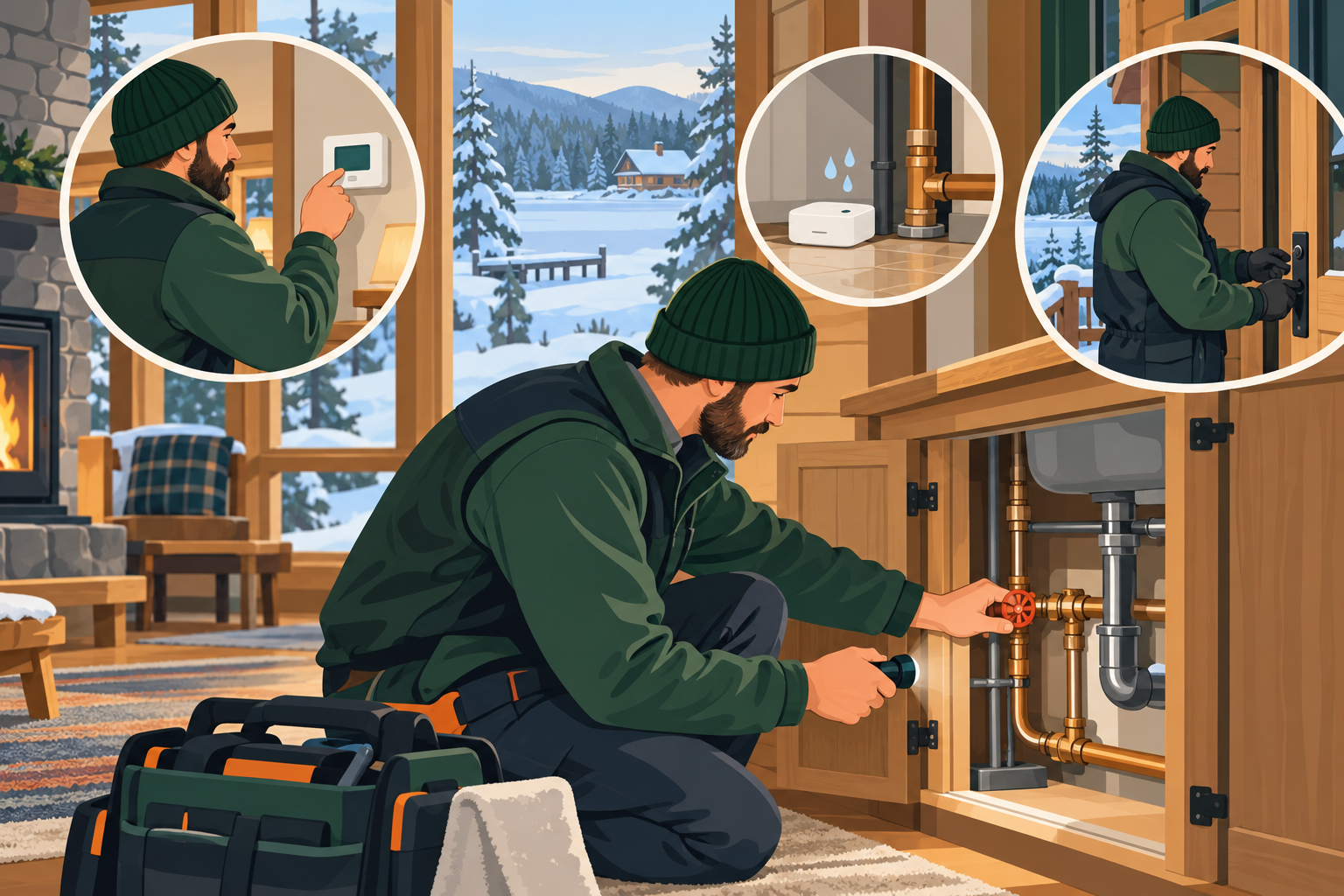
The final record should show which rooms and systems were reached, what was shut off or left active, what was drained or protected, what could not be checked, and any next service date. Ask for photographs of shutoff positions and equipment readings where those records will help the reopening professional. Avoid relying on a verbal “winterized” note; the next person needs to know the exact boundary of the work.
Set an approval process for findings that need a return visit. The provider can report a frozen exterior tap, a leaking appliance, or an alarm fault without automatically authorizing an open-ended repair bill. Agree on a callout fee, spending limit, who may approve work, and how emergency action is documented if the owner cannot be reached. Request receipts for parts and a brief summary of work completed.
If multiple contractors are involved, decide who coordinates the order. For example, the property may need fuel service, heating maintenance, water-system winterization, and a final caretaker inspection. A sequence can avoid one trade undoing another’s work or arriving after access is closed. Include scheduling and travel in the cost estimate, especially when the service area is large or winter roads can delay a visit.
At departure, confirm that all exterior doors and windows are secure, alarms are armed as planned, access credentials have been returned or retained under an agreed arrangement, and the owner has the provider’s emergency number. Document the fuel level, thermostat status, water shutoff, and any system intentionally left operating. These are property-specific handoff details; the provider should not be asked to make equipment changes outside its qualifications.
Review the invoice against the agreed checklist and retain the report for the next opening. If the same extra task recurs each season, add it to the base scope and compare it as a defined service item. If an item was unnecessary or could not be completed, record why and revise the plan. This record turns a one-time visit into a repeatable service schedule that can be priced and checked consistently.
Separate seasonal service from repairs
Tell the provider whether the home contains a well, cistern, water treatment, or onsite wastewater system before confirming the package. Those systems may need specific service beyond a standard house closing.
Ask the provider to identify any condition that is outside the planned closing scope, such as a leaking roof, damaged exterior door, failed alarm, or equipment that does not operate as expected. Request a separate repair quote and clarify whether the condition must be addressed before the building is left vacant. This lets the owner approve work based on a defined problem rather than an open-ended “winterize and repair” package.
For repeat visits, compare service dates and task lists year to year. If a system needs professional attention before every closing, ask its installer whether scheduled maintenance could reduce avoidable extra calls. Do not assume that an annual closing checklist replaces required equipment service. The owner’s record should distinguish provider observations, specialist diagnosis, approved repair, and unresolved concern.
Plan the last visit before the access season changes
Book the closing far enough ahead to coordinate qualified trades, fuel deliveries, and any repair found during inspection. Confirm whether a contractor can reach the property after early snowfall or whether all work must happen while the road is still open. If more than one provider is involved, give each the access dates and confirm which person is responsible for final lock-up. A return trip after the road becomes difficult may add travel, equipment, or accommodation costs. Include a backup date in the plan and tell the insurer if the intended vacancy schedule changes. This makes the closing service a scheduled part of seasonal ownership rather than a last-minute response to a forecast.