
A property-check service is a recurring human inspection for a home that is empty, difficult to reach, or exposed to weather and system failure. It is not automatically the same as property management, rental management, security monitoring, or a caretaker who lives on site. Define the visit before comparing prices.
What a routine visit may cover
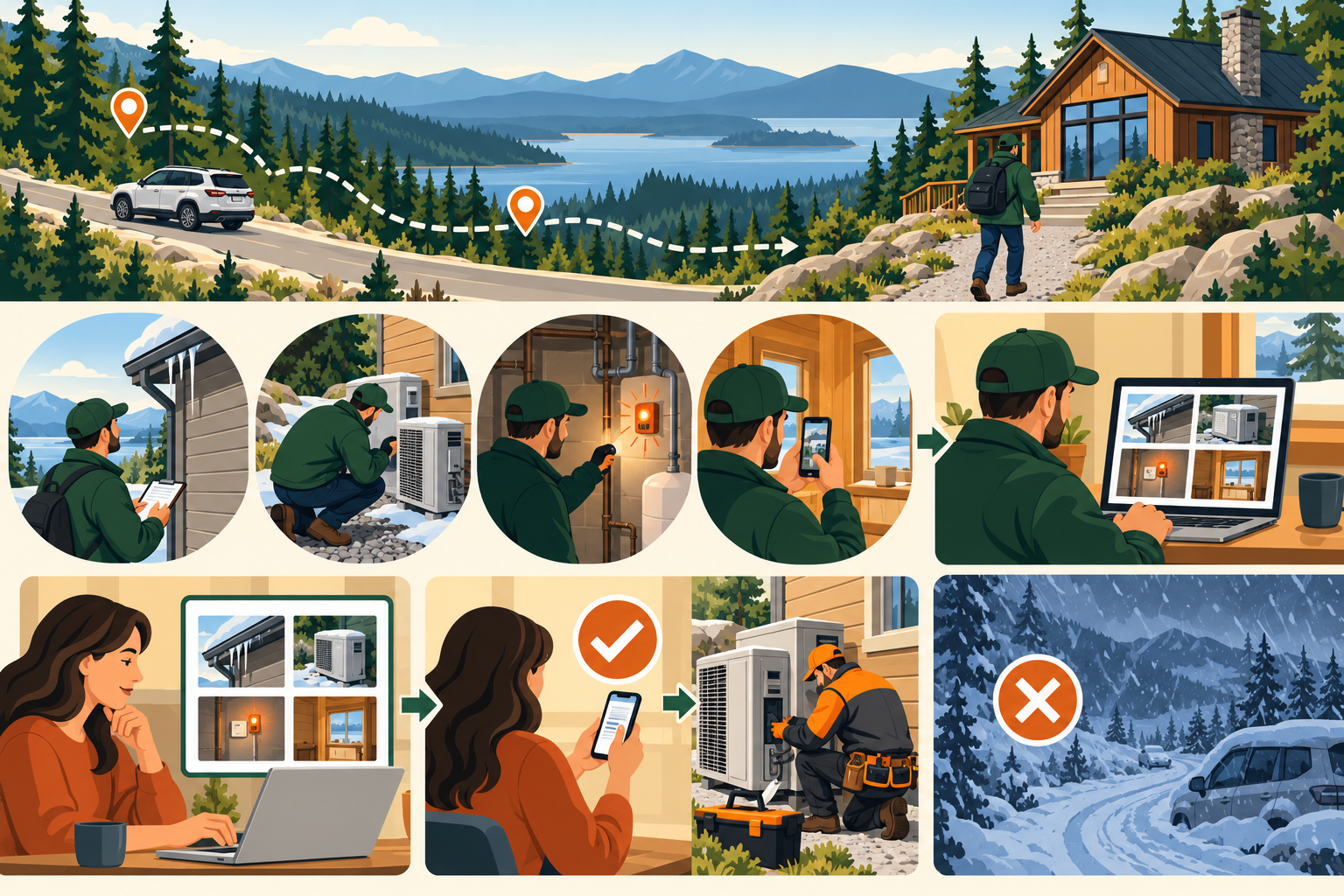
- exterior access, doors, roofline, drainage, and visible damage;
- interior temperature, power, water, leaks, alarms, and obvious freeze signs;
- fuel level and delivery access;
- photographs, meter readings, and a written report;
- snow, storm, vegetation, pest, or unauthorized-entry observations;
- keyholding and access for an approved contractor.
Winter or post-storm visits may need a different scope, equipment, travel time, or response priority. Emergency work should be authorized separately from a routine check.
Price the service by the assumptions
| Pricing driver | Questions to state in the agreement |
|---|---|
| Frequency | How often, in which months, and after what weather event? |
| Travel | Is travel included, charged by distance, or subject to a minimum? |
| Reporting | Photos, readings, written report, insurer documentation, or a phone call? |
| Response | What happens after a leak, freeze alarm, outage, storm, or blocked road? |
| Coordination | Is contractor scheduling, supervision, or emergency procurement included? |
| Access | Who holds keys, codes, gate permissions, and backup contacts? |
There is no standardized North American “home watch” rate. A low visit price may exclude travel, winter access, reporting, after-hours response, or contractor coordination.
Human checks and remote alarms do different jobs
Water, temperature, power, and fuel sensors can provide earlier notice, but they do not inspect the roof, road, culvert, storm damage, pests, or a failed device. Canadian guidance explains that water alarms may notify or support automatic shutoff without identifying the underlying problem. Use technology to complement a human plan where the property’s risk and connectivity justify it.
Coordinate with the insurer and local services
Ask whether the insurer expects inspections or documentation during extended absence. Confirm who can authorize emergency stabilization and who pays for the visit, travel, parts, cleanup, and follow-up. Do not represent an insurer’s example as a universal policy requirement.
A regulator’s suggestion that a neighbor check a vacant home does not establish a required schedule or a professional home-watch scope. The District of Columbia insurance regulator gives neighbor checks as one possible precaution when an unheated property is vacant, while noting that policy terms vary. Confirm any required visit frequency in the actual policy, then price the provider’s route, reporting, callout authority, and response limits separately. A check package cannot guarantee access during a storm or replace specialist diagnosis.
Define the visit and the response authority
Specify whether a routine check is exterior-only or includes an interior walk-through. List the systems the provider will observe: doors and windows, visible water alarms, thermostat readings, leaks, signs of pests, power status, sump equipment, snow load or drainage concerns visible from safe areas, and storm damage. State what will not be inspected, opened, tested, adjusted, or repaired. A home-watch visit is not automatically a home inspection, security patrol, trade service, or insurance compliance guarantee.
Ask for a dated checklist and photographs, plus a reliable contact method if an urgent condition appears. Decide whether the provider may call a plumber or contractor, stabilize an active leak, arrange board-up, or authorize emergency spending. Set the spending threshold, who receives notice, and what happens if the owner cannot be reached. Confirm whether the provider retains keys, how access is logged, and how the home is secured after each visit.
Read provider prices as packages, not market averages
Telluride Home Watch lists $350 per month for two visits and $595 per month for four visits, with scope details for its service in Telluride and Mountain Village, Colorado. The site’s dollar symbol is not accompanied by an ISO currency code. The listed plans imply different per-visit figures, but those should not be applied to a property with different travel, frequency, or reporting needs. Use the page as one local package example and verify current inclusions directly.
Towerview Services lists a 12-visit exterior cabin-check package at $420 and a 12-visit interior-and-exterior package at $480, with emergency response and mileage priced separately. Its page does not state an ISO currency code. These are provider-specific package prices; the source does not establish a national rate or a direct comparison with the Telluride monthly plans. The examples show why a quote needs to name visit count, interior scope, mileage, and emergency charges.
For the property being budgeted, ask local providers to quote the same schedule and reporting level. Separate monthly retainer, per-visit price, travel, holiday or storm callout, mileage, materials, contractor coordination, keyholding, and taxes. Ask what happens if a visit is missed because the road is impassable. Confirm that the provider’s service area covers the property throughout the vacancy season.
Build a dependable vacancy plan
Set a visit schedule from the property’s risks and insurer’s written conditions rather than selecting a frequency from a generic package. A home with active heat, water, and a history of leaks may need a different response arrangement than a drained and shut-down building. Decide which alarms notify the owner and which notify the caretaker. Test communications before departure and keep backup contacts for power, internet, and mobile-service failures.
Give the provider a property map, shutoff locations, utility contacts, emergency contractor list, access instructions, and limits on what may be moved or operated. Separate observation from specialist diagnosis: a caretaker who sees water should report and call the agreed professional, not conceal a system repair inside a routine check. After the season, review reports against invoices and update instructions for any recurring concern.
The annual budget should show visit frequency, regular package cost, travel, emergency response, repair authorization, and owner responsibilities. Ask the insurer what inspections or proof it requires; never treat a provider’s offer or another policy’s wording as a universal coverage rule.
Put reporting, access, and limits in writing
If a property has several buildings or a long private lane, list each structure and access point on the visit map. Ask whether the quoted visit covers all of them or only the main house.
Ask what the owner receives after each visit: a checklist, photographs, temperature or alarm readings, description of visible conditions, and a time stamp. Decide how urgent issues are reported and whether the provider calls one contact or a list in order. Set a response expectation without assuming the caretaker guarantees a particular arrival time during severe weather. Confirm who reports a closed or unsafe road and whether the provider will make a second attempt.
Clarify what access the service needs and how credentials are stored, shared, changed, and returned. State whether the provider may enter outbuildings, operate shutoffs, reset alarms, collect mail, or escort a contractor. Limit each task to the service agreement and the provider’s qualifications. Ask how photos are stored, who can view them, and how long records are retained. The agreement should also identify liability coverage and the process for reporting damage.
Select a plan using the property’s risks
Before hiring a service, list the conditions the visit is meant to detect: loss of heat, active water leak, storm damage, power failure, pest entry, blocked access, or a visible alarm. For each condition, decide whether a caretaker can observe it, whether a specialist must diagnose it, and who may authorize a repair. Some problems require a monitored sensor or professional alarm service in addition to a visual check. Do not assume an interior visit detects a hidden leak or equipment failure.
Ask whether a provider offers a seasonal package, recurring monthly service, or an individual visit, and compare the actual time on site as well as the visit count. Confirm holiday coverage and service availability in shoulder seasons, when owners may expect a property check before roads are fully open. If the same person cannot guarantee coverage, ask how a backup caretaker is briefed on keys, maps, and emergency instructions.
After the first month, review reports and response times with the provider. If a check provides no meaningful information, revise the checklist or schedule. If the owner makes frequent emergency calls, consider whether a planned maintenance visit or repair is more effective. The service budget should reflect the property’s actual risk plan and written agreement rather than an assumed standard home-watch package.
Record the provider’s operating season and holiday coverage alongside the contract. A service that ends before winter or pauses during peak travel may require a backup arrangement.
Before relying on the service in a policy or purchase decision, obtain the written agreement and sample visit report. A marketing description may not state the precise response window, number of interior checks, or repair authorization that matters to the owner.
Measure whether the visits provide useful coverage
After several visits, review whether the reported observations were timely, specific, and actionable. Compare the checklist with the property’s actual risks and ask the provider to report only what can reasonably be observed during the agreed visit. If an alarm or monitoring device is part of the arrangement, test notification and clarify who responds when the owner is unavailable. Record missed visits and how the provider handled road closures. If the owner needs a specialist after most reports, consider whether a planned service call or repair would reduce repeated caretaker charges. This review makes the service schedule more responsive and helps compare renewal quotes on actual performance rather than package names.