
Whole-structure fumigation is a specialized termite intervention, not the default meaning of “termite treatment.” Current U.S. market observations put tenting/fumigation around $1,200–$2,500 or more as a flat project in some markets and roughly $5–$20 per linear foot in another pricing unit. Other sources report broader multi-thousand-dollar ranges. These figures are illustrative and highly dependent on structure, region, product, and provider. Fumigation is not established here as a standard Canadian residential method.
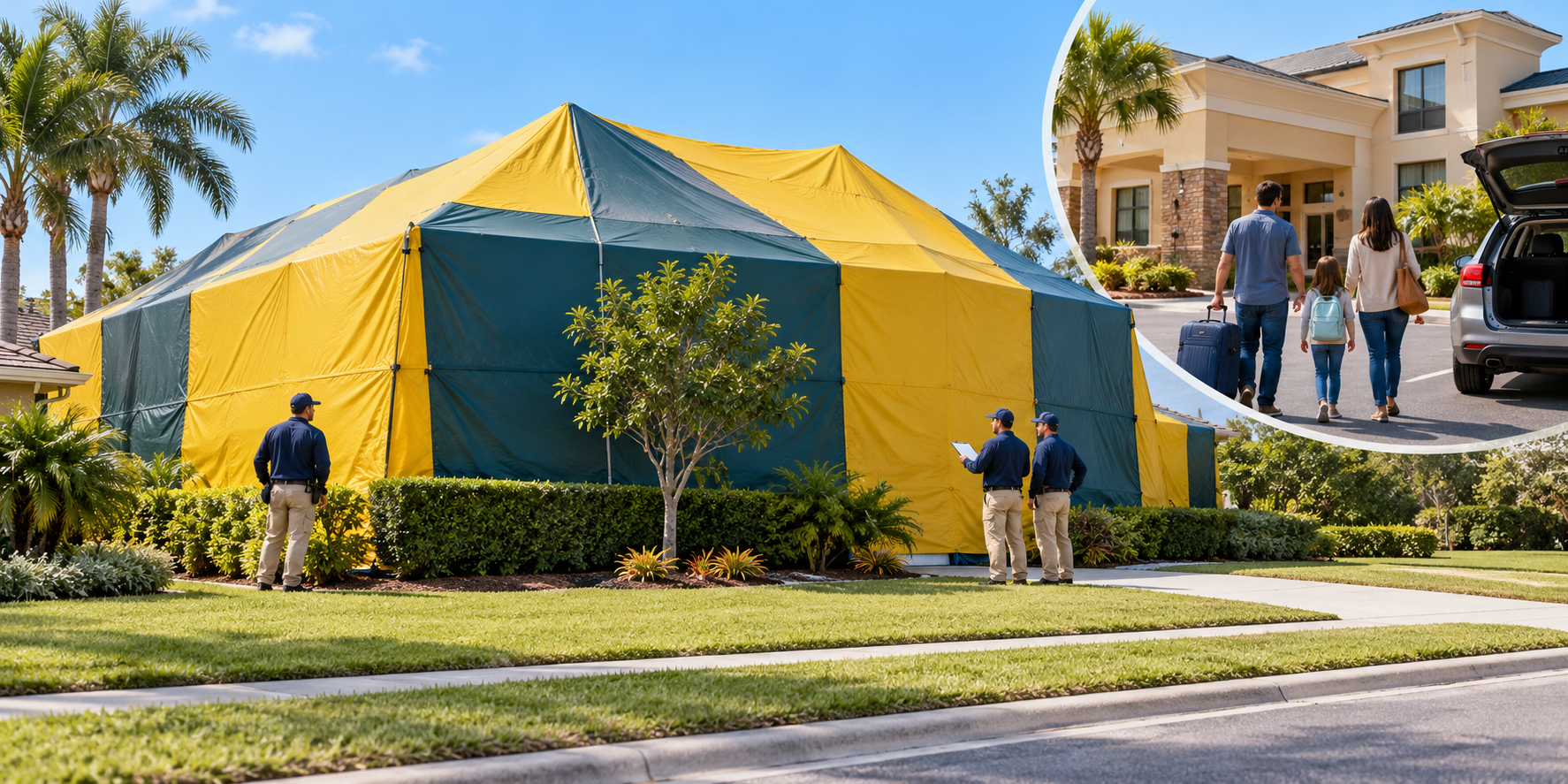
Confirm that fumigation is the question
Fumigation may be considered for particular termite types, building conditions, or inaccessible infestations. It is not interchangeable with a localized liquid treatment, bait system, or wood treatment. A professional must identify the pest and explain why whole-structure work is applicable. Subterranean termite evidence, for example, does not automatically imply tenting.
What the price is buying
The proposal may include:
- pre-treatment inspection and planning;
- measurement of the structure and attached areas;
- tent installation and sealing;
- specialized fumigant application by properly qualified personnel;
- security of the site during treatment;
- required clearance and re-entry process;
- removal or protection of food, medicines, plants, pets, and other items as directed;
- coordination around utilities, access, neighbors, and attached structures.
A low headline total may reflect a smaller treatment boundary or omit preparation, access, or monitoring; identify those assumptions before comparing bids.
Home size is not the only driver
Volume, building shape, attached garages, porches, crawlspaces, additions, roof geometry, access, and the ability to establish a complete enclosure can matter more than floor area alone. Fumigation may also require work around vents, chimneys, fences, solar equipment, utility penetrations, or other features. The provider should identify what must be moved, protected, opened, or left outside the treatment boundary.
Temporary displacement has a real cost
Tenting can require the household to leave the building and make arrangements for pets, plants, food, medication, work, and vulnerable occupants. Count lodging, meals, transportation, storage, and lost use only after the provider gives the actual schedule. Do not infer re-entry timing from another project or from a generic internet estimate. The provider’s current label-based and clearance instructions control.
Safety and legal limits
Fumigation involves a pesticide and a sealed structure. Do not attempt it, alter the enclosure, enter during treatment, or make your own re-entry decision. EPA advises homeowners to review credentials, labels, application precautions, and the agreement; U.S. state licensing and the applicable product label govern. Canadian requirements may involve federally registered products and provincial or territorial rules. This article does not provide application, evacuation, or clearance procedures.
Compare alternatives honestly
Ask why baiting, liquid treatment, wood treatment, or a physical barrier is or is not suitable. Compare the full cost and disruption of each method, including monitoring and follow-up. If the provider recommends fumigation because evidence is concealed, ask whether the inspection can narrow the affected area or whether another specialist is needed. A second opinion is reasonable when the proposed decision is large and the applicability is unclear.
Repair and prevention remain separate
Fumigation may control the target termite but does not restore damaged framing, flooring, trim, drywall, or moisture conditions. It also does not make future entry impossible. Budget for damage assessment, repairs, and any prevention or monitoring plan separately.
What a fumigation proposal should document
Ask the provider to state the suspected termite type, why whole-structure fumigation is being considered, what structures are included, how the enclosure will be installed, how access and attached structures are handled, what preparation is required, and how re-entry is determined. The proposal should identify the licensed or qualified applicator and the current label or regulatory framework it follows.
Food, medicines, plants, pets, aquariums, utilities, alarms, and neighboring access can create preparation or coordination work. The homeowner should receive written instructions from the provider; do not copy a list from another fumigation project because products, labels, building layouts, and local requirements differ.
Ask how measured clearance is documented
For residential sulfuryl-fluoride fumigation, EPA says a certified operator—or someone under that operator’s supervision—must use portable clearance devices to verify 1 ppm or less in the breathing zone of every room before the structure is considered cleared. Ask who performs that measurement, how each room is covered, and what written record confirms clearance. Do not decide that the home is safe to re-enter from elapsed time alone, and do not attempt to measure or interpret clearance yourself.
The source timing statements differ: EPA’s current webpage describes one hour of active aeration followed by 6–8 hours of passive aeration, while the EPA-accepted July 2024 Vikane label lists minimum no-entry periods of 12 hours for Procedure 1 and 14–24 hours for Procedure 2, depending on conditions. Those statements are not a universal schedule and this article does not reconcile them. The current product label, measured clearance, and certified applicator’s instructions govern. Florida’s regulator says structural fumigation in Florida may be performed only by certified applicators; verify the applicable credential in the property’s jurisdiction.
Compare the project as a sequence, not one fumigation number
Ask for the proposal to identify the provider’s charge and any separate household costs that are not included. Confirm whether taxes, enclosure removal, and a written completion report are included instead of assuming they are. The cost components can be organized this way:
| Stage | Budget question |
|---|---|
| Applicability and inspection | Is species and building suitability established, and is a separate inspection fee credited? |
| Preparation and enclosure | Are attached spaces, difficult sealing, moving contents, and preparation labor included? |
| Treatment and monitoring | Which structure is included, and what access or utility coordination changes the scope? |
| Clearance and return | Who records measured clearance and communicates re-entry, and are additional visits included? |
| Household displacement | What are lodging, pets, meals, travel, storage, work disruption, and lost-use costs for this schedule? |
| Repair and prevention | Which wood, moisture, finish, or monitoring work is outside the fumigation contract? |
A simple structure with a clear boundary may avoid some access and preparation work; connected porches, garages, additions, hard-to-seal roof geometry, contents, or neighboring access can add coordination. Ask the provider to name the physical assumptions behind its price rather than relying on floor area alone. Keep lodging, travel, meals, pet or plant care, work disruption, and temporary storage in a separate household budget. Fumigation does not restore damaged wood, correct moisture, or certify the structure, so price those repairs and prevention separately.
Confirm who pays for an added visit or schedule change if weather, incomplete preparation, access, or clearance delays the return date. Do not reserve nonrefundable lodging based on a generic fumigation duration.
Compare fumigation with an alternative only after the provider explains which methods fit the evidence. A lower localized-treatment figure is not comparable if it omits follow-up, monitoring, or inaccessible areas that the fumigation proposal includes. Keep the options conditional when the species or affected boundary is still uncertain.
Do not convert a per-linear-foot quote into a flat project price using floor area or a different provider’s rate. The published examples use different units and markets, and a building’s measured boundary, attachments, sealing difficulty, preparation, and clearance scope can change what the unit covers. Ask whether the linear measurement follows the structure perimeter or another boundary, whether attached areas and minimum charges are included, and what preparation is excluded. Then request the same project total from any second provider. A unit rate is useful only when both providers define the same treatment boundary and household responsibilities.
Also ask whether the quoted amount is fixed, an allowance, or subject to a post-inspection measurement. If the final price depends on the enclosure or access after setup, identify the approval point before the household leaves and contents are protected. A written ceiling or change-order rule makes a specialized estimate easier to budget.
Bottom line
Use U.S. fumigation prices only as broad orientation and require a written explanation of why tenting fits the identified termite condition. Budget for the complete displacement and treatment scope, ask how room-by-room measured clearance is recorded, and follow the current applicable label and qualified provider’s instructions. Do not infer a universal re-entry time or assume tenting is a standard Canadian method.