
Sheet vinyl and linoleum can look like simple material choices, but installation is sensitive to seams, room geometry, substrate condition, old-floor removal, and the desired finish. Confirm which product is being quoted; the names are not interchangeable for every specification or installation method.
What the price includes
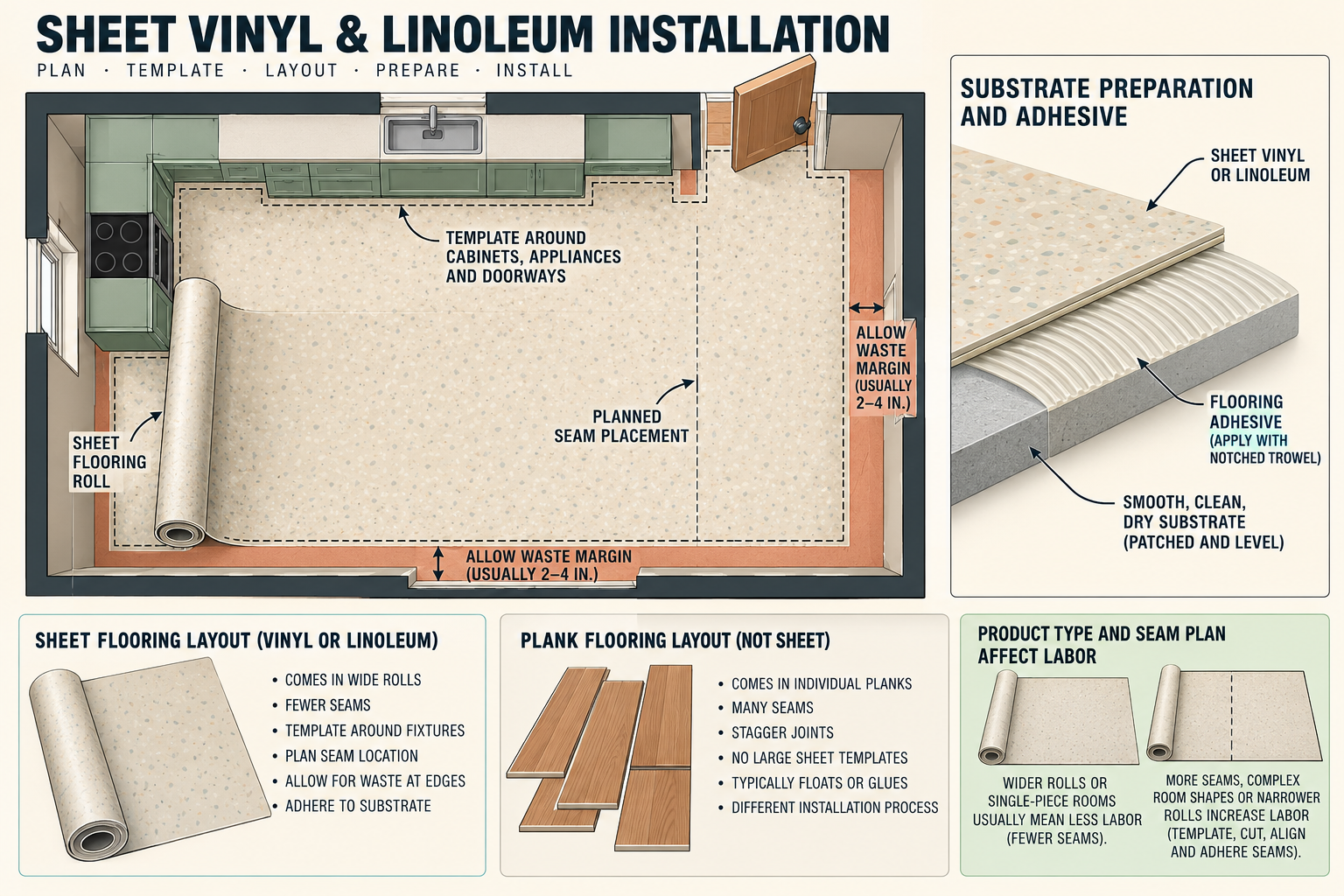
Separate material from pattern matching, templating, cutting, adhesive, seam work, perimeter details, preparation, removal, disposal, transitions, and trim. Cabinets, appliances, irregular rooms, and penetrations can increase layout labor. A smooth-looking result may require more substrate preparation than a basic material price suggests.
Canadian market observations place vinyl and linoleum among lower-cost flooring examples, including a $466 total in a 550-square-foot sample. The sample’s scope and exact material distinction are unresolved. Do not present that total as a national installed rate or convert it into U.S. dollars.
The existing floor matters
An installer should assess flatness, bond, moisture, and contamination before recommending an overlay. Manufacturer instructions control whether a particular product can cover an existing floor. The surface must not be treated as suitable simply because it looks intact.
Questions for the installer
Ask whether the quote includes old-floor removal, disposal, patching or leveling, furniture and appliance handling, adhesive, seam placement, transitions, baseboards, and cleanup. Confirm who supplies the product and how extra preparation is priced if the substrate is not ready.
Bottom line
Sheet goods can be economical when the room is accessible and the substrate is ready. Complex seams, poor preparation, moisture, or demolition can erase the material advantage. Compare the complete installed system.
Vinyl and linoleum are not interchangeable labels
Retail listings sometimes use vinyl and linoleum loosely, but they are different finish families with different products, installation details, and maintenance expectations. Tell the installer the exact product rather than relying on a generic “sheet flooring” allowance. The material, backing, adhesive, seam treatment, and manufacturer requirements all affect the quote.
Sheet goods can reduce the number of visible seams in an open room, but that benefit depends on room dimensions, roll width, doorways, closets, and pattern direction. A room that looks simple from above can require careful layout around cabinets, islands, toilets, stairs, or irregular walls. Seams also need a suitable substrate and professional finish expectations.
Why preparation dominates the result
Sheet flooring can telegraph ridges, joints, holes, and adhesive residue. The base may need cleaning, patching, smoothing, or replacement before the sheet is installed. A soft or moving subfloor can affect the finish and seam performance. Moisture can affect the substrate, adhesive, or product suitability.
Ask whether old flooring, adhesive, and underlayment are removed or left in place. Do not assume that a new sheet will hide every irregularity. If the existing material or adhesive may contain asbestos, ordinary removal should pause for qualified local assessment. U.S. and Canadian requirements differ, and appearance cannot identify a specific material.
Cost scenarios
A simple project has a ready, accessible substrate, a product that fits the room, limited seams, and no major furniture or removal work. A typical project includes removal, disposal, preparation, adhesive, seam or edge work, transitions, and appliance or furniture handling. A complex project includes multiple layers, extensive smoothing, difficult corners, a custom pattern, a large room with limited roll width, or a moisture concern.
The material price may be lower than a plank or tile system while the labor is more specialized. Compare total installed cost, the finish standard, and repairability rather than assuming sheet goods are automatically the inexpensive option.
Maintenance and future decisions
The selected product’s care, seam, water-exposure, and warranty requirements should be documented. A damaged sheet may require a patch or a larger replacement because matching material and seam visibility matter. Keep product details and spare material where possible. If future access to plumbing, appliances, or a crawl space is likely, discuss how the finish will be repaired.
Quote checklist
Ask for the exact product, material quantity, waste, roll or seam layout, adhesive, substrate preparation, removal, disposal, moisture assumptions, appliance and furniture responsibility, transitions, baseboards, cleanup, and repair policy. Compare bids that promise the same seam and finish result.
The right sheet-flooring budget accounts for the surface that must be created before installation and for the room details that make a continuous finish succeed.
Understand the layout before pricing the roll
Sheet flooring is measured by the room’s actual dimensions, roll width, seam plan, pattern direction, openings, and waste. A large room may need a seam even when the visible area seems simple. Cabinets, islands, appliance locations, closets, thresholds, and irregular walls can change the template and the cutting time. Ask to see the assumed layout or at least have the seam and waste assumptions written down.
The product also needs to be identified precisely. True linoleum and sheet vinyl are not interchangeable labels, and backing, adhesive, seam treatment, and care requirements can differ. A contractor should price the named product rather than substituting a generic “vinyl or linoleum” allowance.
Separate a ready base from a repaired base
The finish can reveal ridges, joints, adhesive residue, or uneven patches below it. Preparation may include removal of old layers, cleaning, patching, smoothing, moisture assessment, or replacement of underlayment. If an existing floor is proposed as the base, ask why the product manufacturer permits that assembly and what condition must be present before installation.
If older sheet material or adhesive may contain asbestos, stop ordinary removal for qualified local assessment. U.S. and Canadian guidance differ, and the material cannot be identified from appearance alone. Hazard assessment or abatement is separate from ordinary finish installation and should not be improvised inside a low-cost removal line.
Think about repairs and future access
A continuous sheet can reduce visible seams in the right room, but a later patch may still show because of pattern, color, wear, and seam placement. Keep product details and spare material where possible. If plumbing, appliances, or a future remodel may disturb the floor, discuss access and how the finish will be repaired.
Compare the complete sheet-flooring scope with LVP/LVT or another alternative. Include preparation, removal, disposal, transitions, trim, appliance handling, and future repair. Sheet goods can be economical when the base is ready and the layout is straightforward; specialized layout or extensive preparation can change that result.