
Luxury vinyl plank (LVP) and luxury vinyl tile (LVT) are product families, not one installation price. The budget changes with wear layer and core, plank or tile format, floating or attached installation, pattern, preparation, removal, and transitions.
Canadian market context
A current Canadian flooring guide does not separate luxury vinyl plank or luxury vinyl tile from other vinyl products. It reports a 550-square-foot vinyl-or-linoleum example at $466, but that combined figure is not an LVP/LVT installed rate and should not be used to price this project. Use a quote based on the named product, installation method, measured area, and preparation scope rather than borrowing a generic vinyl number.
Preparation is part of the system
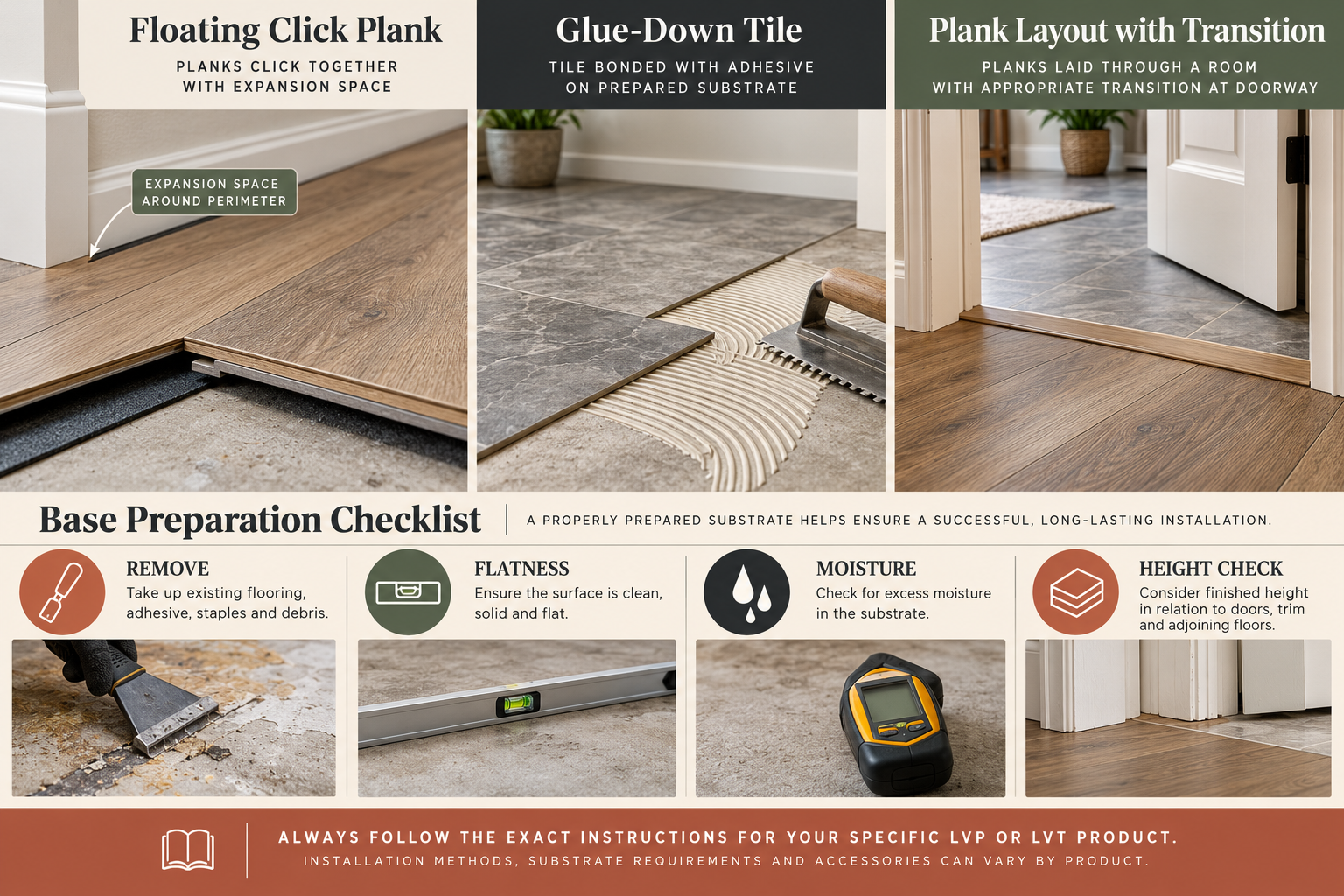
Shaw’s installation guidance says the existing floor may be usable in some cases when it is flat, clean, and in good condition. It also notes that removal, moving large items, and subfloor preparation may be separate from the initial price. Perimeter expansion space varies by vinyl type, so the product’s current instructions control.
Subfloor preparation is product-specific. For example, Lions Floor’s April 2026 WPC guide sets a flatness limit of 3/16 inch over 10 feet or 1/8 inch over 6 feet for the products it covers. Those figures are not universal LVP/LVT tolerances. Ask which flatness check and correction allowance apply to the exact product in the quote.
Do not use an overlay allowance to hide moisture, movement, contamination, loose layers, or an unsuitable floor height. Water-prone locations also require a product specifically designed for that environment; “vinyl” by itself is not a universal approval.
What to put in the quote
Ask for material, waste, delivery, old-floor removal, disposal, substrate preparation, leveling, adhesive or underlayment, transitions, baseboards, furniture handling, and cleanup. Confirm how doors, appliances, stairs, and floor-height changes will be handled.
The decision
Floating LVP/LVT may be attractive when the existing assembly meets the named product requirements. Removal may be the better budget when layers are unsound or height and moisture concerns would create future repair costs. Compare complete scopes rather than the plank price alone.
Two installation systems under one category
Luxury vinyl plank and luxury vinyl tile share resilient construction but may differ in format, layout, cuts, and appearance. More important than the label is the installation system: floating click, glue-down, or another manufacturer-approved method. The system determines adhesive, underlayment, subfloor preparation, access, and repair implications.
A floating product can reduce some fastening or adhesive labor, but it still needs a sufficiently flat, clean, dry, and stable base. Glue-down work can have a different preparation and installation profile and may be more sensitive to substrate condition and adhesive requirements. Ask for the exact product and method before comparing bids.
What changes the installed cost
Material cost changes with wear layer, construction, format, finish, pattern, and availability. Labor changes with room geometry, cuts, transitions, closets, stairs, appliance removal, furniture, and whether old flooring must be removed. Plank direction, borders, tile-like grids, and detailed transitions can create more layout time than a simple rectangular room.
Preparation may include removal, adhesive cleanup, patching, leveling, moisture assessment, underlayment, or replacement of damaged subfloor. A resilient finish can be visually forgiving in some situations, but it does not make a moving, wet, or contaminated base suitable. Water-prone areas can also have product-specific installation and warranty limits.
Simple, typical, and complex projects
A simple project has a ready substrate, an accessible room, a basic layout, and no unusual removal or trim work. A typical replacement includes demolition, disposal, minor preparation, transitions, baseboard coordination, and occupied-room protection. A complex project includes several existing layers, difficult adhesive, stairs, irregular rooms, moisture or flatness correction, or a product-specific installation constraint.
Ask what the quote assumes about the existing floor. Some products allow installation over a named existing surface only when it is sound and prepared. That permission does not cover floating, damaged, damp, or cushion-backed materials in every case. Verify the current product instructions rather than relying on a generic resilient-floor rule.
Repair and ownership considerations
LVP and LVT can be attractive when a homeowner wants a replaceable finished surface, but repair access depends on the product, installation direction, and surrounding furniture or cabinets. A discontinued pattern may be difficult to match. Record the product, color, lot, installation date, and room layout; keep spare pieces when practical.
Compare the product with laminate, sheet goods, or engineered wood on the complete system: preparation, moisture, installation method, transitions, sound, repair, maintenance, and future replacement. Do not compare material prices without including the substrate and restoration work.
Quote checklist
Ask for the exact product, installation system, adhesive or underlayment, removal, disposal, leveling, moisture assumptions, layout, waste, transitions, baseboards, door and appliance adjustments, stairs, furniture, protection, taxes, and cleanup. Ask how concealed substrate damage will be priced and who verifies product compatibility.
The useful LVP/LVT budget is the one that makes system conditions visible. A low material number is not a saving if the installation fails the product’s substrate, moisture, or height requirements.
Decide which resilient system is being priced
Floating click products and glue-down products can have different labor and preparation requirements. LVP and LVT also differ in layout, cut pattern, and the way a room’s edges are finished. Ask for the exact collection, format, installation method, adhesive or underlayment, and perimeter requirement. A bid that says only “vinyl plank” leaves too much of the scope undefined.
Shaw’s consumer guidance provides a conditional example of installing some LVT/LVP over an existing floor when it is flat, clean, and in good condition. It directs the installer to the applicable product instructions and does not establish a universal overlay rule. It also notes that removal, moving large items, and subfloor preparation may be separate price items.
Layout and preparation can reverse the material advantage
An open rectangle with a ready base may be efficient. A room with closets, islands, cabinets, angled walls, multiple doorways, stairs, or a detailed plank direction takes more measuring, cutting, and transition work. Existing adhesive, a soft subfloor, moisture, or a height conflict can add removal, patching, leveling, or a different installation method.
Water-prone locations require the named product’s suitability and installation instructions. “Vinyl” is not a blanket approval for every environment, underlay, adhesive, or substrate. If the base is damp or moving, ask for the condition to be corrected or assessed before the finish is installed.
Keep a repair plan
Record the product, color, lot, installation direction, and room layout. A damaged plank or tile may be replaceable, but cabinets, fixed trim, and the direction of the installation can limit access. Future matching can be difficult after sunlight and wear change the visible surface.
Compare LVP/LVT with laminate, sheet goods, or engineered wood on preparation, installation, moisture, sound, transitions, repair, and future replacement. The right choice is the complete system that fits the room, not the product with the lowest retail price.