
Rot or termite damage can remain hidden until the framing is exposed, so a visible-area price can leave major scope differences uncounted. Comparable national installed ranges are not established; compare proposals that separate cause treatment, structural repair, concealed-condition rules, access, and finish restoration.
Published price context
For one common repair component, HomeGuide’s U.S. subfloor guide, dated September 3, 2024, reports US$350–US$1,000 per replacement floor joist. This does not include pest or moisture treatment, concealed damage, connected sill or beam work, temporary support, or finish restoration; do not treat a per-joist estimate as the price of the whole repair.
Treatment is not structural reconstruction
Stopping a leak, drying an area, treating insects, or removing damaged material addresses the cause or environment. Replacing or reinforcing joists, beams, posts, sills, rim framing, and load-bearing walls restores the structure. A pest-control or waterproofing quote is not a framing-repair budget.
HUD inspection guidance identifies fungal or insect attack, deflection, warping, and structural members as inspection concerns. The visible damage may not show its full extent until finishes or surrounding material are opened. Do not assume damaged wood can remain or that all nearby wood must be replaced without project-specific assessment.
Why hidden extent changes the price
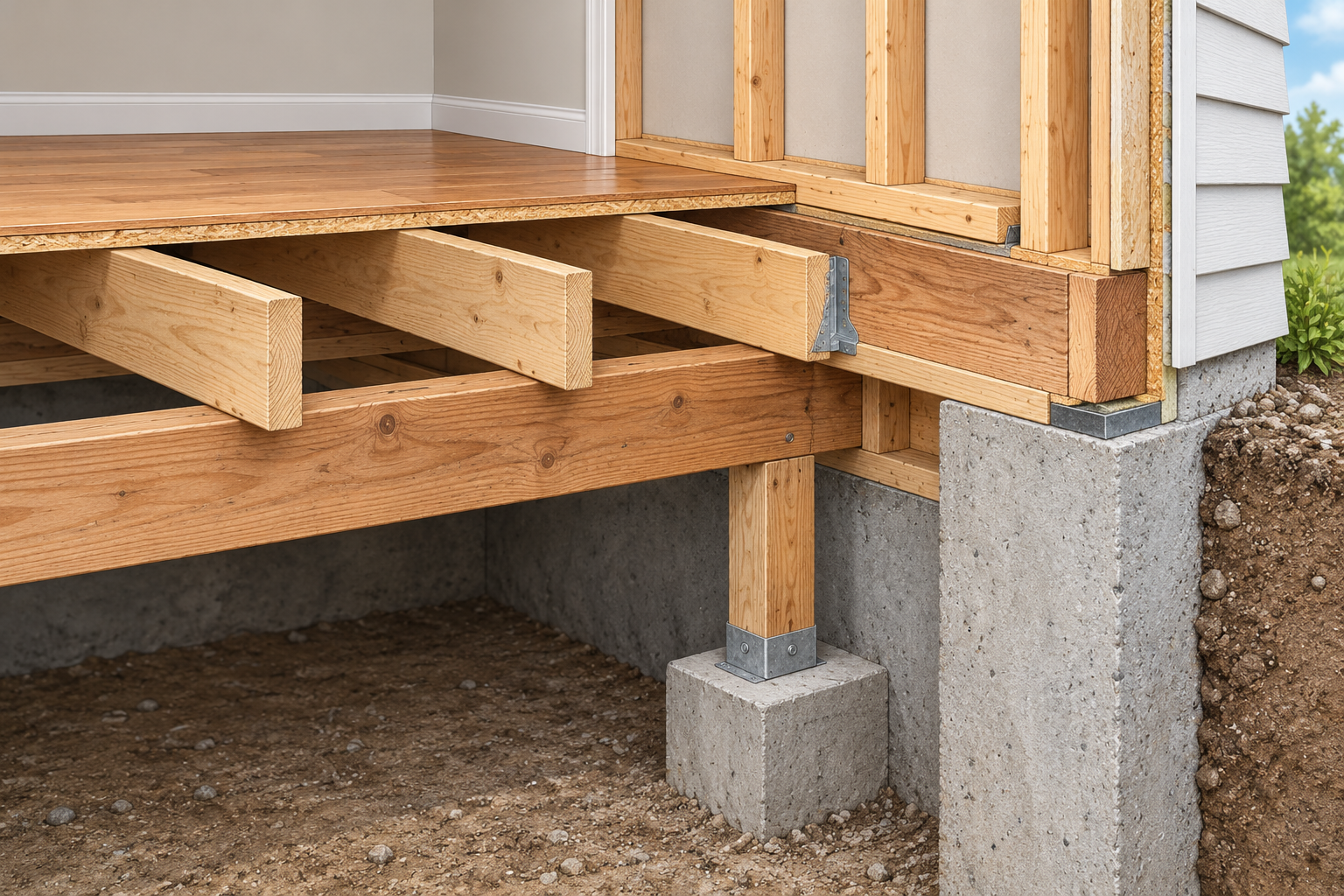
Repair may involve selective exposure, temporary support, sistering, localized replacement, full member replacement, connections, footing or bearing correction, utility relocation, demolition, disposal, insulation, subfloor, siding, drywall, flooring, and finish restoration. A small area of rot at a sill can affect joist ends and wall framing; a termite path can be more extensive than the initial opening.
The best quote separates a defined base scope from an allowance or unit price for concealed conditions. “Replace as needed” is not a useful control unless the contract defines how need, quantity, documentation, and approval are determined.
Cost drivers and scenarios
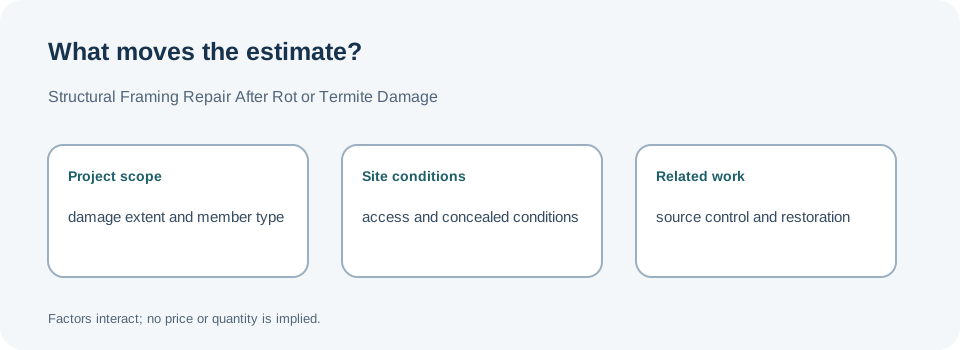
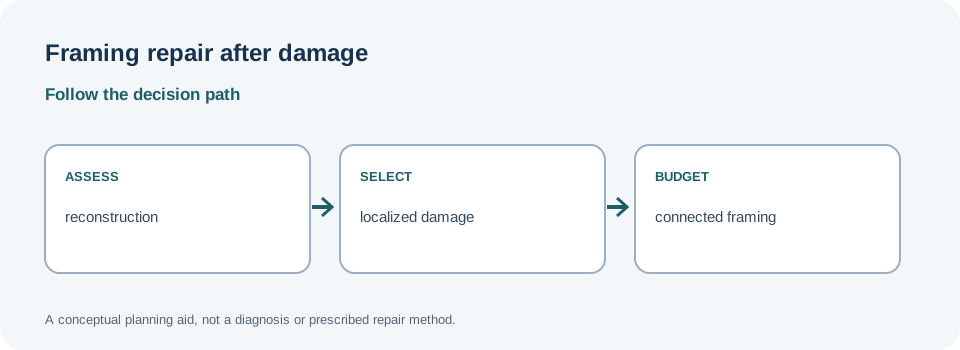
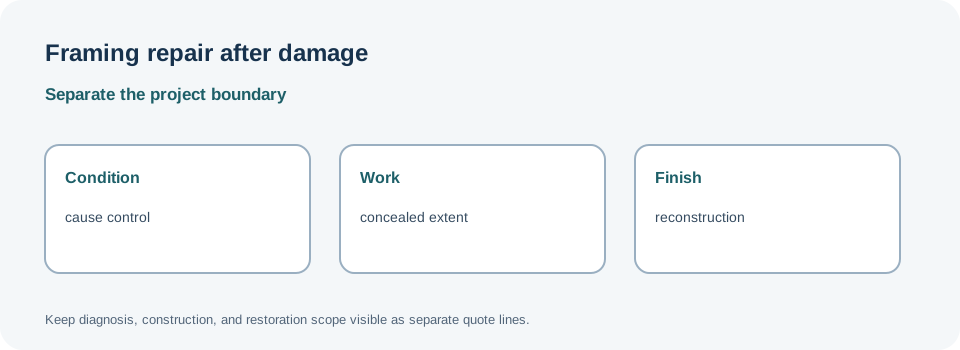 Drivers include member type and importance, damage extent, access, finishes, temporary support, utilities, moisture or pest source, engineering, permits, disposal, material matching, and restoration.
Localized repair: Exposed damage affects one or a few accessible members and the cause is controlled. Price structural repair and treatment separately.
Moderate reconstruction: Several members, a sill or rim line, or a wall section require opening and support. Carry a concealed-damage allowance and coordinate the source correction before closing finishes.
Broad damage: Beam, floor, post, wall, and foundation connections are affected, or the source remains active. Budget for a staged structural project, not a series of isolated patches.
Quote questions
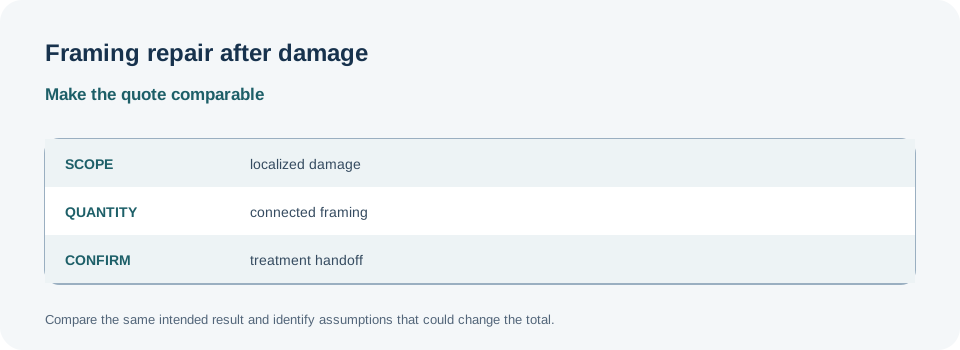 Ask what was exposed, which members are included, how temporary support is handled, what cause correction is required, who performs pest or moisture work, whether engineering or permits apply, how hidden damage is measured and approved, and what finishes are restored. Keep insurance or legal responsibility questions separate from the physical scope; coverage and liability depend on documents, policy, and local law.
The economically sound sequence is to control the cause, verify the remaining structure, repair the load path, and restore finishes—while keeping each cost boundary visible.
Use a controlled concealed-damage allowance
Ask the contractor to define the base opening, the members included, the unit price for additional length or members, photo documentation, and who authorizes the change. A contingency that simply says “unknown damage” may be necessary but is difficult to compare. The allowance should connect to a measurable discovery.
For a short horizon, a bounded reconstruction may be sensible if the cause is stopped and the surrounding structure is sound. For a long horizon, include the value of source correction, inspection access, durable connections, and avoiding a second opening. Treatment, remediation, and structural reconstruction should be coordinated without pretending they are one price.
Before closing a damaged framing repair
Confirm what was exposed, what was treated or corrected, which members were replaced or reinforced, and how additional hidden damage is measured. Ask for photos and a written approval threshold before finishes close the work. A general contingency is difficult to compare when it has no quantity or discovery rule.
Separate pest treatment, moisture correction, structural reconstruction, and finish restoration. For long-term ownership, retain access and records of the repaired load path. For short-term ownership, a bounded repair can be rational when the cause is stopped and the surrounding structure is documented as sound.
Choose the scope from the load path, not the visible stain
The cheapest-looking option is not always the smallest safe scope. If a joist end, sill, post, or beam has lost bearing, a surface treatment or short patch may leave the load path unresolved. Conversely, replacing every nearby member without documenting its condition can turn a localized repair into unnecessary reconstruction. The useful question is what must be opened and restored so the supported loads have sound bearing and connections after the cause is controlled.
Before comparing totals, ask whether the proposal includes the member’s bearing surface, fasteners or connectors, temporary support, and inspection of adjacent members. If a post bears on a deteriorated sill or a beam bears on a compromised wall, repairing only the most visibly damaged piece can create repeat work. This is also why an engineer or qualified structural professional may be needed when damage affects a primary beam, concentrated support, multiple levels, or a changed load path.
A practical comparison
Compare one quote that repairs only exposed wood with another that includes opening, cause correction, structural work, and restoration. The first may look cheaper because it leaves discovery, treatment, or finishes outside the number. Normalize both to the same endpoint: dry and controlled conditions, sound structure, documented hidden-condition rules, and a defined restored finish. If an item remains uncertain, retain it as a measurable allowance rather than treating an unexplained lump sum as a firm price.
Sequence cause control, exposure, and reconstruction
The order matters economically even when different trades perform the work. A leak, drainage problem, or active infestation may need to be controlled before structural members can be evaluated or closed. Selective exposure then establishes the extent of damage and the condition of bearing and connections. Only after that can the structural repair be compared with localized reinforcement, member replacement, or broader reconstruction. The article’s sources support this distinction without providing a universal repair sequence for every property.
Ask which contractor owns each handoff and what evidence is required before finishes are restored. Treatment, remediation, demolition, structural reconstruction, disposal, insulation, subfloor, siding, drywall, and flooring can be separate scopes. A treatment-only quote is not a structural repair budget, and a structural quote that leaves the active cause unresolved may not be durable.
Make hidden damage measurable
Define the opening, members included, accessible and inaccessible areas, photo documentation, unit price for additional length or members, and approval threshold. If damage affects a primary beam, concentrated support, multiple levels, or a changed load path, professional structural input may become a material prerequisite. Do not infer that nearby wood is sound or unsound from the visible stain alone.
For long-term ownership, include source correction, inspection access, repair records, and the cost of preventing a second opening. For short-term ownership, a bounded reconstruction may be rational when the cause is stopped and the surrounding structure is documented. The defensible comparison is the same corrected endpoint, not an unexplained contingency or the smallest visible patch.
Make the load path and source-control handoff explicit
Rot or termite damage can affect a joist end, sill, rim, post, beam, wall, roof member, or several connected components. The repair scope should identify what carries load after reconstruction, how temporary support is handled, and which bearing or connection surfaces are restored. A treatment provider may control the infestation while a structural contractor rebuilds the members; the bid should state when the structure is ready to close and who verifies the handoff.
Moisture or pest source correction may include work outside this category, such as drainage, roofing, plumbing, envelope, or treatment. Keep those costs separate but visible. If finishes are opened, include insulation, subfloor, siding, drywall, flooring, disposal, and cleanup. A narrow structural price can be reasonable when the source is controlled and the damage is documented; it is not a complete project price if the cause or access is left unresolved.
For long-term ownership, preserve photographs, treatment records, repaired members, and future inspection access. For short-term ownership, document the remaining uncertainty and the condition accepted. A measurable concealed-damage rule protects the budget better than either a cosmetic patch or an unlimited “replace as needed” promise.
Match the repair boundary to the damage pattern
Damage at one joist end or stud may support a localized repair, while repeated damage at bearing lines, sill interfaces, beam ends, or roof connections can indicate a broader exposure or source problem. Ask for the inspected boundary, the members considered sound, and the evidence supporting that conclusion. If the repair depends on drying, treatment, drainage, or a separate envelope project, state the condition required before reconstruction and who verifies it.
The final comparison should include the same endpoint: sound and connected framing, controlled source, protected opening, and restored finishes or a documented unfinished condition. For long-term ownership, compare prevention and inspection access with the cost of another concealed opening. For short-term ownership, a bounded repair can be reasonable when the source is controlled and the limits are recorded. This keeps a treatment allowance, a structural repair, and a full restoration from being mistaken for equivalent prices.