
Wall reinforcement prices depend on the wall, movement, system, access, and whether the project stabilizes in place or changes the wall position. Current evidence does not establish comparable national installed ranges; request a defined design and compare the same wall length, excavation, temporary support, and restoration.
Published price context
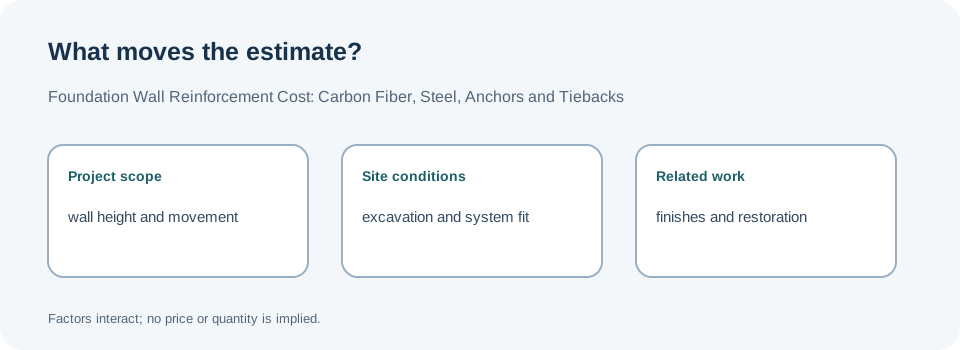 HomeGuide’s U.S. foundation guide gives US$5,000–US$10,000 for stabilization using braces or anchors. It does not price carbon-fiber reinforcement, steel members, tiebacks, or straightening separately. Use it only as a broad, attributed stabilization example; compare the wall length, design, access, temporary support, and restoration in the actual proposals.
Compare the purpose before the product
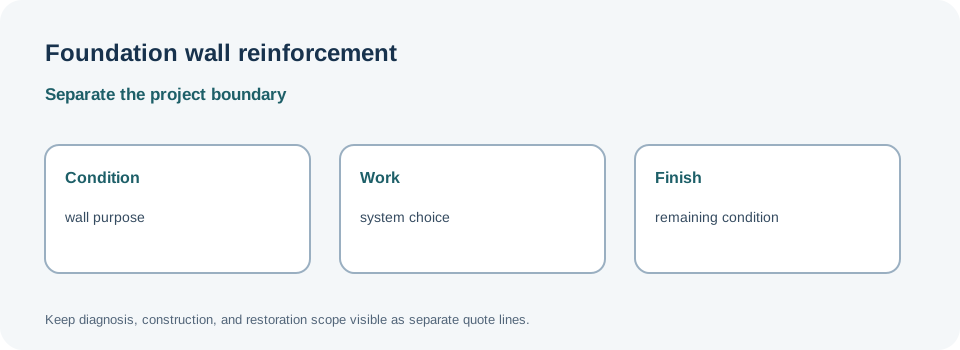 A reinforcement proposal may be intended to stabilize a wall in its existing position. An anchor or tieback may transfer lateral load to a resisting system. Steel or a composite system may be part of either approach. Straightening adds a movement objective, while reconstruction replaces the failed wall section. These are different economic outcomes.
The cause may include soil or water pressure, frost, construction condition, connected framing, or settlement. The same product is not automatically suitable for every wall. HUD inspection guidance supports evaluating material, distress pattern, bulging or leaning, deterioration, and connected structural components as part of a system.
Why material-only comparisons fail
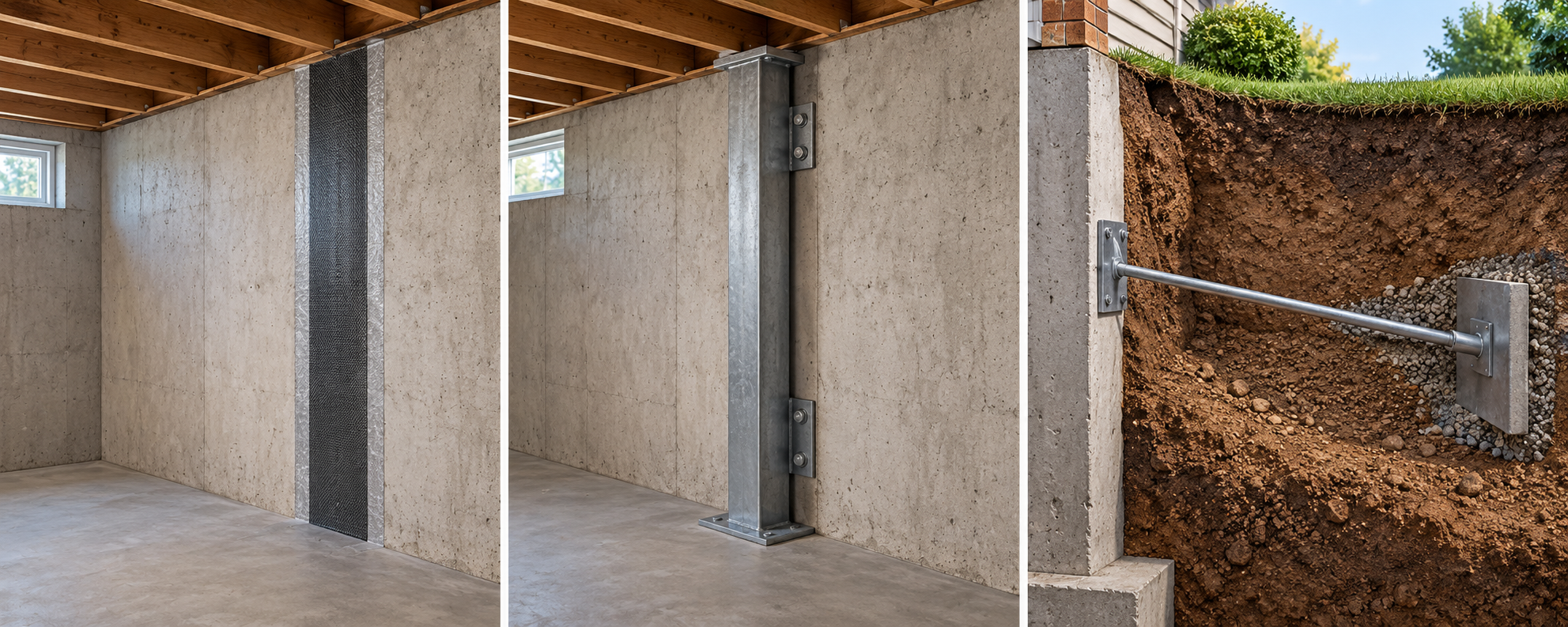
Carbon-fiber-type systems may have low material volume but still require preparation, bonding conditions, finish removal, and a compatible wall condition. Steel members require handling, attachment, and finish planning. Anchors and tiebacks can involve drilling, exterior access, soil, excavation, or property constraints. The installation and design context can outweigh the product line.
Ask whether the price includes assessment, engineering, preparation, number and spacing of reinforcement elements, excavation, shoring, drainage, waterproofing, finishes, permits, and monitoring. Manufacturer marketing can describe a system without establishing that it is the right solution for this wall or that it offers a universal advantage.
Scenarios
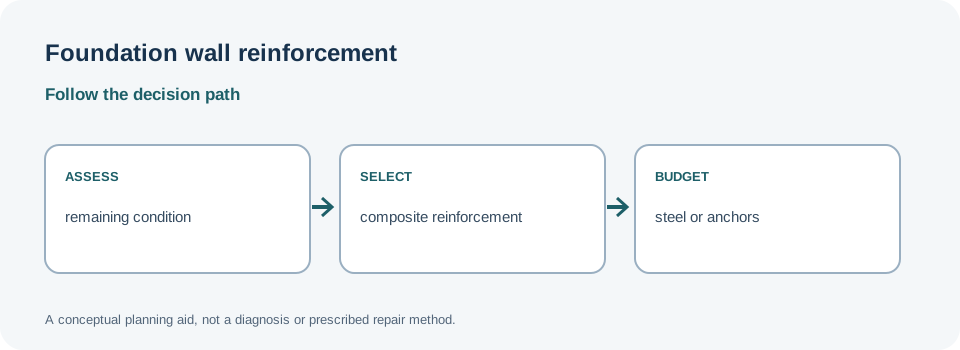 Limited stabilization: A defined wall area is accessible from the interior, movement is bounded, and no straightening is proposed. The quote should explain the evidence for a stabilization-only outcome.
Multi-element repair: Several reinforcement points or anchors, wall preparation, and finish restoration are needed. Compare the wall length and system quantity rather than the brand name.
Complex correction: The wall has substantial displacement, exterior excavation, groundwater, connected framing damage, or a reconstruction alternative. Price stabilization, straightening, and rebuild separately when the design allows.
Stabilize or straighten?
Stabilization can be the lower-disruption choice when preserving the current wall position is acceptable and the underlying loads are controlled. Straightening may improve geometry but can add temporary support, excavation, jacking, finish cracking, utility coordination, and uncertain restoration. A proposal should say what movement is expected and what damage is excluded.
Drainage and grading are related but distinct. Below-grade water management belongs to its own category, and site drainage belongs to site work. If those are omitted, ask whether the reinforcement is being treated as a complete correction or only a structural response.
Quote checklist
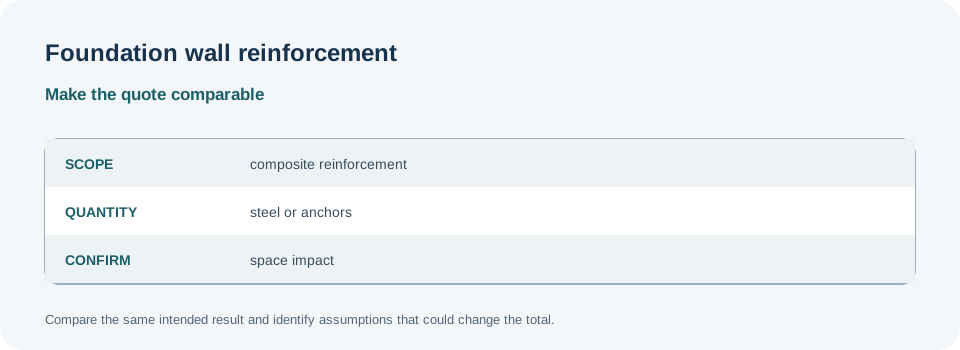 Normalize wall material and length, observed condition, access side, system type and quantity, engineering, permits, excavation, temporary support, water-management exclusions, restoration, monitoring, warranty, and concealed-condition rules. A proposal that includes only a named product is not comparable with one that includes diagnosis and restoration.
The right choice is the system that matches the intended structural outcome and the site—not necessarily the one with the lowest material price.
Compare what the system leaves behind
Ask whether the wall remains displaced, whether the system is accessible for later inspection, and whether the pressure or moisture condition is corrected. A reinforcement product can be a valid response while still leaving excavation, drainage, finishes, or other structural work outside the contract. Make those residual items explicit before comparing warranty language.
For a short ownership horizon, lower disruption may outweigh straightening when the condition is stable and documented. For a long horizon, a broader correction may be worth the cost if it avoids repeated access or continuing movement. The decision should be based on outcome, site fit, and total scope rather than a product comparison alone.
Distinguish a method allowance from a complete budget
A reinforcement quote should identify preparation, element count, attachment or bonding conditions, access, surface repair, engineering, and warranty. If anchors or tiebacks are proposed, ask about exterior access, soil assumptions, property constraints, and restoration. If straightening is optional, price it separately so a homeowner can see what additional outcome the extra work buys.
The cheapest system can be poor value when it does not address continuing movement or requires a second mobilization for finishes and drainage. A higher first cost can be reasonable when it includes a defined structural outcome and cause correction. Neither conclusion follows from the material name; it follows from the complete scope and residual uncertainty.
Make the system and outcome explicit
Ask whether the proposal stabilizes, straightens, or reconstructs the wall; what wall length and material are included; and whether excavation, drainage, shoring, engineering, permits, finishes, and monitoring are priced. Compare the same outcome across systems. A composite, steel, anchor, or tieback quote is not complete if it leaves the pressure source or access work undefined.
The useful ownership question is what condition remains and whether the wall can be inspected later. Lower disruption may favor a bounded reinforcement, while a broader correction may reduce repeat work. Keep that tradeoff visible rather than declaring one system universally better.
The connection and bearing details matter
A reinforcement product is only one part of a wall system. The estimate should identify how loads reach the reinforcement, what it bears against, how anchors or plates attach, and whether excavation or interior removal is required. A wall may remain displaced after reinforcement; that can be acceptable when the objective is stabilization, but it should be stated rather than implied.
Compare proposals by outcome: retain the wall in place, reduce movement, restore alignment, or reconstruct the affected section. Ask what water pressure, soil pressure, drainage, or settlement condition remains and whether that work is included. If a method needs engineering or a project-specific layout, a material-only allowance is not comparable with a designed and installed system. The most useful quote shows both the reinforcement and the condition it is expected to leave behind.
Compare space impact and future access
Interior systems can preserve excavation and landscaping while consuming basement space, changing wall finishes, or limiting future access. Exterior anchors or tiebacks can preserve interior space while adding excavation, property constraints, drilling, backfill, and surface restoration. Steel or composite reinforcement can differ in preparation and finish integration. These are project-level tradeoffs, not a ranking of materials.
Ask each bidder to show the wall length, element locations, access side, preparation, attachment, and finish endpoint. If the wall has corners, openings, returns, or framing bearing on it, confirm those areas are included or deliberately excluded. If the proposal does not correct drainage or pressure, make the remaining condition visible and identify who owns that work.
For a short horizon, a lower-disruption system may be reasonable when stabilization is the agreed outcome. For a long horizon, include inspection access, monitoring, source correction, and the cost of a second opening. The installed system is the object of comparison; the named material is only one part of its price and performance.
Tie reinforcement to the wall’s remaining service condition
Ask what the wall is expected to do after reinforcement: retain soil without further movement, carry the floor or sill safely, resist a defined lateral condition, or simply remain stable enough for a separate repair. The answer affects whether the scope needs straightening, drainage, new bearing, crack treatment, monitoring, or finish restoration. A reinforcement that leaves a displaced wall can still be a valid stabilization, but the accepted geometry and residual movement should be recorded.
The estimate should also identify the inspection and maintenance boundary. Exterior systems may require future excavation or access to anchors; interior systems may hide connections behind finishes; and both can depend on drainage or groundwater control. Include photographs, marked locations, engineering or installation records, and the method for evaluating future movement. For long-term ownership, those records can reduce the cost of the next investigation. For short-term ownership, they make the remaining condition clear to the owner and future buyer.
Before comparing warranties, ask what event would show that the system is performing as intended and who measures it. A workmanship warranty may not cover continuing soil movement, water pressure, or a condition outside the reinforcement scope. That limitation can be reasonable when the cause is separately controlled, but it belongs in the cost decision. Price monitoring, future access, and any planned drainage or excavation so the owner can compare a lower-disruption stabilization with a broader correction on the same ownership horizon.
The decision is therefore about the wall, its cause, and the condition left behind—not the reinforcement label alone.