Electrical Distribution, Wiring & Lighting

Project cost and decision guide

Adding a switch or conventional multi-location control requires a box and cable path. Compare wiring topology, access, wall repair, fixture interaction, and alternatives.

On this page

Cost to Add a New Light Switch or Three-Way Control

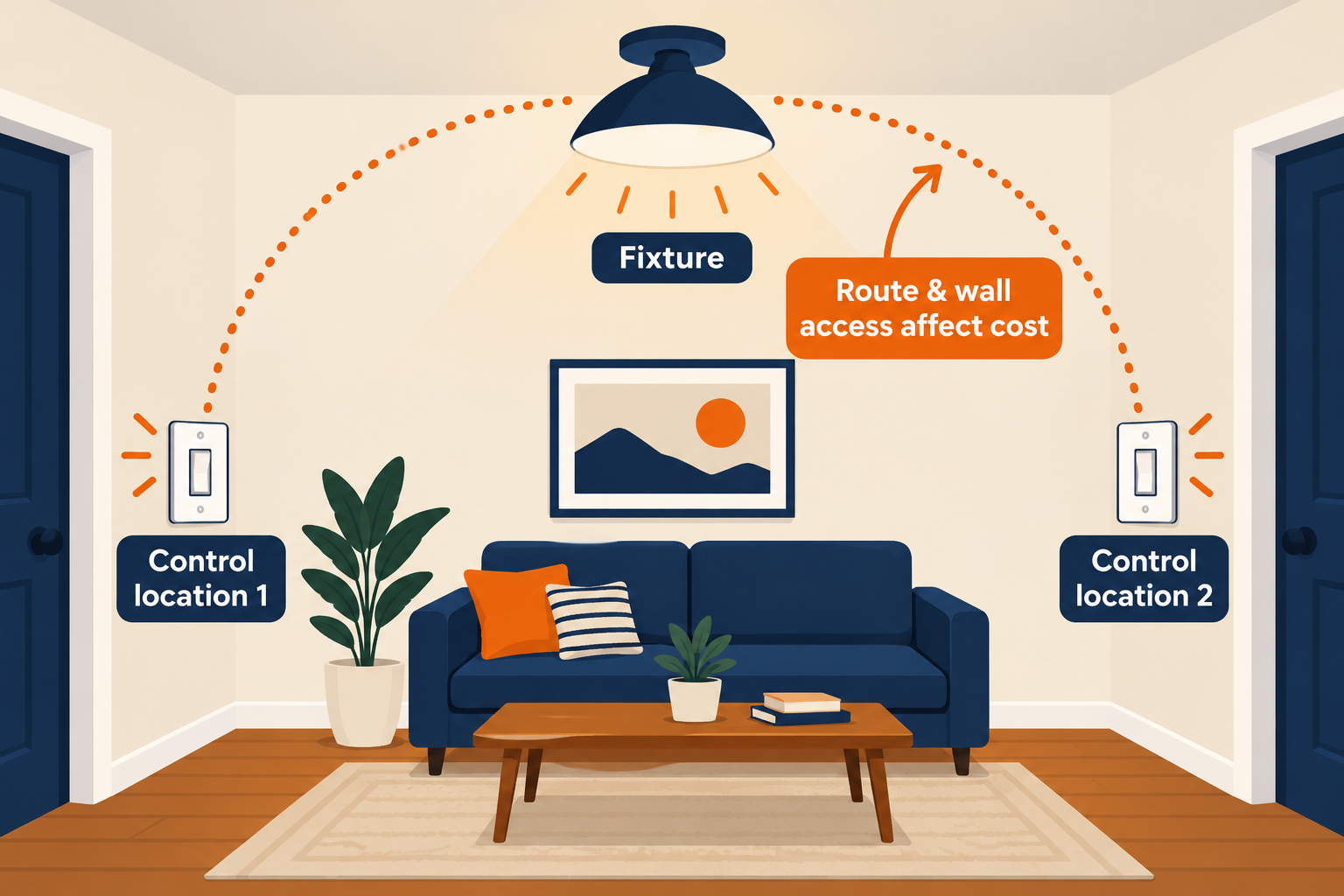
Adding a switch is materially different from replacing one. The electrician must establish a box location, route cable or other approved wiring, connect the control to the fixture or circuit, and restore the wall. A three-way arrangement adds a second conventional control and a different wiring topology. Canadian electrician labor observations around CAD $80–$150 per hour provide context, but there is no dependable universal installed range for every configuration.

Add versus replace

A replacement uses an existing box and conductors. A new switch or multi-location control creates a new location or changes how the existing locations control a fixture. The project may involve the fixture box, ceiling access, wall openings, insulation, finished plaster, and patching.

Do not rely on an online wiring diagram for an actual installation. The circuit topology, device, conductor requirements, and local rules must be reviewed by the qualified electrician.
Main cost drivers

  • distance from the existing switch or fixture;
  • open framing versus finished wall or ceiling;
  • one new control versus a multi-location arrangement;
  • box, cable, and access to the fixture;
  • dimmer or device compatibility;
  • wall patching and painting;
  • panel/circuit condition and older wiring;
  • permit, notification, inspection, and testing.

The shortest physical distance may not be the cheapest route if it crosses tile, masonry, cabinets, or an occupied finished surface. Ask the contractor to state the access assumption.

Scenarios

Open-wall addition: A renovation exposes the route, and a new box/control can be installed before finishes close. The electrical scope may be efficient, but inspection timing and restoration must be included.

Finished-wall single switch: The electrical work is defined, but cutting and patching can dominate the total. The electrician may not own painting.

Three-way conversion: Two control locations and the fixture must be mapped, with the existing wiring topology determining whether the desired arrangement is straightforward or requires rerouting.

Alternative control: A wireless or smart control may reduce wall access in some products, but it introduces battery, compatibility, network, and ecosystem decisions. If automation is the primary purpose, use the portal’s smart-home scope rather than treating the alternative as a universal saving.

Local administration

Electrical requirements and permit paths vary by jurisdiction. Alberta’s code-and-standards guidance illustrates that Canadian implementation is jurisdictional; Ontario and B.C. use their own processes and fee schedules. Ask who files any notification or permit, when inspection occurs, and whether wall concealment must wait.

Quote checklist

Request a simple plan of the control locations, fixture/circuit assumptions, box and cable route, access, device compatibility, wall restoration, permit/inspection, testing, and exclusions. Compare the installed conventional control with any wireless alternative over the ownership horizon, including future maintenance and replacement.

The right price follows the wiring path and finish boundary. A switch is inexpensive only when the existing topology and access make it a true device-level change.

Confirm what the controls must do

Before pricing, list the fixture, every desired control location, whether the controls are conventional or automated, and whether the wall finishes are open. “Three-way” is a wiring arrangement, not a product style; the existing route and box locations determine the work. An electrician should confirm the topology and applicable conductor requirements.

A wireless or smart alternative may reduce wall access in some installations, but it substitutes product, battery, network, and future-support considerations. Compare it with the conventional route over the ownership horizon rather than treating it as a guaranteed cheaper option.

Price restoration and future access

For finished walls, ask who patches and paints, what happens if framing blocks the route, and when inspection occurs before concealment. For open construction, confirm whether the electrical work is scheduled before insulation and finishes. Multiple controls in one renovation may share access; a later single-control addition may pay for that access again.

A complete proposal makes the circuit, locations, controls, access, restoration, administration, and testing visible. That is the decision support a switch-only unit price cannot provide.

Use the control requirement to set the scope

Before accepting a three-way or multi-location quote, describe which fixture each location controls, whether independent control is required, and what should happen when one location is changed. If a switch is being added near a doorway or stair, the route may be more important than the device price. If the controls are part of a larger lighting change, include the fixture, dimmer, and circuit assumptions so the electrician is not pricing an isolated switch against an unstated redesign.

A wireless or smart option may reduce wall access in one property and create product or maintenance dependence in another. Compare the desired behavior, outage behavior, future replacement, and network independence. If the homeowner chooses the alternative, keep the electrical prerequisite and the control product boundary explicit.

Make the switching boundary observable

The quote should identify each control location, fixture or circuit controlled, box and route assumption, device type, wall access, restoration, and testing. If the intended operation depends on a wireless or smart device, state the fallback behavior and future replacement boundary. If the homeowner wants conventional controls, do not let a generic automation allowance substitute for the actual wiring decision.

For a renovation, document the concealed route before finishes close. For a finished wall, price patching and painting as a real part of the project. The result is easier to maintain when a future electrician can tell what each switch controls without reopening the wall.

Confirm completion and future use

Ask for the switch locations, fixture controlled, circuit assumption, device type, testing, restoration, and any retained wiring. If the control is part of a larger room renovation, coordinate access before the finish schedule is fixed. If the homeowner may later add automation, ask whether the conventional arrangement remains serviceable and what future changes would require.

A complete price includes the route and the wall, not merely the switch. The most economical choice is the one that gives the desired control without paying twice for access or leaving an undocumented circuit change.

Choose conventional or alternative control

A conventional three-way arrangement may be the most durable choice when boxes and routes are accessible. A wireless or smart alternative can reduce wall openings in some products, but it may add batteries, hubs, network dependence, subscription or support concerns, and future replacement. If the control must work during an outage or without a network, include that requirement in the comparison.

Ask for a base case with open-wall access, a finished-wall case, and a stated change-order threshold. This turns an uncertain route into a budgeted decision instead of a low initial price followed by an unbounded access charge.

Research notes

Sources used for this guide