
Replacing an existing switch or dimmer is normally a device-replacement job, but the electrician’s visit often costs more than the device. Canadian specialist observations put residential electrician labor around CAD $80–$150 per hour and a first-hour service call around CAD $100–$200. U.S. service-call observations are similarly broad in USD. Use those as market context, not a fixed installed price.
What a simple replacement assumes
The existing box and conductors are accessible and serviceable, the new device suits the circuit and load, the switch controls the intended fixture, and no new cable or box is needed. Multiple devices can be grouped into one planned visit, but each should be priced and tested.
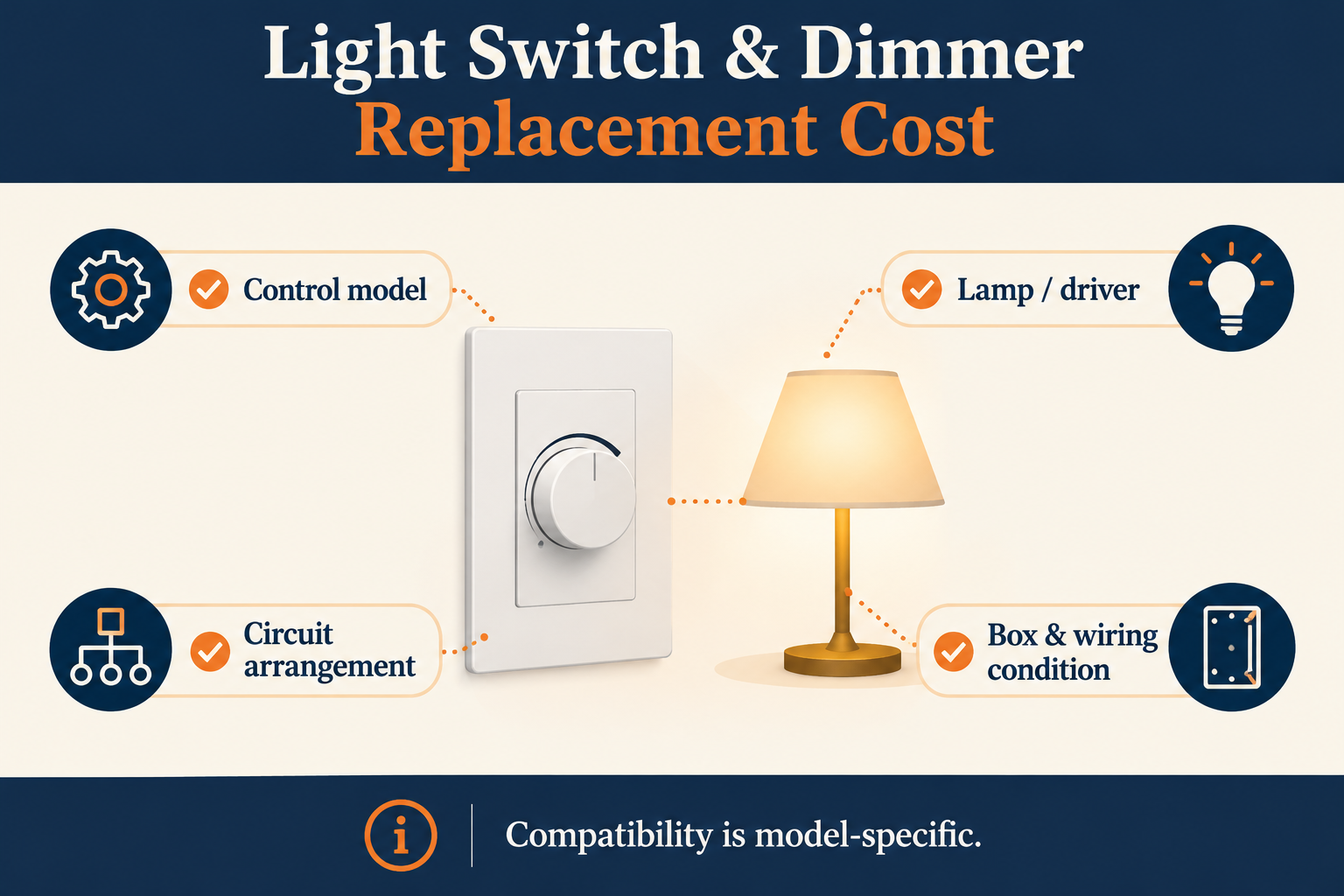
A dimmer introduces product and load compatibility. LED lamps, fixture drivers, minimum loads, three-way arrangements, and neutral-conductor requirements can vary by exact device and manufacturer. Do not choose a dimmer from a generic wattage list alone.
When the scope expands
Cost increases when the box is damaged or crowded, wiring is altered, the switch is part of a multi-location circuit, a neutral is needed for the selected control, the circuit contains aluminum wiring, or the device is associated with heat, buzzing, sparks, or repeated trips. Those symptoms call for diagnosis rather than a cosmetic swap.
CPSC lists warm faceplates, burning-plastic odor, and flicker as warning signs associated with investigated aluminum-wire connection problems. That does not mean every old switch contains aluminum wiring; it means the condition should be assessed by qualified personnel when the signs are present.
Scenarios
Standard switch: One existing switch is replaced with a compatible device. The minimum visit, device, labor, and testing dominate.
Dimmer replacement: The selected dimmer and connected fixture must be compatible. If the circuit or fixture is unsuitable, the quote may include a different device or fixture work.
Legacy or damaged box: Wiring, box, connection, or aluminum termination needs correction. Budget for access and a repair scope, not a switch price.
New control location: No existing box or cable serves the desired position. Use the new switch-wiring guide; this is no longer a replacement.
Smart-control boundary
A simple line-voltage control may remain in this category. If the main decision is an automation ecosystem, network integration, sensors, or whole-home smart control, the low-voltage and smart-home category owns that broader choice. The electrical quote may remain a prerequisite.
Compare replacement quotes
Give the electrician a location list with the switch count, control type, fixture or lamp information, and any multi-location arrangement. Ask the quote to identify the device model, load compatibility, existing box and wiring assumptions, neutral requirement if relevant, service minimum, testing, access, permit or inspection where applicable, and exclusions. If the product is undecided or homeowner-supplied, state the assumed device and confirm compatibility before scheduling.
Group ordinary, genuinely similar replacements to see whether one visit reduces repeated minimums. Keep dimmers, multi-location controls, and devices with heat, odor, buzzing, flicker, or legacy-wiring concerns visible as separate scopes. Those symptoms call for assessment, not a cosmetic replacement allowance. If a renovation will soon open the wall, compare the cost of doing the work during that access with the risk of duplicate labor; urgent symptoms still need prompt professional attention.
The lowest device price may not be the lowest installed cost if it is incompatible with the lamp, fixture, circuit, or existing wiring. The useful comparison is the complete control and installation scope, with any larger repair threshold made explicit.