
“Pulling the permit” means handling an application, but the words can hide several different roles: owner, applicant, authorized agent, contractor, professional designer, and permit holder. Who may apply and who carries which legal or inspection responsibilities varies by jurisdiction and project. Do not accept a universal rule from a contractor, designer, or online forum.

Separate the roles
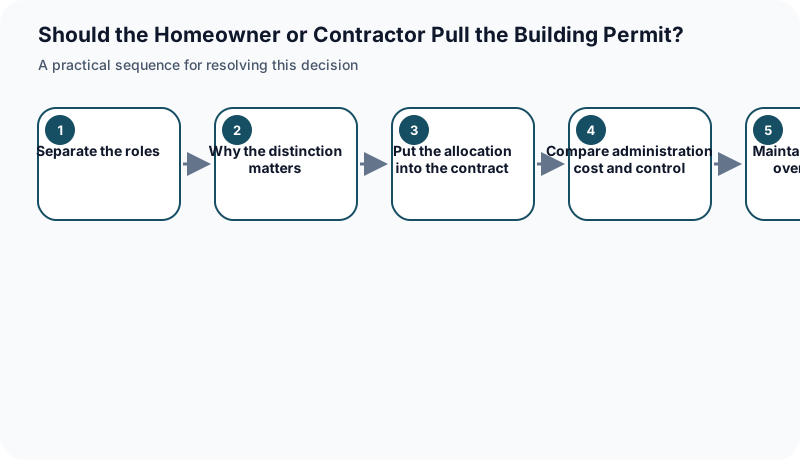
The owner controls the property and usually pays for the work. The applicant submits information to the authority. An authorized agent may submit on the owner’s behalf. The contractor performs construction under the contract. A professional may take responsibility for defined design activities. A permit holder or other named party may have duties under local rules.
These roles can overlap, but they are not automatically interchangeable. Ontario’s 2026 permit form, for example, allows an owner or authorized agent to apply, identifies the owner when different, and separately records individuals responsible for design activities. It is an Ontario form effective February 16, 2026, not a North American owner-builder rule.
Why the distinction matters
The person submitting the application may need to provide accurate plans, fees, applicable-law information, declarations, contacts, and inspection coordination. The contractor’s responsibility for means, methods, workers, and construction quality is a separate contract question. A professional’s design responsibility is not created merely because that person drew a sketch.
Ask the authority who may apply, who must be named, who schedules inspections, whether a licensed contractor is required, and what happens when the owner acts as builder. Ask the contractor to state in the contract which permits are included and whether the allowance covers applications, government fees, trade permits, corrections, inspections, and closeout.
Put the allocation into the contract
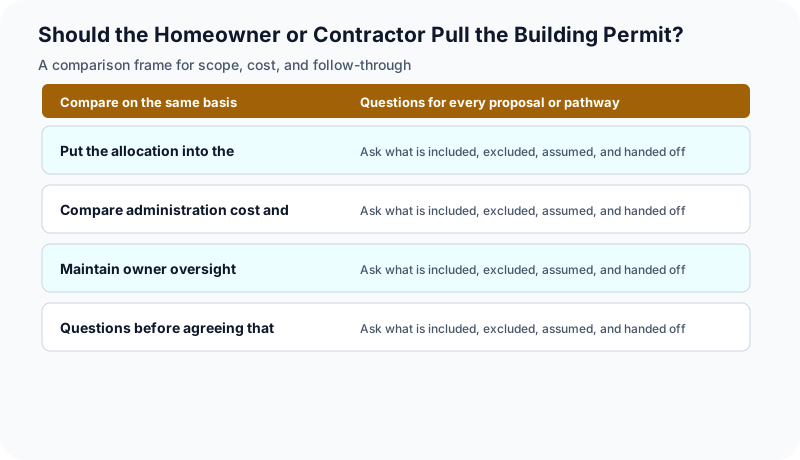
Do not leave “permit included” as an undefined allowance. State which person prepares the application, pays each authority fee, coordinates design documents, answers correction notices, schedules inspections, and obtains closeout records. Identify who communicates a changed scope to the authority and who pays if a revision or additional approval is required.
If the owner is the applicant, confirm what statements they must make and what records they need to maintain. A contractor may prepare documents or submit as an authorized agent while the owner remains named in another role. Ask the authority how the form separates owner, applicant, agent, contractor, and design professional.
If the contractor is responsible for the permit, require the contract to name the permit type and jurisdiction. Ask for the permit number, issued documents, approved plans, inspection history, and final status. If the contractor uses a subcontractor or expediter, ask who is accountable for the application and how that person is authorized to act.
Compare administration cost and control
Owner-managed filing may save a contractor’s administration fee, but it shifts time and coordination to the owner. The owner may need to track forms, missing documents, payment deadlines, review comments, inspections, and closeout. Contractor-managed filing can simplify communication when the contractor already coordinates the project, but the owner should still be able to see the official record and verify what the allowance includes.
Ask what the contractor’s permit line covers. It might include only submission, or also drawings, application fees, trade permits, correction responses, inspections, reinspection charges, and closeout. The contract should say how unexpected municipal charges are handled and whether the contractor may add a markup. Compare the written allocation with the project schedule so an application task is not left unassigned.
Maintain owner oversight
Even when a professional or contractor manages the process, ask to receive copies of the application, issued permit, approved plans, inspection results, correction letters, revisions, and completion record. Confirm who will tell you before scope changes are submitted. Keep the current approved set accessible to the contractor and verify that superseded drawings are removed from use.
Before work starts, ask what approvals must be issued and what inspections must occur before particular areas are concealed. During the project, track missed or failed inspections and any change orders that affect the approved work. At the end, confirm separately that each related permit is closed or that outstanding items are documented.
If a project pauses for a long period, clarify who will monitor permit deadlines and related approvals. The person who applied may need to request an extension, but the authority decides whether the permit can be extended. Permit renewal and reinstatement costs explains that status and restart decision.
Questions before agreeing that you will apply
- Is owner application permitted for this exact project and property type?
- Am I becoming an owner-builder under a local rule?
- Which party is responsible for design declarations or professional seals?
- Who submits drawings and answers plan-review corrections?
- Who schedules and attends required inspections?
- Who pays reinspection, revision, or special-inspection charges?
- What records will I receive when the permit is closed?
An owner can choose to manage administration and still hire professionals for design and construction. Conversely, a contractor can submit or coordinate a permit without taking over every legal or design responsibility. The written authority instructions and contract must say what each party does.
Red flags
Pause when someone says a permit is unnecessary without asking the authority, asks you to sign declarations you do not understand, promises approval, refuses to identify the permit applicant, includes only a vague permit allowance, or suggests concealing completed work. Do not start work while relying on an unresolved permit assumption.
If the work has already started, read unpermitted work and retroactive permit cost. If the construction is complete, permit closeout and final inspection explains the separate end-of-project question.
Use a responsibility schedule
For a project with an owner, designer, general contractor, trade contractors, and an expediter, assign each permit task in a written schedule. Name who prepares the scope, who signs each form, who pays each fee, who answers comments, who requests inspections, and who obtains the final closure record. Identify a backup contact if the responsible person is unavailable.
The contract should also state how changes are handled. If a contractor substitutes equipment or changes a wall after permit issuance, who checks whether revised drawings are needed? If an inspector identifies a correction, who coordinates the professional response and who pays the authority’s fee? These responsibilities can be divided, but they should not be left implicit.
Balance convenience with owner oversight
Some owners prefer to keep direct contact with the permit office; others want the contractor or design professional to manage submissions. Either may work if the authority allows it and the contract names the responsibilities. Direct access to the official portal can help an owner verify status, but it does not require the owner to prepare technical documents.
Ask the contractor to provide the permit number and current approved drawings before work starts. Request copies of any revision, inspection result, and correction. If the contractor controls the online account, ask how the owner can access records later. Keeping an accurate file is particularly useful if the project is sold, paused, or handed to another contractor.
Choose an arrangement the owner can administer
Owner filing is more manageable when the application is clear, the owner has time to track communications, and professionals provide complete documents. Contractor management can reduce administrative handoffs when the contractor is coordinating design and trades. A third-party expediter can help with a defined portal or tracking task. None of these options removes the need for accurate technical information and owner oversight.
Ask the authority whether an agent needs written authorization, what contact information appears on the permit, and how the owner can retrieve records. Ask the contractor how quickly they will forward a correction notice and who can authorize a revised scope. If the owner is not comfortable interpreting official notices, include a professional who can explain them.
Revisit responsibility when the project pauses
Permit administration continues after the application is submitted. Someone must respond to comments, request inspections, report changes, and obtain closeout. If a project pauses or changes contractors, the owner should know who controls the account and where approved drawings are stored.
Before a contractor’s agreement ends, collect the permit number, application record, approvals, corrections, inspection results, and any outstanding task list. This makes it easier to transfer responsibility without duplicating fees or missing an authority response.
Confirm where responsibility transfers
If the owner changes contractors, pause, or sells the property, confirm who has the permit login and which applications or inspections remain open. Collect the official file before the relationship ends so a new professional can continue without guessing.
A practical allocation
Many owners ask the contractor or design professional to prepare and submit the application because that person understands the drawings. The owner may still want direct confirmation of the permit status, fee schedule, inspection steps, and final closure. A clear contract can allocate the administration while preserving the owner’s ability to verify the official record.
There is no safest universal choice. Choose the arrangement you understand, that the authority permits, and that gives you a written record of design, construction, inspection, and closeout responsibilities.