
A variance or other discretionary planning approval is a request to proceed even though a proposal does not fit a by-right land-use rule or needs a decision beyond ordinary permit review. Terminology differs: one jurisdiction may use minor variance, another variance, conditional use, special exception, rezoning, or a different process. Confirm the correct path before budgeting.
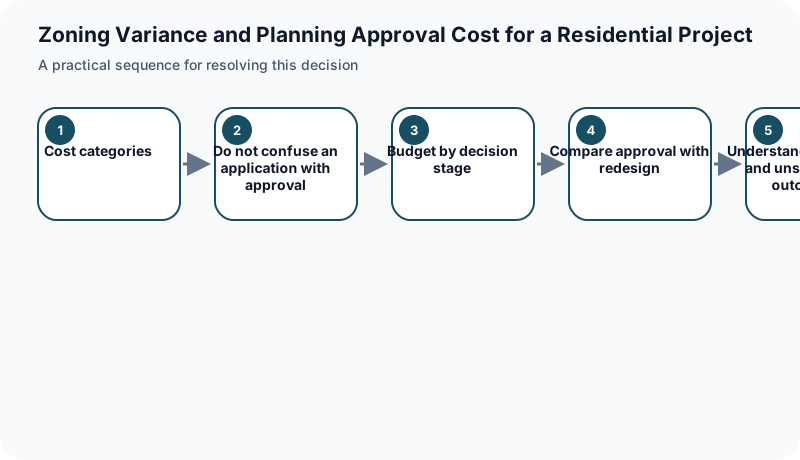
Cost categories
| Cost category | What it may cover |
|---|---|
| Authority application fee | Filing, staff review, notices, or hearing administration |
| Survey and documentation | Boundary, site, topographic, photographs, or property records |
| Design and planning | Site plan, drawings, planning statement, or alternatives |
| Professional representation | Planner, architect, engineer, or land-use consultant |
| Legal support | Advice or representation where the matter is complex or contested |
| Revisions and conditions | Changes requested by staff, neighbors, board, or approval conditions |
| Carrying and schedule cost | Delayed design, financing, contractor pricing, or temporary arrangements |
The authority fee is only one line. A project may require professional work before the application can be filed and after comments are received. There is no defensible North American average because procedures and property issues differ.
Do not confuse an application with approval
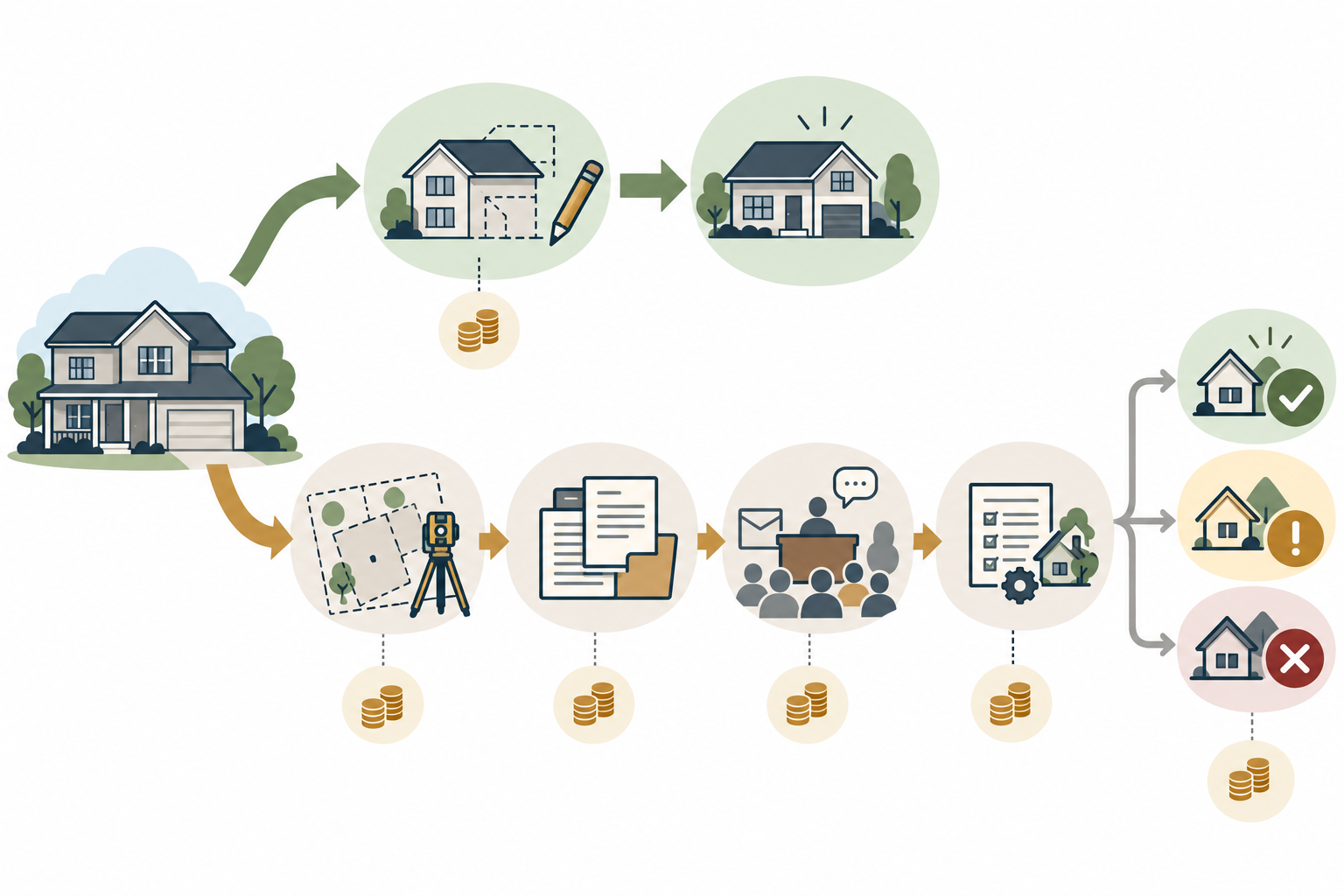
Paying a fee starts a process; it does not guarantee a decision in your favor. Approval can include conditions, expire, require follow-up permits, or be unavailable for the requested scope. Avoid any consultant promise that a variance is “routine” without a jurisdiction-specific basis.
Toronto and Seattle materials show why local property and project requirements should be checked before a permit package is finalized, but they do not establish a universal variance process. Ask the planning authority which application, evidence, notice, hearing, and appeal rules apply to your address.
Budget by decision stage
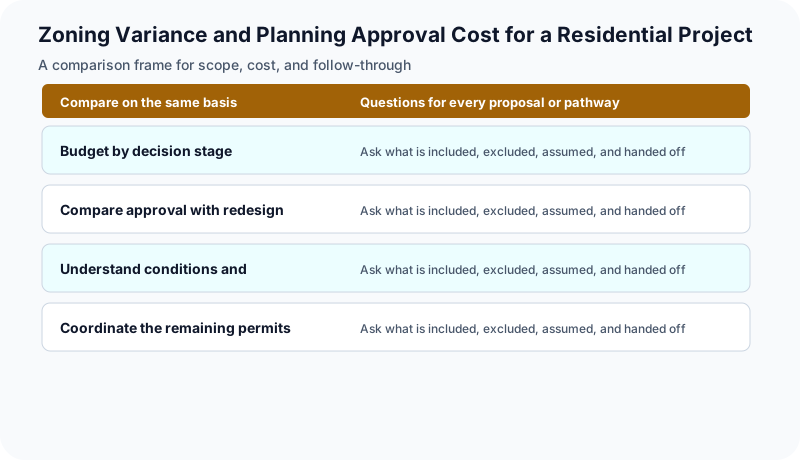
The total can be spread across early screening, survey or design, application preparation, authority filing, notice or hearing, response work, and any later building-permit application. Ask which tasks are already included in the land-use consultant’s fee and which are billed by an architect, engineer, lawyer, surveyor, or authority. If a proposal describes only the filing fee, it does not describe the full cost of seeking approval.
Before commissioning the application package, request a written scope that names the relief being requested, the evidence required, the drawing list, and the process stage it covers. Ask how many meetings and comment rounds are included, how a public hearing is handled, and whether appearance at a hearing is an additional service. The professional should identify uncertainty without promising a favorable decision.
Compare approval with redesign
A discretionary application is one possible route, not always the lowest-cost route. A smaller project or different site layout may avoid some application and delay costs. Redesign can also create new survey, engineering, or contractor costs. Compare the full alternatives before committing: the requested design and its approval path, a version that fits the existing rule, and stopping or postponing until more information is available.
The relevant comparison is not simply the application fee against a redesign fee. Include authority charges, professional hours, schedule effects, stale construction pricing, financing or carrying costs, and whether the requested relief would change later approvals. Do not count approval as certain in the financial case unless the authority has granted it.
Understand conditions and unsuccessful outcomes
Ask what happens if approval is refused, granted with conditions, or granted for a design that later changes. Conditions may require further documents, site work, or another application. A refusal may leave the owner with design fees already spent and a choice to appeal, revise, or stop. The provider should explain which costs are earned regardless of outcome and which apply only after a later phase begins.
Ask whether an appeal or reconsideration is a new scope. Do not assume that a consultant’s application fee includes legal representation or all hearing preparation. If the matter is disputed or financially consequential, seek advice from a qualified local professional who understands that process.
Coordinate the remaining permits
A planning approval does not automatically complete building-code review, trade permits, heritage approval, utility review, or construction inspection. Ask how long the planning decision remains usable, which drawings can carry forward, and whether building-permit work can proceed in parallel. A change made to satisfy a planning condition may require new structural or engineering coordination.
Keep the authority application, approved plans, conditions, expiry dates, and follow-up records together. A later owner or contractor needs to know what was approved and whether the current proposal still matches it.
Build an application team with clear tasks
The planning consultant may prepare the rationale and coordinate the package, while an architect or surveyor prepares drawings and property information. A lawyer may advise on an appeal or contested matter. Ask each provider what they are responsible for and who integrates the final submission. Avoid paying separate professionals to recreate the same site history or plans.
Ask the authority whether it offers a pre-application meeting and what materials it expects. A paid meeting can help identify evidence and process, but does not secure approval. Record any comments, conditions, or requested revisions and ask the consultant to update the fee if the scope changes.
Plan for a decision with conditions
Before filing, ask how conditions would affect the next permit stage. A condition may require a revised site plan, landscaping, access, drainage, or another approval. The design team should estimate the professional and construction implications of likely conditions, while keeping uncertain outcomes separate from confirmed scope.
If the authority refuses the request, compare the options to appeal, redesign within existing rules, or stop. Ask which drawings and studies remain useful for each option and what new professional work would be required. Do not treat the application fee as the only sunk cost.
Decide what evidence is worth buying
Ask the planning professional which evidence is essential to the application and which would only add detail. A current survey may be necessary to show a setback request; a broad study may be unnecessary unless the authority asks for it. The provider should tie each report, drawing, or consultant input to a specific criterion or likely question.
If neighboring properties or public notice matter, ask what information the authority publishes and how the consultant will respond to comments. A hearing may require preparation time beyond the initial filing. Confirm whether attendance and post-hearing revisions are included.
Ask whether the local process allows a preliminary meeting and whether its fee is credited toward an application. Confirm the application completeness requirements before ordering all supporting documents.
Record the approval and carry conditions forward
If the authority grants relief, obtain the formal decision, approved plans, and written conditions. Ask who tracks each condition and what must be completed before a building permit or occupancy. A consultant’s email summary is useful, but keep the official decision and referenced drawings together.
If the owner later changes the design, ask whether the approval still applies or whether the change needs another planning review. Do not assume that a small design change leaves every variance condition intact. Give the approved decision to the architect, contractor, and future owner or agent.
Ask whether an approval is tied to a named drawing issue or property condition and who must notify the authority if it changes. Give the final decision and conditions to the contractor before construction pricing is finalized.
Maintain a copy of approved conditions with the building-permit application so the later reviewer can see how the design responds.
What makes the cost rise
- A large deviation from the by-right standard.
- Multiple relief requests or a change of use.
- Neighbors, public notice, hearing, or appeal involvement.
- Need for a current survey, traffic or drainage information, or environmental documentation.
- Changes to the design during review.
- Coordination with building, heritage, conservation, or utility approvals.
- Delay while contractor pricing, financing, or design assumptions become stale.
Questions before committing
- What exact relief or approval is required?
- Is the authority’s answer a formal determination or preliminary guidance?
- What evidence must accompany the application?
- Which fees are current, refundable, or payable at later stages?
- Who prepares drawings, planning rationale, and responses?
- What happens if the request is refused or approved with conditions?
- Which building permits remain after planning approval?
Keep a variance allowance separate from building permits and construction. If the issue is an ordinary by-right check, read zoning pre-application review. If the property has heritage controls, historic review cost may be an additional path rather than a substitute.
Budget for the full approval path
The application fee is only one part of a variance budget. The owner may also need planning advice, survey updates, drawings, technical studies, public notice, hearing preparation, and responses to comments. Confirm which items the authority requires for this property and which are recommendations from the consultant. Ask whether a decision can be appealed, what conditions could require redesign, and how long the approval remains valid before a building permit must follow. Do not assume that paying a fee secures relief or that an approval transfers to a different design. Reserve time and money for the possibility that the preferred concept must change or the application may not succeed.