
Framing material is a structural-system decision. The choice affects engineering, connections, installer familiarity, corrosion exposure, decking compatibility, availability, and future repair—not only the price of lumber or steel.
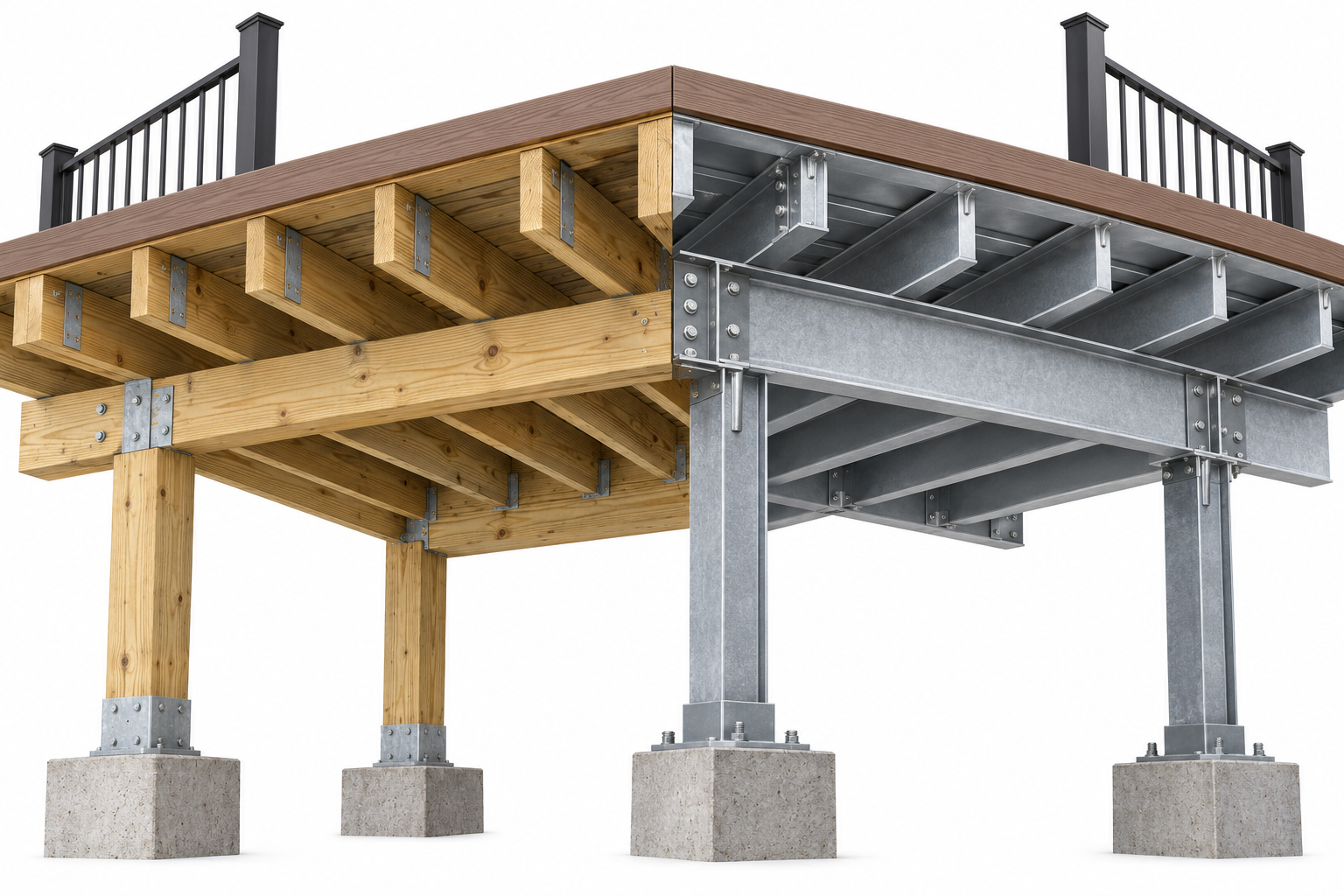
Upfront cost is only one line
Ask for a complete framing scope: design, posts, beams, joists, connectors, bases, footings, decking interface, access, corrosion protection, and inspection or permit allowances. Current evidence does not establish a universal national installed-cost ranking between wood and steel systems. A less familiar system may carry different labor or engineering costs even when material pricing looks attractive.
Wood framing
The AWC guide provides a prescriptive wood-deck framework with component relationships and stated assumptions. USDA guidance addresses treated wood selection and exposure considerations. Neither source makes every wood species, treatment, configuration, or jurisdiction interchangeable. Moisture, soil, cut ends, connectors, and maintenance still matter.
Steel framing
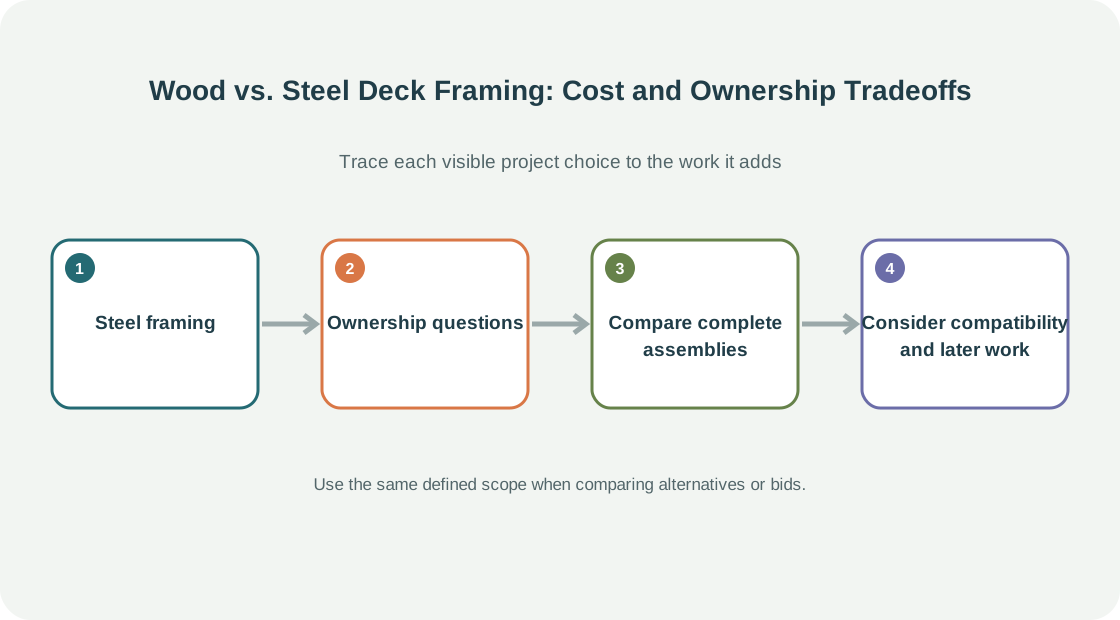
Steel systems vary by manufacturer, coating, profile, connector, span, and required decking. Corrosion protection and compatibility with the surface system need product-specific review. Availability and installer experience can be as important as material cost. Avoid applying a claim about one proprietary system to all steel framing.
Ownership questions
Ask how each system will be inspected, repaired, modified for a future roof or enclosure, and matched to replacement decking. Consider moisture and salt exposure, fire or hazard context, maintenance access, warranty conditions, and whether local professionals can service the system.
Compare complete assemblies
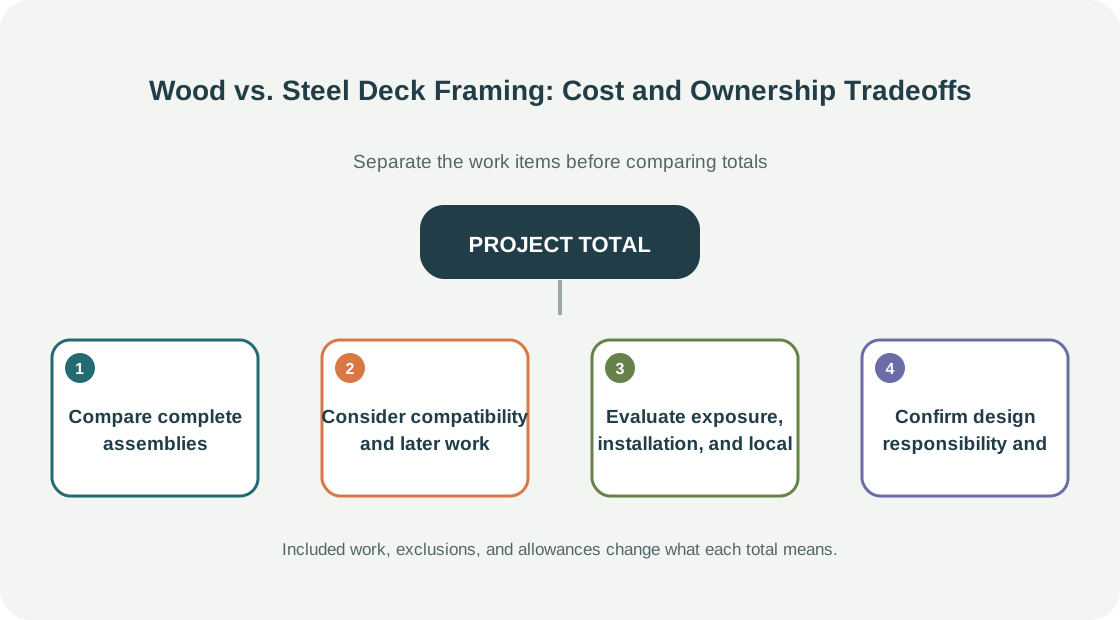
A framing quote should describe the same geometry, support layout, deck height, span assumptions, footings, posts, beams, joists, connectors, surface system, stairs, guards, and access for both options. If the steel bid includes engineering while the wood bid assumes a prescriptive layout, those are not necessarily equal scopes. Ask each bidder to show which work is included, what professional is responsible for design, and what approvals are separate.
| Ownership question | Wood framing | Steel framing |
|---|---|---|
| What sets the installed cost? | Species/grade, treatment, member sizes, connectors, labor, and site access. | System profile, coating, proprietary connectors, availability, labor, and engineering. |
| What should be documented? | Framing assumptions, treated-wood selection, connections, and exposure. | Manufacturer system, coating, connector compatibility, and product-specific design information. |
| What can complicate later changes? | Moisture-related deterioration, altered spans, or a new surface system. | Replacement-part access, proprietary components, corrosion exposure, or limited local familiarity. |
| What affects maintenance? | Exposure, water management, cut ends, and inspection access. | Coating condition, cuts or scratches, water traps, connections, and access for inspection. |
The comparison is not a universal rating. Different systems may fit different sites, products, and local design requirements. The lowest material line is not necessarily the lowest installed or ownership cost.
Consider compatibility and later work
The frame supports the deck surface and any related stairs, guards, or accessories. Ask whether the selected decking manufacturer permits the proposed framing material and which connectors or fasteners are required. A Trex or other decking detail applies to the named product, not to every composite board. If you may add a roof, screen enclosure, or heavier feature later, have the professional evaluate that intended future use at the design stage rather than assume either frame can accept it.
Ask what a future repair would require. Can a damaged joist or beam be accessed without removing a large area? Are connectors standard or proprietary? Does the installer have local experience and replacement components? A system with a favorable warranty may still be difficult to modify if service is unavailable nearby. Warranty terms also do not replace project-specific design or verify that the installation followed the manufacturer’s instructions.
Evaluate exposure, installation, and local service
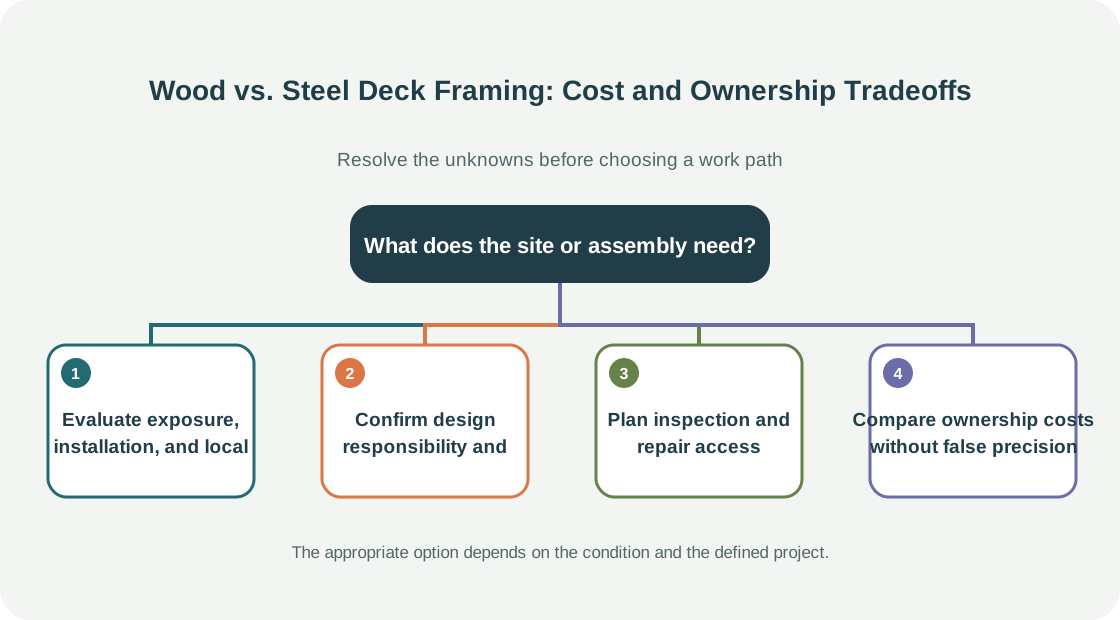
Compare the site’s wet and dry areas, ground contact, salt, water retention, ventilation, and other relevant hazards. Treated-wood species and exposure guidance are product- and use-specific; steel products also differ in profile, coating, cut-edge protection, and connector design. Ask for the exact material documentation and service recommendations rather than a broad claim that either material is maintenance-free. Include connectors and fasteners in the review because the frame is an assembly, not just its main members.
Local availability changes practical cost. Ask how members are delivered, cut or fabricated, fastened at corners and transitions, and protected during installation. A proprietary or engineered system may depend on a specific connector family and trained installer. A familiar system may have more repair options nearby, but still needs a suitable design. Confirm lead time, replacement-part access, and who can service the frame after installation.
Confirm design responsibility and compatibility
Identify who determines member sizes, spacing, spans, loads, connectors, posts, beams, and footings, and what design basis applies. A supplier’s span table or product sheet is not automatically a complete structural design. The AWC guide is a U.S. prescriptive reference for a defined wood-deck context; steel systems may rely on manufacturer engineering and local professional review. Attached decks, unusual height or geometry, or future additions may need project-specific documents and approvals. Show those responsibilities and any separate design allowance in each quote.
The selected framing must also suit the decking, fascia, rails, stairs, and accessories. Ask whether the decking manufacturer permits the proposed frame and which fasteners or connectors are required. A detail for a named Trex or other product does not apply to every board. If a roof, enclosure, or heavier feature may be added later, have the responsible professional evaluate that intended use now rather than assume the existing frame can carry it.
Pressure-treated wood requires attention to the treatment and connector/fastener combination. Simpson Strong-Tie’s corrosion guidance explains that preservative chemistry, moisture, exposure, connector coating or alloy, and fastener material affect compatibility. Ask bidders to identify the actual materials instead of treating all galvanized or stainless parts as interchangeable. The guidance also cautions that accelerated tests cannot predict an exact service life for a particular installation.
Decking standards answer a different question from frame design. ASTM D7032’s public summary describes performance ratings for composite and plastic-lumber boards, treads, guards, and handrails, including properties such as load and fastener holding. It does not establish a wood or steel frame’s capacity or code approval. Keep surface-product evaluation separate from the frame’s member, span, connection, and support documentation.
Plan inspection and repair access
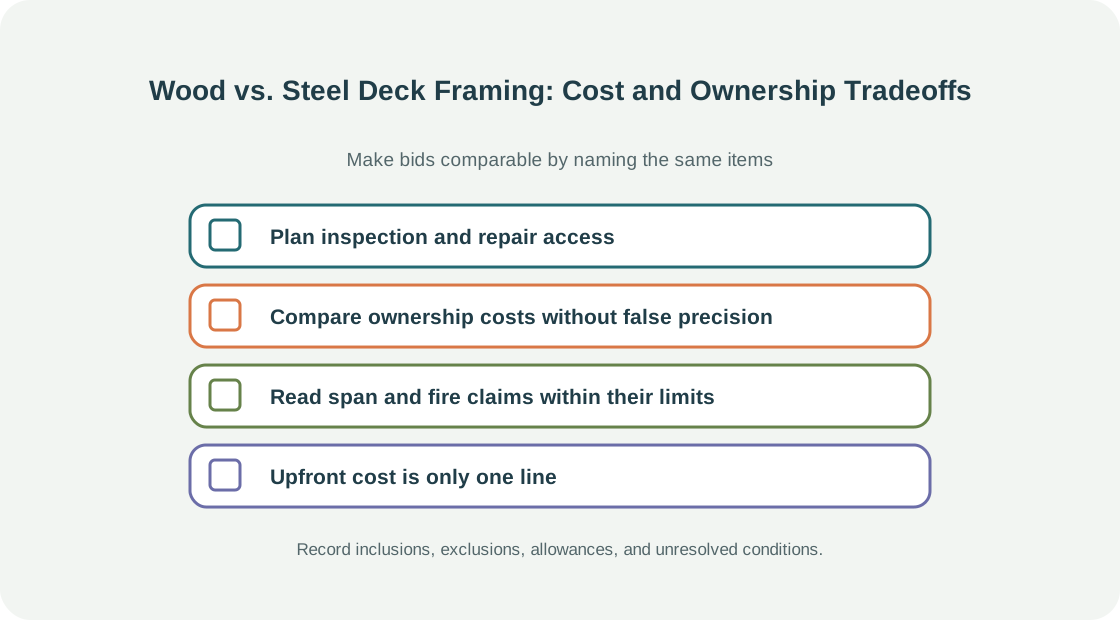
Skirting, finished ceilings, and drainage components can conceal the frame. Ask whether an inspector can reach connectors and whether a damaged joist or beam can be replaced without removing a large area. Plan access before closing in a low deck and a safe route for work on an elevated structure. Ask how concealed or coated steel will be checked for corrosion and how the selected wood assembly will be kept from persistent moisture. Record the maintenance and inspection instructions for the exact system.
Future repairs also depend on parts and support. Identify whether connectors are standard or proprietary, whether a qualified local contractor can service the product, and what happens if a component is discontinued. A favorable warranty does not replace project-specific design or prove that installation followed product instructions.
Compare ownership costs without false precision
Compare the installed price with the same footprint, support layout, deck height, spans, footings, surface system, stairs, guards, access, and approval assumptions. Then list known maintenance, inspection access, repair support, and replacement-part availability. Do not assign a precise service life or a future roof cost when the available evidence and project scope do not support one. Mark uncertain assumptions so they remain visible in the decision.
Before choosing, ask each bidder for the named framing system, design documents, member and connector schedule, decking compatibility, treatment or coating details, installation and delivery boundary, local approval assumptions, and repair path. If the bids use different engineering assumptions or one excludes access and approvals, correct that scope gap before comparing totals. Choose according to site exposure, product compatibility, documented design, available service, and intended use; there is no universal cost or durability winner between wood and steel.
Read span and fire claims within their limits
The AWC prescriptive guide can help identify inputs for a wood layout, but its tables apply to stated materials, spans, loads, and configurations. They do not rank wood against a proprietary steel system or replace project-specific design when the deck falls outside those assumptions. Ask for the span, member size, support position, connector detail, and design responsibility behind each proposal. A decking product’s performance report is not a framing capacity document.
If fire or wildfire exposure is part of the decision, state that before selecting a material. Ask the responsible designer or local authority to identify the applicable product documentation and approval path for the exact surface, frame, connections, and site. A material label alone does not establish that a full assembly meets current local requirements. The cost sources discussed here do not provide a comparative fire rating or establish a particular deck’s resilience.
Check that any cited test or listing covers the named product and assembly conditions rather than a material family in general.