
Routine cleaning removes dirt, leaves, and surface buildup. Restoration preparation is a more involved service intended to leave the deck ready for stain, sealer, paint, or repair. The price and risk are different.

Routine cleaning
Basic work may include sweeping, washing, treating visible organic buildup, and cleaning rails or stairs. The quote should identify the deck material and the surfaces included. Composite, PVC, painted wood, and unfinished or treated wood can have different care limits.
Preparation for refinishing
Preparation may include removing old coatings, additional cleaning, drying, sanding where appropriate, spot repairs, and protecting nearby siding or landscaping. Ask what happens if cleaning reveals cracked boards, rot, fastener problems, or deteriorated framing. A preparation quote should not imply that a clean appearance proves the deck is structurally sound.
Avoid generic pressure or chemical rules
The acceptable method depends on the product and surface condition. Manufacturer instructions should control for composite and PVC systems. For wood, USDA guidance connects finish performance to wood properties, surface condition, product, climate, and exposure. Do not use one pressure setting, chemical, or technique as a universal recommendation.
What changes the price
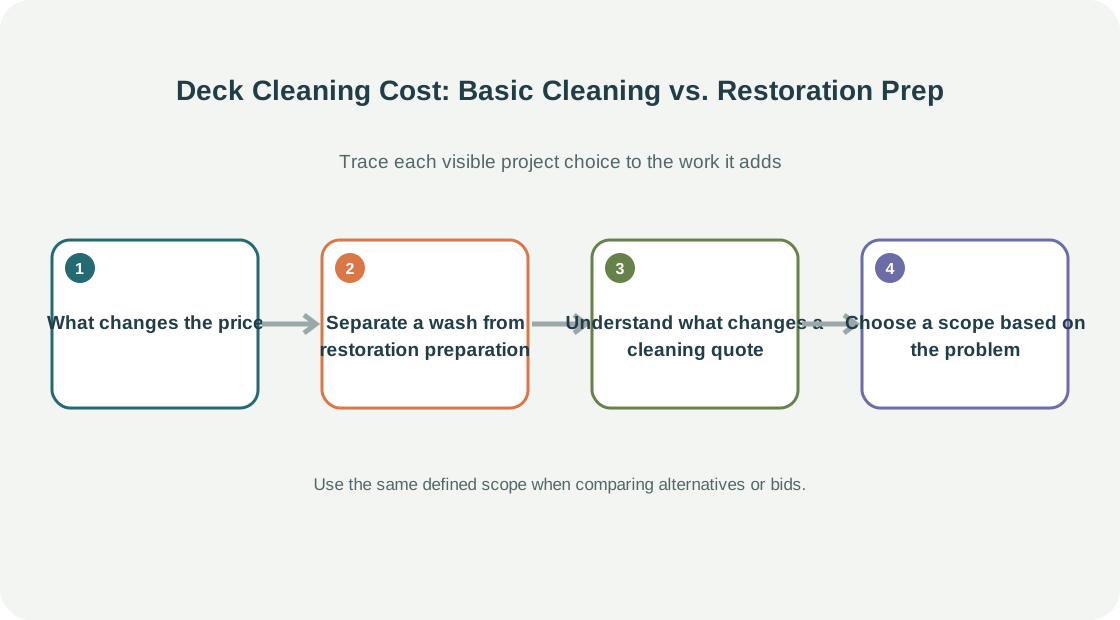
Size, rails, stairs, height, access, algae or mildew, old coatings, water restrictions, and the desired finish all matter. Current market evidence supports broad deck-cost context, not a dependable national cleaning price. Compare the work description and protection measures rather than a low headline number.
Separate a wash from restoration preparation
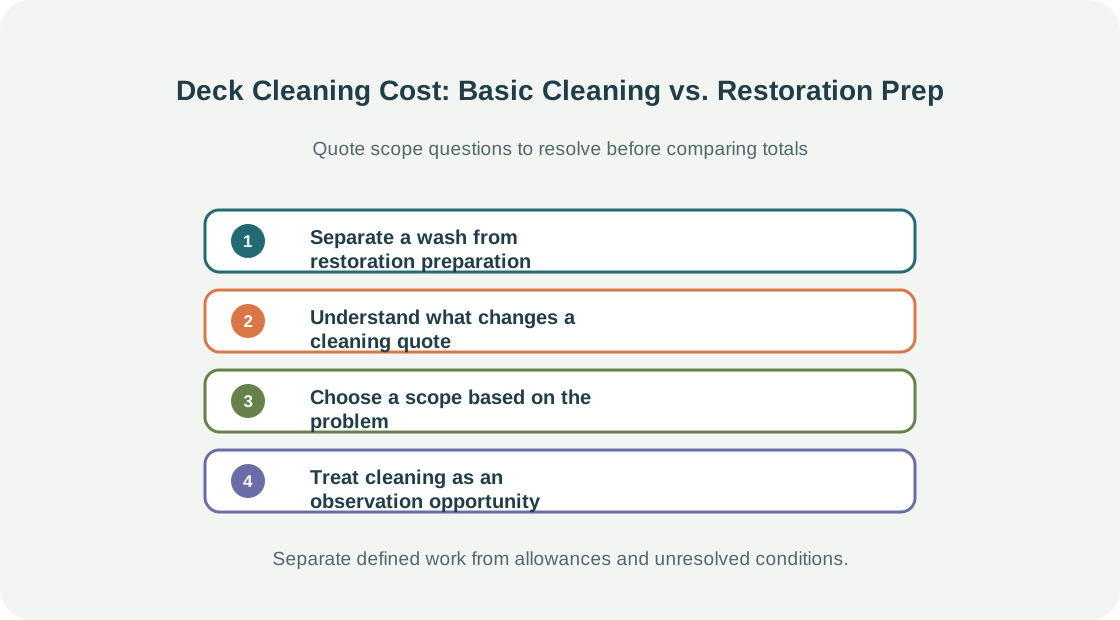
Ask the contractor to name the intended outcome. Routine cleaning may remove loose debris and surface grime so the deck is more pleasant to use. Preparation for refinishing is a different service: it may include treating old coating, additional cleaning, drying time, surface preparation, and protection of landscaping or siding. A bid should say which of those tasks it includes and whether the owner expects a clean surface, a finish-ready surface, or repair work.
Before comparing totals, identify the material and product if known. Composite and PVC products can have brand-specific care directions, while wood and painted surfaces have different finish and preparation considerations. A general label such as “deck wash” does not establish the appropriate method. Ask the provider which manufacturer instructions apply and whether the proposed cleaner or equipment is suitable for the actual surface.
Understand what changes a cleaning quote
Square footage matters, but so do stairs, rails, bench seating, privacy screens, height, access beneath the deck, nearby plants, water availability, and the amount of buildup. A shaded deck with algae may need different preparation than a sunny surface with ordinary dust. Removing a failed coating is a separate task from washing. Ask whether materials, dwell time, rinsing, protecting adjacent surfaces, and post-cleanup are included.
If the service is intended to prepare for stain, clarify who is responsible for the next step and what drying or scheduling assumptions apply. A low-priced cleaning job may not include preparation suitable for a new finish. Conversely, an expensive restoration proposal may include stripping and repairs that a routine cleaning does not need. Compare the described work rather than a single price-per-square-foot figure; current evidence does not support a dependable national cleaning price.
Choose a scope based on the problem
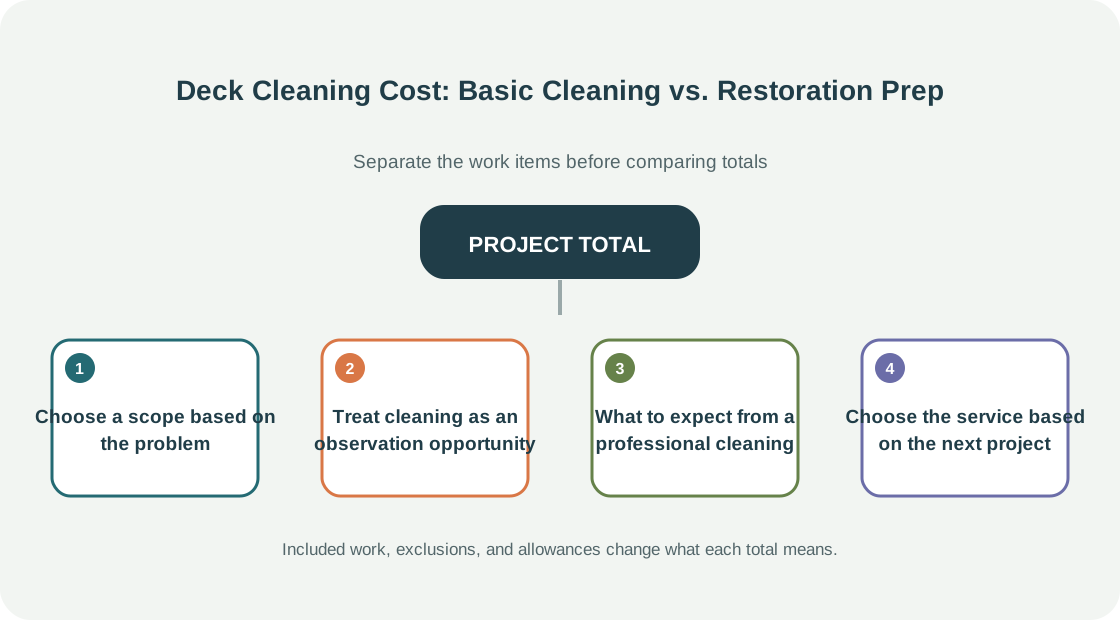
For seasonal debris, a basic maintenance clean may be sufficient. If the goal is a consistent finish, ask for a preparation estimate that names the old coating, surface condition, product, and included areas. If grime returns quickly or standing water remains, cleaning will not correct drainage or shade conditions. If the color change is actually weathering or finish failure, a wash alone may not produce the appearance the homeowner expects.
Ask how the contractor will protect doors, outlets, plants, and adjacent siding, and how runoff and debris are managed. If the deck is elevated, clarify access, underside protection, and whether water can affect finished areas below. The proposal should set realistic appearance expectations and avoid promising a uniform result where the existing material is already damaged or uneven.
Treat cleaning as an observation opportunity
After loose debris is removed, defects may become more visible. Note soft boards, exposed fasteners, splitting, loose guard connections, or movement, and ask whether the contractor will stop and report them before continuing with cosmetic work. Cleaning cannot establish that the structure is safe or make a deteriorated support sound. If the deck moves or a guard is unstable, keep people off the affected area and arrange qualified evaluation.
What to expect from a professional cleaning quote
Give the provider the deck material, approximate area, height, number of stairs and rail sections, and the purpose of the service. State whether the next step is stain or sealant application. Ask the contractor to list each surface, the preparation standard, products or equipment planned, protection for nearby areas, cleanup, and any access surcharge. If the product or prior coating is unknown, say so rather than assuming the provider can identify it from a photograph.
Request separate line items for routine cleaning and refinishing preparation when both are being considered. This helps you decide whether to clean only, clean and recoat, or pause for repair. If one contractor includes stripping and sanding while another includes a wash, the totals should not be compared as if the work were the same.
Choose the service based on the next project
If no finish work is planned, request a cleaning scope limited to the material and areas that need attention. If staining or sealing is next, ask for the preparation standard the selected finish requires. If the surface has peeling coating or deteriorated boards, price restoration or repair separately. These scopes may use different products, equipment, and labor, so a single “clean and seal” label can hide important work.
For a newly installed composite or PVC deck, follow the exact product’s cleaning directions and warranty conditions. For painted or previously coated wood, identify the existing finish before adding another product. If the coating is unknown, ask how the contractor will test or evaluate compatibility and what happens if removal is needed. Do not assume that a one-time wash prepares every surface for a new finish.
Make the quote specific enough to review
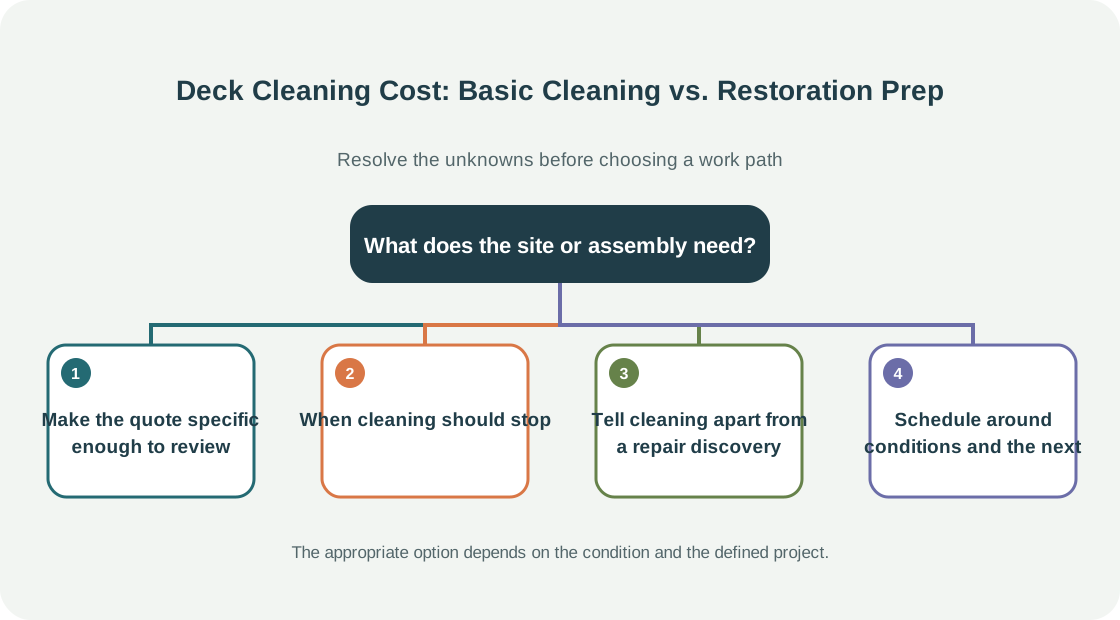
Ask for a list of floor, stairs, rails, and other surfaces, plus any treatment of visible organic growth or old coating. Clarify what products will be applied, what nearby surfaces will be protected, and how runoff and cleanup are handled. If the contractor cannot guarantee a particular color or appearance because of weathering or damage, have that limit stated before work begins.
When cleaning should stop
Routine cleaning can be part of ordinary outdoor upkeep, while restoration work addresses heavier buildup or prepares the surface for a new finish. The timing depends on use, shade, trees, moisture, and material directions. A deck that stays dry and open may not need the same cleaning as a shaded surface under trees. Avoid a fixed schedule that ignores product requirements and actual conditions.
If the goal is to improve appearance before selling or hosting, be clear about the expected result. Cleaning can remove dirt and surface growth but may not restore faded color, remove a failed finish, or make old boards look new. Ask the contractor what change is realistic and whether a test area can show the likely result.
If boards flex, rails move, posts lean, connections separate, or supports show decay, pause the cosmetic work and arrange an appropriate evaluation. Cleaning can expose deterioration; it cannot correct it.
Tell cleaning apart from a repair discovery
A cleaning visit can reveal conditions that were difficult to see beneath dirt, leaves, or surface growth. Ask whether the crew will report loose boards, damaged fasteners, soft areas, or rail movement and stop work in the affected area. Agree on how additional repairs will be authorized; cleaning should not quietly expand into structural work without a separate explanation and price.
For a deck with unknown coatings, old treated wood, or a nearby garden, ask how runoff and debris will be contained and disposed of. The answer may depend on the material, product label, local waste rules, and site drainage. Homeowners should not assume that wash water can be directed toward planting beds or storm drains. A contractor should identify what protections are included and what site preparation is expected from the owner.
If the deck has not been cleaned recently, photograph the surface and note any existing stains or damage before work starts. Afterward, compare the result with the agreed scope rather than expecting a new-deck appearance from a wash. This record can also help distinguish a pre-existing defect from a newly observed one and guide the next maintenance decision.
Schedule around conditions and the next finish
Ask how the contractor chooses a cleaning day and what conditions would postpone the work. Temperature, rain, direct sun, airflow, and the selected cleaning product can affect application, rinse, and drying. If a finish will follow, clarify the required drying interval and whether the provider returns for a separate coating visit. An estimate that assumes same-day coating may not match product instructions or the surface condition.
Protect adjacent items by identifying outlets, doors, plants, furniture, and surfaces that could be affected by spray or runoff. Clarify who moves furniture and what preparation the owner should complete. Keep photos of existing stain and discoloration; cleaning may expose old finish differences without causing them. This makes the agreed scope easier to evaluate afterward.